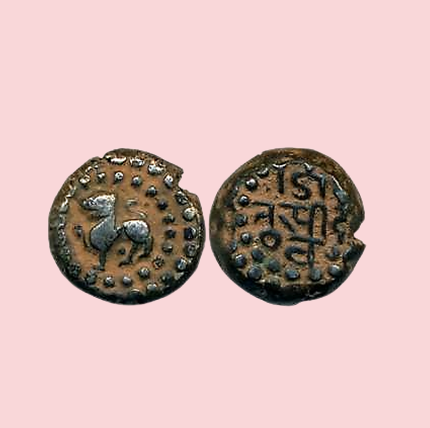
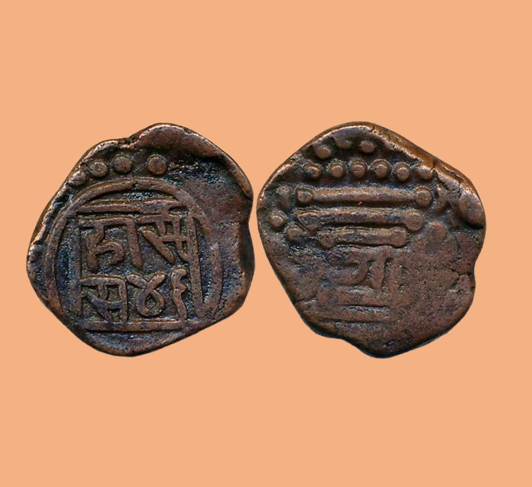
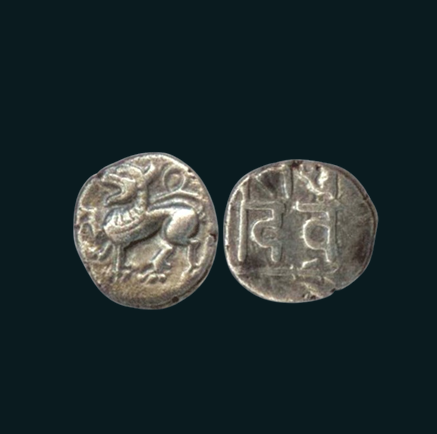
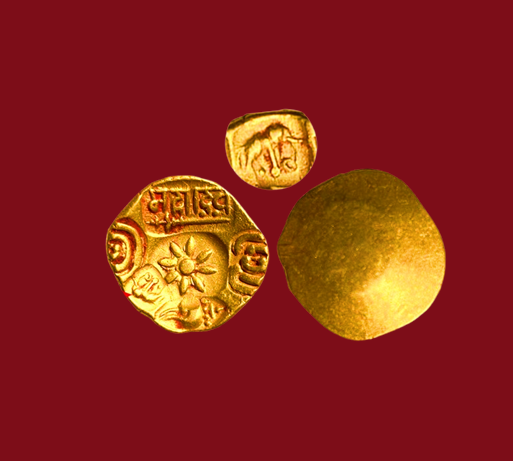
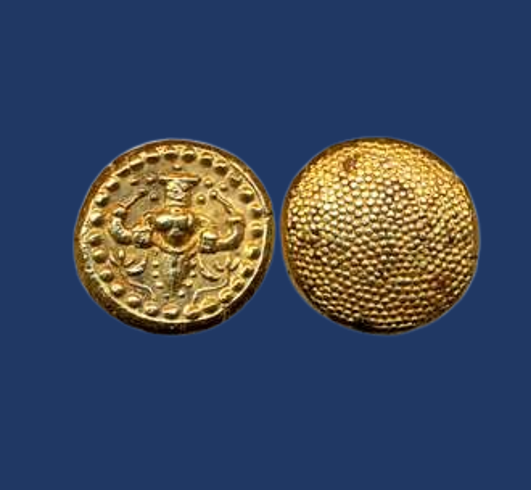
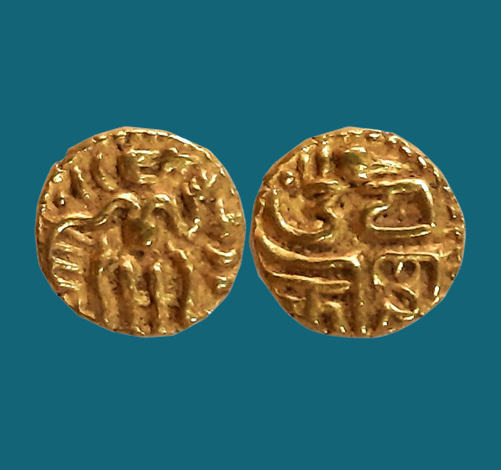
Shiva-Parvati in Gold: The Sacred Varaha of Krishna Raja Wodeyar III
The gold Varaha of Krishna Raja Wodeyar III is much more than a medium of exchange. It represents the meeting of religion, royal authority and centuries-old South Indian monetary tradition. The image of Shiva and Parvati connects the coin with the sacred artistic heritage of Mysore, while the Devanagari legend proudly proclaims the name of its ruler.
With its compact 3.42-gram gold flan, the coin preserves an extraordinary amount of history—linking the Wodeyars with the older traditions of the Vijayanagara and Ikkeri monetary systems. It is therefore a fascinating example of how Mysore's rulers used coinage not only for commerce but also to preserve identity, continuity and royal legitimacy.
For more info., https://t.co/5hG2BYh6rf
#Numismatics #IndianCoins #Mysore #Wodeyar #KrishnaRajaWodeyar #GoldCoin #Varaha #AncientCoins #MedievalIndia #IndianHistory #CoinCollectors #CoinCollecting #SouthIndianHistory #Coinage #History
@KarnatakaWorld@incredibleindia@AshmoleanMuseum@IndiaHistorypic
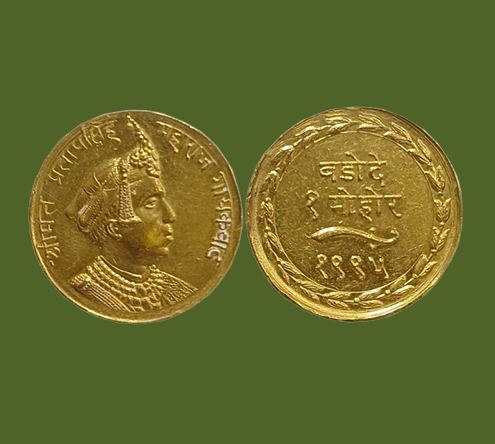
Baroda Last Ruling Maharaja Pratap Singh Gaekwad’s Rare Mohur
The Pratap Singh Gold Mohur is much more than a rare piece of gold coinage. It captures a fascinating moment when India's centuries-old princely order was approaching its end.
On one side stands the portrait of Pratap Singh Gaekwad, proudly identified in Devanagari as the Maharaja of Baroda. On the other are the name of Baroda, the traditional Mohur denomination, the Vikram Samvat date and the Gaekwad emblem.
Struck at the threshold of a new era, this rare gold Mohur preserves the memory of the last ruling Maharaja of Baroda and the final flowering of the Gaekwad dynasty's distinguished numismatic tradition.
For more info., https://t.co/1RQfDSsKKf
#Numismatics #IndianCoins #Baroda #Gaekwad #GoldMohur #IndianHistory #IndianNumismatics #CoinCollecting
@BaronaMuseum@incredibleindia@IndiaHistorypic
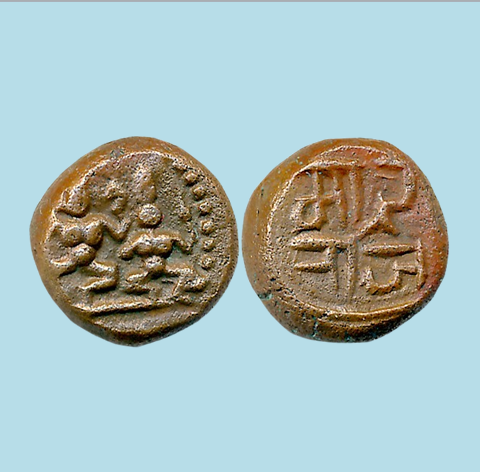
Divine Shiva & Parvati on a Tanjore Maratha Copper Mudra
The history of Tanjore entered a new chapter in the 17th century when the Marathas established their rule in the fertile and culturally rich Kaveri delta. The Tanjore Maratha kingdom emerged after Venkoji (Ekoji I), the half-brother of the celebrated Maratha ruler Chhatrapati Shivaji Maharaj, captured Tanjore in 1676. The Marathas subsequently ruled the region for nearly two centuries, until the kingdom was annexed by the British in 1855 following the death of Shivaji II, the last ruler of the dynasty.
For more info., https://t.co/fKVvQ0Woxf
#Numismatics #IndianCoins #CoinCollecting #TanjoreMarathas #Thanjavur #MarathaHistory #IndianHistory #CoinHistory #Shiva #Heritage @tntourismoffcl@incredibleindia
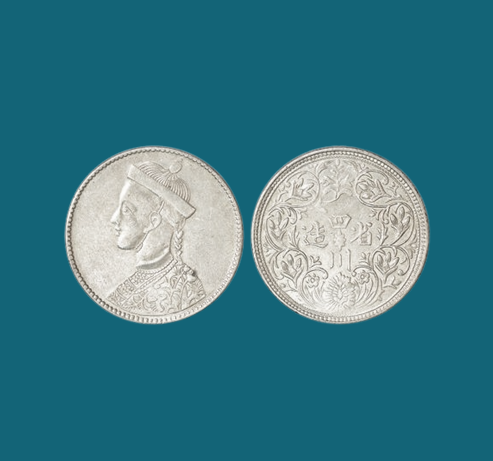
Silver Rupee from Tibet
For centuries, Tibet occupied a distinctive position at the crossroads of the cultures and political ambitions of Central and South Asia. Its mountainous geography helped preserve a strong cultural and political identity, while its location brought it into contact with powerful neighbors including China, British India, Nepal and Bhutan.
During the late 19th and early 20th centuries, Tibet became increasingly important in the strategic rivalry between the British Empire and Qing China. The period was marked by competing claims of authority, diplomatic missions and military interventions. These political developments were also reflected in Tibet's coinage.
For more info., https://t.co/4k7z5Pgofk
#Numismatics #TibetanCoins #Tibet #SilverRupee #CoinCollecting #AsianHistory #QingDynasty #BritishIndia #CoinHistory #Heritage
@numismaticnews@britishmuseum@V_and_A@ASIGoI
Silver Dramma of the Chauhans Jaitra Simha of Ranthambhor
The Chauhans of Ranthambhor were a 13th-century Rajput dynasty that ruled from the formidable hill fort of Ranthambore in present-day Rajasthan. They were a collateral branch of the famous Chauhans of Shakambhari (Ajmer). After the decline of the main Chauhan kingdom centered at Ajmer and Delhi, the Ranthambhor branch continued to assert its independence from its formidable hill fortress.
Ranthambhor, strategically located in present-day Rajasthan, was one of the most important strongholds of medieval northern India. Its formidable fort commanded routes connecting northern India with the Malwa and Gujarat regions, making the territory strategically significant. The Chauhan rulers of Ranthambhor maintained their authority from this stronghold during a period marked by intense political competition among Rajput states and the expanding Delhi Sultanate.
For more info., https://t.co/yM9cw2bn4S
#Numismatics #IndianCoins #JaitraSimha #Ranthambhor #Chauhans #RajputHistory #MedievalIndia #Rajasthan #CoinCollecting #IndianHistory
@myrajasthantour@my_rajasthan
Coin of the Last Chauhan of Ranthambhor, Hammira Deva
The history of Ranthambhor reached its dramatic climax under Hammira Deva, one of the most celebrated rulers of the dynasty. He ruled Ranthambhor in the late 13th and early 14th centuries and is remembered for his resistance to the expanding power of the Khalji dynasty of Delhi.
Hammira inherited a strategically important kingdom centred on the powerful Ranthambhor Fort. During his reign, the fortress became a major centre of resistance against the Delhi Sultanate. His refusal to submit to Alauddin Khalji ultimately led to a prolonged conflict. In 1301, Alauddin Khalji's forces captured Ranthambhor after a determined siege, bringing the independent Chauhan kingdom of Ranthambhor to an end. Hammira's resistance subsequently became an enduring theme in Rajput historical and literary traditions.
#Numismatics #IndianCoins #HammiraDeva #Ranthambhor #Chauhan #MedievalIndia #Rajasthan #IndianHistory #CoinCollecting #RajputHistory
@PIBJaipur@my_rajasthan
Lion on Silver Coin of Devgiri Yadava King Singhana Deva II
The Yadavas of Devagiri, also known as the Seuna Yadavas, were one of the most powerful dynasties of medieval Deccan India. Rising to prominence between the 9th and 12th centuries, they initially ruled as feudatories before establishing an independent kingdom with Devagiri (Daulatabad in Maharashtra, as their capital). Strategically located in the Deccan, Devagiri became an important centre of political power, trade, culture, and military activity.
For more info., https://t.co/ytkMKHuidu
#Numismatics #IndianCoins #CoinCollecting #Yadavas #Devagiri #Mahadeva #PadmaTanka #GoldCoin #MedievalIndia #IndianHistory
@maha_tourism@KarnatakaWorld
Yadavas of Devagiri: Mahadeva’s Punch-Marked Gold Padma Tanka
Mahadeva's Gold Gadyana–Padma Tanka is much more than a small gold coin. Its six punches form a carefully constructed combination of royal identity, religious symbolism, regional scripts and political imagery.
This coin stands as an exceptional example of how medieval Indian coinage could transform a small piece of precious metal into a compact expression of faith, prosperity, kingship and political authority.
For more info., https://t.co/4gpaiot1zZ
#Numismatics #IndianCoins #CoinCollecting #Yadavas #Devagiri #Mahadeva #PadmaTanka #GoldCoin #MedievalIndia #IndianHistory
@maha_tourism@KarnatakaWorld
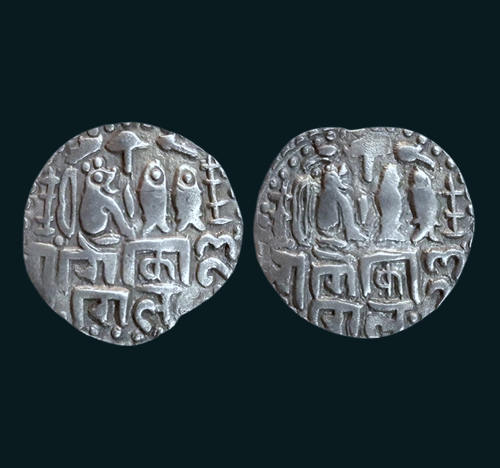
A Gangaikonda Series Coin Celebrating Rajendra Chola’s Northern Conquest
The Cholas were one of the most powerful and long-lasting dynasties of South India. Their origins can be traced to the fertile Kaveri delta of Tamil Nadu, and by the 9th century they had emerged as a major imperial power. Under rulers such as Vijayalaya Chola, Aditya I, Parantaka I, Rajaraja Chola I and Rajendra Chola I, the Chola state expanded dramatically across southern India and beyond.
This silver Kahavanu is a remarkable numismatic record of one of the most powerful rulers of medieval South India. Its combination of imperial insignia, the emblems of the Tamil kingdoms and the proud “Gangaikonda Chola”legend transforms a small silver coin into a powerful statement of Rajendra Chola I's ambition, military success and imperial vision.
For more info., https://t.co/GifnblszBi
#RajendraChola #GangaikondaChola #CholaCoins #CholaEmpire #IndianNumismatics #AncientCoins #TamilHistory #IndianHistory @incredibleindia@tntourismoffcl@United_Tanjore
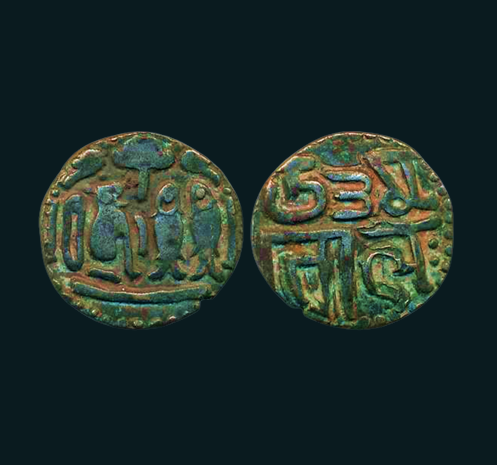
Uttama Chola’s Rare Kahavanu Carries a Tiger beneath the Parasol
The Imperial Cholas were renowned not only for military expansion but also for their sophisticated administration, temple architecture, bronze sculpture, Tamil literature and extensive overseas connections. Their magnificent temples and inscriptions remain among the most important sources for understanding medieval South Indian history.
This base-silver Kahavanu is more than a piece of medieval currency. Its carefully arranged symbols communicate a vision of Chola sovereignty, dynastic identity and political authority. The combination of the tiger, bow and twin fishes beneath the royal parasol makes it an especially evocative representation of the Imperial Chola period.
For more info., https://t.co/JR7Ei8dHRW
#UttamaChola #CholaCoins #CholaDynasty #IndianNumismatics #TamilHistory #SouthIndianHistory #RareCoins #Numismatics @UpdatesTanjore@TNDIPRNEWS
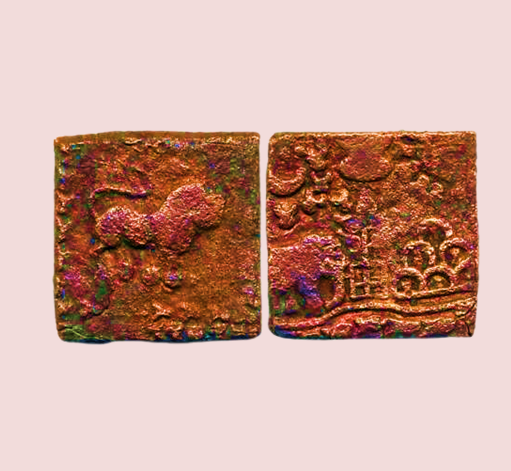
A Coin from Ancient Tamilakam – Elephant and Tiger of the Cholas
The Cholas were one of the ancient Tamil dynasties, with their history extending back to the Sangam age. Along with the Cheras and Pandyas, they were among the three great powers of early historic Tamilakam. The Cholas were associated with the fertile Kaveri river valley, which later became the heartland of their imperial expansion.
For more info., https://t.co/boTUwHhQrG
#Numismatics #IndianCoins #AncientCoins #Cholas #SangamAge #Tamilakam #TamilHistory #SouthIndianCoins #CholaCoins #CoinCollecting @tntourismoffcl@incredibleindia
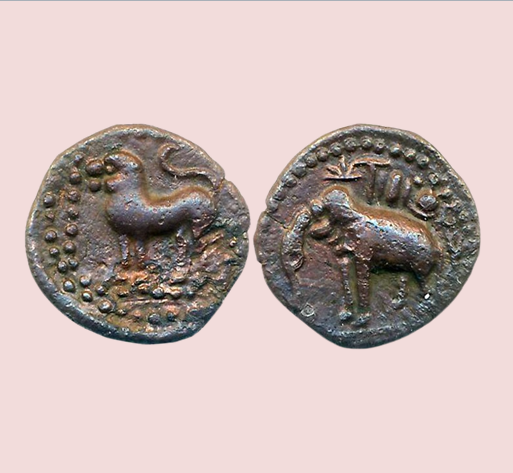
Elephant and Lion Depicted on Sangam Chola's Coinage
The use of animals on these early coins is one of their most intriguing features. The elephant, lion and tiger appear repeatedly in the coinage attributed to the early Cholas and reflect a broader tradition of using powerful animals as visual symbols of authority.
As we have seen in our last post that Sangam Cholas belonged to one of the three great Tamil dynasties of early historic South India, alongside the Cheras and Pandyas. Their power was closely connected with the fertile Kaveri region, and their memory survives not only through Sangam literature and archaeology but also through their distinctive coinage.
For more info., https://t.co/ytr22pxKUM
#Numismatics #IndianCoins #AncientCoins #Cholas #SangamAge #Tamilakam #TamilHistory #SouthIndianCoins #CholaCoins #CoinCollecting @tntourismoffcl@incredibleindia
A Musician and Composer King's Copper Kasu
Swathi Thirunal Rama Varma - Travancore King, A Musician and a Classic Composer
Sree Padmanabhadasa Sree Swathi Thirunal Rama Varma; also spelled Swati Tirunal was the Maharaja of the great Kingdom of Travancore of present-day southern Kerala, India. He reigned from 1829 until his death in 1846. He was the second child and elder son of Queen Gowri Lakshmi Bayi (who ruled Travancore from 1810 to 1815) and Raja Raja Varma Koil Thampuran of Changanasseri Palace. Proclaimed king while still in the womb, he earned the title Garbha Sreemaan. Born under the Svati star, he was named Swathi Thirunal. His reign began under the regency of his mother from 1813 to 1815, followed by that of his maternal aunt Gowri Parvati Bayi until 1829. The king is celebrated as a prolific composer, musician, scholar, and progressive ruler.
As a King and great Administrator...
more at:
https://t.co/7DUabOTnAB
#money #cash #kasu #keralam #onam #travancore #thirunal #king #musician #composer #carnatic #sanskrit #vishnu #padmanabha
"Happy #Onam! Wishing you peace, prosperity, and happiness."
Rare Gold Anantha Varahan of Travancore Queen Gouri Lakshmi Bayi
Maharani Ayilyom Thirunal Gowri Lakshmi Bayi also as Gouri Laxmi Bayi; c. 1791–1815, was the Maharani of Travancore. She is notable as the only queen of Travancore to have ruled in her own right and not solely as a regent).
She ascended the throne in November 1810 following the death of Maharaja Balarama Varma, who left no male heirs. She ruled in her own right until 1813. After the birth of her son Swathi Thirunal that year, she served as Regent Maharani on his behalf until her death in 1815. Her younger sister, Gowri Parvati Bayi, then continued as regent until Swathi Thirunal assumed full power in 1829. Her accession faced challenges, including rival claims to the throne, but she secured her position with the support of British Resident Colonel John Munro, whom...
more at:
https://t.co/1xdJatLPdW
#money #coins #gold #travancore #pagoda #varaha #queen #bayi #gouri #lakshmi #keralam #onam
"Happy #Onam! May your home be filled with smiles, laughter, and endless joy."
@MMRDAOfficial When will the lights will work on these posts and the cross sections. It has been months and it is creating dangerous situation in the night #mmrda#mumbai
Golden “Jaya Chola” on Fanam in Nandinagari Script
Rajaraja Chola I (reign – c. 985–1014 CE) is regarded as one of the greatest rulers of medieval South India. Under him and his son, the Chola state reached the height of its political, military and maritime power.His coinage is remarkable not only for its royal imagery but also for the scripts used to express his titles and names.
This coin preserves not only the memory of a powerful emperor, but also the story of how scripts, languages and political traditions travelled across centuries of South Indian history.
For more info., https://t.co/apltdGsgwd
#RajarajaChola #JayaChola #Nandinagari #CholaCoins #IndianNumismatics #Pallavas #SouthIndianHistory #CoinCollecting @tntourismoffcl@pibchennai
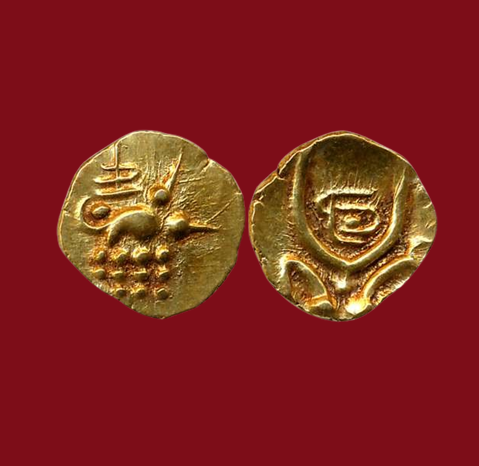
𝐑𝐚𝐫𝐞 𝐅𝐚𝐧𝐚𝐦 𝐨𝐟 𝐭𝐡𝐞 𝐅𝐢𝐫𝐬𝐭 𝐓𝐚𝐧𝐣𝐨𝐫𝐞 𝐌𝐚𝐫𝐚𝐭𝐡𝐚: 𝐕𝐞𝐧𝐤𝐨𝐣𝐢’𝐬 𝐆𝐨𝐥𝐝𝐞𝐧 𝐋𝐞𝐠𝐚𝐜𝐲
The coin is described as Extremely Fine and very rare. Its importance lies not merely in its gold content but in the historical moment it represents. It belongs to the formative years of the Tanjore Maratha state, when Venkoji was establishing the political authority of the Bhonsle family in the Tamil country.
At only 0.38 grams, this tiny gold piece carries an extraordinary amount of history. The lion, the abbreviated “Ve”, the crescent and the stylized boar together provide a glimpse into the monetary language of a newly established dynasty. Its association with Venkoji and the earliest phase of Maratha Tanjore makes it a particularly desirable and historically significant piece of South Indian numismatics.
For more info., https://t.co/4nUuHET7BS
#Numismatics #IndianCoins #GoldFanam #RareCoins #Tanjore #Thanjavur #Venkoji #MarathaHistory #IndianHistory @United_Tanjore@ignca_delhi
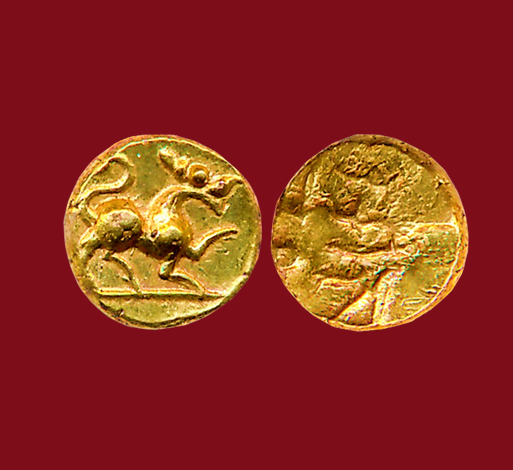
𝐆𝐨𝐥𝐝𝐞𝐧 𝐋𝐢𝐨𝐧 𝐨𝐧 𝐓𝐚𝐧𝐣𝐨𝐫𝐞 𝐊𝐢𝐧𝐠 𝐒𝐚𝐫𝐚𝐛𝐡𝐨𝐣𝐢 𝐈’𝐬 𝐅𝐚𝐧𝐚𝐦
The lion is especially significant. Lion imagery has a long history in South Indian coinage, and on these fanams it provides an instantly recognizable emblematic design. The relationship between the lion on the obverse and the word Sarabha on the reverse makes the type particularly fascinating: Sarabha in Indian tradition denotes a powerful mythical creature, often represented as a lion-like being. Consequently, the imagery and legend may have a symbolic relationship beyond simply identifying the ruler.
At approximately 5–7 mm across in examples of this series, the fanam demonstrates the extraordinary precision required of the die engraver.
For more info., https://t.co/EbA2YMuxKo
#Numismatics #IndianCoins #CoinCollecting #AncientCoins #MedievalCoins #GoldCoin #GoldFanam #Tanjore #Thanjavur #SarabhojiI #Maratha #MarathaHistory #IndianHistory #SouthIndianHistory #CoinHistory @IndianMuseumKol@NationalLib_GoI@MinOfCultureGoI