Claude Sonnet 5 is here.
Top-tier performance on coding and tool use at Sonnet pricing, with a 1M context window.
It's the new default in Claude Code for Pro users, and available everywhere on the Claude Platform, including the API and Managed Agents.
📣 Claude Fable 5, the first in @AnthropicAI's Mythos model class, is now generally available and rolling out in GitHub Copilot.
It is designed for long-horizon, autonomous coding and knowledge-work tasks. Try it out in @code or the GitHub Copilot app. ⬇️
https://t.co/jJTqh35jjY
No more waitlist. The GitHub Copilot app's technical preview is now available to everyone currently on Copilot Pro, Pro+, Max, Business, and Enterprise plans.
This agent-native desktop experience lets you decide what agents work on, how they work, and what ships. Go from issue to merge all in one place. ✨
𝗧𝗛𝗔𝗡𝗞 𝗬𝗢𝗨, Red Raiders! The softball journey has come to an end for the Red Raiders. Thank you to this year's team for an incredible season! 🥎
Through the highs and lows, the passion, toughness, and pride you displayed represented Lubbock and Raider Nation the right way. From big wins to tough challenges, you gave fans something to believe in every step of the way.
We appreciate the effort, the heart, and the fight you brought to the field. Proud to support you—now and always.
Wreck ’Em 🔴⚫️
Our goal is to deliver unmetered intelligence to every home and every desk with Windows.
NVIDIA RTX Spark marks a real breakthrough toward that vision.
Looking forward to sharing more with Jensen, who will be joining us live from Taiwan, at Build this week! https://t.co/O9ttCunAhG
This is amazing. Do this:
1. Set model to Opus 4.8
2. Reasoning effort to /ultracode
Enables Claude Code's new Dynamic Workflows.
Claude will autonomously detect complex tasks, write an orchestration script, and spawn an agent swarm.
What do you need for great agent framework? Check out this new blog post from @shawnhenry on how @Microsoft Agent Framework is built and what makes it special: https://t.co/qH2Ig2s7Vv
🚨 MICROSOFT JUST OPEN-SOURCED SELF-EVOLVING AGENT SKILLS
You can now train agent skills the exact same way you train AI models, and watch them get better over time.
It's called SkillOpt, and it's 100% free and open-source.
Until now, building agent workflows has been pure trial and error. You write a prompt, cross your fingers, and guess whether your manual tweaks made a difference.
SkillOpt replaces the guesswork with an automated, mathematical loop. A base model runs the tasks, while an optimizer evaluates the output to rewrite and improve the instructions itself.
→ Data-driven updates: Isolates successful paths from failures to find precise improvements.
→ Built-in quality control: Automatically rejects any edit that doesn't boost your benchmark score.
→ SOTA performance: Easily outperforms hand-crafted prompts and optimizers like TextGrad.
→ Zero model lock-in: Because it learns real procedural logic, the skill transfers perfectly to other models.
Think of it like learning to drive—once you understand the mechanics, you can drive any car.
The optimizations you make don't disappear when you swap out your underlying tech stack.
It's a complete paradigm shift: focus on teaching the skill instead of tweaking the model.
repo link in 🧵↓
Great new doc published for any agent builders who are also using @github Copilot CLI / App, Claude Code, or any other coding agent. Now you can add skills to help your coding agent be an expert in deploying to Microsoft Foundry! https://t.co/gsMOXwNG7U 🥳
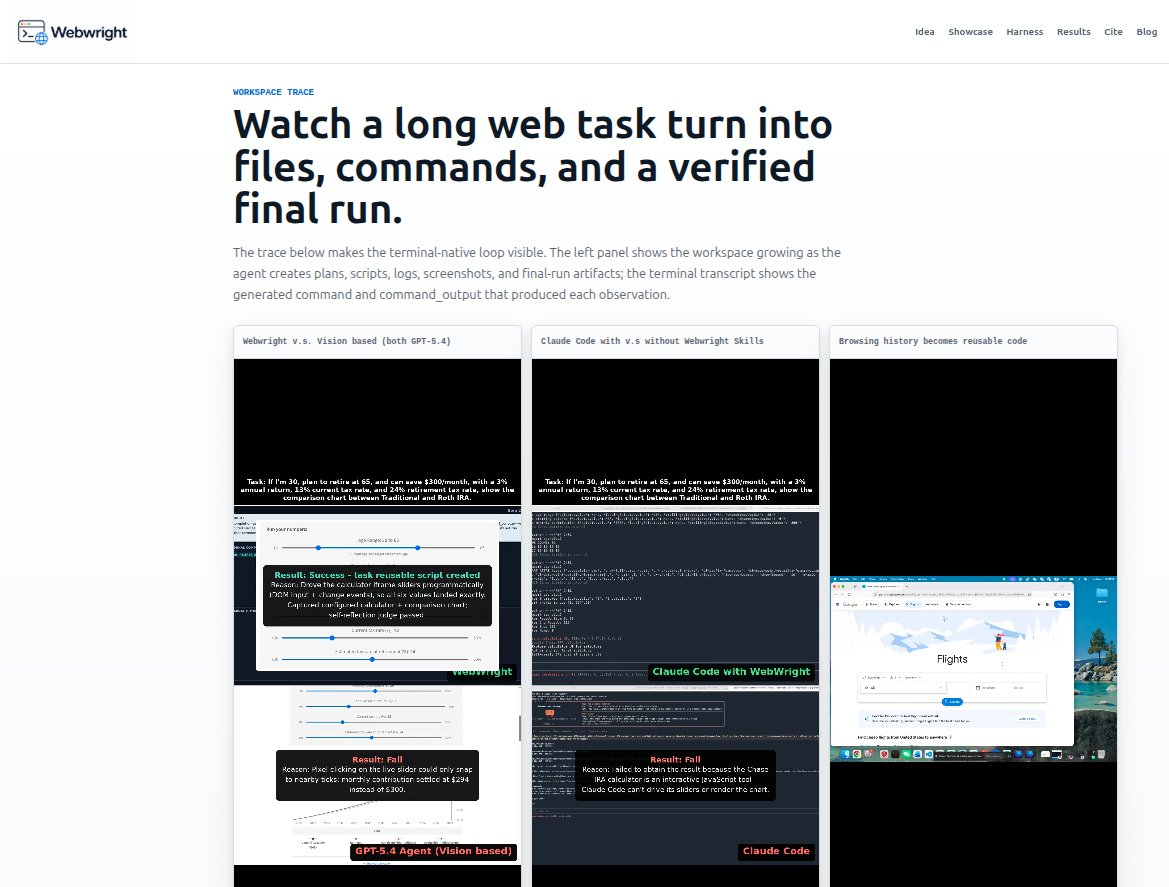
Microsoft dropping a massive Playwright update geared specifically for agents, Webwright!
This is an absolute game changer for agentic browser use as every session becomes a reusable workflow
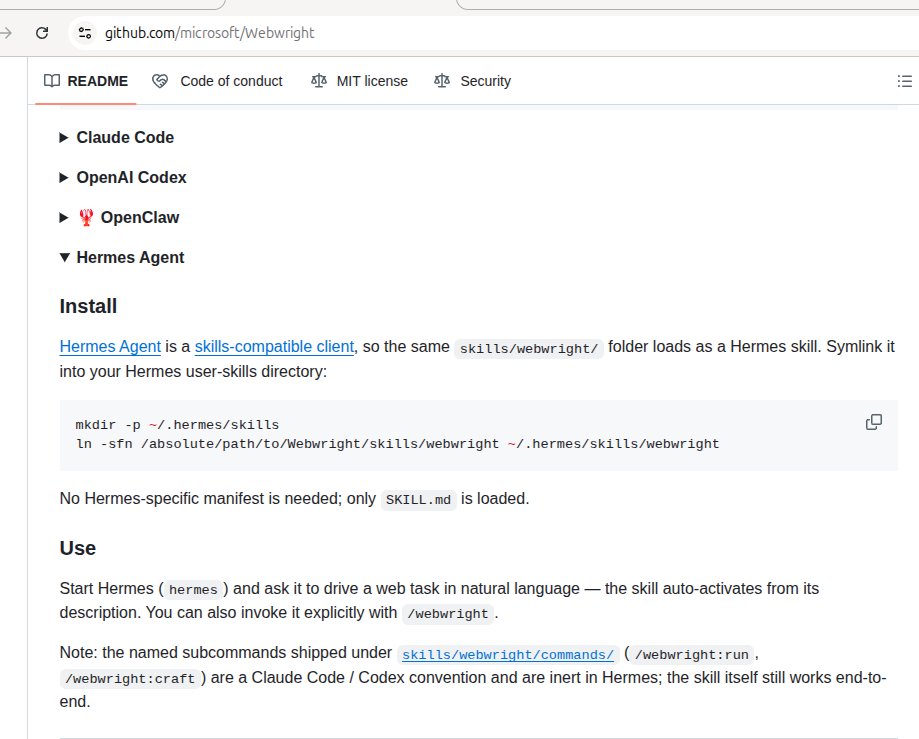
The repo includes a @NousResearch Hermes Agent skill 😍
https://t.co/mDmKCN9kV9
That's why I built waza — a Go CLI that benchmarks agent skills with A/B baselines, pairwise judging, and auto discovery. Scores, not gut feeling.
https://t.co/BeHptuwPIh
The new @code evaluations extension for primitive is actually a pretty solid step toward dealing with agent skill slop and token waste.
It now gets automatically offered in the latest versions and adds tooling to analyze, validate and even help fix issues in primitives.
It also integrates Waza CLI for evaluating AI agent skills, generating eval suites and running them against your primitives and workflows.
Yes, it costs tokens.
But this feels like the natural progression of the skills stack needed to maintain quality agentic workflows at scale.
We spent years building CI/CD, tests, tracing and observability for software.
Now we’re doing it for prompts, primitives and agents.
You still need to install Waza CLI separately. There’s a helper in the command palette + docs.
Did you try it already?
What are you using today to optimize and eval your primitives?
Or are most teams still shipping them completely unmeasured?
https://t.co/olaevyLiAa
https://t.co/C8Bo72X2cg
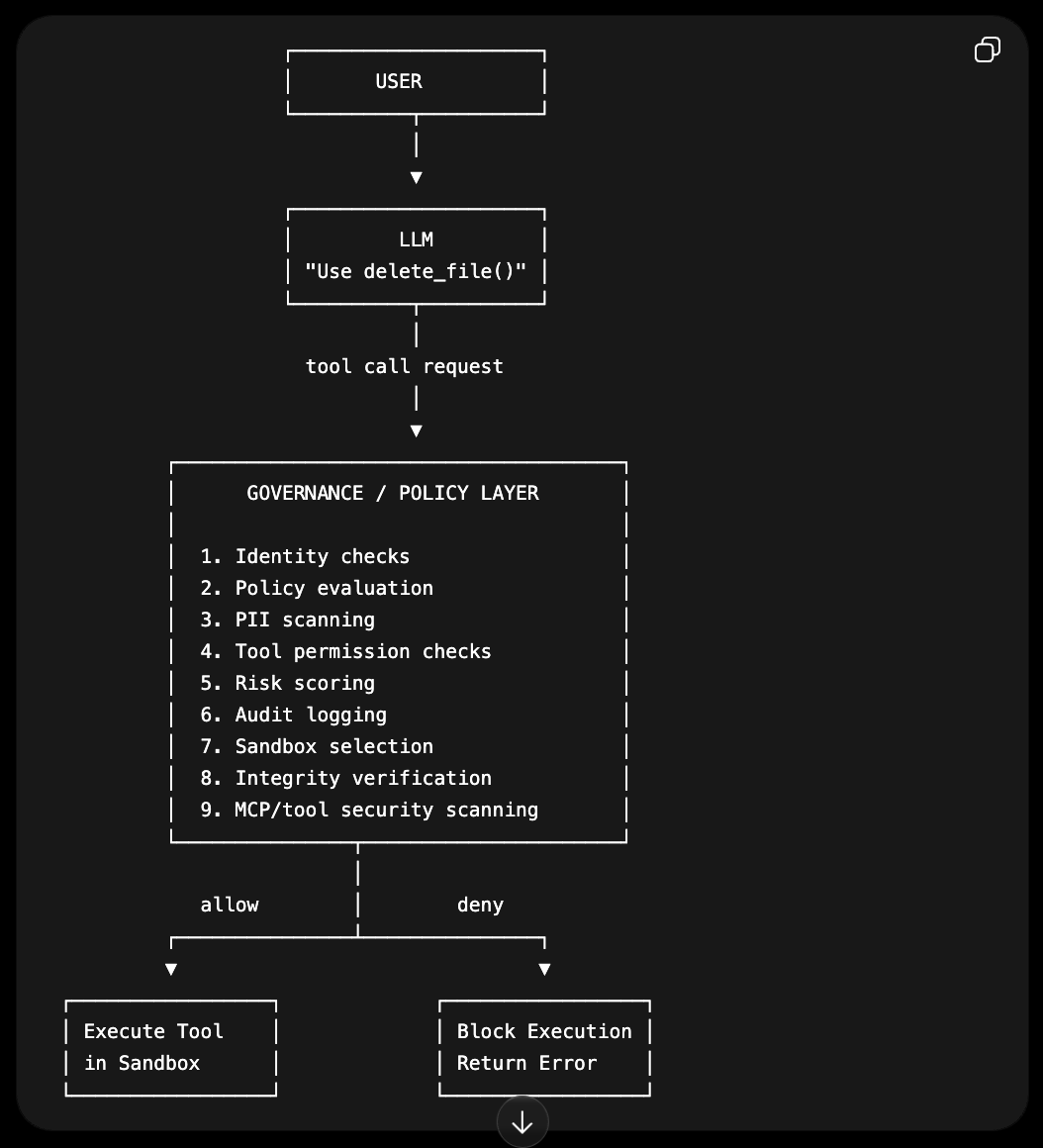
AI Agent Governance Toolkit - by Microsoft
Runtime governance for AI agents through deterministic policy enforcement, zero-trust identity, execution sandboxing, and SRE for autonomous agents. Covers all 10 OWASP Agentic risks with 13,000+ tests.
https://t.co/sONejSjsrX
I've said one of the best features I like in the new @GitHubCopilot desktop app is /spar
It spins up two agents that tear through your task or question and rip you a new one
If you read through the demo vid carefully one of them even grilled me on the too generic question I asked it for the spar but hey it was just a demo :-)
Are you using it already? what's your fav feat?