Within this star-forming nebula (captured by Webb) are the smallest brown dwarfs ever detected. Neither planet nor star, these objects are formed like stars, raising questions about the star formation process. https://t.co/s58sxdx1dl
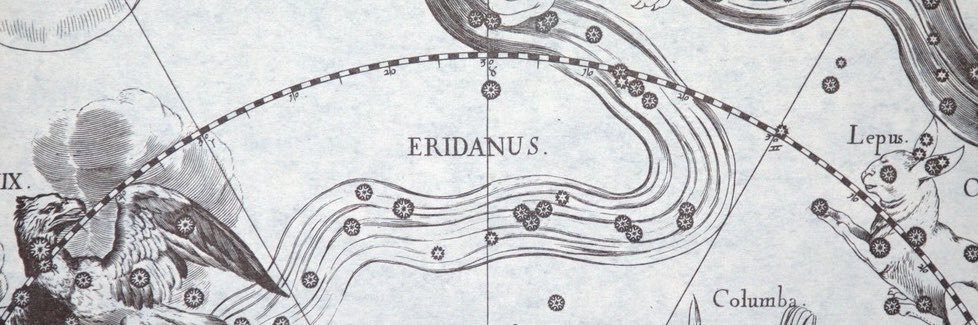
In the cold darkness of Eridanus, only about 900 light-years from Earth, a cosmic witch hangs frozen in space — nebula IC 2118, better known as the Witch Head.
This is no ordinary cloud of dust and gas. It is an ancient ghost: likely the remnant of a long-dead supernova, or a molecular cloud that has spent millions of years being both lit and sculpted by the fierce wind of the nearby blue-white supergiant Rigel. His icy light ricochets off countless tiny dust grains, painting the nebula in the same cold blue-violet that colors our daytime sky.
Look closer. A long hooked nose, a sharp chin, a mouth that seems to hang open in a silent scream, and streaming “hair” of interstellar dust. The witch appears to stare eternally at Rigel — and to scream at him. That sinister profile in silhouette is exactly why she earned her unsettling name.
Deep inside this “head,” new life is already stirring: young protostars and classic T Tauri stars are forming in the hidden molecular clouds. The cosmic witch does not only haunt the night. She also gives birth to stars.
NGC 6559: a stellar nursery in full bloom.
Glowing gas, dark dust lanes, and newborn stars collide in this crowded corner of the Milky Way. One of the more photogenic star-forming regions in the sky.
Credit: ESO / U.G. Jørgensen