It’s insane how good the out-of-distribution performance of humans is. Evolution fine-tuned us to hunt, gather, and have sex and now we’re building spaceships and training computers to reason
Just read Dario Amodei’s “Concrete Problems in AI Safety” from 2016. He highlights 5 issues.
To me, the 2 that might kill humanity and might never have a good enough solution are Reward Hacking and Negative Side Effects.
The other three (scalable oversight, distributional shift, and safe exploration) seem solvable without killing humanity.
Whether an LLM mode collapses or not depends on the dataset and post-training method used. It's not as consistent as people typically think. Sometimes, it could actually be more diverse than the target distribution. (See animation.) In our paper, we show this and also we show that fine-tuning actually fixes both under-diversity (AKA mode collapse) and over-diversity.
Previous work has shown that LLMs can mode collapse in different settings: @MengdiWang10 in simulated populations; @chrmanning & @shi_weiyan in post-training; @hhexiy & @vishakh_pk in AI-assisted writing. While it does seem to be a common behaviour in LLMs, it is not guaranteed.
We formalise LLM diversity using probability of sequence collision, which measures how often an LLM gives the exact same response to two samples from the same prompt. You could calculate the literal exact sequence match probability, but in many cases, the probability of any two sequences matching exactly can be too close to zero. Instead it's useful to look at some higher-level output similarity using a similarity kernel. For example, we measured the similarity of code using Abstract Syntax Trees in one of our experiments.
We can calculate this collision probability both for LLMs and the training distribution, and in the paper we prove that the absolute difference between them is bounded by the square root of KL divergence of the model from that training distribution. It means that as you keep training bigger models using more training steps, they get closer to the training distribution, and both mode-collapse and its opposite (over-dispersion) stop occurring at the same magnitude.
To verify these results on data, we fine-tune four LLMs on three human surveys (ANES, WVS, GSS). These models initially gave much less diverse answers than people did. As we trained the models with more and more human examples, all four approached the human level of diversity across all three surveys.
We ran the same procedure on the CodeNet dataset. Unlike the case with social surveys, on code, some models generated more varied program structures than humans; and others generated less. Fine-tuning again brought both closer to the human target.
To understand why LLM output diversity can go either way, we decomposed the expected next-token collision gap into three terms. Variance and squared bias are always positive, and thus increase collisions, but alignment between model bias and the training distribution can push it either way, and when it's negative, it could take over the always-positive terms.
This last term gives us a way to control whether mode-collapse or its opposite happens. We set up two synthetic language experiments, where we knew the target distribution exactly. This lets us calculate the decomposition terms. We show that depending on how the model is initialised with respect to the training distribution, we can get either mode-collapse or its opposite.
Regardless of whether mode-collapse or under-dispersion happens, we now know that cross-entropy training calibrates it in the limit. So, mode-collapse that is often talked about, is either due to RL nerfing the model's preferences, or the lack of domain-specific data.
As average benchmark scores continue to climb, output diversity may stay low. This can lead to homogenization in thought, science, writing, and many other fields that increasingly use LLMs. So, it's imperative that we figure out how to fix this. Our results in particular show that post-post-training methods could make use of the "purifying" properties of fine-tuning to cure models destabilised by RL.
📄 More in the paper: https://t.co/64G2TTtVKo
Joint work with @EricFithian@XYHan_
Just learned that the Paper Assistant Tool (PAT) that ICLR uses for auto-generating llm-reviews is powered by Gemini 2.5 Deep Think. To which I respond:
What makes Gemini 2.5 DT believe it's qualified to judge the paper I wrote with Fable 5.1 Max and GPT 6 Astra Ultra?
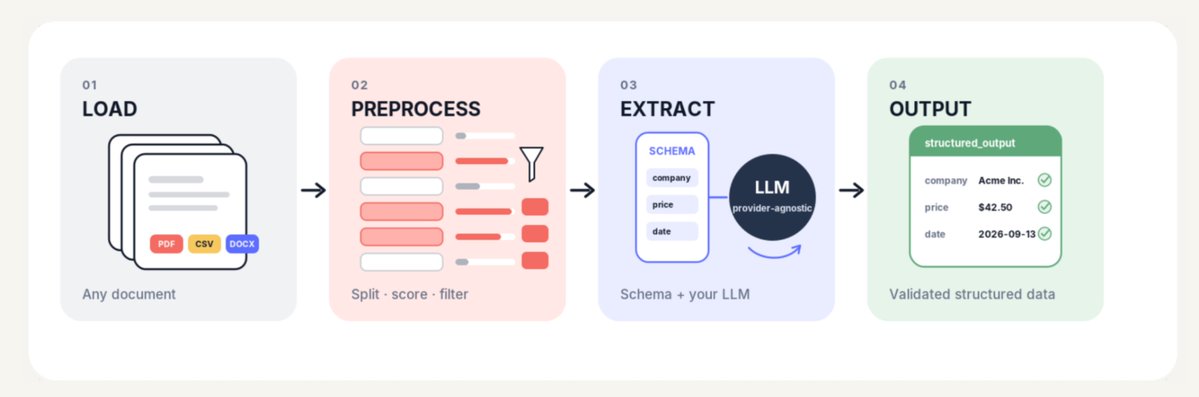
If you're still using one off scripts to do structured data extraction with an LLM at any meaningful scale, you should really check out DELM (or ask your agent to). It'll save you and your agent money and headaches.
We benchmarked GPT-6 Astra on the @SurgicalDSC@CAAI_Booth Surgical AI Leaderboard
- astra is the new generalist leader, but falls behind tiny specialist models (1000x smaller)
Full Leaderboard: https://t.co/KAhJJ5kKmw
Paper: https://t.co/c85v9RZS4N
HT @kskblv@EricFithian
We benchmarked Claude Fable 5.1 and Gemini 3.8 Flash on surgical intelligence:
- The performance of the two new releases is spiky (e.g. good on tools, bad on VQA)
- Frontier LLMs still underperform tiny specialized models
Check out the full LLM leaderboard linked below
@ethanCaballero find out for yourself - https://t.co/XCMQ1B8dxX
We just added Fable 5.1 and the Claudese skill so you can compare side by side unbiased
had Grok @Bot study 300+ GitHub repos of skills
here are the 12 that influenced my setup:
/humanizer by @blader: make your writing and rewrites sound human
https://t.co/YEhDiFZMaR
/unslop by @poteto: removes common AI slop patterns from your writing
https://t.co/mh1i25eckL
/no-ai-slop by @petergyang: make your writing more precise and clearly human
https://t.co/Vgm1xPmw8l
/agent-skills by @addyosmani: agents that interview you before they invent any specs
https://t.co/Y6IYOOcPOB
/skills by @mattpocockuk: a suite of S tier engineering and productivity skills
https://t.co/vk176Bt0hN
/skills by @MengTo: prompt S tier design and UIs like a design system
https://t.co/lZWcrSQklq
/skills by @emilkowalski: design and motion skills that survive real audits
https://t.co/Wqgu8zQoAT
/cartographer by @KingBootoshi: a repo map before your agent wanders
https://t.co/BKpep9ZkTm
/superpowers by Jesse Vincent: stop guessing when you debug, agentic skills framework + complete software dev methodology forcing agents to follow professional workflows
https://t.co/ULxREJMy71
/gstack by @garrytan: memory improvements + spec, review, and QA playbooks so agents cannot silently edit
https://t.co/zCVt87cGiJ
/impeccable by @pbakaus: detect, fix, and recheck with 61 rules
https://t.co/zbMaoYochR
/last30days by @mvanhorn: deep research what people said about a topic over the last month
https://t.co/cUJAXKOpSc
save these and remix them with your Bot!
It doesn't matter which AI is writing what proofs.
It doesn't matter whether an AI wrote a paper or whether an AI reviewed it.
What matters is whether a human wants to read that paper after it is all done.