Asked Fable 5.2 to make an animation for our "Quantum Jumps of Sound" result for a presentation I'm giving. Not exactly one-shot, more like ~four-shot. But the result is an HTML file that's about 40kB, captures my intent very well, and looks really nice :)
What we believe might be a world record in optical switch loss! 7mdB!
Quantum hardware that is both manufacturable and scalable, that is what is needed for utility-scale quantum computing and that is what we are building at Xanadu.
This 7 mdB optical switch loss achievement is a clear proof point for our leading photonics technology and a critical step forward on the path to commercialization.
Learn more: https://t.co/H1Rg66IYbf
My dog decided I wasn’t taking him seriously on only playing fetch with toys other than balls so he got a ball and maintained eye contact with me as he destroyed it.
#BurnTheShips
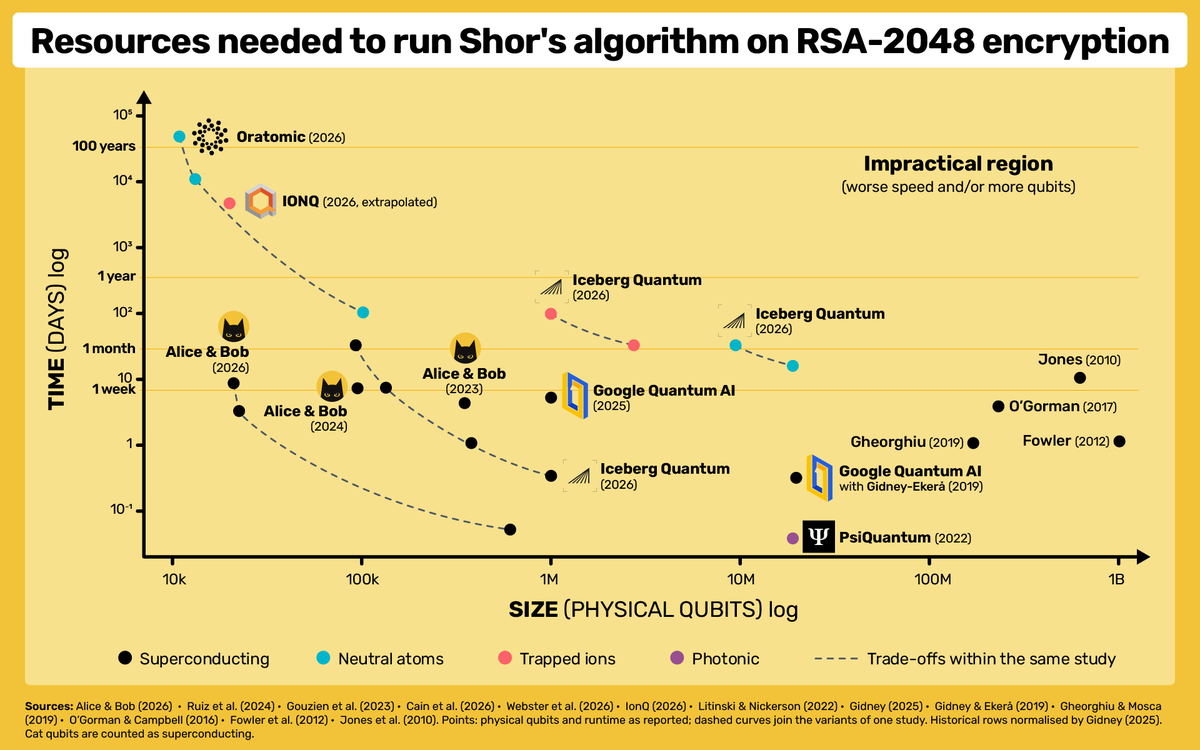
Breaking RSA-2048 with 23,000 cat qubits. 🐈 In 3.14 days
This is the finding of our new paper, the latest resource estimate for Shor’s algorithm, the benchmark the whole field uses to compare quantum hardware 📄
The results are a record low for total quantum resources at this speed of execution, about 40 times fewer physical qubits than @GoogleQuantumAI 's Craig Gidney 2025 estimate. 🏁
RSA-2048 is the lock behind secure websites, banking and software updates 🔐 Shor's algorithm has been able to break it, on paper since 1994. Nobody has built the machine yet, but every year the estimate of how big it needs to be gets a little smaller.
In 2019, the best estimate was 20 million qubits. In 2024, ours was just under 100,000. Now 22,593, in 3.14 days. Yes, pi 🥧
Small isn't enough. Fast isn't enough. The new study optimizes for both. 😼
Bitcoin, Ethereum and most blockchains aren't secure either, about 30,000 qubits would be needed to crack a Bitcoin key in about an hour ₿ ⏳
How we got here, what it means for cryptography, and when it all converges, our CEO Théau Peronnin talks about it in the blog 👇
📝 Blog - https://t.co/K3E5pxTUMv
📄 Paper - https://t.co/kiC9JZz66u
Stay curious, more info coming soon 👀
#QuantumComputing #CatQubits #ShorsAlgorithm #PostQuantumCryptography #Cryptography #FaultTolerance #DeepTech
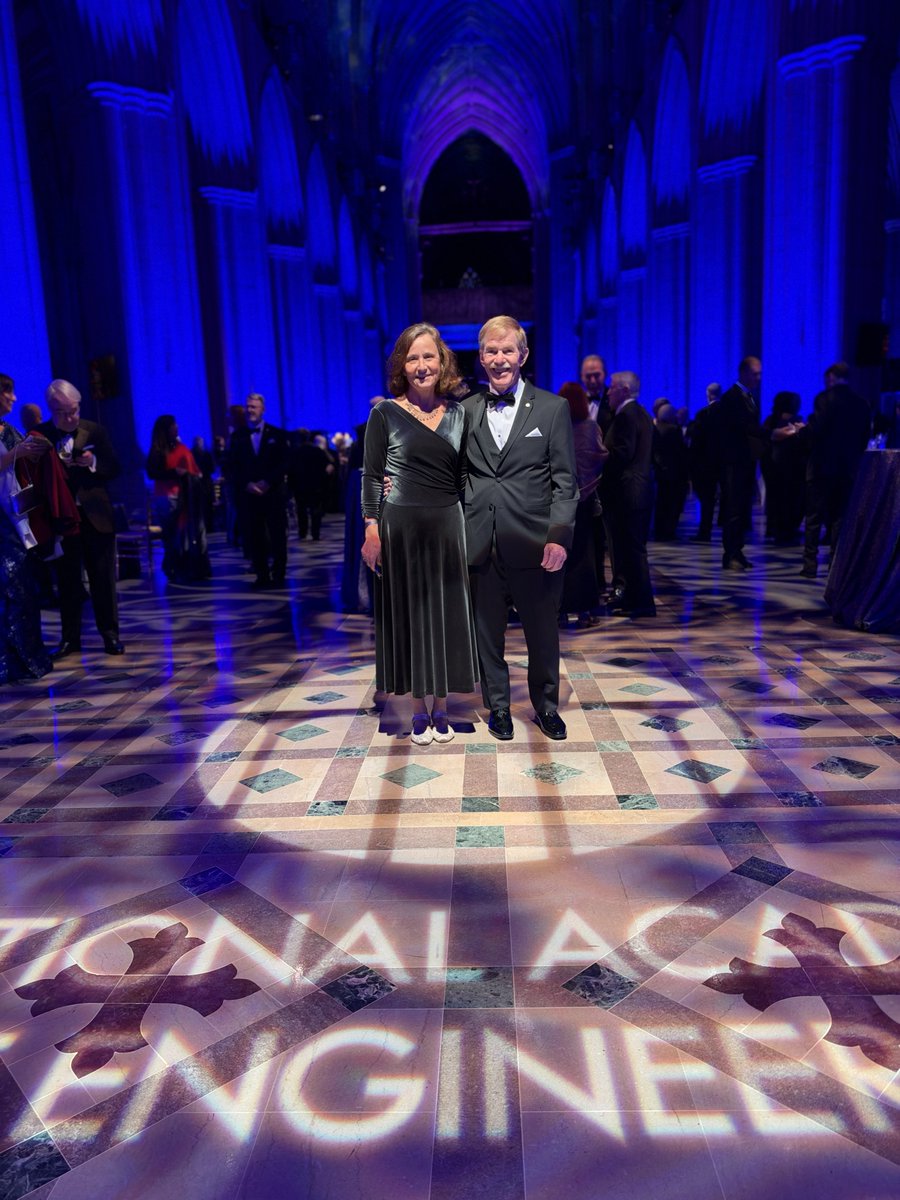
Congratulations to our founder and Chief Science Officer, Dr. Dana Z. Anderson, who was formally inducted into the National Academy of Engineering (@theNAEng) this weekend in Washington, D.C.
NAE membership is one of the highest honors in engineering, with new members elected by their peers. Dana was recognized for "contributions to optical quantum engineering of ultracold atoms."
Behind those words are decades of work connecting fundamental science with practical technology. Through his research at the University of Colorado Boulder (@CUBoulder) and JILA (@JILAscience) and his founding of ColdQuanta, now @infleqtion, Dana helped bring atom-based quantum technology to life. That work laid the groundwork for much of what we build today.
Those of us who work alongside Dana see his conviction every day: that extraordinary science can solve real problems. He is relentless about making that happen.
This is a well-deserved honor. Thank you, Dana, for the vision that started Infleqtion and the determination that continues to move us forward.
@NormanDodd_knew Why not? My consistent home ownership experience has been that any boomer owned business will double and triple charge. GenX and Millennial businesses consistently offer friendlier more affordable customer service.
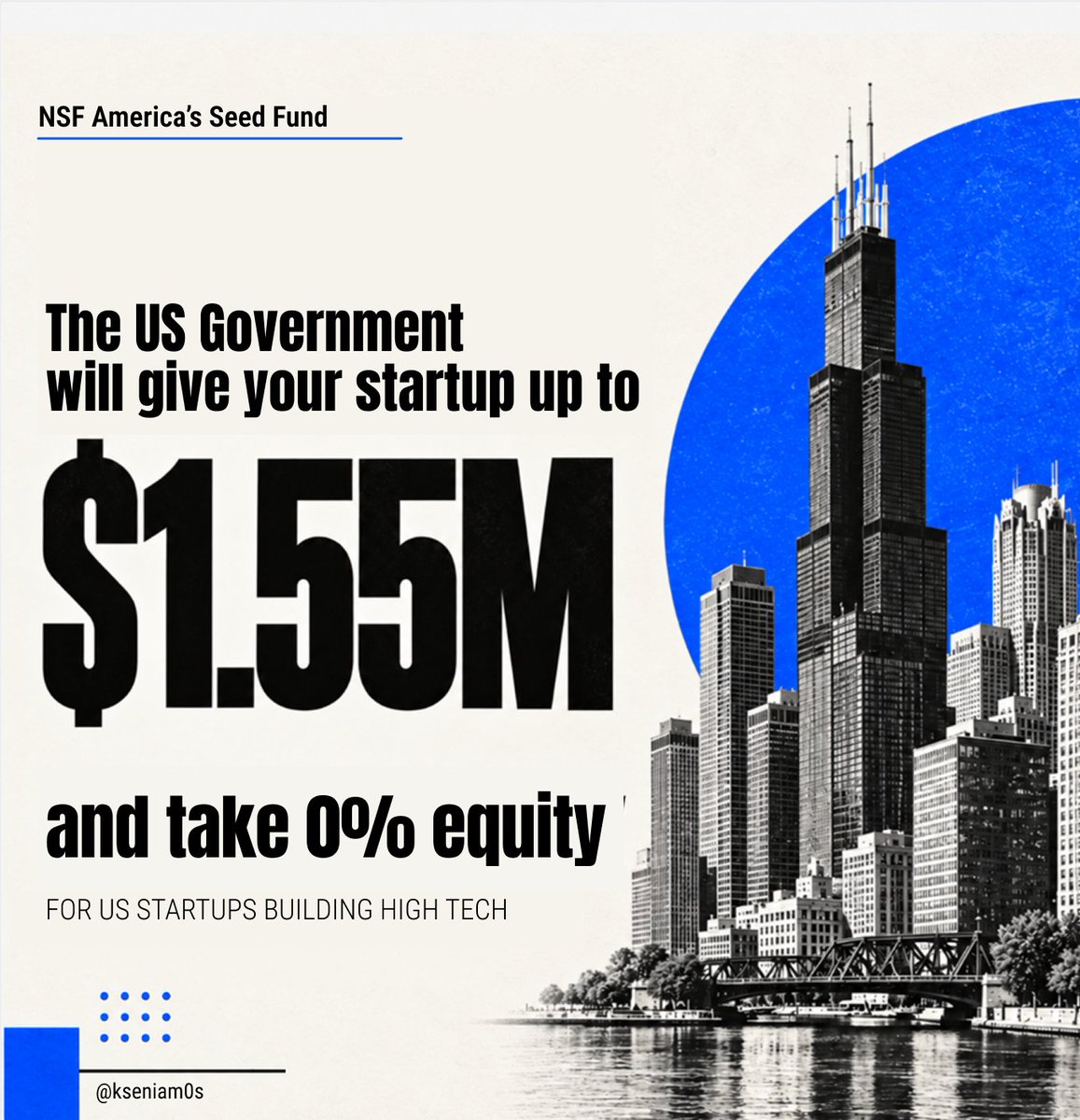
The US government will give your startup up to $1.55M and take 0% equity.
@NSF's America's Seed Fund is open again after Congress reauthorized it in April.
Three tracks:
- Phase I: up to $305K to prove the idea
- Phase II: up to $1.25M to build it
- Fast-Track: up to $1.55M, both phases in one go
Who can apply:
- US-based startups with 500 or fewer employees
- 51%+ owned by US citizens or permanent residents
- Not majority owned by VCs
- All the work done in the US
How it works:
- Send a 3-page Project Pitch first
- NSF invites the best ones to submit a full proposal
- Next full proposal deadline: Nov 4
Phase I funding rates have run about 10 to 20%. It's work, but nobody takes your cap table.
Application link 👉 https://t.co/f5CcZoC1bf
Bookmark and tag a tech founder who needs this.
I have met several boomers at the dog park that complain about how little they get in social security “after paying in for 40 years”. What’s been fun is finding out all of them worked jobs that paid part, or the majority, of their income in cash or under the table. They are often proud they avoided paying taxes on that income…
A new postdoc fellowship worth passing along: the MIT Quantum Initiative (QMIT) fellowship, supported by the Moore Foundation.
Up to 17 fellows, across physics, chemistry, materials, and the bio and Earth sciences. For PhDs from Jan 2025 on, starting in 2027. Due October 23.
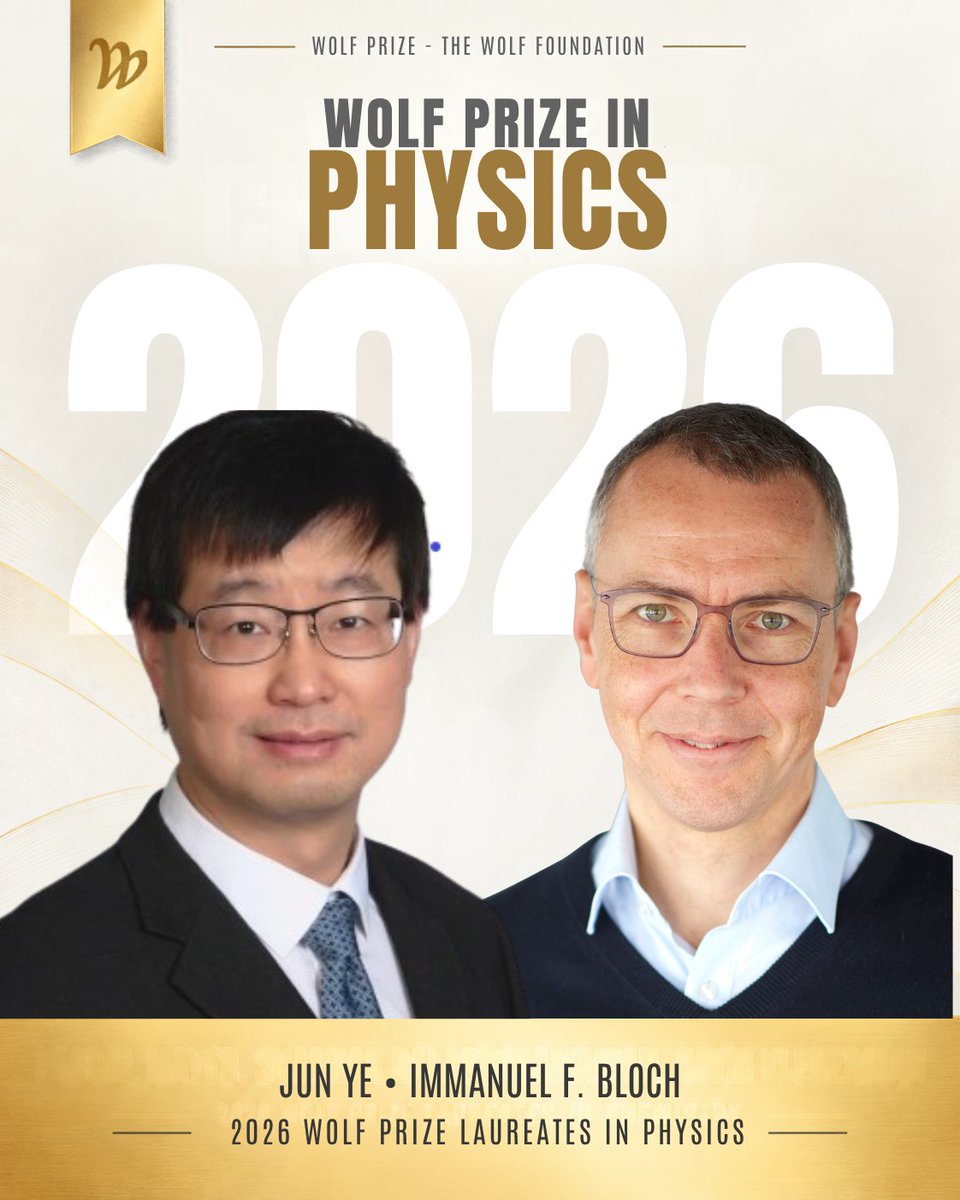
ANNOUNCING THE 2026 WOLF PRIZE LAUREATES IN PHYSICS
The 2026 Wolf Prize in Physics is awarded to Immanuel F. Bloch and Jun Ye “for transformative, widely applicable advances in the control of ultracold atomic systems.”
Their work has pushed experimental physics into realms that were once almost impossible to control.
Bloch established ultracold atoms trapped in optical lattices as a powerful platform for studying complex quantum systems. His work helped define the modern field of quantum simulation, revealing new insights into many-body quantum states and laying foundations for emerging quantum technologies.
Ye, meanwhile, led the development of the world’s most accurate and stable optical atomic clocks, achieving levels of precision that have reshaped how time and frequency can be measured. His work has also opened new ways to test fundamental physics, from relativity to searches for variations in nature’s fundamental constants.
From controlling quantum matter to measuring time with unprecedented precision, their discoveries have expanded what physicists can observe, test, and engineer.
Congratulations to Immanuel F. Bloch and Jun Ye, the 2026 Wolf Prize Laureates in Physics.
@NIST@maxplanckpress
Jun Ye has been named a 2026 Wolf Prize laureate in Physics! 🏆
Ye shares the prize with Immanuel Bloch, Max Planck Institute for "transformative, widely applicable advances in the control of ultracold atomic systems."
Read more: https://t.co/s317VjrO6w
@CUBoulderPhys@NIST@CUBoulder
A provable quantum advantage for approximate optimization via decoded quantum interferometry
https://t.co/0qOfISWgxg
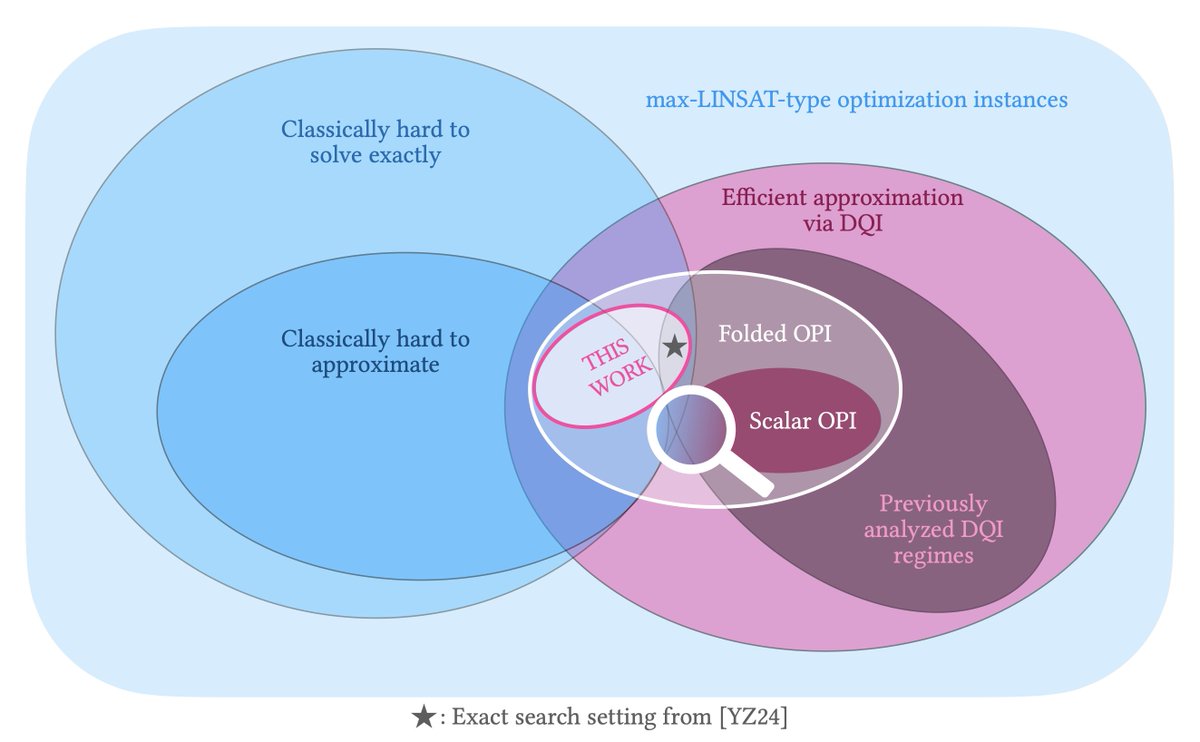
This is a piece of work I am particularly happy with. We prove a quantum advantage for approximate #optimization: in an oracle setting, a quantum algorithm achieves a strictly better approximation ratio than any polynomial-time classical algorithm.
Our problem is folded optimal polynomial intersection: find a low-degree polynomial whose grouped evaluations pass as many acceptance tests as possible. The folded Reed–Solomon code is given explicitly. Independently sampled acceptance sets, each containing half the block alphabet, are accessed through separate membership oracles. Each query tests whether a proposed symbol is accepted in one classically chosen block. Quantum algorithms can query that block’s membership predicate coherently, over a superposition of input symbols.
#Decodedquantuminterferometry (DQI) connects optimization and coding theory through Fourier interference and decoding. At code rate 0.3, it achieves an asymptotic expected score of approximately 0.857 using one coherent query per block.
Exceeding the classical threshold of 0.65 by any fixed amount, with constant probability on sampled instances, requires super-polynomially many classical membership queries—even with unlimited computation between queries. A modified quantum algorithm reaches a score of 0.95 with constant success probability on typical sampled instances.
For me, the particularly satisfying point is that the classical lower bound covers every algorithm in this oracle model, including algorithms we have not yet discovered. Warm thanks to Maximilian Johannes Kramer, @EliesMiquel, Benjamin D.M. Jones and @FJSchreiber.
In high school there was a mandatory wellness class and I got a B one quarter. When my mom asked me why I said it was because I refused to bring in $10 a week so the teacher could buy gifts for people at her mother’s retirement home. In the parent teacher conference my mom asked about this and the teacher said she made it clear everyone gets a B unless you give her $10/week then you get an A. Mom went to get the principal and that policy didn’t last.
Attention arXiv authors. Because of the exponential increase in submissions, arXiv is limiting the number of papers that a person can submit each month to two. 1/
@seattleiminyou I once hired a scientist and on their first day they didn’t show up. When I called they said they got a job elsewhere and had been too busy to let me know. That forever changed my bar.