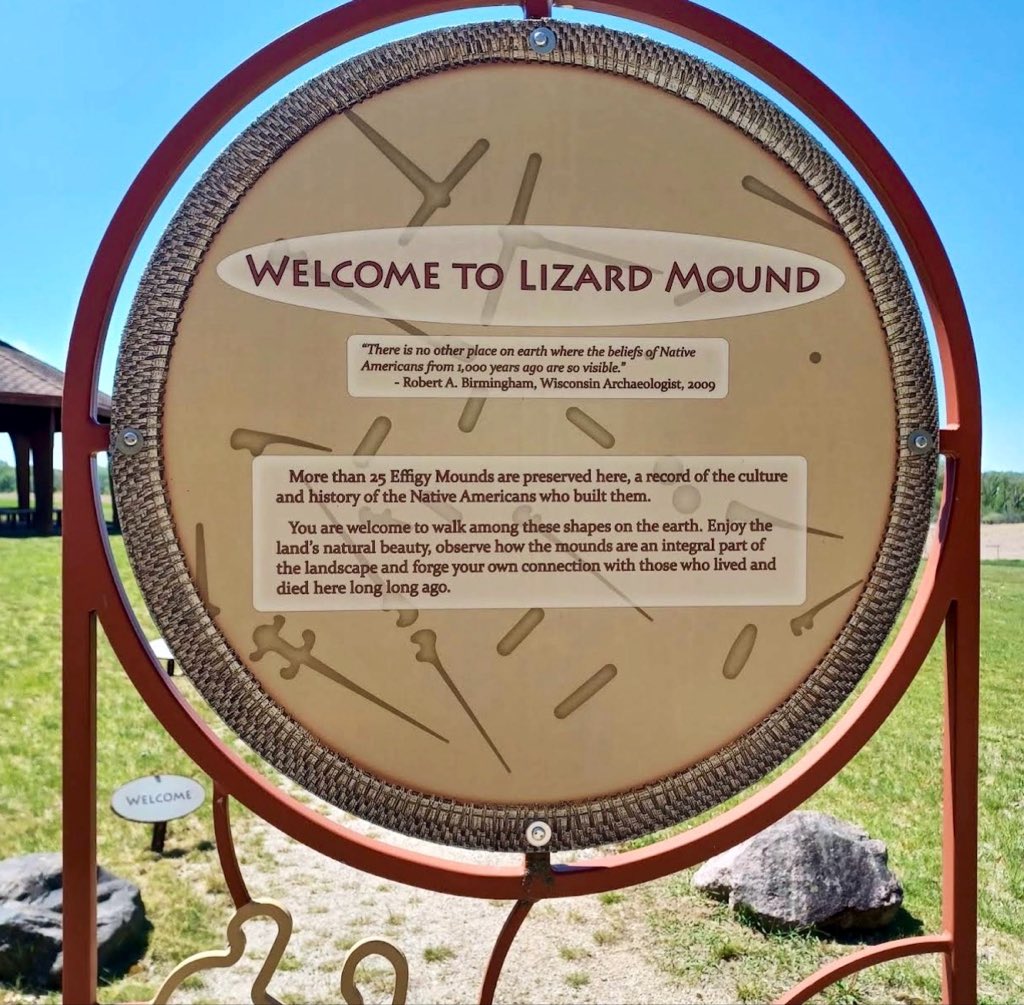
Lizard Mound preserves something that has almost disappeared from North America.
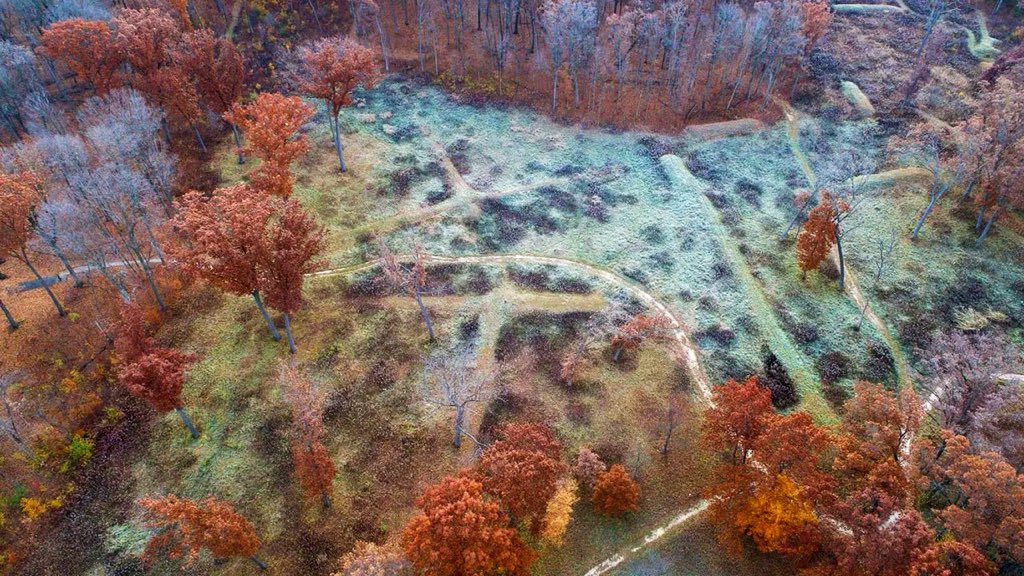
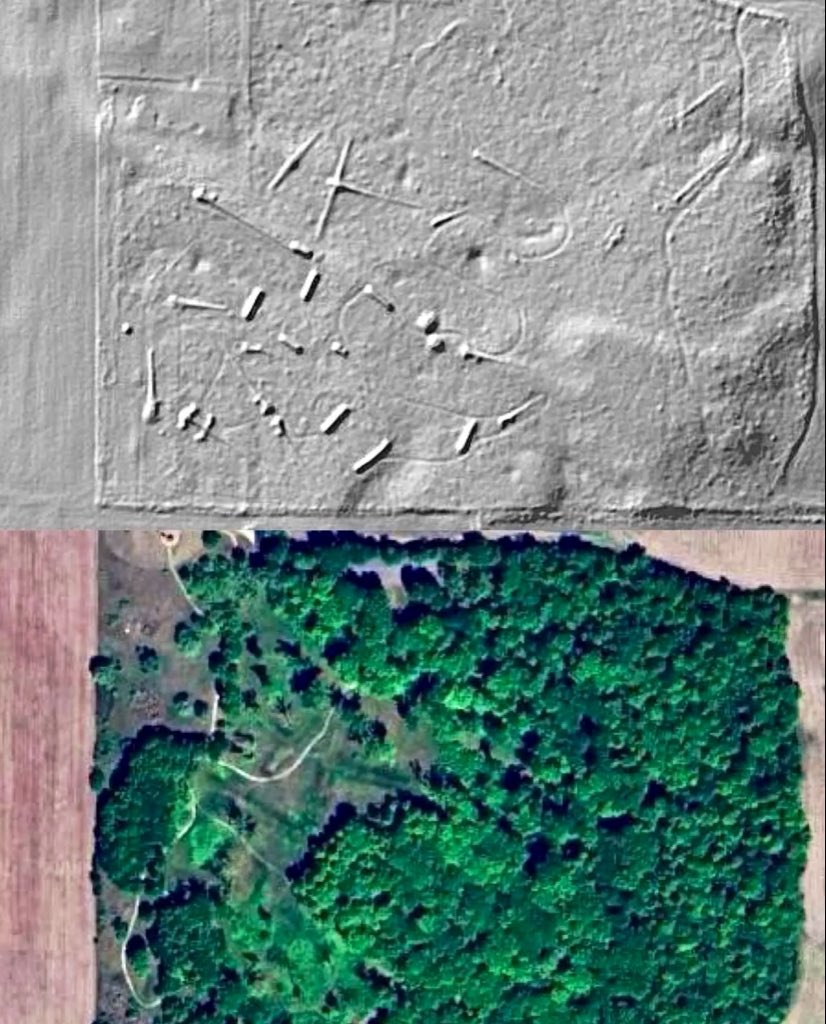
The site contains conical, linear, and effigy mounds built by Late Woodland communities roughly 900–1,300 years ago. Wisconsin’s mound builders created animals, birds, and other forms across ridges overlooking wetlands, lakes, and river valleys, making the surrounding terrain part of the monument itself.
These earthworks were designed from the ground, not from the air. Their meaning came from where they sat, what they overlooked, and how they related to neighboring mounds. The landscape was part of the architecture.
Today, Lizard Mound feels exceptional.
A thousand years ago, it wouldn’t have.
Southern Wisconsin alone once contained thousands of effigy mounds. By the late nineteenth and twentieth centuries, the overwhelming majority had been flattened beneath plows, roads, subdivisions, and expanding towns before archaeologists could properly record them.
It preserves the relationship between multiple mound types in their original setting. Thats unique.
When people ask what North America lost before most Americans even realized it existed, this is part of the answer.
you're infinitely closer to homelessness than you are to being a billionaire--those are our brothers and sisters chewed up n' spat out by a system that was functioning as it was designed. sympathizing more w the architects of that system than the victims of its design is suicidal
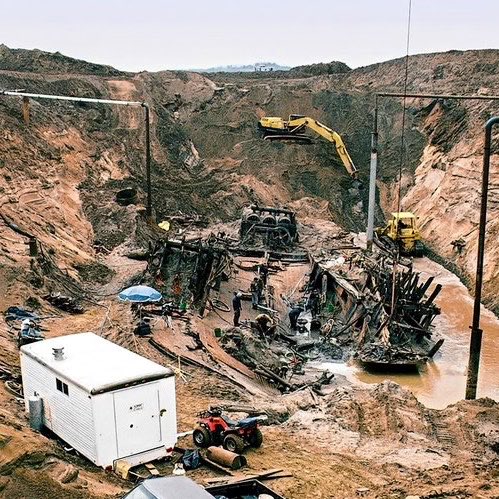
In 1988, the Hawley family began excavating a Kansas cornfield after old river maps, survey records, and local accounts placed the steamboat Arabia beneath it.
About 45 feet down, they reached the wreck.
The Arabia had struck a submerged cottonwood snag and sunk in the Missouri River in 1856. The boat still lay where it went down, but by the time the excavation began, the active river channel was nearly half a mile away.
The Missouri had shifted across its floodplain. Repeated floods buried the abandoned channel beneath sand, silt, and mud until the wreck sat below working farmland.
What came out of that old riverbed was more than a shipwreck.
The cargo was a large commercial shipment from one precisely dated voyage. It had been packed in St. Louis for merchants farther upriver and sank before it could be divided among stores and customers.
The shipment included commercial quantities of footwear, hardware, ceramics, textiles, medicines, preserved foods, tools, and household goods. Archaeologists were looking at merchandise before use, breakage, repair, reuse, and disposal altered the assemblage.
That is rare.
Many nineteenth century sites are built from refuse, loss, demolition, and repeated occupation. The Arabia preserved a shipment before it entered any of those processes.
Waterlogged, low oxygen sediment slowed the decay of leather, wood, textiles, seeds, and food that normally survive poorly at dry sites. The result was an unusually large, tightly dated collection of mid nineteenth century goods from the Missouri River trade.
People remember the Arabia because someone found a steamboat beneath a cornfield.
I remember it because the field used to be the Missouri River.