Lamentable noticia del fallecimiento del Dr. Sergio Serna, sus contribuciones a la ciencia en México y a nivel internacional perdurarán por generaciones así como su calidad humana. Que en paz descanse.
Over 5 million obesity-related deaths yearly, with a projected global economic burden of $4.32 trillion by 2035.
@ErickGGPlants's preprint offers insights:
- natural compounds' anti-obesity effects🥦
- the preventive role of dietary habits and lifestyle🏋️♂️
https://t.co/lAjX92GlNw
If you are interested in preparing a manuscript for consideration at Discover Applied Sciences as part of this Collection, please let us know and I would be happy to provide further detail 🔬🧬🧪 @SpringerNature
El apoyo de CONFIE sin duda fue fundamental para que nuestra investigación llegue a una audiencia amplia y tenga impacto en la comunidad científica. Agradezco también a Giovanni Ambriz por su gestión durante el proceso.
Agradezco a @CONFIESinaloa por el apoyo brindado a través del Programa de Apoyo e Incentivos a Publicaciones Científicas para culminar el proceso de publicación del artículo con DOI: https://t.co/YtftSz5fZd en Scientific Reports
Tis the spoke season!
Hubble observed "ring spokes" on Saturn, seen as the faint gray smudges along the rings.
These spokes are likely levitated dust or ice caused by interactions between Saturn's magnetic field and the Sun's solar wind particles: https://t.co/xJVja0IyVn
.
Who should pay for open-access publishing? What are the alternatives to Article Processing Charges?
In an interesting paper from @scrinders, writing in @Nature, various alternative to APCs (Article Processing Charges) are discussed. Here are the highlights from the article.
BACKGROUND
1⃣ APCs have come under scrutiny recently In cases such as the entire editorial boards of two neuroimaging journals resigned. They were protesting against what they believed to be excessive APCs. The APC for NeuroImage is US$3,450, and its sister journal NeuroImage: Reports doubled its APC to $1,800.
2⃣ APCs can range from <$1,000 to >$10,000. Authors either pay these directly, through research grants or via their institutions, if they have entered into contracts with publishers.
3⃣ When APCs were first introduced, there was an expectation that the fees would be relatively small, and temporary.
4⃣ There are a number of criticisms around APCs, for example:
🔴Some argue that journals charge exorbitant fees that are well above recouping their costs
🔴Some publishers are not transparent about what APCs cover.
🔴Publishers often offer APC waivers, or doscounst, especially to authors in lower- and middle-income countries. Critics argue that the guidelines for eligibility are often unclear and difficult to find.
🔴We would add, but is not in the article and is our view, that open access and APCs have provided predatory journals with the opportunity to exploit authors are who naive, keen to publish (no matter where) or are taken in by the journals/publishers that promise (among other things) fast review times.
5⃣ Publishers defend the APCs they charge:
🔴@tandfonline says it has a "transparent approach to calculating APCs" and “they support sustainable models of open access, reflecting the value of our services, and ensure we can continue to invest in robust, scalable and flexible infrastructure”.
🔴@SpringerNature said: “The APC of Nature and the [Nature-branded] Research Journals reflects the time, investment and value of producing and publishing these journals”, adding “These journals are also highly selective, which means the journal staff invest considerable time assessing papers that are not ultimately accepted for publication”.
ALTERNATIVES
Models are emerging to replace standard APCs.
1⃣ Retain APCs but, rather than charging authors directly, institutions, funders or governments would pay publishers directly.
2⃣ SCOAP^3 is a partnership between more than 3,000 libraries, funding agencies and research institutes, administered by @CERN. Publishers have a contract directly #CERN and the institutions contribute to a central pool of funds, which then covers APCs (for journal that participate in the initiative).
3⃣ In the diamond open access model, anybody can publish or read articles without fees. This model is supported by the EU council of government ministers and @cOAlitionS_OA.
@rschrobUK, founder and managing director of @rschconsulting, commented "To date diamond open access has relied on a decentralized model comprised of multiple small journals which are embedded in the scholarly community. This is both a strength and a weakness.” He added “The question going forward is really whether diamond open access will receive the financial support needed to allow it to scale and offer a genuine alternative to commercial publishing models.”
4⃣ @PLOS, a non-profit open-access publisher, is looking at non-APC ways of publishing.
Their community action publishing (CAP) model “... aims to demonstrate that we do not need to charge high APCs in order to sustain a highly selective journal. It’s based on the principle of collective action.”
The CAP model charges a fixed annual fee to institutions based on the publishing activity of all authors named on a paper.
5⃣ Another #PLOS model is their global equity plan. Individual institutions pay a flat fee and their researchers can then publish in specific PLOS journals.
6⃣ The @ASMicrobiology has announced an initiative where a journal’s content becomes open access if subscriptions to it reach a minimum target.
7⃣ Green open access enables journals to maintain paywalls for their articles but allows authors to share their manuscripts. This model is used @ScienceMagazine, which is published by @aaas.
8⃣ @ACSPublications has recently announced a variation to green open access theme. The society allows authors to make their papers immediately available, but the authors only pay the costs associated with a manuscript from when it is submitted through to the final editorial decision. This option is only available who do not have access to APCs.
FINAL COMMENTS (from us)
APCs are, undoubtedly, a complex and controversial area and papers like the one presented here, can only help that debate and discussion.
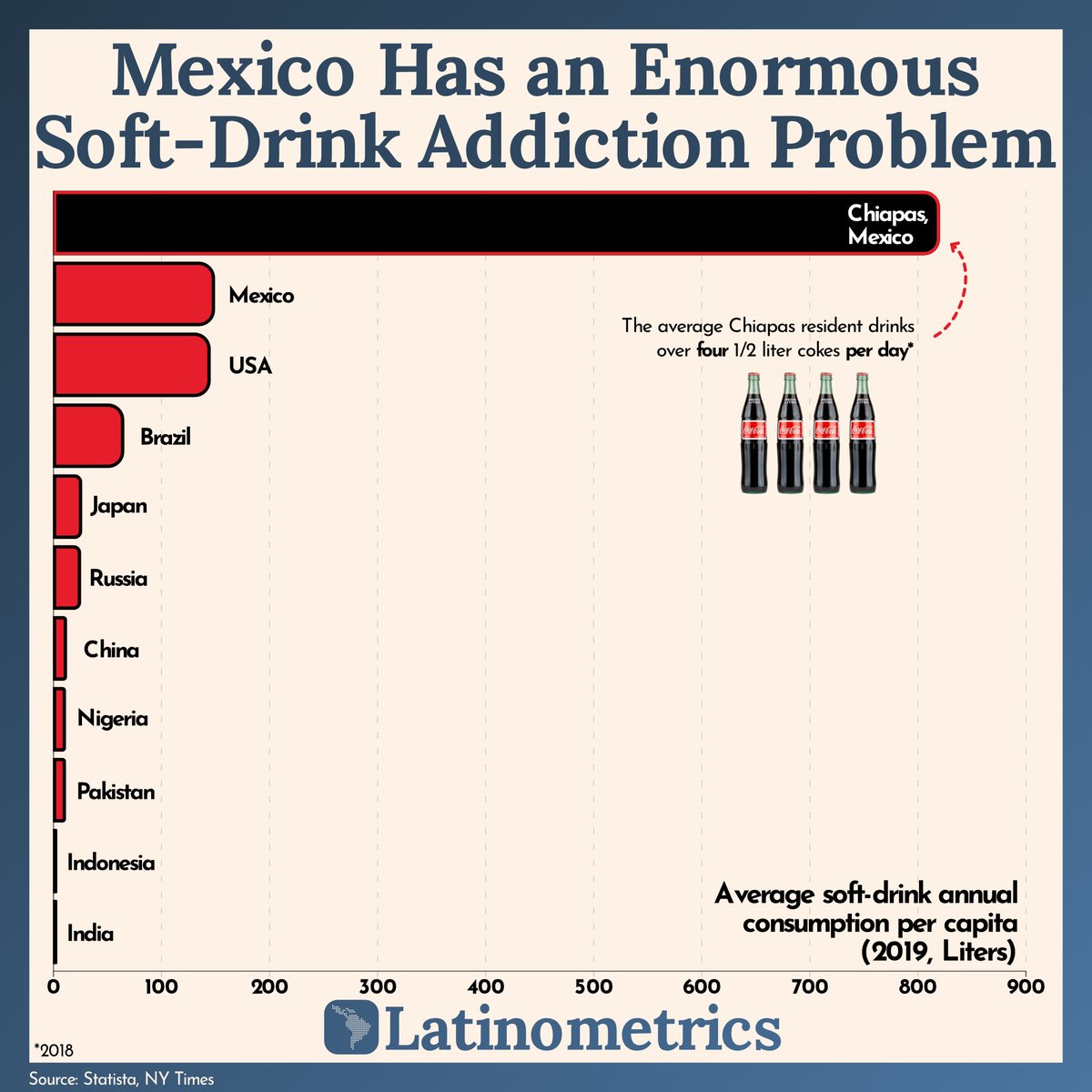
🥤 The high cost of a cheap drink: Mexico's struggle with soda.
Every year, 50% of all Mexican deaths occur due to one of 3 leading causes of death, all highly correlated with soda consumption: high blood sugar, high blood pressure, and obesity. To illustrate the importance, these deaths — 400K in total — represent 12x the number of annual homicides.
Of course, soft-drink consumption is not the only contributor to these deaths, and no company should be directly blamed for them. Low-nutrient street food, processed foods, high sugar content, lack of access to clean water, and low physical activity contribute to the leading causes of death (also correlated with low levels of education). However, soda consumption is one of the most significant contributors, especially in southern Mexico, where a soft drink is often more available than drinking water. Coke has become so entrenched in the culture that it’s now used in some religious ceremonies, basically replacing Holy Water— for more on that, check out this insightful documentary by Unreported World.
Slowly, the country has begun to take small steps to address the obesity epidemic. For example, it recently introduced very noticeable food labels to increase awareness, but much remains to be done. Restricting soft-drink sales to kids could be a step forward, as well as banning family-sized 2L bottles from stores. Perhaps Mexican policymakers could learn a thing or two from their European counterparts, whose leaders have taken a more holistic strategy to combat the growing obesity problem.
Terrorífico como se potenció #Otis. Algunxs climatólogxs indican que no hay registros recientes de un #huracán categoría 5 impactando de forma directa a una ciudad de más de 1 millón de habitantes.
#CambioClimatico
Falling behind: postdocs in their thirties tire of putting life on hold.
Read the results of Nature’s second global survey of postdoctoral researchers https://t.co/jYxKuLT3B9
Ayer en la @UNAM_MX, al inicio de una presentación cultural, se dio la bienvenida a "todas, todos y todes". Delante mío dos personas hicieron chasquidos, giradas de cabeza y comentarios al unísono de "todes". Una expresión inaceptable en una comunidad incluyente.
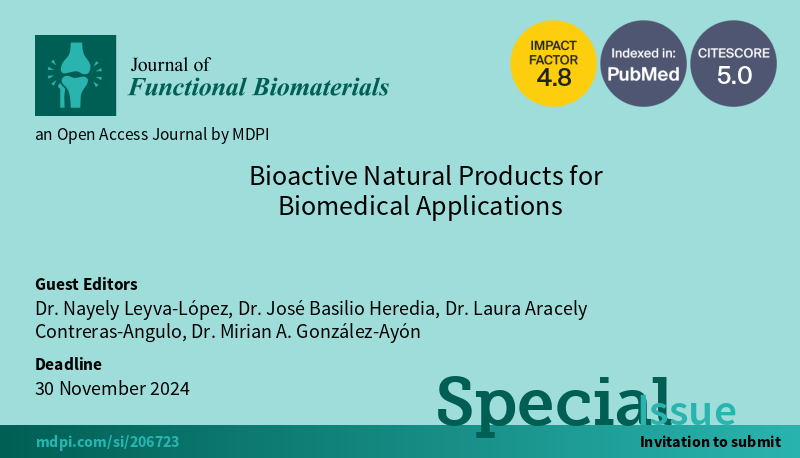
Call for papers!
Frontiers in Horticulture "Recent Studies On Plants As Bio-factories For Antioxidants And Bioactive Compounds"
https://t.co/J3oZg8hAQb
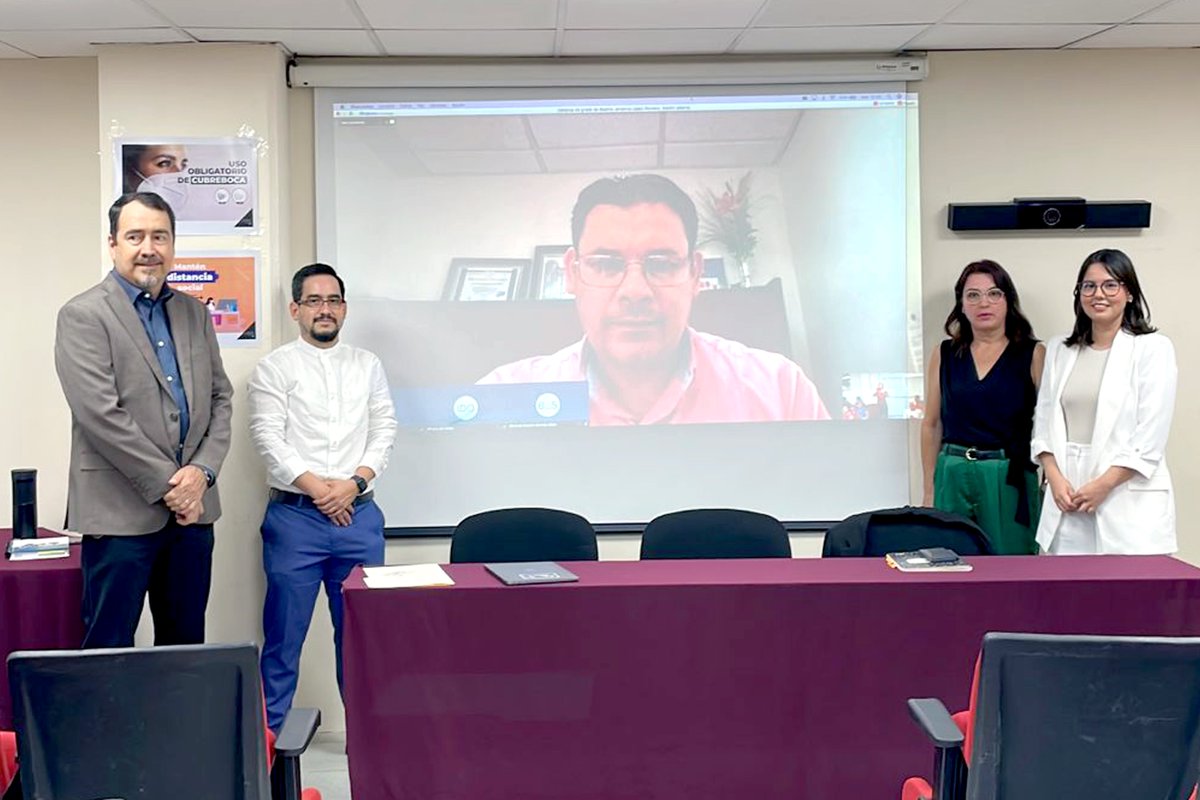
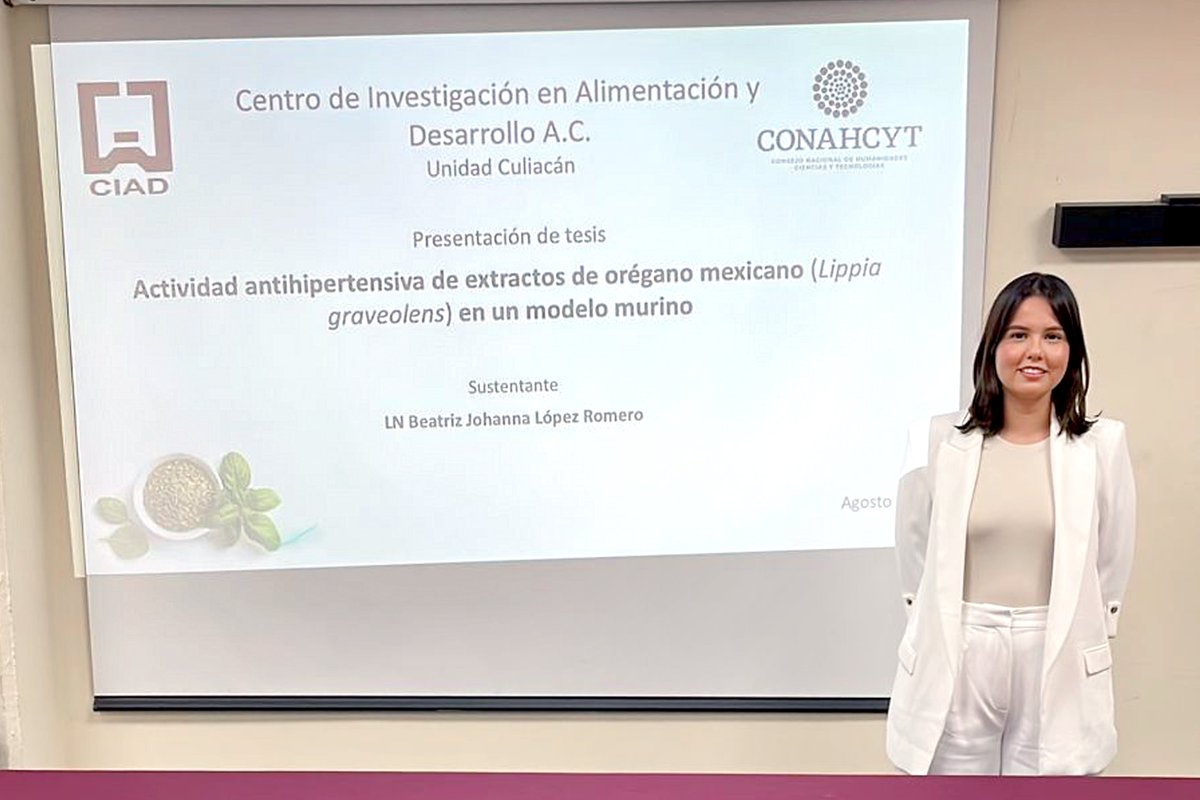
Beatriz Johanna López Romero, #estudiante egresada de la #Maestría en #Ciencias, presentó su defensa de la #tesis "Actividad antihipertensiva de extractos de orégano mexicano (Lippia graveolens) en un modelo murino". Su investigación fue dirigida por el Dr. José Basilio Heredia
Juan Pablo Manjarrez defendió la #tesis de #Maestría en #Ciencias "Extracción ultrasónica optimizada de aceites esenciales de biomasa de Lippia graveolens Kunth mediante disolventes autécticos y su efecto en Colletotrichum asianum", dirigida por el Dr. Erick Paul Gutiérrez
🎉🎓
I'm thrilled to share the newly published review "Polyphenol-Loaded Polymeric Matrixes as Potential Biopharmaceuticals against Cancer" https://t.co/YSd96RT9Nd #mdpimacromol
We found in the literature that the use of nanopolymers to deliver polyphenols and drugs, the effect against cancer tumors and cancer cells is increased. This combination also, in some cases helps lower the drug's dose, thus decreasing their side effects..






![fake_journals's tweet photo. .
Who should pay for open-access publishing? What are the alternatives to Article Processing Charges?
In an interesting paper from @scrinders, writing in @Nature, various alternative to APCs (Article Processing Charges) are discussed. Here are the highlights from the article.
BACKGROUND
1⃣ APCs have come under scrutiny recently In cases such as the entire editorial boards of two neuroimaging journals resigned. They were protesting against what they believed to be excessive APCs. The APC for NeuroImage is US$3,450, and its sister journal NeuroImage: Reports doubled its APC to $1,800.
2⃣ APCs can range from <$1,000 to >$10,000. Authors either pay these directly, through research grants or via their institutions, if they have entered into contracts with publishers.
3⃣ When APCs were first introduced, there was an expectation that the fees would be relatively small, and temporary.
4⃣ There are a number of criticisms around APCs, for example:
🔴Some argue that journals charge exorbitant fees that are well above recouping their costs
🔴Some publishers are not transparent about what APCs cover.
🔴Publishers often offer APC waivers, or doscounst, especially to authors in lower- and middle-income countries. Critics argue that the guidelines for eligibility are often unclear and difficult to find.
🔴We would add, but is not in the article and is our view, that open access and APCs have provided predatory journals with the opportunity to exploit authors are who naive, keen to publish (no matter where) or are taken in by the journals/publishers that promise (among other things) fast review times.
5⃣ Publishers defend the APCs they charge:
🔴@tandfonline says it has a "transparent approach to calculating APCs" and “they support sustainable models of open access, reflecting the value of our services, and ensure we can continue to invest in robust, scalable and flexible infrastructure”.
🔴@SpringerNature said: “The APC of Nature and the [Nature-branded] Research Journals reflects the time, investment and value of producing and publishing these journals”, adding “These journals are also highly selective, which means the journal staff invest considerable time assessing papers that are not ultimately accepted for publication”.
ALTERNATIVES
Models are emerging to replace standard APCs.
1⃣ Retain APCs but, rather than charging authors directly, institutions, funders or governments would pay publishers directly.
2⃣ SCOAP^3 is a partnership between more than 3,000 libraries, funding agencies and research institutes, administered by @CERN. Publishers have a contract directly #CERN and the institutions contribute to a central pool of funds, which then covers APCs (for journal that participate in the initiative).
3⃣ In the diamond open access model, anybody can publish or read articles without fees. This model is supported by the EU council of government ministers and @cOAlitionS_OA.
@rschrobUK, founder and managing director of @rschconsulting, commented "To date diamond open access has relied on a decentralized model comprised of multiple small journals which are embedded in the scholarly community. This is both a strength and a weakness.” He added “The question going forward is really whether diamond open access will receive the financial support needed to allow it to scale and offer a genuine alternative to commercial publishing models.”
4⃣ @PLOS, a non-profit open-access publisher, is looking at non-APC ways of publishing.
Their community action publishing (CAP) model “... aims to demonstrate that we do not need to charge high APCs in order to sustain a highly selective journal. It’s based on the principle of collective action.”
The CAP model charges a fixed annual fee to institutions based on the publishing activity of all authors named on a paper.
5⃣ Another #PLOS model is their global equity plan. Individual institutions pay a flat fee and their researchers can then publish in specific PLOS journals.
6⃣ The @ASMicrobiology has announced an initiative where a journal’s content becomes open access if subscriptions to it reach a minimum target.
7⃣ Green open access enables journals to maintain paywalls for their articles but allows authors to share their manuscripts. This model is used @ScienceMagazine, which is published by @aaas.
8⃣ @ACSPublications has recently announced a variation to green open access theme. The society allows authors to make their papers immediately available, but the authors only pay the costs associated with a manuscript from when it is submitted through to the final editorial decision. This option is only available who do not have access to APCs.
FINAL COMMENTS (from us)
APCs are, undoubtedly, a complex and controversial area and papers like the one presented here, can only help that debate and discussion.](https://pbs.twimg.com/media/F_a2dqvagAA1EMv.jpg)