@LowCountry_GC I'm in windows, I give a line item to each opening and list everything we do for each one but only provide one number for the total. It seems easier to digest for some reason. Full transparency seemed to hurt me more than help.
@CityofDenver Will anyone ever monitor/inspect the ramp on the east side of Sante Fe? Seems like a perfectly shielded area for drug use, human urination & defecation, trash & debris. Like so much of the city. Many people I've spoken to won't even bother trying to use it for safety reasons.☹️
I love how TSA rules are different at every airport and they look at you like you're a fucking idiot when you don't speak their regional dialect of security theater.
The city of Denver makes it’s PBM contract available online. So I grabbed it and had Claude look at it and answer a simple question “Where are they getting ripped off”
Here is it’s response:
Denver is getting hit in six places, and the contract says so out loud. This is a self-funded City & County of Denver plan (4,051 employees / 8,554 participants, 1/1/2023–12/31/2025, $80M max) where the only stated pharmacy fee is… nothing. The medical admin fee is $45.13 PEPM. There is no PBM admin fee. That’s your first tell — the pharmacy program is priced entirely in the dark.
1. Spread pricing, written into the contract three separate times. Section A7 (Claims Processing): on mail, specialty and retail, United retains the difference between what it reimburses the network pharmacy and what Denver pays. It’s repeated in the General Conditions of the Pharmacy Financials exhibit and again in the Specialty Pharmacy Discount Guarantee conditions. So the AWP-discount guarantees describe what Denver pays — not what the pharmacy receives. The delta is Optum’s revenue, uncapped and unreported. For a public entity, that’s the whole ballgame. FTC found the Big 3 generated an estimated $1.4 billion of spread income on specialty generics alone.
2. Rebates: 100% retained, replaced with a fixed per-script number. Section A8: United keeps 100% of pharmacy rebates and pays Denver a fixed brand-script guarantee instead — $740.43 retail / $1,020.22 mail in 2023, rising to $885.02 / $1,105.10 by 2025. The contract then says explicitly that any rebates above the fixed amount are United’s to keep. Manufacturer rebate administration fees are folded into the guarantee, meaning they’re netted against what Denver was already owed rather than paid over. Denver has no idea what the actual rebate yield is, and no contractual right to find out.
3. The Rebate Credit clause is the biosimilar killer. If Denver moves to a biosimilar, an authorized alternative, or a lower-WAC brand, United gets credited toward its rebate guarantee for the manufacturer revenue it would have earned had Denver stayed on the high-rebate originator. Translation: United is financially indifferent to Denver buying the cheaper drug. Denver’s savings on ingredient cost get clawed back through the rebate math.
4. Your five clauses — all present, all in United’s favor. Specialty Drugs are defined as “Prescription Drugs available at United’s Specialty Pharmacy.” That’s a circular definition: whatever Optum stocks is specialty. Then: “United reserves the right to change the designation of a drug from specialty to non-specialty based on market conditions.” Then: specialty dispensed inside United’s specialty network is excluded from the retail and mail guarantees. Specialty dispensed outside it gets swept into the retail guarantee. Specialty rebates are “included in retail.�� The specialty guarantee itself is 20.7% off AWP composite — and any specialty drug not on United’s list is guaranteed at only 14.0%. United controls the list. Every new high-cost launch defaults to the 14% bucket. And spread is retained on top of the discount either way.
5. Medical-benefit specialty has no guarantee at all. “Specialty drugs typically covered under the medical benefit (physician’s office, ambulatory, home infusion), and/or transitioned to the pharmacy benefit, are excluded from all guarantees.” That’s the buy-and-bill oncology and infusion book — the most expensive spend in the plan — with zero pricing accountability. On medical drug rebates Denver gets 80%, United keeps 20% plus float interest, and an unnamed subcontractor takes an undisclosed cut on top.
6. The lock-in clauses, which are the reason you can’t fix any of the above. Denver may not negotiate with any manufacturer for rebates or direct purchase — doing so forfeits earned-but-unpaid rebates. All pricing guarantees require United as exclusive mail provider. Terminating pharmacy services early means United keeps every pending and future rebate.
@Mrs1500 Oof I’m sorry to be this guy but Standard Time is better for health so I I sure hope it doesn’t stay permanent. I recommend checking out Huberman’s work on it, he’s great at making complex things digestible.
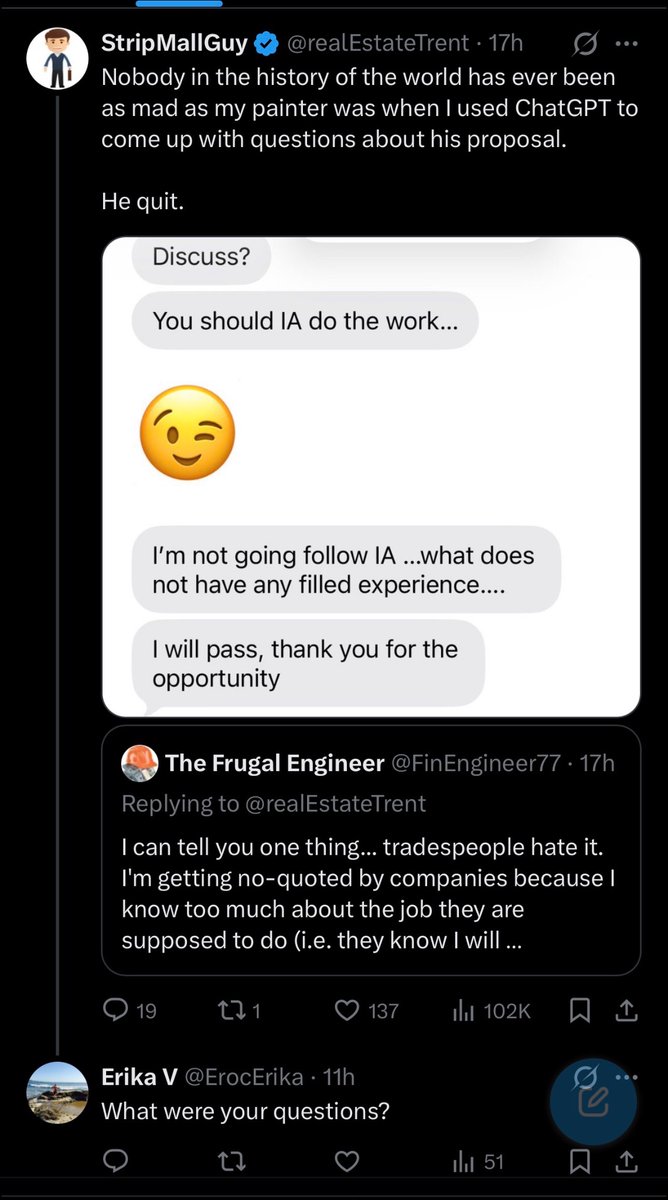
@jamesonhaslam@twallyweb I’ve noticed a trend where they attack home services. I guess that’s work? This fella won’t answer anyone when asked about what the questions were.
@contractorkeith@HSchenewark I got a 13.8 cu ft garage ready upright and it fit everything from my half share which included extras like soup bones and dog food. Got my beef from The High Lonesome Ranch and it’s so great it’s just what I’ll have to do forever.
@seandsweeney How long would that even last though I’d wonder, no matter the number. The problems would still be there? How to fix the root cause would probably far surpass 6.6, but I don’t know I guess I’d have to ask whomever came up with that arbitrary number in the first place 🤣