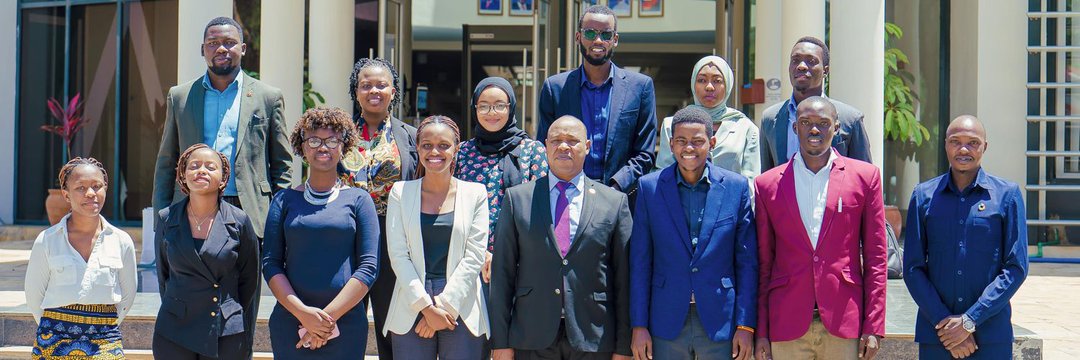
The EAC Youth Ambassadors must be lauded👏 Of course they may have their excesses. But as a believer in Africa's regional integration, I think the various RECs can learn from them and have similar platforms to encourage youth participation in achieving Africa's Economic Community
A Norwegian neuroscientist spent 20 years proving that the act of writing by hand changes the human brain in ways typing physically cannot, and almost nobody outside her field has read the paper.
Her name is Audrey van der Meer.
She runs a brain research lab in Trondheim, and the paper that closed the argument was published in 2024 in a journal called Frontiers in Psychology. The finding is brutal enough that it should have changed every classroom on Earth.
The experiment was simple. She recruited 36 university students and put each one in a cap with 256 sensors pressed against their scalp to record brain activity. Words flashed on a screen one at a time.
Sometimes the students wrote the word by hand on a touchscreen using a digital pen, and sometimes they typed the same word on a keyboard. Every neural response was recorded for the full five seconds the word stayed on screen.
Then her team looked at the part of the data most researchers had ignored for years, which is how different parts of the brain were communicating with each other during the task.
When the students wrote by hand, the brain lit up everywhere at once.
The regions responsible for memory, sensory integration, and the encoding of new information were all firing together in a coordinated pattern that spread across the entire cortex. The whole network was awake and connected.
When the same students typed the same word, that pattern collapsed almost completely.
Most of the brain went quiet, and the connections between regions that had been alive seconds earlier were nowhere to be found on the EEG.
Same word, same brain, same person, and two completely different neurological events.
The reason turned out to be something nobody had really paid attention to before her work. Writing by hand is not one motion but a sequence of thousands of tiny micro-movements coordinated with your eyes in real time, where each letter is a different shape that requires the brain to solve a slightly different spatial problem.
Your fingers, wrist, vision, and the parts of your brain that track position in space are all working together to produce one letter, then the next, then the next.
Typing throws all of that away. Every key on a keyboard requires the exact same finger motion regardless of which letter you are pressing, which means the brain has almost nothing to integrate and almost no problem to solve.
Van der Meer said it plainly in her interviews.
Pressing the same key with the same finger over and over does not stimulate the brain in any meaningful way, and she pointed out something that should scare every parent who handed their kid an iPad.
Children who learn to read and write on tablets often cannot tell letters like b and d apart, because they have never physically felt with their bodies what it takes to actually produce those letters on a page.
A decade before her, two researchers at Princeton ran the same fight using a completely different method and ended up at the same answer. Pam Mueller and Daniel Oppenheimer tested 327 students across three experiments, where half took notes on laptops with the internet disabled and half took notes by hand, before testing everyone on what they actually understood from the lectures they had watched.
The handwriting group won by a wide margin on every question that required real understanding rather than surface recall.
The reason was hiding in the transcripts of what the two groups had actually written down.
The laptop students typed almost word for word, capturing more total content but processing almost none of it as they went, while the handwriting students physically could not write fast enough to transcribe a lecture in real time, which forced them to listen carefully, decide what actually mattered, and put it in their own words on the page.
That single act of choosing what to keep was the learning itself, and the keyboard had quietly skipped the choosing and skipped the learning along with it.
Two studies. Two countries. Same answer.
Handwriting makes the brain work. Typing lets it coast.
Every note you have ever typed instead of written went into your brain through a thinner pipe. Every meeting, every book highlight, every idea you captured on your phone instead of on paper was processed at half depth.
You did not forget those things because your memory is bad. You forgot them because typing never woke the part of the brain that would have made them stick.
The fix is the thing your grandmother already knew.
Pick up a pen. Write the thing down. The slower road is the faster one.
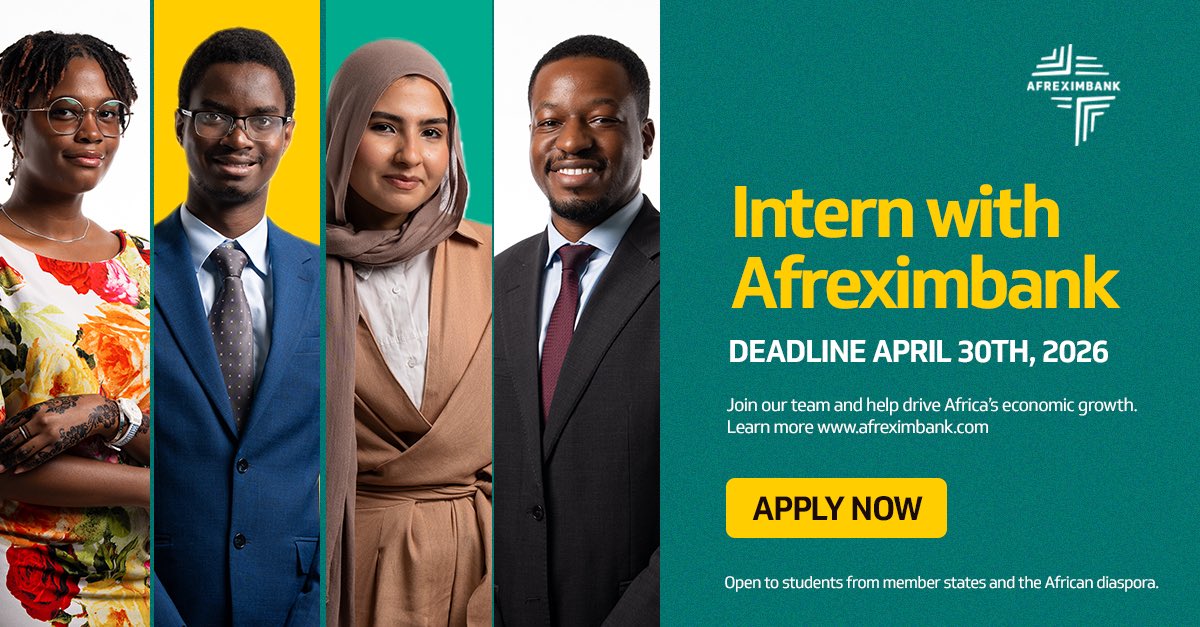
Applications are now open.
Join the Afreximbank Internship Programme and gain hands-on experience shaping Africa’s trade and economic future.
Work alongside industry leaders, contribute to real projects, and build practical skills across trade, finance, and development.
Open to students and postgraduates from Afreximbank member states and the African diaspora. Duration is up to six months.
Apply by 30 April 2026: https://t.co/fckpneEIQd
#Afreximbank #Internship #GlobalAfrica #Careers
THE NEXT BOOK
*****************
When I was called to make short remarks at the launch of my book, "The President Ghana Never Got," I spoke about a major lesson I had learned since I published my first book. In my speech, I pointed out that I had done some excellent work in my career, but I had not done perfect work. I, therefore, asked those who would read my book to give me feedback to improve my future work.
From the reviews I've seen publicly and those sent to me personally by some readers, "The President Ghana Never Got" is an excellent book.
But is it perfect?
No?
How did I know from the beginning that it would not be a perfect book?
It wasn't my first book, and I'd learnt a humbling lesson even from books published by globally renowned publishing companies. If there is any human endeavour that makes our fallibility and imperfection so obvious, it is writing, especially of books. If you go through your manuscript a hundred times, you will find something that needs improvement or correction each time. Sometimes, you can read "Kofi coming home" a hundred times as "Kofi is coming home."
One major issue from my latest book has been the demand notice from lawyers of Ibrahim Mahama, a brother of former President Mahama, about a reference in my book about a controversial 2013 indebtedness to Merchant Bank at the time the bank was being sold to a private equity firm, Fortiz. The bank was renamed Universal Merchant Bank (UMB).
Those who claim the reference is part of my attacks on the Mahamas, even though the book is on Akufo-Addo's presidency, certainly have not read the book. It was a passing reference that sought to provide context to a major issue in the Akufo-Addo presidency.
In the chapter on the economy, I discussed the banking sector crisis in the Akufo-Addo administration. In my research for the book, it emerged that UMB had challenges and was a candidate for a possible "collapse" by the Bank of Ghana.
How did it survive?
Sources claimed an influential cousin of President Akufo-Addo was hired as the lawyer for UMB, which saved the bank. When I contacted the President's cousin, he said his law firm did not represent UMB. Instead, it had represented Fortiz, the equity firm that owned the bank.
He, however, said he "lobbied" for UMB during the banking sector crisis because the bank had a good case.
In recounting the bank's history, I referenced the 2013 indebtedness, which coincidentally involved a relative of a sitting president and overshadowed the other aspects of the transaction.
I linked the debt to the president's brother instead of his company. When it was pointed out to me, I retracted and apologised.
(Ibrahim Mahama's lawyers also pointed out that the debt was later paid, and the failure of the bank's new owners to acknowledge payments resulted in a legal tussle. That was, however, not an error on my part. My book did not mention or discuss the controversy surrounding the repayment of the loan.)
Steve De Shazer once said, "Where you stand determines what you see and what you do not see."
To some, saying that Ibrahim Mahama owed instead of his company is a mortal sin that casts doubt on the credibility of the entire book, which is about 400 pages long. Others have also said it does not change the substance of the reference, which was the indebtedness to the bank.
There was also the group that came bearing fire and brimstone: "This is an opportunity to attack, dampen his spirits and finish him,"
To this group, I say you have chosen the wrong target.
I'm incredibly proud of the work I've done. As you continue to gloat, take note that I am already thinking about my next book.
Will it be a perfect book?
No.
Will it be better than this one?
That is why I'm learning harder to become better.
Will I ever make a mistake in my book?
I will not knowingly repeat a mistake that my attention has been drawn to. For instance, if I were to write about the sale of SSNIT hotels tomorrow, I would say Rock City, not Bryan Acheampong, wanted to buy them.
I won't stop writing. But I cannot guarantee that I will never make a mistake in my book.
Those who can guarantee they will never make a mistake in their writings or books are those who will never write or publish a book.
Get your copy of "The President Ghana Never Got". The book has more revelations than the few that have made headlines in the media.
Thank you.
Manasseh Azure Awuni
September 9, 2024
Lincoln, Nebraska
“Make sure you turn to your communities and help the girls’ groups, adolescents, and those who complete high school. That is the way we can contribute to the change that we all desire to see in our countries." Esther Spio
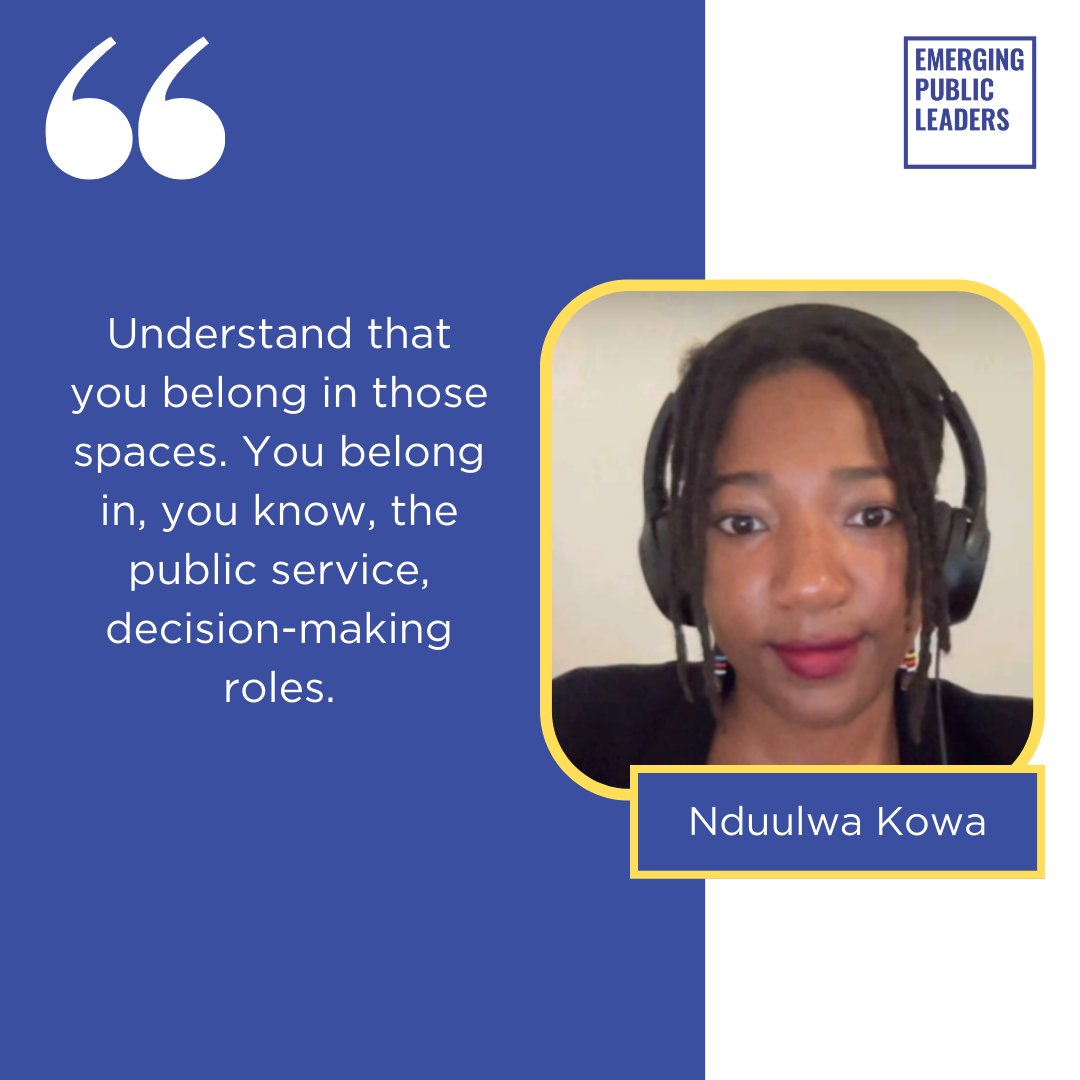
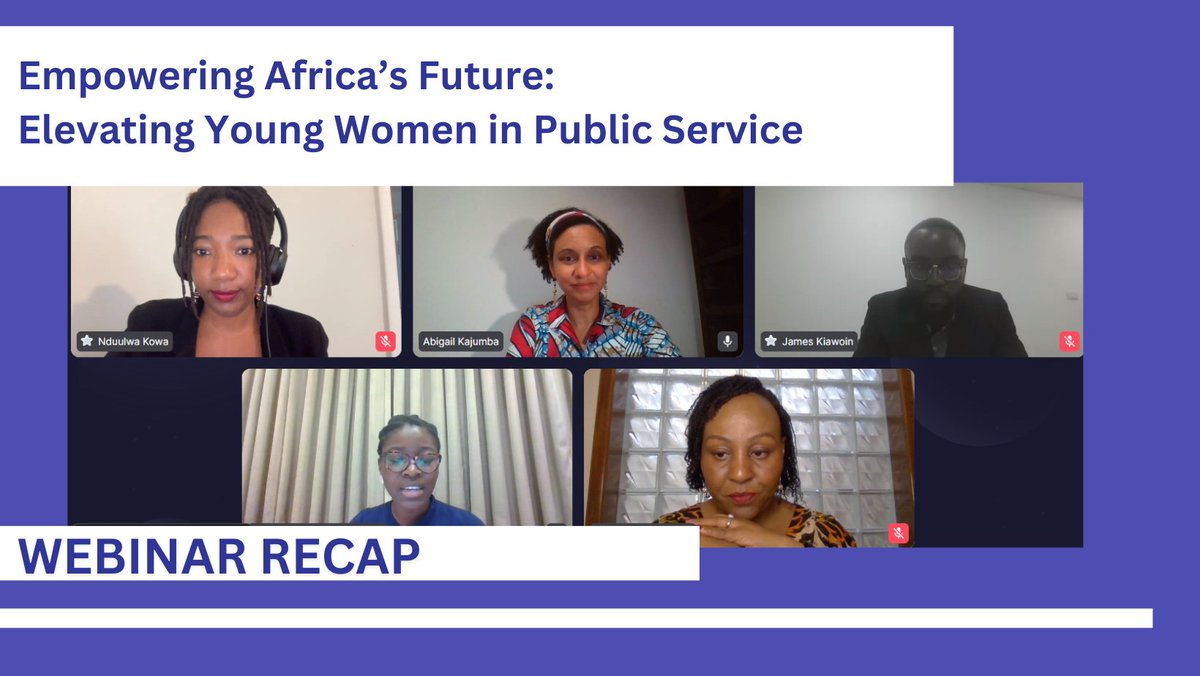
Our key takeaways were that despite the challenges faced, women, and those who champion them, continue to undertake the work of 🧠changing mindsets by deliberately making space,📣 advocating, ⚖️pursuing decision-making roles, and👥being mentors and mentees in leadership.
Webinar Recap: This week, we brought an expert panel together @deardiasporapod, @JEKiawoin, @EstherSpio, and @NyangePatience to discuss the importance of supporting more women leaders in public service in Africa.
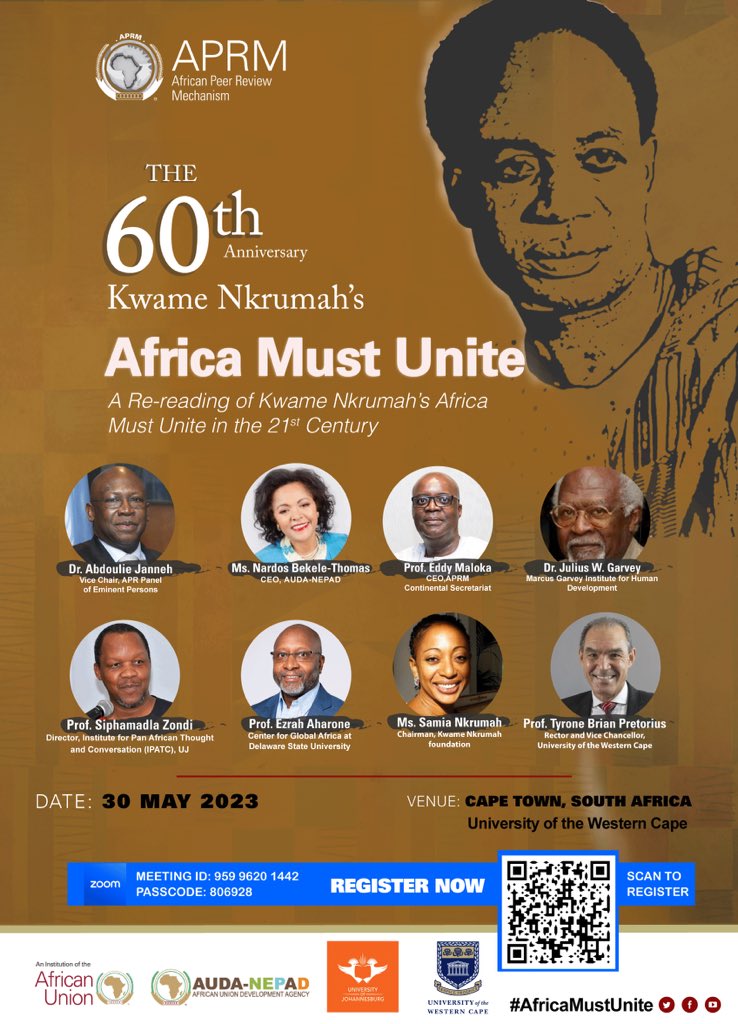
🎙️ We are thrilled to unveil the lineup of distinguished speakers joining us at the highly anticipated 60th Anniversary Kwame Nkrumah's #AfricaMustUnite conference! This historic event will take place at the @UWConline Cape Town 🇿🇦.
Register here: https://t.co/ZxrZb74eNY
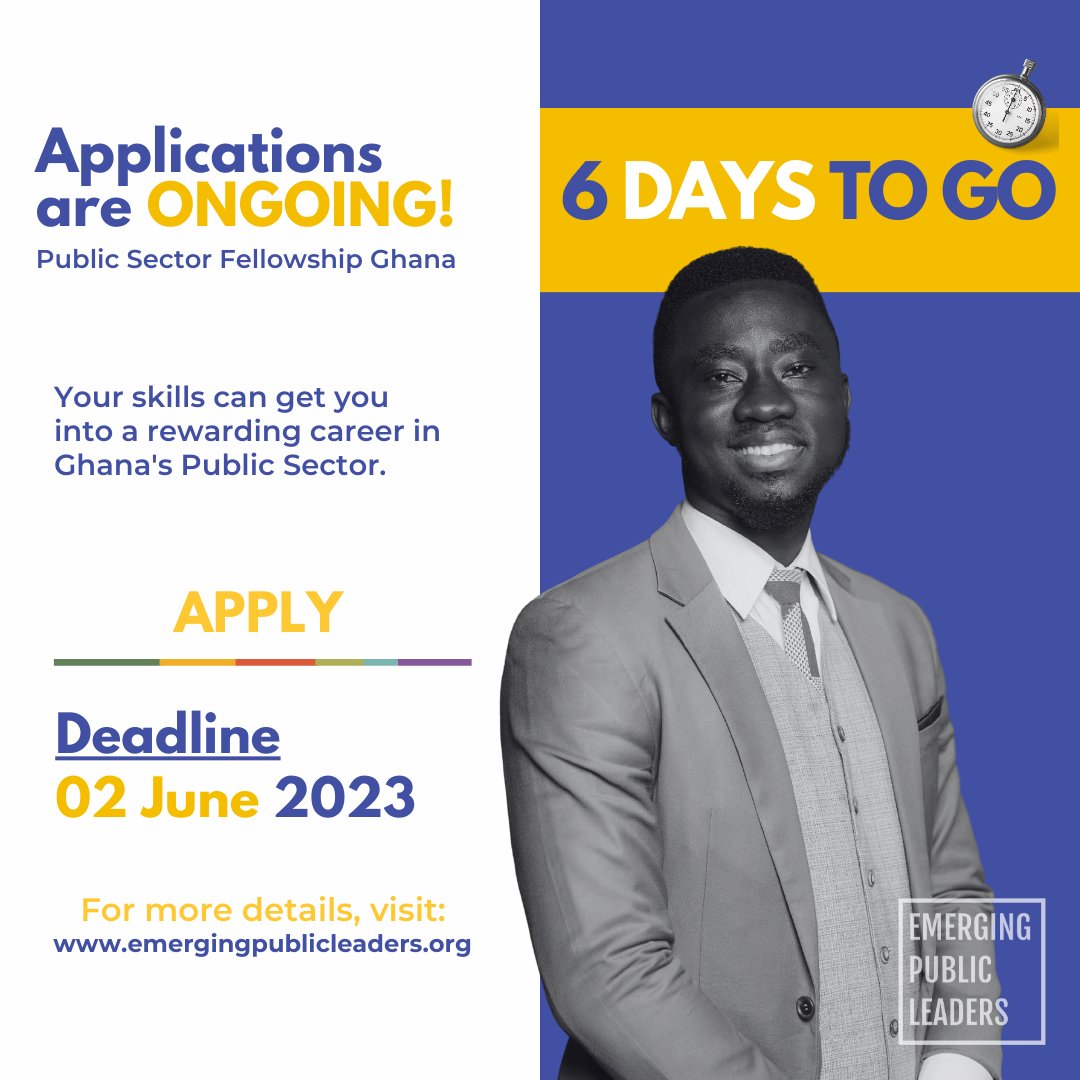
Applications are OPEN for our unique one-year Emerging Public Leaders of Ghana 5th Cohort Public Sector Fellowship!
CLICK the link below to apply!
https://t.co/pMhlntg5q1
Thank you Josephine and everyone at Public Health Commission for receiving us last week. In just one year the Public Service Emerging Leaders Fellowship - PSELF - has lifted off and we are excited to see where your wings will take you. @EPLeaders@elfafrica1
Vacancy Alert!‼️📢
Hello #Africa, we are on a search to find a passionate and exceptional leader for the YouthConnekt in Africa.
Know someone who could be a good fit? Help us spread the word! Deadline has been extended to May 12th, 2023.
Learn more📝:https://t.co/jrFpmv75CJ
A splendid scenario for reforming Ghana's Civil Service that got me thinking about; what reforms the Head of Service should prioritise, and for how long? Donor or self (GoG) funded? Though set in 2014, the Case is timely. Thanks to @Mar_tinW, Sarah and @BlavatnikSchool for this!
Public policy and poli sci instructors, here's a new (free!) teaching case on civil service reform in Ghana. Put your students in the shoes of the Head of Civil Service. Designed for masters and exec ed courses.
Available in English and Portuguese w/ teaching note. Links below:
The @AUYouthEnvoy is advocating for every country to have a youth advisor to the president, & a sector-focused Youth Advisory Councils as part of governance structures. #AfricaYouthLed
To know more read https://t.co/9s10wVYtr5 #AUMediafellowship