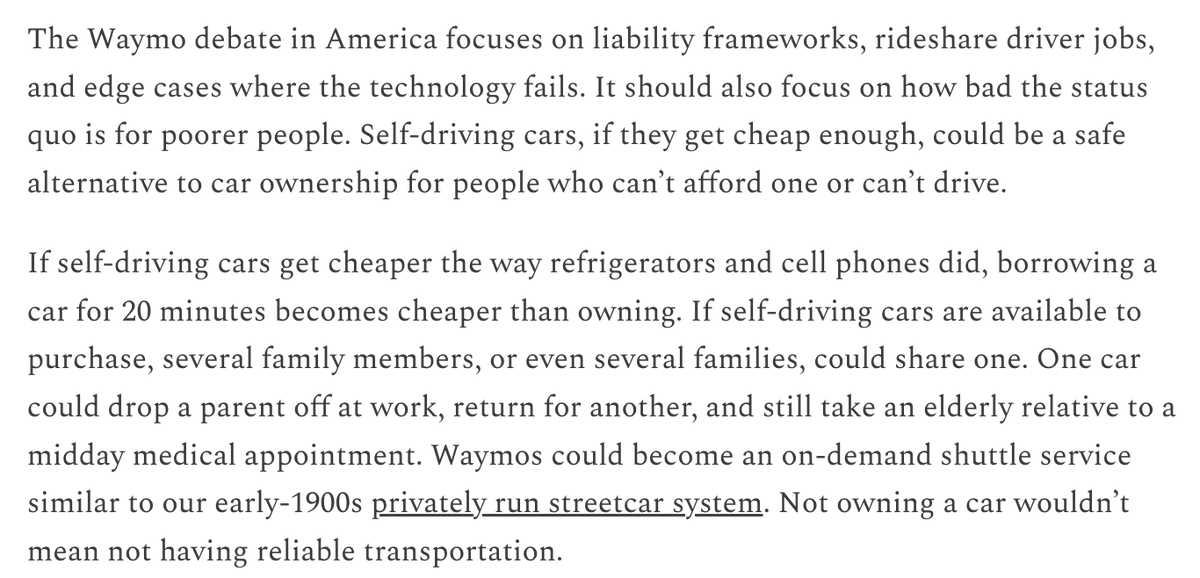
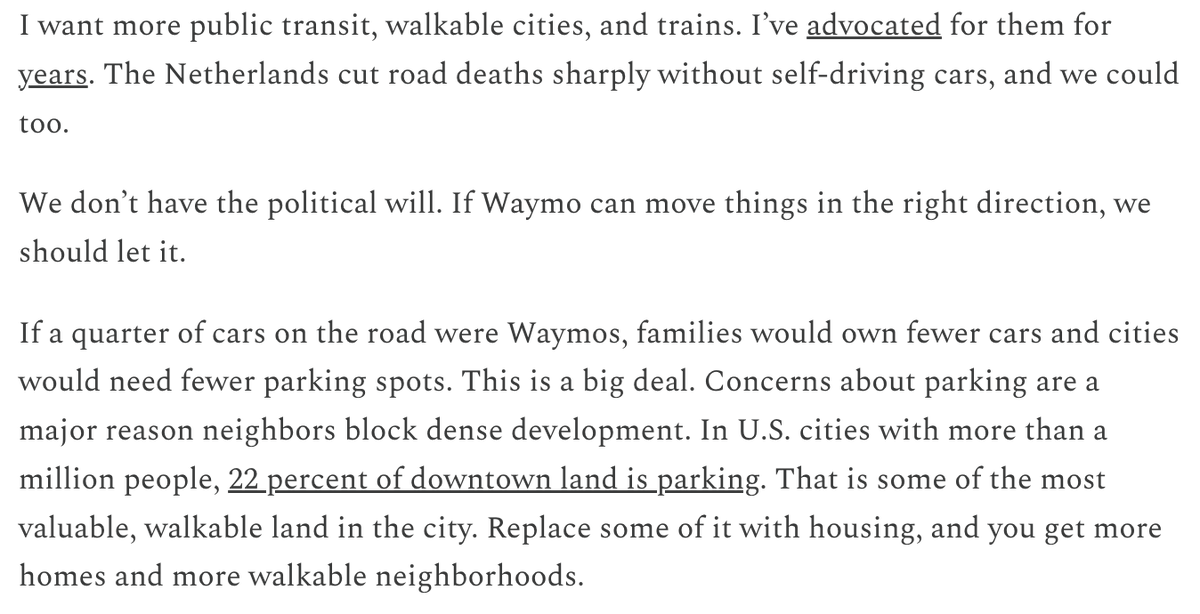
The difference between Claude (left) and Grok (right).
Both took only 5 seconds to respond.
Claude won't let me make a pie chart if it doesn't agree with my thesis.
Scary stuff.
I know it’s really hard for some people to grasp, but if any other president — of either party — put his face and name on so many things the exact people who like it when Trump does it would be throwing a conniption about it.
Hello Julia, sans aucune ironie, c'est top que tu prennes le temps de te renseigner. Mais le problème quand on lit Marx aujourd'hui, c'est qu'on prend pour acquis sa prémisse de départ, alors qu'elle a été démontée scientifiquement il y a plus de 150 ans.
Toute la pensée de Marx repose sur la théorie de la valeur-travail. L'idée que la valeur d'un bien vient de la quantité de travail nécessaire pour le produire. Si tu acceptes cette prémisse, alors oui, tout son raisonnement tient. Le capitaliste "vole" la plus-value du travailleur, l'exploitation est mathématique, la révolution est inévitable.
Sauf qu'en 1871, trois économistes (Menger en Autriche, Jevons en Angleterre, Walras en Suisse) découvrent indépendamment la même chose : la valeur n'est pas objective, elle est subjective et marginale.
Un verre d'eau dans le désert vaut une fortune. Le même verre à côté d'une rivière ne vaut rien. Le travail incorporé est identique. Donc le travail ne détermine pas la valeur. C'est le consommateur qui valorise un bien selon son utilité marginale dans un contexte donné.
Exemple concret : tu peux passer 1000 heures à tricoter un pull moche que personne ne veut. Selon Marx, ce pull a énormément de valeur (beaucoup de travail incorporé). Selon la réalité, il ne vaut rien. Parce que personne n'en veut.
À l'inverse, Bernard Arnault crée des milliards de valeur non pas parce qu'il "exploite" mais parce qu'il a su anticiper et organiser des désirs humains à grande échelle. La valeur est créée par la coordination, pas extraite par le vol.
Cette découverte (la révolution marginaliste) a invalidé tout l'édifice marxiste. Pas pour des raisons idéologiques, pour des raisons scientifiques. C'est pour ça que plus aucun département d'économie sérieux au monde n'enseigne Marx comme un cadre d'analyse valide. On l'enseigne en histoire de la pensée.
Maintenant, le truc important. Si ton intention en lisant Marx c'est d'aider les pauvres (c'est une intention noble), alors tu vas être surprise par ce qui suit.
Regarde les chiffres de la Banque mondiale. En 1820, 90% de l'humanité vivait dans l'extrême pauvreté. Aujourd'hui, moins de 9%. Cette chute historique ne s'est PAS produite dans les pays qui ont appliqué Marx. Elle s'est produite dans les pays qui ont libéralisé leur économie.
Chine post-1978, Vietnam post-1986, Inde post-1991, Pologne post-1989. À chaque fois qu'un pays libéralise, des centaines de millions de gens sortent de la pauvreté en une génération. À chaque fois qu'un pays applique Marx (URSS, Cambodge, Corée du Nord, Venezuela), c'est la famine et les goulags.
Ce n'est pas une opinion, c'est l'expérience la plus massive jamais menée en sciences sociales. Plusieurs milliards de cobayes humains, sur un siècle.
Donc paradoxalement, si tu aimes vraiment les pauvres, la position la plus cohérente n'est pas d'être marxiste. C'est d'être pour la liberté économique. Parce que c'est empiriquement la seule chose qui a jamais sorti massivement les gens de la misère.
Pour creuser, je te recommande trois lectures qui vont changer ta vision :
"La Loi" de Frédéric Bastiat (court, lumineux, gratuit en ligne)
"La Route de la Servitude" de Hayek
"Économie en une leçon" de Henry Hazlitt
Bonne lecture, et vraiment chapeau de chercher à comprendre plutôt que de rester dans tes certitudes. C'est rare.
I often tell the story of Rockefeller, he had serious dental issues, and when he needed a root canal removed, two people had to hold him down while the dentist painfully pulled it out. Today, even in the poorest countries, dentists use anesthesia and numb you.
We are far richer than Rockefeller, the richest American, in more ways than we realize
Here in brief is the method I’ve honed to optimize a two-week vacation: When you arrive in a new country, immediately proceed to the farthest, most remote, most distant place you intend to reach during the trip. If there is a small village, remote spa, a friend’s farm, or a wild place you plan on seeing on the trip, go there immediately. Do not stop near the airport. Do not rest overnight in the arrival city. Do not pause to acclimate. If at all possible proceed by plane, bus, jeep, car directly to the furthest point without interruption. Make it an overnight journey if you have to. Then once you reach your furthest point, unpack, explore, and work your way slowly back to the big city, wherever your international departure airport is. In other words you make a laser-straight rush for the end, and then meander back. Laser out, meander back. This method is somewhat contrary to many people’s first instincts, which are to immediately get acclimated to the culture in the landing city before proceeding to the hinterlands. The thinking is: get a sense of what’s going on, stock up, size up the joint. Then slowly work up to the more challenging, more remote areas. That’s reasonable, but not optimal because most big cities around the world are more similar than different. All big cities these days feel same-same on first arrival. In Laser-Back travel what happens is that you are immediately thrown into Very Different Otherness, the maximum difference that you will get on this trip. You go from your home to extreme differences so fast it is almost like the dissolve effect in a slide show. Bam! Your eyes are wide open. You are on your toes. All ears. And there at the end of the road (but your beginning), your inevitable mistakes are usually cheaper, easier to recover from, and more fun. You take it slower, no matter what country you are in. Then you use the allotted time to head back to the airport city, at whatever pace is your pace. But, when you arrive in the city after a week or so traveling in this strangeness, and maybe without many of the luxuries you are used to, you suddenly see the city the same way the other folks around you do. After eight days in less fancy digs, the bright lights, and smooth shopping streets, and late-night eateries dazzle you, and you embrace the city with warmth and eagerness. It all seems so … civilized and ingenious. It’s brilliant! The hustle and bustle are less annoying and almost welcomed. And the attractions you notice are the small details that natives appreciate. You see the city more like a native and less like a jaded tourist in a look-alike urban mall. You leave having enjoyed both the remote and the adjacent, the old and new, the slow and the fast, the small and the big. We’ve also learned that this intensity works best if we aim for 12 days away from home. That means 10 days for in-country experience, plus a travel day (or two) on each end. We’ve found from doing this many times, with many travelers of all ages and interests, 14 days on the ground is two days too many. There seems to be a natural lull at about 10 days of intense kinetic travel. People start to tune out a bit. So we cut it there and use the other days to come and go and soften the transitions. On the other hand 8 days feels like the momentum is cut short. So 10 days of intensity, and 12 days in a country is what we aim for. Laser-back travel is not foolproof, nor always possible, but on average it tends to work better than the other ways I’ve tried. #KKtraveltips
Conservatives Must Oppose a Taxpayer Funded Bailout of Spirit Airlines! @AmericanFreedom Explains All the Reasons Why Having the U.S. Government Take a 90% Stake in Spirit is such a Bad Idea!👇🇺🇸
Pence-aligned group blasts Trump’s reported Spirit Airlines rescue deal |The Hill https://t.co/OlYdAvl5Kr
The truth is that Irreligion is the opium of the people. Wherever the people do not believe in something beyond the world, they will worship the world. But, above all, they will worship the strongest thing in the world.
Map of Chongqing's metro system in 3D.
Chongqing is called the "mountain city". Building metro here is more difficult than in plain cities.
Chongqing’s metro total length ranks 7th in the world, with over 550 km.
The British Museum taking things was not "theft" but preservation.
Indians may want this back because its the last remaining one, but if they had kept it it would have suffered the same fate as the countless thousands THEY had.
Where are yours? You made them. You had thousands of them.
Finders keepers, and you're welcome for preserving your history.
This was a huge UK W before the country fell to shit.
Knowledge is having the right answers.
Intelligence is asking the right questions.
Wisdom is knowing when to ask the right questions.
—Professor Richard Feynman
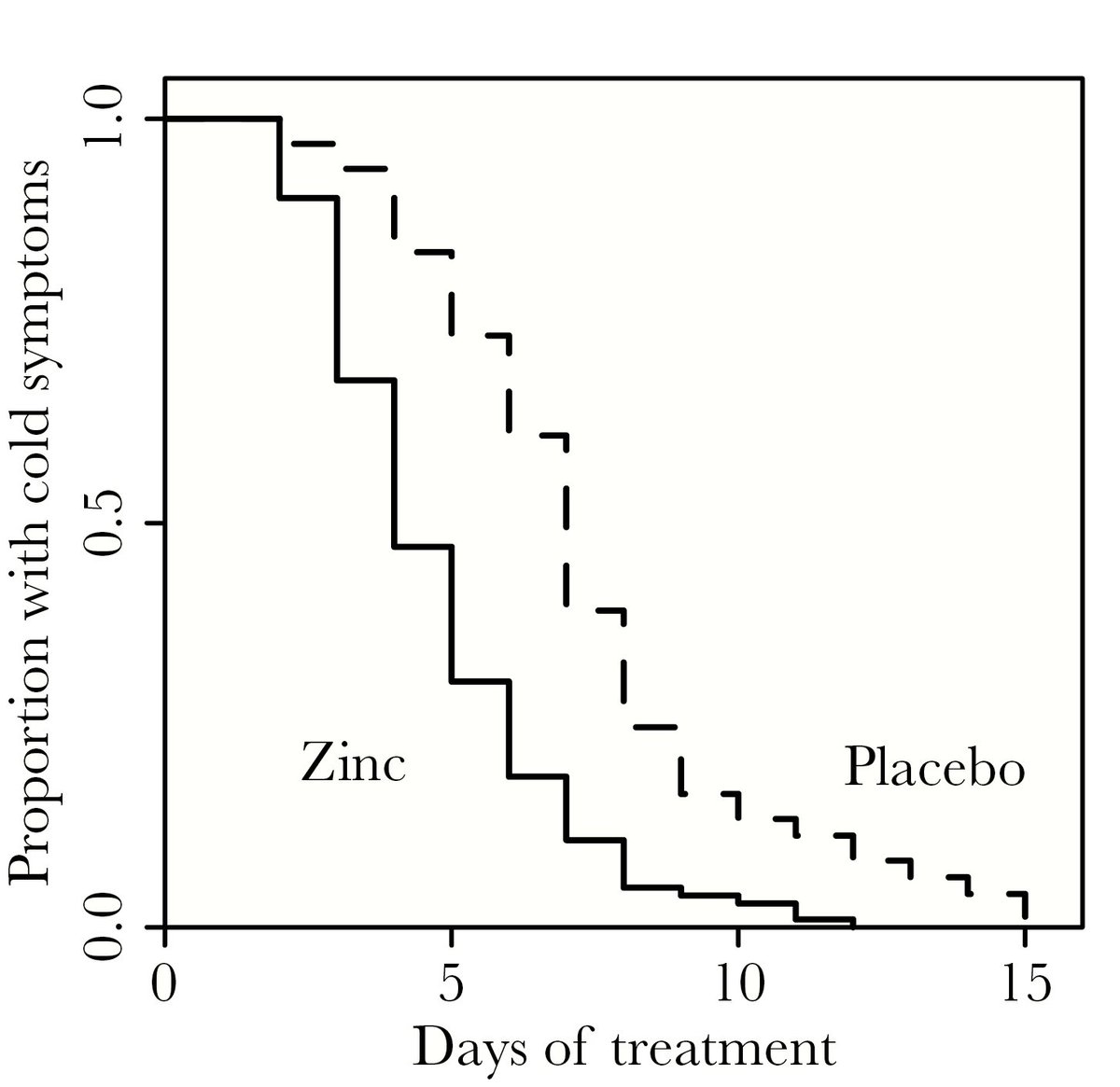
If you have a cold and you want it to go away faster, consider taking a zinc lozenge.
Aggregating data from three randomized placebo-controlled trials, it seems lozenges cut down the time people are sick by ~40%.
By day 5, 70% were cured with lozenges versus 27% with placebo.
“Jo Boaler is a professor of education at the Stanford Graduate School of Education, with an enormously influential body of work …. Her work got Algebra removed from middle schools across the Bay Area.
It is some of the most incompetently or dishonestly conducted research I have seen in a decade as a journalist.”
This 2-hour Stanford lecture breaks down how models like ChatGPT and Claude are actually built, clearer than what many people in top AI roles ever get exposed to.
Save this and set aside two hours today. It might end up being the most valuable thing you learn all week.
This was super interesting, so went kinda deep into the weeds:
- Surname sharing (Stone, IFS 2026): Couples who don't share a surname divorce ~50% more often and ~30% faster than those who do. But Stone admits the effect "reflects very large selection biases." Most of the gap probably disappears with proper controls.
- Partisanship and marriage (Wilcox/IFS): Married Republicans are 7 points more likely than Democrats to report being "very happy" in their marriage. But when restricted to married people only and measured by ideology vs party, the happiness gap largely disappears.
- Religious attendance and divorce (VanderWeele, Harvard): Weekly religious attendance associated with 50% lower divorce risk over 14 years. Women only. Mostly Catholic/Protestant, in their 50s at enrollment.
- Nominal vs. practicing religion (Wilcox): Active conservative Protestants who attend regularly are 35% less likely to divorce than the unaffiliated. Nominal conservative Protestants are 20% MORE likely to divorce than secular Americans.
- Shared prayer and happiness (Wilcox & Wolfinger): Couples who pray together weekly are 17 points more likely to report being "very happy." Shared prayer is the single strongest religious predictor, stronger than race, education, age, sex, or region.
- Gender asymmetry in attendance (Wilcox & Wolfinger): Couples where both attend, or only the husband attends, are happiest. Couples where only the wife attends are the least happy, lower than couples where neither attends.
- Who initiates divorce (Rosenfeld, Stanford): Women initiate 69% of divorces. Among college-educated women, ~90%. Divorce initiators' well-being improves; non-initiators' worsens. Women regret divorce at 27%; men at 40%.
- Exercise and divorce (no landmark study): No prospective cohort comparable . But what does exist: marriage reduces women's fitness; divorce increases men's fitness; spouses influence each other's exercise habits when they stay together.
In short: The strongest consistent predictor of marital stability is sustained shared religious practice. But probably because it bundles community, shared ritual, values alignment, behavioral norms, meaning, and social support.
Note: "low divorce rate" is not a clean measure of marital quality; it blends quality with exit costs.
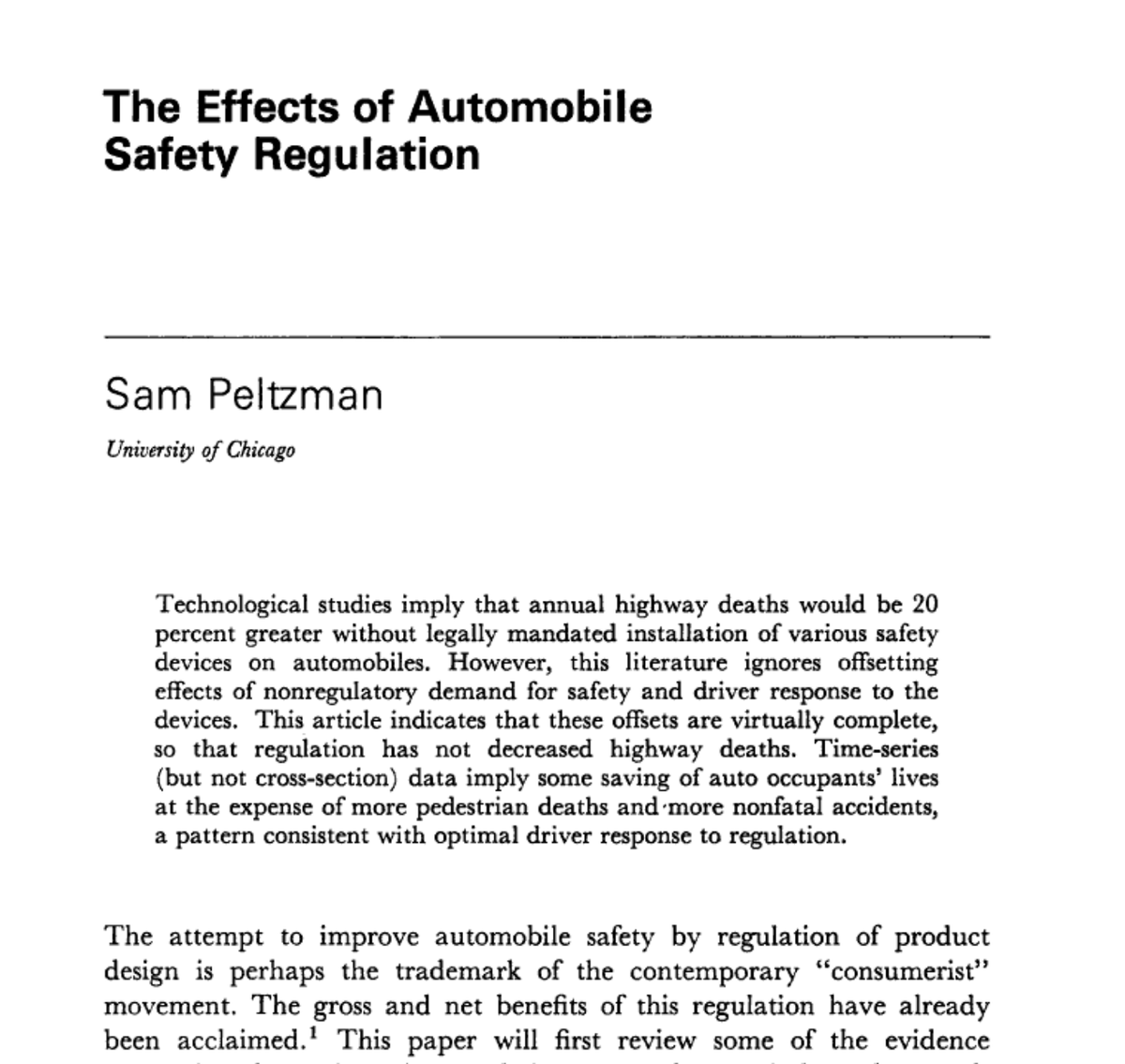
Sam Peltzman famously argued in 1975 that the effect of safer cars on total traffic deaths is ambiguous: Safer cars mean that drivers take more risks.
I am afraid that the effect of LLMs on email will be the same. We are promised that we will spend less time handling email thanks to autonomous agents.
My fear? As the cost of sending and processing emails goes down, more emails will be sent.
Everyone has incentives to do so. An administrator at the dean’s office (one of the most dangerous people in the U.S. right now) will feel they can send many more emails requesting information from faculty. A colleague at another department might reach out to you with questions. You name it.
The bottom line? Yesterday I got nearly 200 emails (without counting spam). Let’s call it the Peltzman effect of LLMs.