1/
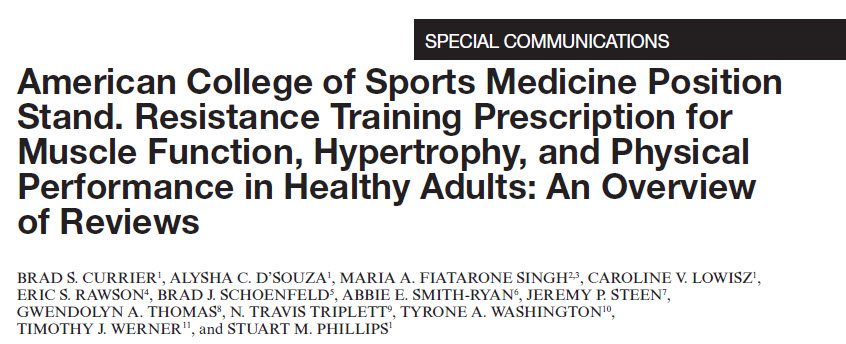
Big update in exercise science: ACSM has revised its resistance training Position Stand for the first time since 2009. That is a 17-year gap, and a lot has changed. 🧵https://t.co/Vk3yQj3Rmp
🏃
"Exercise, Brain Activity, and Better Thinking"
How does exercise affect brain activity and thinking skills? Research shows short and long-term benefits, with new experiences boosting brain efficiency.
#ExerciseScience#Cognition
Movement is medicine.
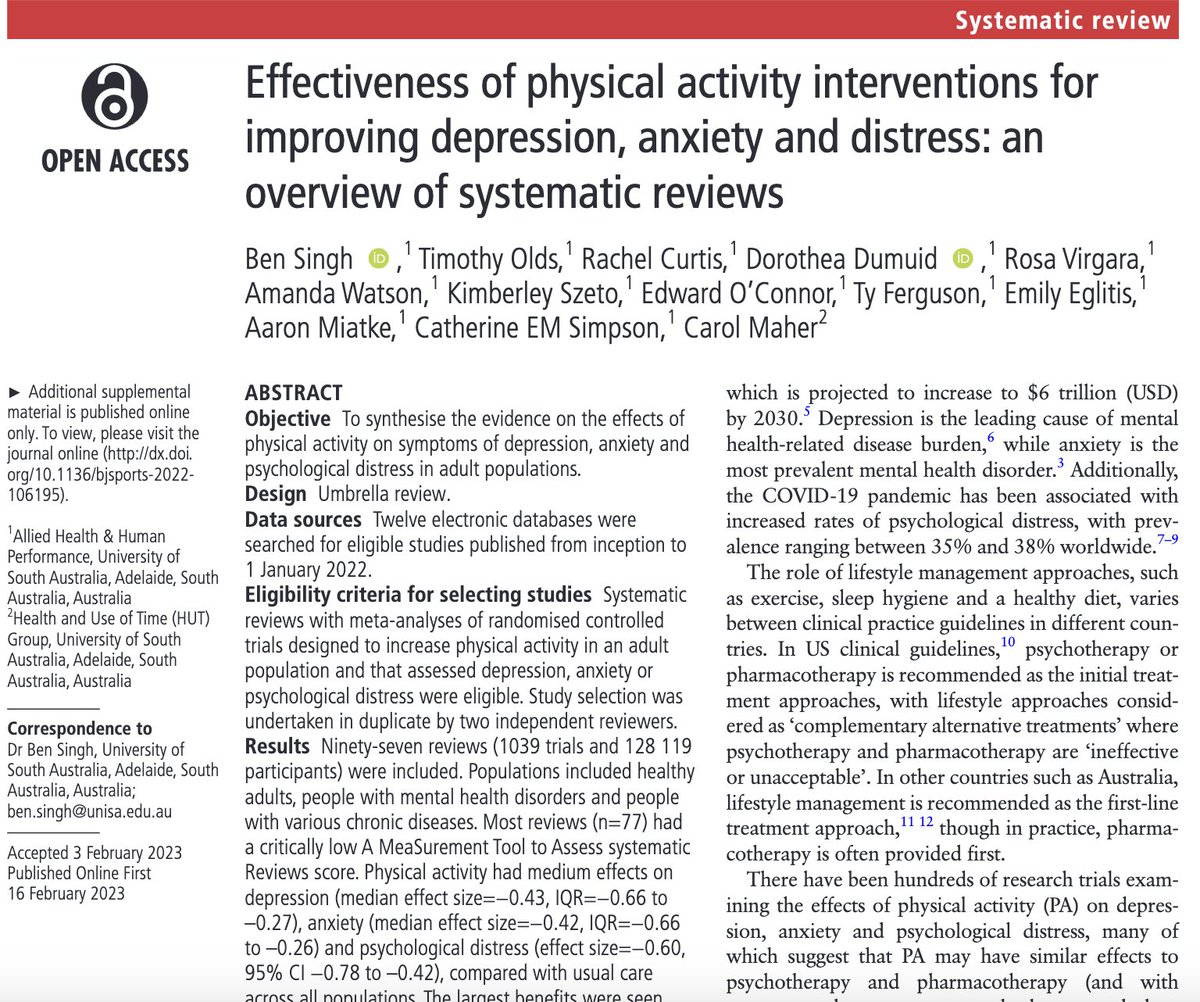
Large systematic review of over 1,000 trials and 120,000 participants finds that exercise has a significant effect on symptoms of depression, anxiety, and psychological distress.
We need to do a better job of integrating mental and physical health.
Supplementing with vitamin D may be one of the simplest ways to lower your dementia risk
Large observational and genetic studies show that vitamin D deficiency is linked to ~80% higher dementia risk in standard cohorts and ~50% higher risk when you look at genetics
Yet, roughly 70% of people in the U.S. have insufficient vitamin D levels
The solution is simple: consider supplementing with 2,000–4,000 IU/day of and aim for blood levels around 40–80 ng/mL (confirmed with a blood test)
Creatine supplementation and healthy ageing: https://t.co/PnqOLjJgtN
This blog outlines the potential role of creatine for combating age-related changes in skeletal muscle and bone health, as well as cognitive function and memory.
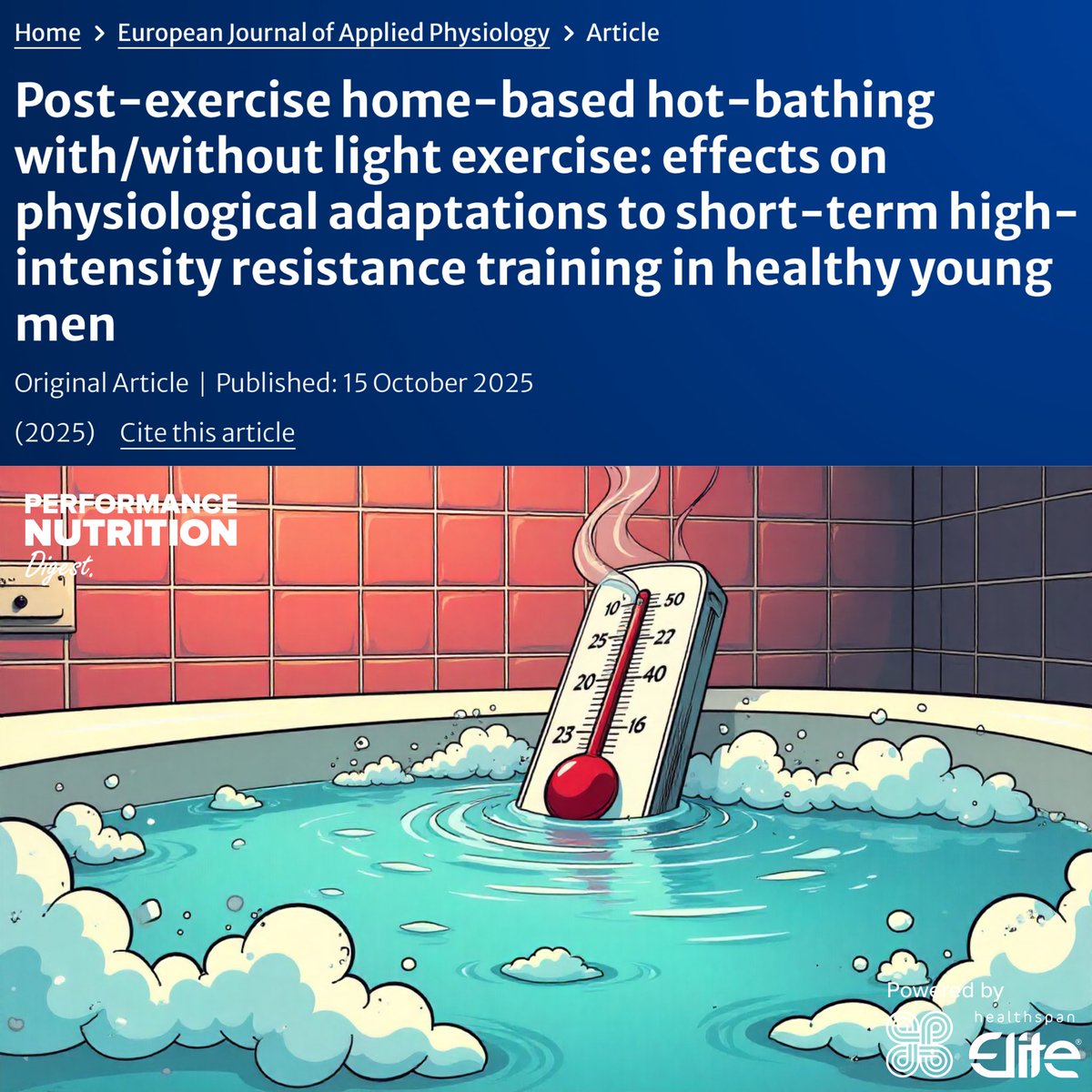
Post-exercise home-based hot bathing enhances strength gains 🌡️
In this new study, 43 healthy young men were assigned to either of the following post-exercise conditions…
🚿 shower (no hot-bathing)
🛁 hot-bathing (40℃)
🛁🏋️ hot-bathing + light-exercise
🚿🏋️ shower + light-exercise
Participants also completed five sessions of isometric knee-extension training at 75% MVC over two weeks 🗓️
Here is what they found ⬇️
Compared with showering (control), hot-bathing produced…
📈 Greater max voluntary muscle contraction gains
📉 Mitigated peripheral muscle fatigue
Adding light-exercise to hot-bathing did not further improve strength or peripheral/central conditions ❌
Home-based hot water bathing enhances muscle strength gains and helps reduce muscular fatigue 💪
This presents a practical strategy to support athletic performance and adaptations to training ✅
Reference:
https://t.co/27kiGsLJcm
Subscribe to Performance Nutrition Digest FREE to receive your daily study breakdown, straight to your inbox or via the Substack app 📥
https://t.co/eiomLjpPt2
Performance Nutrition Digest is powered by Healthspan Elite⚡️
https://t.co/x7WMHaanT4
Understanding exercise intensity zones and physiological stress
This chart integrates sport science and exercise physiology terminology to explain how intensity, effort perception, and physiological stress align across different training zones. It bridges objective markers such as VO₂max and metabolic thresholds with subjective effort scales used in training and research.
1️⃣ Intensity continuum
Exercise intensity progresses from very low (sleep or inactivity) to very high (near-maximal effort). As workload increases, oxygen consumption (VO₂), heart rate, and perceived exertion rise along a continuous physiological gradient.
🟢 Example: Zone 1 (very light to light) corresponds to low heart rates and minimal lactate accumulation, supporting recovery and aerobic base development.
2️⃣ Metabolic thresholds
Two key thresholds define transitions between metabolic states.
Threshold 1 (LT1): the point where lactate begins to accumulate, marking the shift from easy to steady aerobic work.
Threshold 2 (LT2): the onset of significant lactate accumulation and a transition toward anaerobic metabolism.
🟢 Example: Training just below LT2 (“tempo” or Zone 3) improves endurance efficiency and lactate clearance.
3️⃣ Zone classification
Sport science often divides effort into five zones (Z1–Z5):
Z1–Z2: aerobic, low stress, used for long-duration or recovery work.
Z3: tempo or steady-state, moderate stress.
Z4: threshold, high stress near VO₂max.
Z5: supramaximal, brief, maximal exertion (HIIT, sprint intervals).
🟢 Example: Zone 5 training elicits rapid VO₂ kinetics and enhances anaerobic capacity but requires longer recovery.
4️⃣ Subjective perception (RPE and OMNI scales)
The Rate of Perceived Exertion (RPE) correlates closely with physiological strain. Moderate efforts feel “somewhat hard” (RPE 12–14), while near-maximal work rates (RPE 18–20) reflect lactate saturation and cardiovascular limits.
🟢 Example: Using RPE alongside heart rate helps athletes gauge training stress during environmental or fatigue-related variability.
5️⃣ Applied context
Understanding where intensity lies along the stress continuum informs training prescription, recovery management, and adaptation.
🟢 Example: Endurance programs often allocate ~80% of volume to low-intensity zones (Z1–Z2) and 20% to high-intensity zones (Z4–Z5) for optimal performance and resilience.
This framework connects metabolic physiology with subjective effort, helping athletes and practitioners quantify training load, manage fatigue, and optimize long-term adaptation.
https://t.co/GV8kAGEkwP
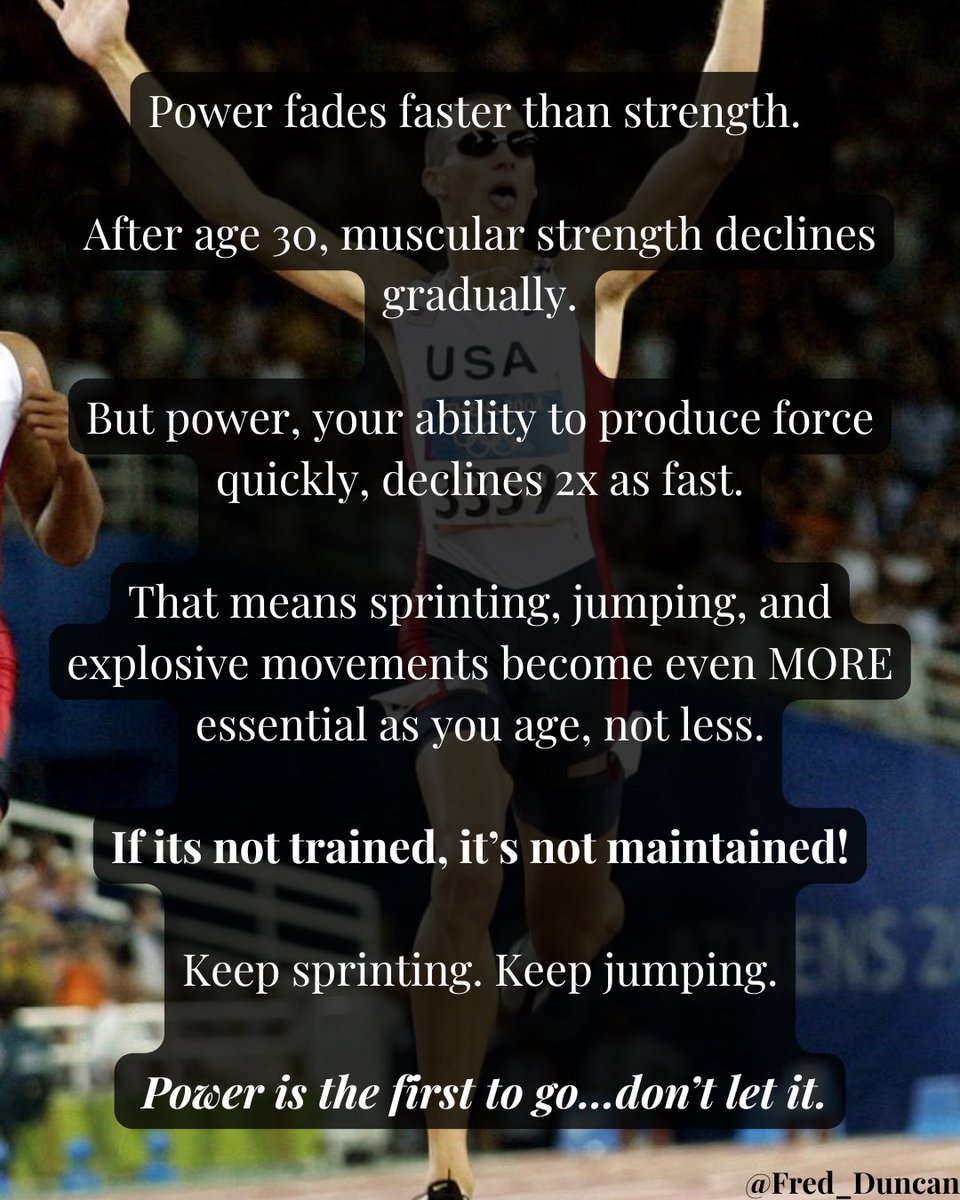
Power declines twice as fast as strength as you age.
That’s why sprinting and jumping don’t become dangerous after 30…they become necessary.
Use it or lose it!
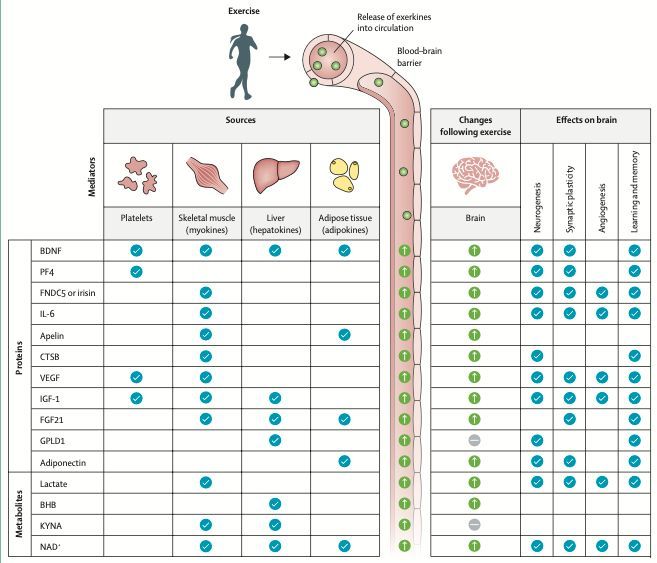
Exercise intensity matters: the effects of aerobic exercise intensity on muscle-derived neuroprotective myokines
Peripheral & systematic mechanisms through which exercise-induced myokines impact brain function👇🏼
#exercise#muscle#brain#health
https://t.co/eNKTRdr8xq
Many thanks to @JSHS_MedHealth for the invitation 🙏
We enjoyed reflecting on the field of #PhysicalActivity
Any other reflections? We look forward to conversations beyond this paper.
@Ulf_Ekelund @AdrianBauman@pjclare
https://t.co/GwrjOcSgIN
Doing media interviews on the need to bring walkable corner stores & services back to communities. It’s an idea that resonates because it has so many layers of benefit and public value. We designed & regulated them out — we CAN bring them back. #CornerConvenience#WalkableCities
Huge team effort by 54 brilliant coauthors including 10 young people from all around the globe. Very grateful to @TheLancet especially Editors Joan Marsh & Sophia Davis & also @niallpboyce who supported the original concept
UCLA researchers have discovered a compound, DDL-920, that restores memory and cognitive function in Alzheimer’s model mice by enhancing brain gamma oscillations, offering a potential new treatment that goes beyond slowing disease progression. https://t.co/7gg5bDM72q
A global consortium of world-leading mental health experts and young people have come together to deliver 'a definitive analysis of the worldwide state of youth mental health'. https://t.co/qcTeK4IkJg
Global trends in economics, climate and technology are weighing on young adults, a report finds. It recommends overhauling how we approach mental health care. https://t.co/RuQceTkKIK