Huge levels of mislabelling in Greek #shark products hide sales of prohibited & threatened species - free access to our new paper https://t.co/vFprUax3Xm @ELSfoodscience @ExeterMarine #fishsci#traceability#seafoodfraud#IUU
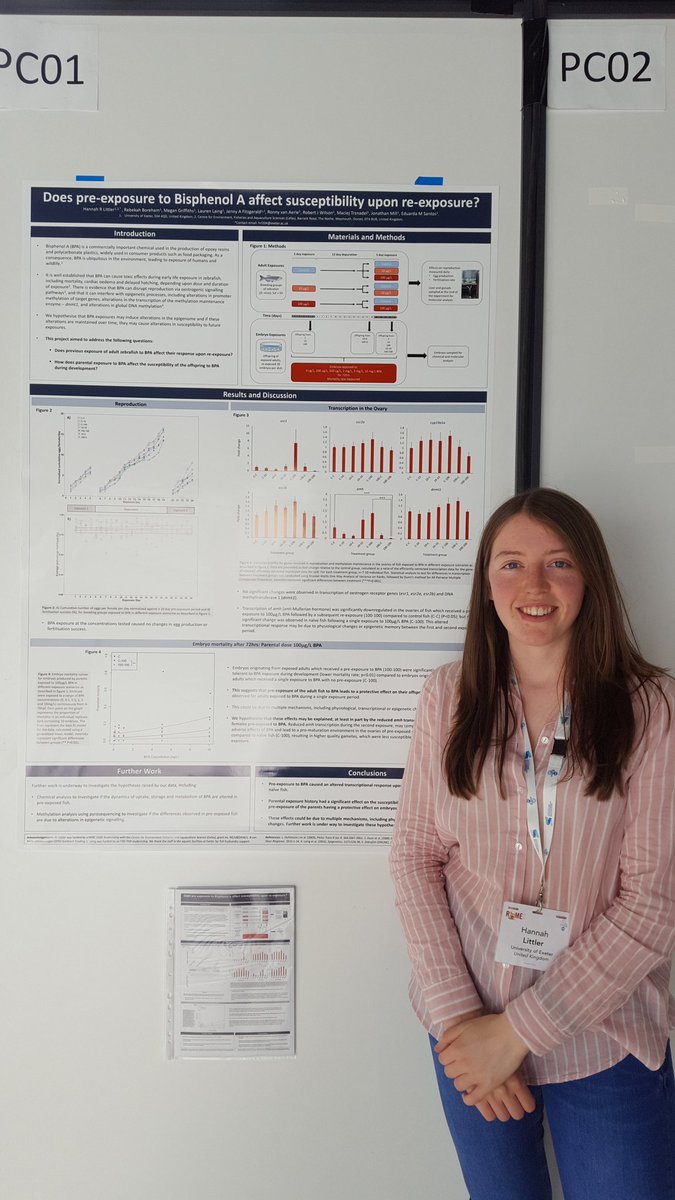
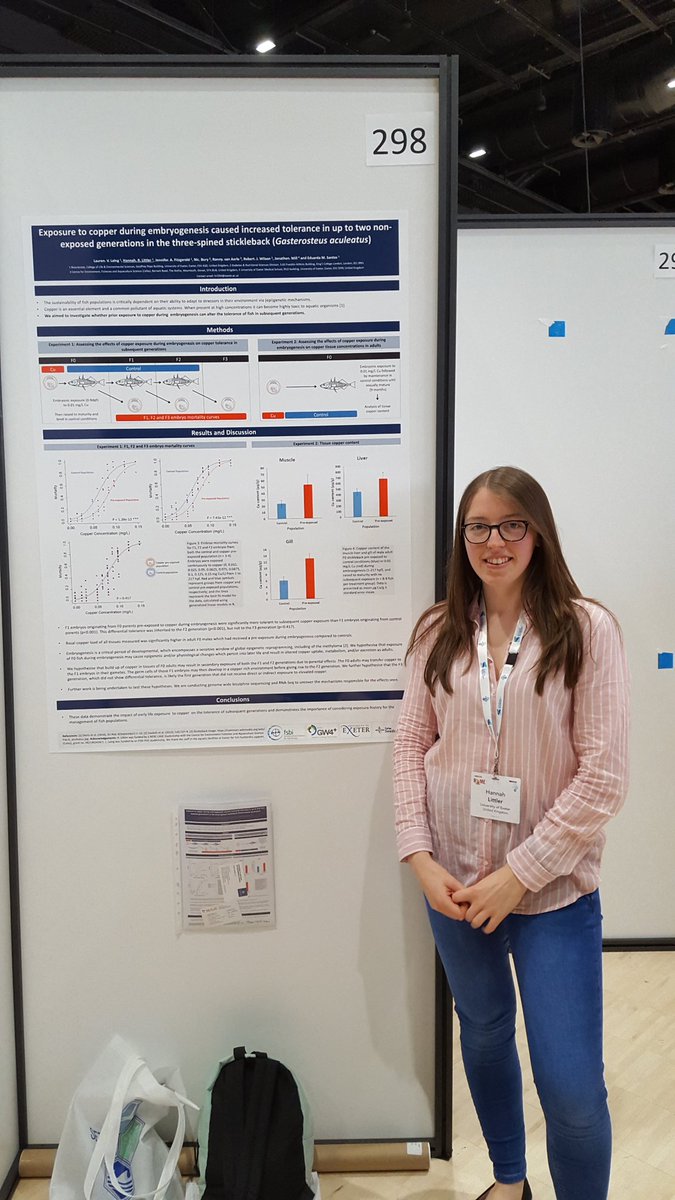
Great day at #SETACRome presenting posters on multigenerational effects of BPA and copper in fish and the importance of exposure history #Epigenetics@ExeterDoctoral
Computer modelling can reduce the use of animals in research. @katie_mintram is modelling the effects of pesticides in fish populations https://t.co/7mX3kKQdRf
There could be many more species in our oceans than we realise. Cryptic species may look the same but be completely different genetically. @TheRayLady is investigating this in elasmobranchs https://t.co/iYt8WXXTV7
@rebekahboreham is doing research to see if there is an easier and cheaper way to detect subtle effects of drugs on wildlife so we can be aware before they are marketed https://t.co/O5ueelHG7D
Most drugs end up in rivers via 🚽, so they all need testing for ☣ effects on 🐟🐸 before going on the market. BUT this takes 🕛 and ££. Can I use glowing 🐟& new🔬to find a better, faster way to study the more subtle effects on wildlife? #tweetyourthesis@ExeterDoctoral#ecotox
Cleaner wrasse keep aquaculture populations healthy but what if the cleaner wrasse populations continue to decline? @henly_lauren is trying to find the answer! https://t.co/rJPDMeUSG1
It seems there’s a catch to expanding Scottish salmon aquaculture! Are the cleaner wrasse that keep salmon healthy at risk of being wiped out on the south coast of the UK? Will there be ecosystem level impacts? My PhD will answer these questions! #tweetyourthesis@ExeterDoctoral
Cells are uniform and identical but require markers to regulate their function. @HannahL_204 is researching whether chemicals may be changing these functions and whether they can be passed on to future generations https://t.co/KfsD1ZpDUy
Every cell in the body has identical DNA/genes. But different epigenetic marks on the DNA regulate gene activity➡️different cell functions. I study how chemicals change these marks in🐟➡️disease/tolerance in them and even future generations #TweetYourThesis@ExeterDoctoral
The drugs people take can end up in our oceans and can impact fish populations. @charles_science is researching how glucocorticoids might have and effect https://t.co/AOhkanuxtZ
Glucocorticoids are used to treat millions of people every year however are now detected in our rivers. Is it possible that these drugs cause detrimental effects to fish by changing their physiology and can this alter the next generation? #tweetyourthesis@ExeterDoctoral
Boating can be fun but do you ever consider what impact boats are having on marine communities? @WeschkeE is doing research on the impact of motorboat noise on fish https://t.co/TNvKF6t3bW
🛳️Noise pollution is increasingly dominating the ocean soundscape impacting fish physiology, communication and behaviour 🐠. My thesis is the very first study to assess how an entire community of fish responds to motorboat noise 🔊. #TweetYourThesis@ExeterDoctoral
Humans are impacting our environment more than ever before. Climate change doesn’t just cause warming, but also acidified our oceans and decreases oxygen. @DanWMont is doing research on how this might impact fish https://t.co/OOAA7OUNL7
Is it possible the pollutants in the environment cause impacts which could be passed on to future generations? @paigecr is doing research to find out! https://t.co/9h5RRzlglK
Toxic chemicals change fish gene function long after the chemical is gone.
But are their grandchildren also affected, even if they’re not directly exposed?
Their germ cells hold the key to observing inheritance of these deadly alterations
#tweetyourthesis@ExeterDoctoral
You are what you eat, but what about what the food you eat eats? @willd2408 is doing research on how water chemistry affects the diet of aquaculture fish for human consumption https://t.co/FjKnRTmS2M
As the worlds population grows, sustainable aquaculture growth is needed to feed the world. I look at how different water chemistry cocktails found within fish farms are affecting a fishes ability to make the most of their meals #tweetyourthesis@ExeterDoctoral
Oil spills can impact marine life, but how toxic is oil? See this tweet from @ColvinMarine to find out the work she is doing on developing a rapid approach to predicting ecosystem damage https://t.co/wM2cXOB0p7
What will we do when the population demands for terrestrial food supply gets too much? Aquaculture! See this tweet from @H_R_Goodrich on the work she is doing into aquaculture https://t.co/u5P9OPhFZi
Food security is one of the most pressing issues facing the modern world. Improving the efficiency of aquaculture will be key to meet demands for 2050. Can we manipulate fish feeds to make them easier for fish to digest and enhance fish growth? #tweetyourthesis@ExeterDoctoral
The impacts of Carbon Dioxide go much further than the air we breath but can also affect the health of our sea creatures. See this tweet from @MarineBioAlice https://t.co/P0wTxZUQ5K
🌊More CO2 in the air makes the ocean more acidic📈This makes some ocean pollutants more toxic☠We don't know which pollutants or how animals are affected🤷🏼Some coastal areas are already more acidic🏖So are pollutants already more toxic here?🐚 #TweetYourThesis@ExeterDoctoral