Exciting results from StanfordNLP (with D'Oosterlinck from Gent) on Causal Proxies: using symbolic surrogate models for interpreting deep learning, and testing for causality using counterfactual interventions.
🚨Preprint🚨
Interpretable explanations of NLP models are a prerequisite for numerous goals (e.g. safety, trust).
We introduce Causal Proxy Models, which provide rich concept-level explanations and can even entirely replace the models they explain.
https://t.co/7F43uCrgI6
1/7
Symbolic regression (SR) is the problem of finding an accurate model of the data in the form of a (hopefully elegant) mathematical expression.
SR has been thought to be hard and traditionally attempted using evolutionary algorithms.
This begs the question: is SR NP-hard?
1/2
This year's Spring Conference focuses on foundation models, accountable AI, and embodied AI. HAI Associate Director and event co-host @chrmanning explains these key areas and why you should not miss this event:
https://t.co/mQn6CrxsMF
Interested in Explainable AI and Finance? Check out this opportunity for a Tenure Track Assistant Professor position at the Informatics Institute, University of Amsterdam! Deadline extended to 3 April 2022.
And happy that also our work "On genetic programming representations and fitness functions for interpretable dimensionality reduction" made it to @GeccoConf!
Preprint: https://t.co/HmjtTUKThj
A short explanation 👇
1/8
I visualized my last #semantle game with a UMAP of the word embeddings. Here's the result: https://t.co/6sdSL8toeD
Semantle is a word guessing game by @NovalisDMT where your guesses, unlike in #wordle, are ranked by their similarity in meaning, not spelling, to the secret word.
📢#MSCAJobAlert Last days to apply to the PhD student position in #AI within @NL4XAI @MSCActions
at @citiususc, ES. Join us and work on the following topic: From Grey-box Models to Explainable Models. ⌛️Deadline 31/03/2022
Apply👉https://t.co/C2K5NiJKl0
@EU_H2020
📢Call for contributions to help identify Europe’s most Critical #OpenSourceSoftware !
We urge all national, regional and local public administrations across all EU 27 member states, to participate! Learn more👉https://t.co/Ts97NVmflE
#FOSSEPS#ThinkOpen
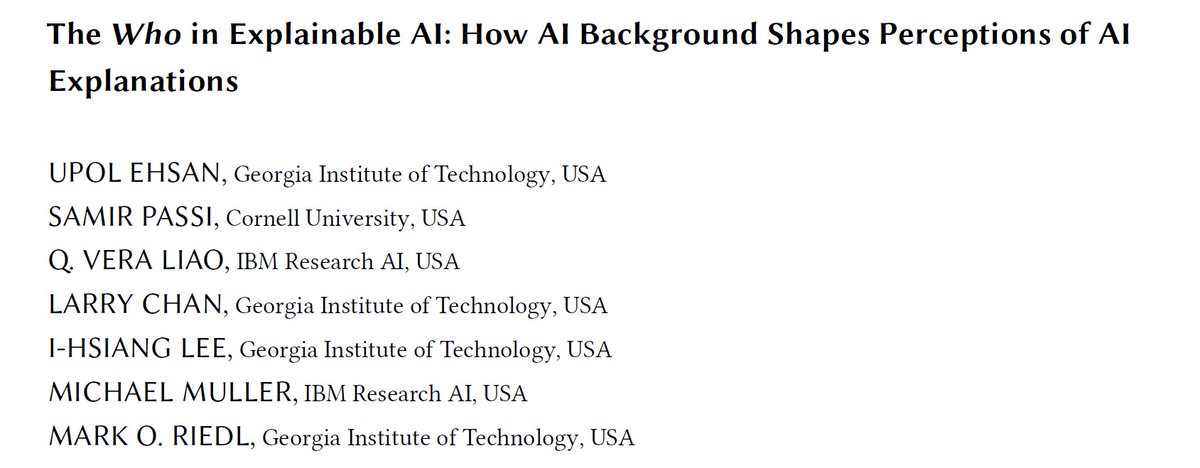
And from a few months ago, Ehsan (2021) and team, including @mark_riedl, highlight how the AI background of recipients of explanations influences their interpretations. 4/3
https://t.co/lOtyb2SUZC
🚨 New pre-print alert! 🚨
Excited to share “The Who in Explainable AI: How AI Background Shapes Perceptions of AI Explanations”
w/ the amazing team: @samirpassi,@QVeraLiao,Larry Chan,Ethan Lee,@michael_muller,@mark_riedl
🔗https://t.co/rhP4h2OcGD
💡Findings at a glance...
1/n
Interesting recent trend in XAI: serious efforts to study the interaction between explainability methods and the *people* who the explanations are addressed to.
Jacovi et al. develop a framework to link interpretability tools to things already known about human cognition. 1/3
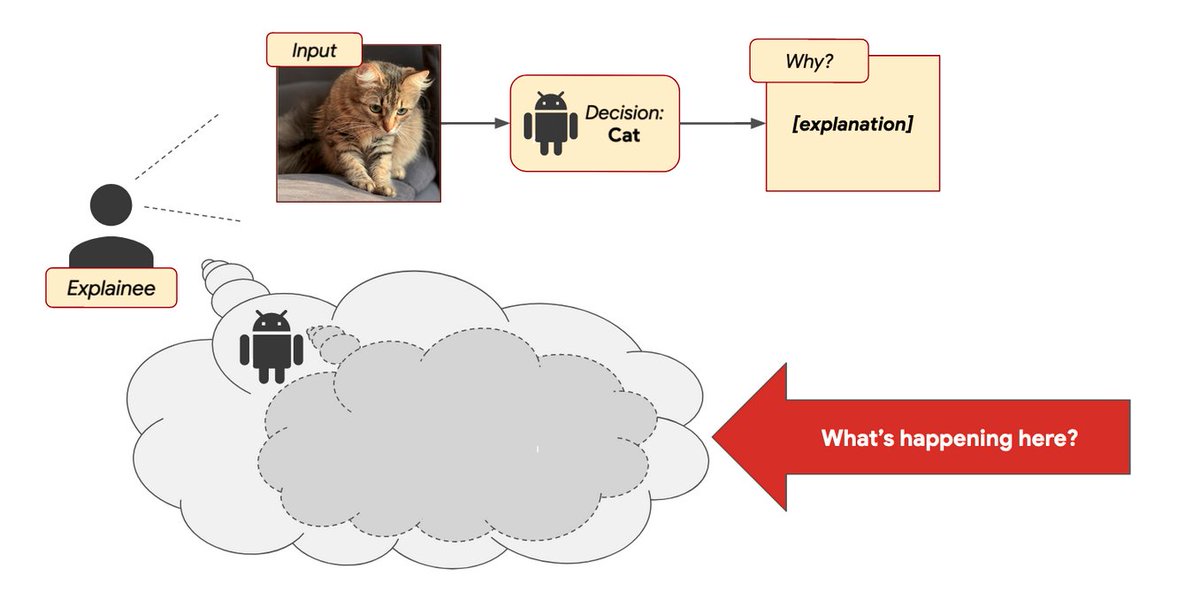
What does it mean for a user to "understand" the explanation of an AI's decision?
New paper 🙌
https://t.co/XnXffa2i2r
Diagnosing AI Explanation Methods with Folk Concepts of Behavior
w\ @BastingsJasmijn @sebgehr@yoavgo@fajtak
Digest:🧵
Krishna et al. study what practioners *do* in practice with what posthoc interpretability tools produce -- and with the strong disagreements between those tools.
*tldr*:
XAI is here to stay, but its methods need to be handled with care! 3/3
https://t.co/37JULNqKgW
Excited to share our work "The Disagreement Problem in Explainable Machine Learning" https://t.co/nF6Hl03KKx. We present new results showing that post hoc explanation methods often disagree in practice & practitioners resolve those disagreements using arbitrary heuristics [1/N]
"Transparency and explainability pertain to the technical domain ... leaving the ethics and epistemology of AI largely disconnected. In this talk, Russo will focus on how to remedy this problem and introduce an epistemology for glass box AI that can explicitly incorporate values"
Lecture by Federica Russo @federicarusso: Connecting the ethics and epistemology of AI.
This Thursday 10 Feb, 12-13 h CET, online. Moderated by Aybüke Özgün.
For more information and the way to get access, see: https://t.co/9qnwEizZm5
A team of researchers from Amsterdam and Rome proposes CF-GNNExplainer: an explainability method for the popular Graph Neural Networks.
The method iteratively removes edges from the graph, returning the minimal perturbation that leads to a change in prediction.
At Pacmed we care about improving medical practice with the help of AI. We often use tree-based models 🌳 in combination with SHAP values to gain a better understanding of what models do.
But... which version of SHAP is best to use? 1/3
https://t.co/FMVb7Xi8rQ
@gchrupala A paper in ICASSP 2020 proposed probing by "audification" of hidden representations in ASR model. They learn a speech synthesizer on top of the ASR representations. They have a nice video of their work here
https://t.co/H7lakRNvA8
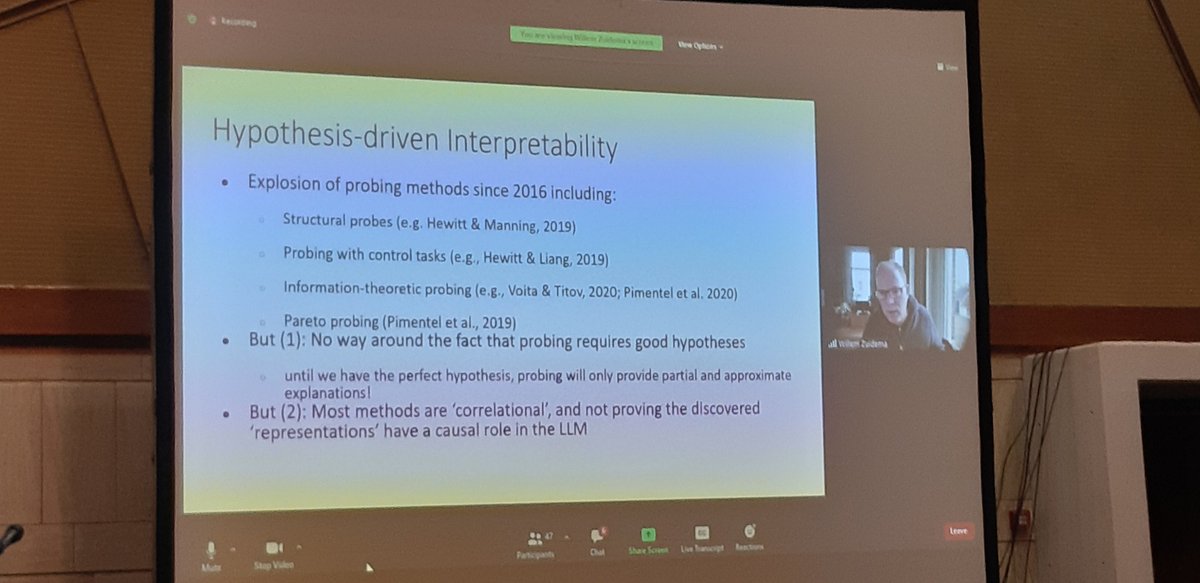
@wzuidema @sarahookr@anmarasovic Hot take from @wzuidema : progress in probing classifiers will not come from sophisticated probing techniques but from the hard work of forming better hypotheses.









![hima_lakkaraju's tweet photo. Excited to share our work "The Disagreement Problem in Explainable Machine Learning" https://t.co/nF6Hl03KKx. We present new results showing that post hoc explanation methods often disagree in practice & practitioners resolve those disagreements using arbitrary heuristics [1/N] https://t.co/BQpQwqSjdT](https://pbs.twimg.com/media/FLAruzuUUAAAqiz.jpg)