The Invest America Act just cleared Congress—every U.S. child gets a $1K S&P 500 starter account at birth. 70M kids gaining a stake in America’s growth 💪🇺🇸 🚀Accounts go live 7/4/26, our nation’s 250th birthday, future-proofing prosperity!
Sebastian Edwards, who worked as a young economist in the Allende government and now is a professor at UCLA, affirms in this podcast that:
“The Chicago boys reforms were incredibly successful”.
https://t.co/3oNQksUpdT
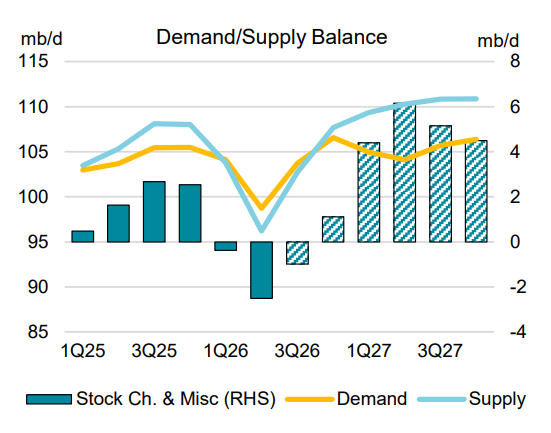
CHART OF THE DAY: In its first look into 2027, @IEA sees the return of an oil glut. The Paris-based agency warns of higher-than-normal uncertainty about its supply and demand forecasts, but with expected Hormuz reopening, by this time next year, it sees too much oil — again.
Latin America’s Data Center Gold Rush: Myth and Reality
The region is moving into the AI era through data centers—but sizable investment alone won't guarantee development.
The winners will be the countries that pair digital infrastructure with smart energy, water, talent, and industrial policies, argues Eduardo Levy Yeyati in his most recent essay for Americas Quarterly.
An important reality check on the region's data center "gold rush" only at @AmerQuarterly.
#LatinAmerica #DataCenters #AI #DigitalInfrastructure #TechPolicy #EconomicDevelopment #EnergyTransition
https://t.co/iVG5It7hh9
This is simply insane. France has by far the most taxes in the world and, at the same time, a huge fiscal deficit
France’s national sport isn’t football. It’s taxing everything that moves.
Are citizens working for themselves, or for the state with a personal allowance attached?
@BasedMikeLee - Already done in Chile - See @josepinera
The Success of Chile’s Privatized Social Security https://t.co/quY2amk4C1 via @CatoInstitute
https://t.co/AIGr3JpIBs
Oh yes, I remember that Bond film where the villain decarbonized the auto industry, brought fast internet to everyone on the planet, and helped paralyzed people interact with the world again.
Keiko joins a growing list of right-wing leaders elected across South America. Only Uruguay, Colombia, and Brazil have leftist leaders. But Colombia may elect a far-right one in a week, and Brazil could elect Bolsonaro's son in an October election. https://t.co/cZD749SzjY @WSJ
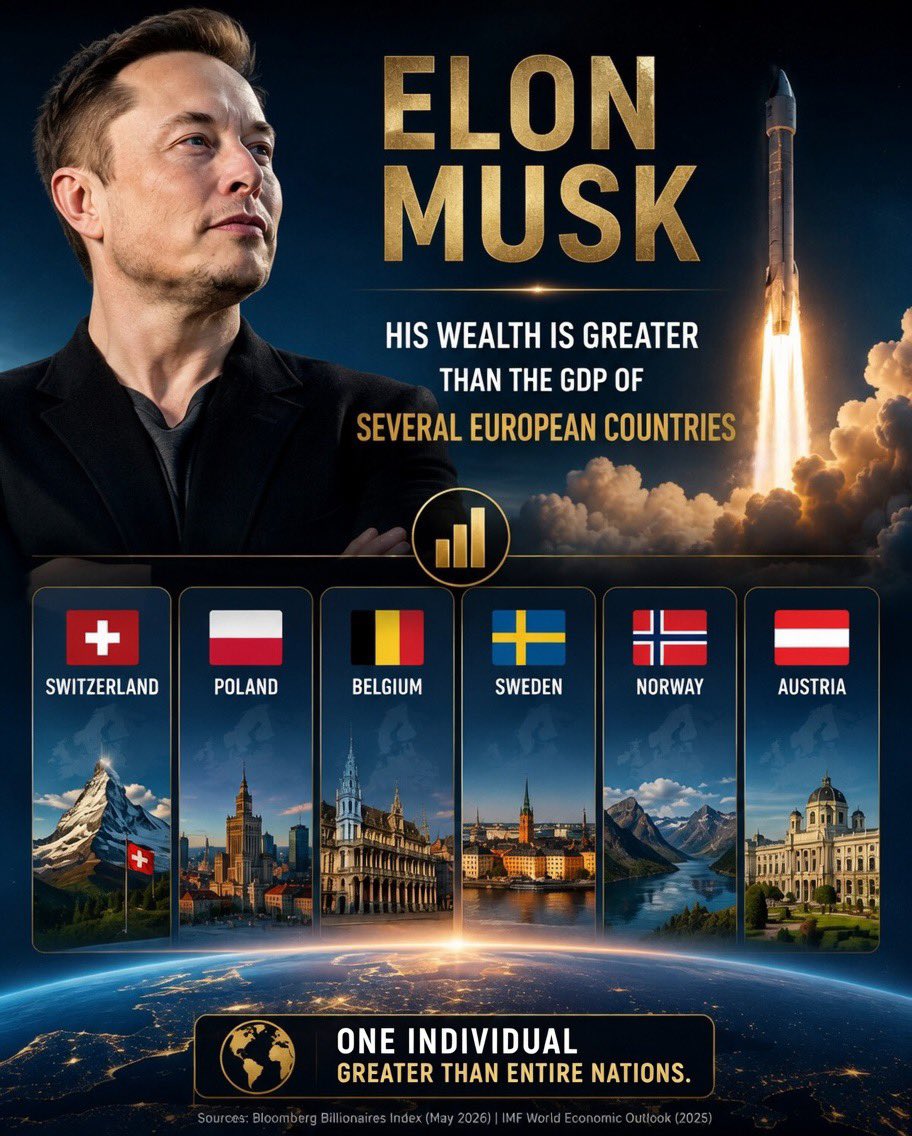
All left populists upset about Elon becoming the first trillionaire never mention that one becomes wealthy by inventing products and services that benefit others and drive progress and innovation
Start your own business, or get a real job instead of stealing other people’s money
I am in the camp that believes a deal with Iran will get done. And when it does, oil will drop, interest rates will follow, and a real peace dividend will begin to ripple through the global economy as the Hormuz risk premium comes out of the system.
President Trump’s Iran deal is not the end of a war. It is something rarer: a decisive victory that changes the terms of the war.
Trump’s Iran deal is a Trafalgar moment: a single, brutal victory that doesn’t end the war, but decides who holds the decisive weapon. In classic Mahanian fashion, it seizes the Strait of Hormuz out of Tehran’s grip and smashing its ability to weaponize the world’s oil supply. The agreement rips away Iran’s most dangerous levers, energy blackmail, nuclear ambiguity and the cash flow that fuels global jihad, even as the regime survives.
Critics who demand regime change will howl. But if this deal is completed, it will stand as the moment the balance turned, just as Nelson’s annihilation of Napoleon’s fleet at Trafalgar settled who would command the seas.
The peace dividend is not only about cheaper oil. It is about a world in which one of the most dangerous regimes on earth has less money to fund terror and less cover to hide a nuclear program behind constant crises. When the main state sponsor of jihadist violence loses its favorite leverage over global energy and finance, risk premiums fall not just at the pump, but across the entire security and investment landscape.
Chemo can't tell a cancer cell from a healthy one. That's the entire side-effect problem.
Nobel Prize winner Dr. Jennifer Doudna's lab just built something that can. It reads the cell's RNA, and if it finds the message for mutant p53, the single most common typo in cancer, it triggers a CRISPR enzyme to shred that cell's DNA.
One wrong letter is the trigger. Healthy cells, spared.
The killing works. In mice, a single dose roughly halved the tumors.
The unsolved half is getting it into every tumor cell in a living body. That's where every CRISPR cancer idea has stalled. Real advance, real wall.
If a private pension company did something like Social Security, its executives would be thrown in prison, but politicians in Washington refuse the fix the program by shifting to personal retirement accounts (2/2) https://t.co/nqUOfeqeuO
The French hate air conditioning.
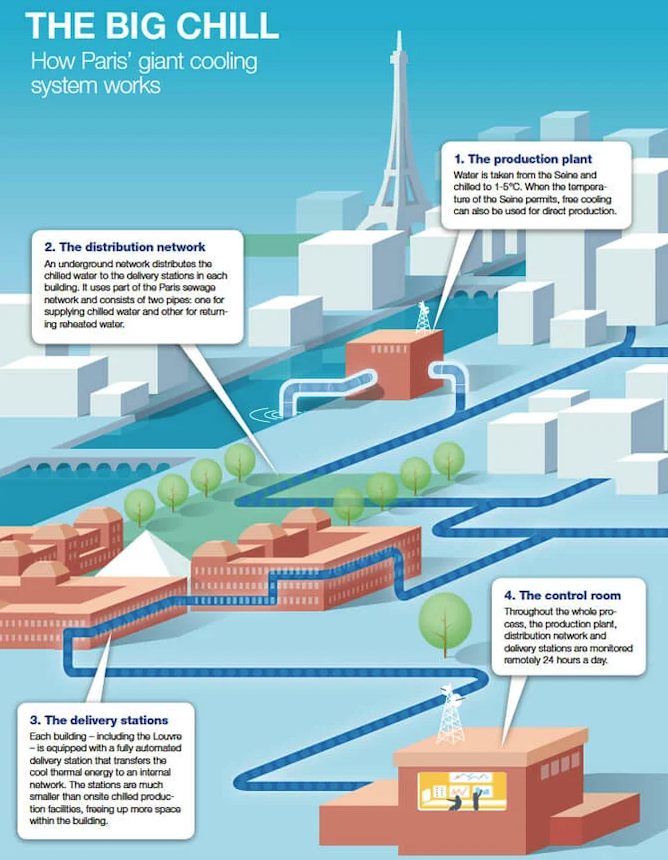
So Paris built a 120-kilometre machine under its streets for producing cold.
It’s called Fraîcheur de Paris, and it does for summer heat what district heating did for winter: centralise the problem.
Instead of every museum, office, hotel, hospital and shop bolting its own cooling plant onto the building, Paris moves cold through pipes.
The network sends water chilled to 2 to 4°C through buried supply lines. The water enters a connected building, absorbs heat through an exchange station, then returns at 12 to 14°C to be cooled again.
It essentially functions with two pipes. One carries the cold out, the other carries heat back.
The production plants cool the circuit from 12°C to 4°C. Some sites use the Seine as a heat sink. In colder periods, the system can use the river’s own temperature for free cooling, which means the machines work less and the electricity demand drops. The Seine water doesn’t become the building water. It stays separate, passing temperature across heat exchangers.
The scale is pretty strange when you see it written down though.
It's got 15 production sites, 4 storage sites, 120 km of underground network with 924 subscribers. This has resulted in 7 million square metres cooled, and 493 GWh of cooling sold.
A cold utility running beneath one of the densest cities in Europe.
The Forum des Halles has been cooled this way since 1979. The Louvre since 1986. Galeries Lafayette, Opéra Garnier, Hôtel de Ville, Station F, La Samaritaine and the National Assembly all sit on the same idea. Tourists stand in the Louvre looking at paintings while a municipal cold loop does part of the dull work below ground.
The boring part is the breakthrough.
Cold can be stored at night in chilled water or ice, then used during daytime peaks. The network is monitored from a control room with more than 125,000 control points. A delivery station inside a building takes 5 to 7 times less space than a standalone cooling installation and avoids the roof and façade clutter that turns cities into compressor farms.
That matters because conventional air conditioning solves heat by moving it somewhere nearby. In a dense city, thousands of private machines mean thousands of outdoor units rejecting heat into streets, courtyards and roofs, plus refrigerants, noise, vibration and maintenance spread across every building.
Paris’s public cooling network has a stated coefficient of performance of 4, against 3 for a wet standalone system and 2 for a dry standalone system. Against an equivalent set of autonomous installations, Fraîcheur de Paris says the network gives 100% higher energy efficiency, 35% less electricity use, 90% fewer refrigerant-fluid emissions and 50% lower CO2 emissions.
The climate backdrop is the real reason this exists.
Paris ran a full crisis exercise called “Paris at 50°C” in 2023. Météo-France’s 2050 reference trajectory for France points to heatwave days becoming five times more frequent, hot nights rising sharply in urban centres, and some local extremes around 48°C becoming possible.
The city signed a 20-year concession in 2022 with Fraîcheur de Paris, owned 85% by ENGIE and 15% by RATP. The contract is worth a projected €2.4 billion. The plan is to extend the network by 158 km by 2042, add 20 production plants and 10 storage sites, and reach more than 3,000 subscribers, including hospitals, nurseries, schools and care homes.
This is basically the infrastructure version of admitting that summer is becoming a public systems problem...
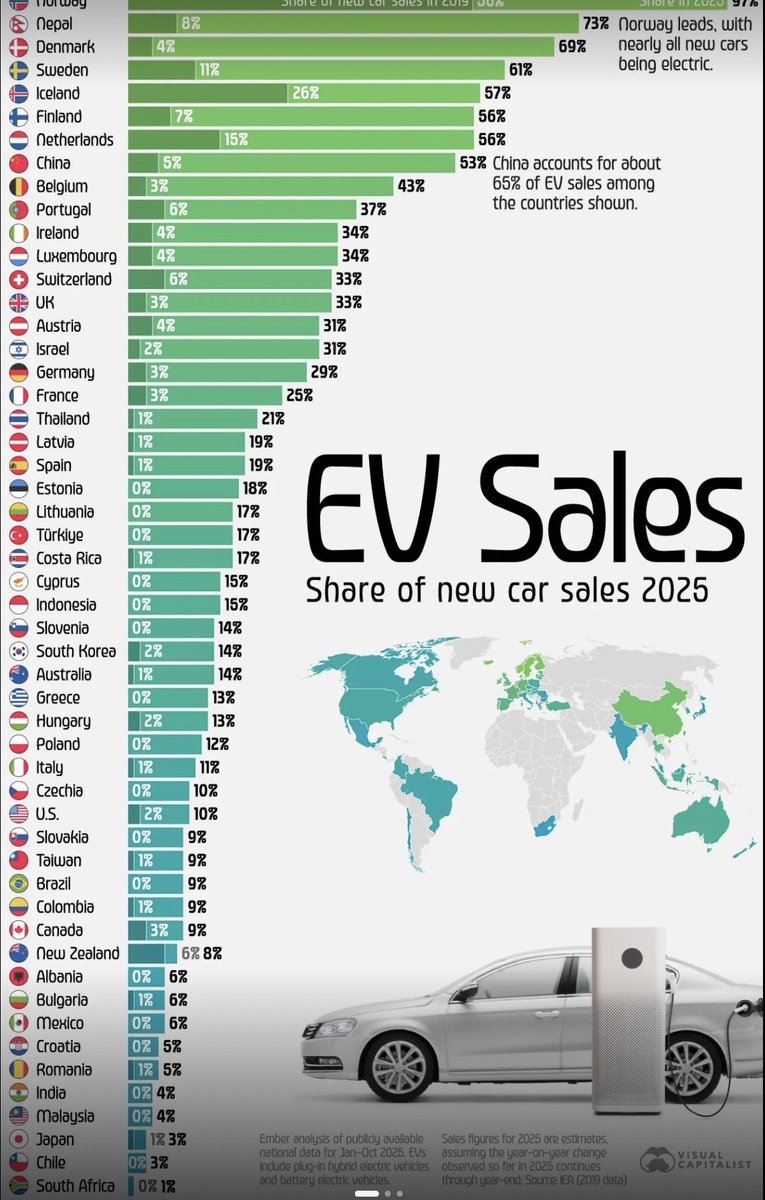
There is no longer any doubt - electric vehicles will take over the world.
2025 showed record sales of electric cars in nearly 100 countries.
Electric cars in 2026 is expected to reach 23 million - 30% of all cars sold globally.
The energy crisis originating in the Middle East will supercharge the electric car growth.
In Europe, sales increased by close to 30% year-on-year; in the Asia Pacific region excluding China, sales jumped by 80%; and in Latin America, they were up by 75%.
Annual electric car sales in Southeast Asia more than doubled last year.
China remains the world’s largest manufacturing hub for electric cars, making nearly 75% of the almost 22 million electric cars produced globally last year.
IEA report: https://t.co/rAHX5zyNTj
“The welfare state is the oldest con game in the world. First you take people’s money away quietly and then you give some of it back to them flamboyantly.”
— Thomas Sowell
1/5
I'm a cardiologist. I have spent twenty years watching cholesterol destroy arteries, trigger heart attacks, and kill people I care about.
Today, Eli Lilly presented data that may begin to end that era.
VERVE-102. A single infusion. One dose. It uses base editing to permanently turn off the PCSK9 gene in your liver.
Presented today at the European Atherosclerosis Society Congress:
88% reduction in PCSK9.
62% reduction in LDL cholesterol.
Sustained up to 18 months.
No treatment-related serious adverse events.
One infusion. Not daily pills you forget to take. Not monthly injections. One dose — and your cholesterol may stay low for the rest of your life.