Believing in science, (MSc Maths).
Only science can prevent us from erring into half truths.
RTs are not necessarily endorsements.
I always block rude people.
Charged particles feel the combined effects of electric and magnetic fields according to the Lorentz force law.
The formula is F = qE + q(v × B).
The electric force aligns with the electric field for positive q. The magnetic force is always perpendicular to both velocity and B, its direction set by the right-hand rule.
The diagrams show a uniform electric field between plates acting on a positive charge and a magnetic field case with v to the right, B downward, and the resulting force directed away from the viewer.
Lorentz law is used in mass spectrometers to separate ions by mass-to-charge ratio and in older CRT displays to steer electron beams across the screen.
In 1937, a 21-year-old MIT student sat in a quiet library, mapping abstract philosophical logic onto electrical circuits to pass the time.
By the time he finished his thesis, the young man had mathematically proven that mechanical telephone switches could perform complex calculations. Instead of just routing phone calls, they were destined to become thinking machines.
He had just discovered the mathematical trigger for digital computing.
But when he published his work, the leading engineers of the industrial world paid little attention, viewing his mathematics as a mere academic parlor trick.
His name was Claude Shannon.
It would take years for the industrial establishment to fully realize he was right and adopt the binary logic that now powers every computer, smartphone, and network on Earth.
His breakthrough against traditional engineering is the ultimate lesson in what happens when rigid practices clash with unexpected philosophical reality.
In the early 20th century, engineers believed they understood circuit design. They knew that as telephone networks grew, they needed more physical wires and relays. But traditional engineering offered no universal science; it was a manual process of brute-force trial and error.
The systems would grow into a chaotic, tangled mess of blueprints and copper lines.
The entire industrial establishment agreed: every circuit, no matter how complex, had to be wired by manual experimentation. It was a tedious, costly formula.
But in that library, Shannon realized the establishment had left a massive variable out of their equations: 19th-century symbolic philosophy.
Shannon recalculated the engineering, factoring in what happens when you treat an electrical switch using the laws of Boolean algebra.
What he found shattered the industrial consensus.
He proved that an electrical switch has only two possible states: it is either closed and letting power through, or open and blocking the current. This was mathematically identical to True (1) and False (0).
The circuit could evaluate logical statements. There was no limit to what it could compute. It could automate human thought, transforming physical electricity into digital logic.
When Shannon presented this concept, mainstream electrical engineers were skeptical. They couldn't accept that an abstract philosophical concept could solve real-world hardware bottlenecks.
Shannon was initially ignored. The establishment stuck to their traditional wiring methods.
Instead of fighting a rigid, closed system, Shannon quietly expanded his work into Information Theory, proving that all data could be compressed into a universal currency called the "bit." Decades later, when the global tech revolution exploded, the world realized the 21-year-old student had been right all along.
The philosophical blueprint Shannon left behind is a vital truth for navigating complex problems and institutional pushback:
Comforting traditions will always be more popular than disruptive innovations. Trust the system's underlying logic anyway.
Most of us approach our careers and projects seeking the validation of current experts or established guidelines. When we propose a radical new idea or try to change a broken system, and the authorities tell us we are wrong, our instinct is to assume our logic is flawed. We abandon our data to fit the consensus.
But Shannon’s legacy proves that traditional industry consensus is not the same thing as truth.
Gatekeepers are human; they protect their own methods, their own training, and their own comfort.
What is a bottleneck, a project, or a direction you’ve abandoned just because an expert or a boss told you it wouldn't work? What happens if you stop looking for their permission and trust the structural logic of your own work?
Stockholm, 1930.
The Nobel ceremony begins.
One name is missing.
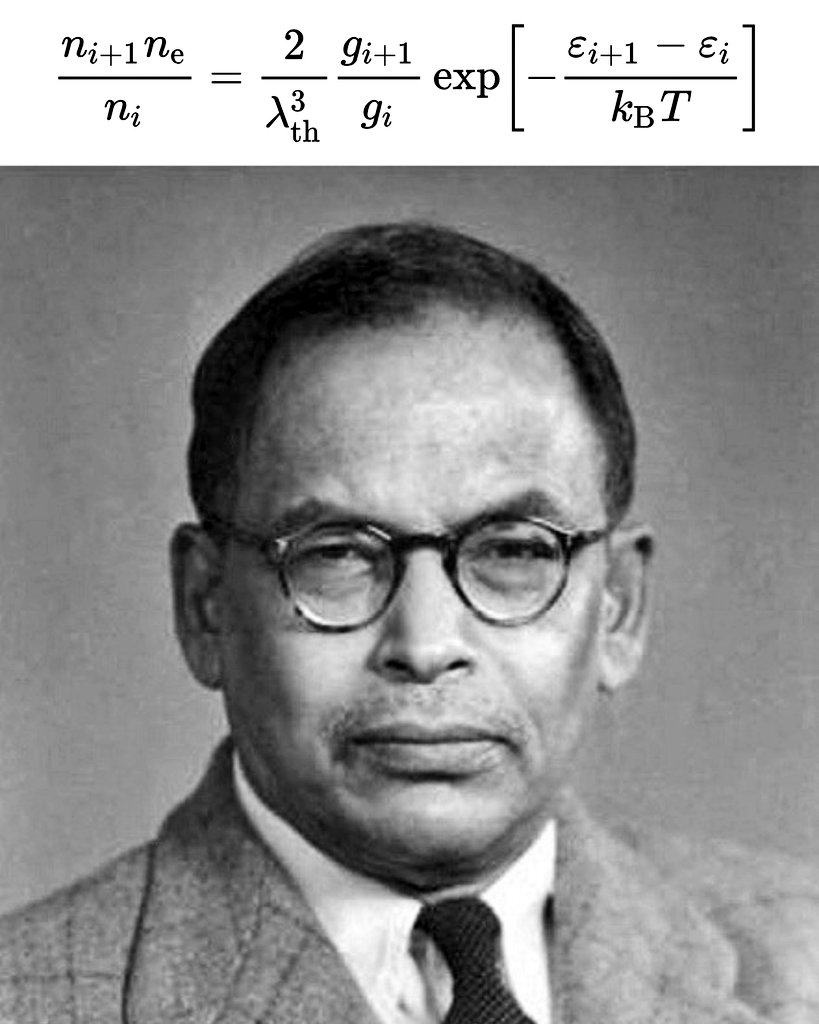
Meghnad Saha nominated again. Ignored again.
His equation explained how stars work—how light reveals temperature, pressure, composition.
Every telescope, every observatory, every astrophysics textbook relies on it. His math made it possible.
He came from nothing, a poor village in Bengal. He taught himself physics while others doubted him.
He was nominated for the Nobel Prize five times.
Five times, the committee said no. The scientist who used his equation won prizes.
The man who gave them the tools received silence.
He died in 1956, still waiting.
The stars he decoded shine every night.
His name almost forgotten. Remember Meghnad Saha.
Michael Faraday was born into a poor family and had little formal education. He was apprenticed to a bookbinder at the age of 14, where he educated himself by reading books that came into the shop.
Le problème avec cet argument, c’est qu’il inverse complètement la chronologie et la nature des menaces dans la région. Israël n’a jamais appelé à la destruction de l’Iran, alors que des dirigeants iraniens, les Pasdarans et des groupes soutenus par Téhéran ont multiplié pendant des années les discours sur la disparition d’Israël, tout en finançant et armant des proxies régionaux.
On peut débattre de la stratégie israélienne, de la question nucléaire ou de l’équilibre régional. Mais présenter la politique israélienne uniquement comme une volonté de “casser tous les pays importants du Moyen-Orient” efface totalement le contexte sécuritaire, les guerres par procuration, les tirs de missiles, les attaques du Hamas, du Hezbollah ou des Houthis, et les menaces répétées contre Israël.
La situation est évidemment plus complexe qu’un simple récit de “monopole nucléaire”.
Thomas Young est mort il y a 197 ans à Londres, à l’âge de 55 ans.
C’était un homme polymathe : il fut médecin, physicien et égyptologue.
Mais pas que.
Il fut aussi un dictionnaire de traductions à lui tout seul : il parlait l'anglais, le français, l'italien, le latin, le grec, l'hébreu, le chaldéen, le syriaque, l'araméen samaritain, l'amharique, le turc, l'arabe et le persan…
Et en ces moments de loisirs, il a inventé le concept de module de Young, réalisé l’expérience des fentes de Young en optique, étudié la pierre de Rosette, sérieusement réfléchi au concept d’assurance-vie, et j’en passe.
Quand même, y a des gens…
At the age of 39, Karl Weierstrass was working as a high school teacher in Germany, far from the major centers of academic life. He spent his days teaching and his evenings quietly pursuing mathematical research on his own.
In 1854, he published a groundbreaking paper on Abelian integrals. The work was so impressive that it immediately caught the attention of leading mathematicians across Europe.
This achievement changed his life. Soon after, Weierstrass was offered a position at the University of Berlin, where he went on to become one of the most influential mathematicians of his time.
On Einstein’s 70th birthday in 1949, his close friend Kurt Gödel gave him a mathematical paper as a gift.
In it, Gödel showed that Einstein’s own field equations allow a rotating universe.
In this Gödel universe, spacetime becomes so curved that it forms closed timelike curves, meaning, at least mathematically, paths that could loop back into the past and allow time travel.
Einstein was reportedly deeply disturbed by the result. He accepted that the mathematics was correct, but still hoped that, on physical grounds, such a universe could not exist, since it seemed to violate the basic idea of causality.
Merci à Christophe Clavé pour cet éclairage sur l’appauvrissement de la langue et la ruine de la pensée 🙌
"La disparition progressive des temps (subjonctif, passé simple, imparfait, formes composées du futur, participe passé…) donne lieu à une pensée au présent, limitée à l’instant, incapable de projections dans le temps.
La généralisation du tutoiement, la disparition des majuscules et de la ponctuation sont autant de coups mortels portés à la subtilité de l’expression.
Supprimer le mot «mademoiselle» est non seulement renoncer à l’esthétique d’un mot, mais également promouvoir l’idée qu’entre une petite fille et une femme il n’y a rien.
Moins de mots et moins de verbes conjugués c’est moins de capacités à exprimer les émotions et moins de possibilité d’élaborer une pensée.
Des études ont montré qu’une partie de la violence dans la sphère publique et privée provient directement de l’incapacité à mettre des mots sur les émotions.
Sans mot pour construire un raisonnement, la pensée complexe chère à Edgar Morin est entravée, rendue impossible.
Plus le langage est pauvre, moins la pensée existe.
L’histoire est riche d’exemples et les écrits sont nombreux de Georges Orwell dans « 1984 » à Ray Bradbury dans « Fahrenheit 451 » qui ont relaté comment les dictatures de toutes obédiences entravaient la pensée en réduisant et tordant le nombre et le sens des mots.
Il n’y a pas de pensée critique sans pensée. Et il n’y a pas de pensée sans mots.
Comment construire une pensée hypothético-déductive sans maîtrise du conditionnel ? Comment envisager l’avenir sans conjugaison au futur ? Comment appréhender une temporalité, une succession d’éléments dans le temps, qu’ils soient passés ou à venir, ainsi que leur durée relative, sans une langue qui fait la différence entre ce qui aurait pu être, ce qui a été, ce qui est, ce qui pourrait advenir, et ce qui sera après que ce qui pourrait advenir soit advenu ? Si un cri de ralliement devait se faire entendre aujourd’hui, ce serait celui, adressé aux parents et aux enseignants : faites parler, lire et écrire vos enfants, vos élèves, vos étudiants.
Enseignez et pratiquez la langue dans ses formes les plus variées, même si elle semble compliquée, surtout si elle est compliquée. Parce que dans cet effort se trouve la liberté. Ceux qui expliquent à longueur de temps qu’il faut simplifier l’orthographe, purger la langue de ses «défauts», abolir les genres, les temps, les nuances, tout ce qui crée de la complexité sont les fossoyeurs de l’esprit humain. Il n’est pas de liberté sans exigences. Il n’est pas de beauté sans la pensée de la beauté."
Christophe Clavé
The Copenhagen interpretation grew out of the intense work of Niels Bohr and Werner Heisenberg in the late 1920s at the Niels Bohr Institute in Copenhagen.
It is one of those moments in physics where the rules didn’t just get refined, they changed how we think about reality itself.
The basic shift is surprisingly simple, but uncomfortable if you grew up with classical physics.
Instead of treating quantum mechanics as a description of “what is really there,” it treats it as a framework for predicting what we can observe.
In this view, a quantum system does not carry definite properties like position or momentum in the classical sense before we measure it. What we have instead is a wave function, a mathematical object that encodes probabilities. When we measure something, we only get one outcome, selected according to those probabilities.
This is where the famous Born rule comes in, turning the wave function into actual measurable likelihoods.
Another key idea is complementarity. A system can show wave-like behavior or particle-like behavior, but never both at the same time in a single experiment.
What you see depends on how you choose to look, not on what the system “is” in a classical sense. This connects deeply with Heisenberg’s uncertainty principle, where certain pairs of properties cannot be sharply defined together.
Then comes the most controversial part: measurement.
When a measurement happens, the wave function is said to “collapse.” A range of possible outcomes suddenly becomes one actual result. This process is not smooth or reversible like classical motion. It is abrupt, and it breaks the idea of a fully deterministic universe.
This is why the interpretation is often described as epistemic. Quantum mechanics, in this view, is not telling us what reality is made of when no one is looking. It is telling us what we can say about outcomes when we do look.
This perspective clashed sharply with Albert Einstein, who believed that a deeper, more complete description of reality must exist underneath the probabilities.
But despite the debate, the Copenhagen interpretation became the standard way of thinking about quantum mechanics in the post-1927 era, largely because it worked so well in practice.
Later, thinkers like Richard Feynman would reframe these ideas in even more intuitive ways, emphasizing that quantum systems are not following single classical paths, but contributing probabilities that only resolve into definite outcomes when observed.
In the end, the Copenhagen interpretation does not try to answer what reality “is” in a classical sense. It simply says: physics is about what we can observe, predict, and measure, and quantum mechanics is the most precise language we have for doing exactly that.
Michael Faraday was one of the greatest experimental physicists in history, yet he had almost no formal mathematical training. Instead of relying on equations, he developed a deeply intuitive way of thinking, visualizing electricity and magnetism as “lines of force” stretching through space.
He discovered the laws of electromagnetism by imagining how these invisible fields flow and interact, building a mental picture of nature rather than solving symbolic expressions on paper.
He once wrote:
When a mathematician engaged in investigating physical actions and results has arrived at his own conclusions, may they not be expressed in common language as fully, clearly, and definitely as in mathematical formulae?
If so, would it not be a great boon… translating them out of their hieroglyphics?
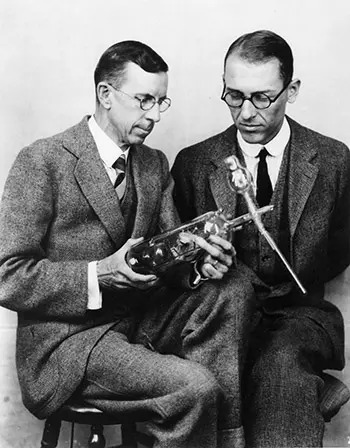
Around 1924, Clinton Davisson and Lester Germer were at Bell Labs shooting an electron beam at a nickel surface. They expected a smooth, boring scattering pattern.
Then they broke their apparatus. Something cracked in their vacuum system, and air rushed in, oxidizing the nickel surface. To clean it, they heated the nickel but accidentally melted it. When it cooled, the nickel recrystallized into a few large, smooth crystals instead of many tiny ones.
The result was striking. When they ran the experiment again, they saw a dramatic peak in electron scattering at a specific angle. This was exactly what you would expect if electrons behaved like waves diffracting off atoms. They had accidentally proven Louis de Broglie’s wave theory of matter, and Davisson later shared the 1937 Nobel Prize for it.
Sometimes breaking your equipment is the best thing that can happen to you.
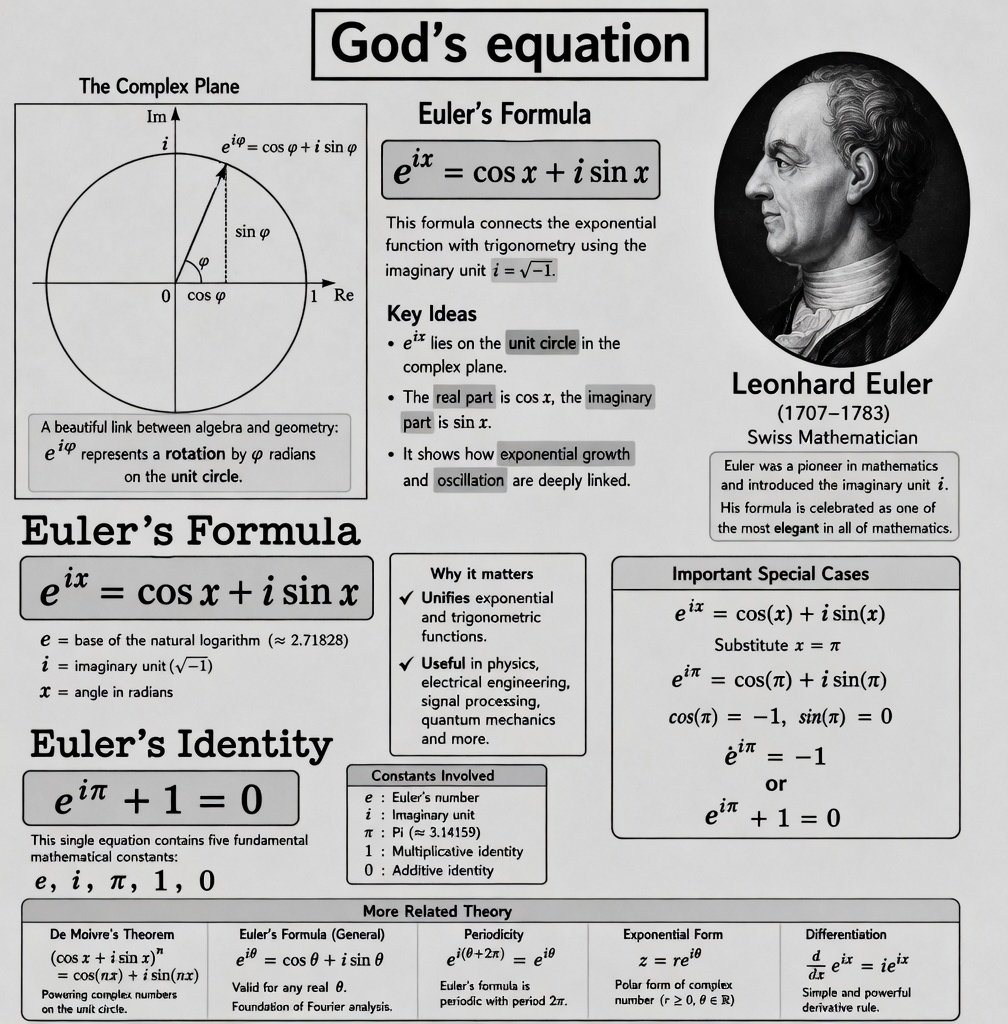
Leonhard Euler (1707–1783) was a Swiss mathematician and one of the greatest scientists in history. He was born in Basel, Switzerland, and made important contributions to many areas of mathematics, including calculus, graph theory, and number theory.
Euler introduced much of the modern mathematical notation used today, such as e for the base of natural logarithms and f(x) for functions. He also made significant discoveries in physics and engineering.
He worked at major academies in Europe, including in Berlin and St. Petersburg, and published hundreds of papers and books. Euler is widely regarded as one of the founders of modern mathematics...
@Grok's critique of the claims made in this post:
The X post (by @ihtesham2005) presents an engaging, dramatic retelling of Ibn al-Haytham (Alhazen, c. 965–1040 CE) as the lone genius who "invented the scientific method" under house arrest in Cairo around 1011, authoring the Book of Optics that supposedly laid the groundwork for Bacon, Galileo, Descartes, and even Newton—while Europe languished in the "Dark Ages." It includes a real quote from his work emphasizing skepticism toward ancient authorities in favor of "argument and experiment," credits him with overturning the Greek extramission theory of vision via the camera obscura, and contrasts this with standard textbook narratives.
This is inspirational popular history with a kernel of truth, but it romanticizes and overstates several claims in ways that echo (and invert) the very Eurocentric textbook biases it criticizes. No single person "invented" the scientific method—it evolved gradually across cultures and centuries through observation, hypothesis-testing, experimentation, and skepticism. Al-Haytham was a major pioneer who systematized and applied these elements rigorously in optics, but he built on predecessors, and similar (often exaggerated) claims have been made for earlier and later figures, including Christian scholars.
Accurate achievements and context
Al-Haytham's Kitāb al-Manāẓir (Book of Optics, written c. 1011–1021) was groundbreaking.
He:Rejected blind trust in authorities (Aristotle, Ptolemy, Galen) in favor of empirical verification: "The seeker after truth is not the one who follows his natural disposition to trust the writings of the ancients... but rather the one who suspects them."
Used controlled, repeatable experiments (combined with mathematics) to test hypotheses, such as showing light travels in straight lines and enters the eye (intromission theory) rather than rays emitting from it.
Provided the clearest early experimental analysis of the camera obscura (pinhole "dark room") to demonstrate image formation, inversion, and light behavior—advancing its use far beyond prior descriptions.
His work was translated into Latin in the 12th–13th centuries and directly influenced European optics scholars like Roger Bacon, Witelo, John Peckham, and later Johannes Kepler (whose retinal image theory drew on it). This fed into the Scientific Revolution.
He deserves far more recognition in Western popular histories than he typically gets.The house-arrest story has some basis (13th-century biographer Ibn al-Qifṭī describes him being summoned by the erratic Caliph al-Hakim for a Nile project he deemed impossible, leading to restricted living until 1021), but the "faked madness to avoid execution" details are legendary embellishments, not from his own writings.
Key overstatements and inaccuracies in the post
"Invented the scientific method": This is the core exaggeration (a common trope applied to many figures—Aristotle, Roger Bacon, Galileo, Francis Bacon, Descartes, Newton). Historians widely reject the "lone inventor" framing; the method developed incrementally.
Predecessors included:Ancient Egyptians (Edwin Smith papyrus, c. 1600 BCE: empirical examination/diagnosis/prognosis in medicine).
Greeks (Aristotle's emphasis on induction from observation + deduction; limited experiments by Herophilos/Erasistratus).
Earlier Islamic scholars (al-Kindi, Jabir ibn Hayyan stressed experiment + theory).
Al-Haytham refined this into a more systematic cycle (observation → hypothesis → controlled experiment → verification) within optics, but even he didn't originate the full modern hypothetico-deductive approach. His use of experiment was pioneering for physics but limited compared to later developments.
Camera obscura: He didn't invent it or first use it scientifically. The principle was known to Aristotle (and earlier Chinese/Indian sources); he advanced its experimental application dramatically.
Newton "studied" the book 600 years later: Influence was real but indirect and mediated (via Kepler and the optics tradition). By Newton's era (late 17th century), the Optics had been largely superseded in specifics, though the experimental ethos persisted.
"Europe in the Dark Ages": Oversimplification. While the post-Islamic Golden Age transmission via Spain/Sicily was crucial, Christian Europe had active scholarship (monasteries, early universities). The 12th-century Renaissance involved massive translation of Greek/Arabic works, including al-Haytham's.
Similar claims about Christian (or pre-Islamic Christian-era) scientists
The post's framing implicitly critiques Western-centric narratives that credit later Europeans while ignoring al-Haytham. Fair point—but the "first/inventor" game cuts both ways, and there were earlier empirical/skeptical approaches in Christian contexts (Byzantine/early medieval).
John Philoponus (c. 490–570 CE): A Christian theologian/philosopher in Byzantine Alexandria who directly challenged Aristotle's physics with empirical arguments and thought-experiments (e.g., on falling bodies, motion/impetus theory as an "implanted force" rather than air pushing—foreshadowing inertia and Galileo by ~1,000 years). He used observation to reject authority, advancing a proto-empirical critique that some historians link to later experimental science. His ideas influenced medieval scholastics (via preserved texts).
Later Christian figures (post-al-Haytham): Robert Grosseteste (c. 1175–1253) and his student Roger Bacon (c. 1219–1292) explicitly promoted experimentation ("scientia experimentalis") as verification, building directly on Arabic translations including al-Haytham. Bacon cited him extensively. These are the Christians often credited in older Western histories with "founding" experimental science—precisely because al-Haytham's work reached them.
Some scholars argue medieval Christian theology (a rational, law-giving God creating an orderly, intelligible universe) provided fertile ground for systematic science in Europe, enabling the full Scientific Revolution—distinct from (though building on) Islamic/earlier contributions. Others note parallel monotheistic motivations in the Islamic world.
In short: The post rightly highlights an underappreciated Muslim scholar whose experimental rigor was transformative in optics and helped transmit/advance empiricism to Europe. But claiming he "invented" the method (while Europe slept) mirrors the very mythmaking it decries—history is collaborative and cumulative, not a zero-sum contest of "firsts." Al-Haytham, Philoponus, Grosseteste, Bacon, and many others all contributed pieces.
An Arab scholar in 1011 was placed under house arrest in Cairo for 10 years. He used the time to invent the scientific method, prove how vision actually works, and write a 7-volume book that Newton studied 600 years later.
I read about him last night and could not stop thinking about it.
His name was Ibn al-Haytham. The book is called the "Book of Optics."
The textbook story names Bacon, Galileo, and Descartes as the founders of modern science. All three of them came 600 years after Ibn al-Haytham. All three of them studied his work directly or through Latin translations. The man who actually invented the scientific method was working alone in a single room in Cairo while Europe was still in the Dark Ages.
Here is the story almost nobody tells you.
He was born in Basra around 965 CE. By his 40s he had a reputation across the Arab world as one of the most original minds alive. Then he made the mistake that almost killed him. He claimed publicly that he could regulate the flooding of the Nile. The mad caliph al-Hakim of Cairo summoned him to Egypt to do it.
Ibn al-Haytham took one look at the river and realized the project was impossible with the technology of his era. The caliph had executed dozens of scholars for less. So he faked madness. The caliph believed him and put him under house arrest in his own home in Cairo for the next 10 years.
Most people would have lost their actual mind. He used the time to invent science.
Before him, knowledge worked one way. You quoted authority. If Aristotle had said it, it was true. If Galen had written it, it was correct. The role of a scholar was to memorize and defend the ancient Greeks. I
Ibn al-Haytham broke this completely. He wrote a sentence in the Book of Optics that quietly destroyed 1,400 years of intellectual culture. "The seeker after truth," he said, "is not the one who follows his natural disposition to trust the writings of the ancients. The seeker after truth is the one who suspects them, questions them, and submits only to argument and experiment."
That single sentence is the foundation of modern science. He wrote it 600 years before the European Renaissance.
The second thing he did was build the actual machinery of experimentation.
He insisted that no claim about the physical world was acceptable until it had been verified by an experiment anyone could repeat. He gave detailed instructions for every experiment in his book. He told his readers, in writing, not to take his word for any of it. Build the equipment. Run the tests yourself. Verify or destroy my claims with your own eyes.
The third thing he did was use the method to overturn one of the most settled questions in physics.
The Greeks had taught for centuries that vision worked because the eye emitted invisible rays. Ibn al-Haytham proved them wrong with a darkened room, a small hole, and a wall. The first camera obscura. He showed that light from the outside world enters the eye, the exact opposite of what every Greek thinker had taught.
Two hundred years later his book was translated into Latin in Spain. Roger Bacon cited him. Kepler cited him. Galileo's work on the telescope was built on his optics. Newton's foundational work on light rested on his framework.
Walk into any physics department today. Ask who founded the scientific method. Almost nobody will say Ibn al-Haytham.
The man who invented the way humanity actually knows things did the work under house arrest, with no funding, no laboratory, and a paranoid caliph next door waiting for an excuse to kill him.
He did it anyway. Most of the world is still pretending it was someone else's idea.
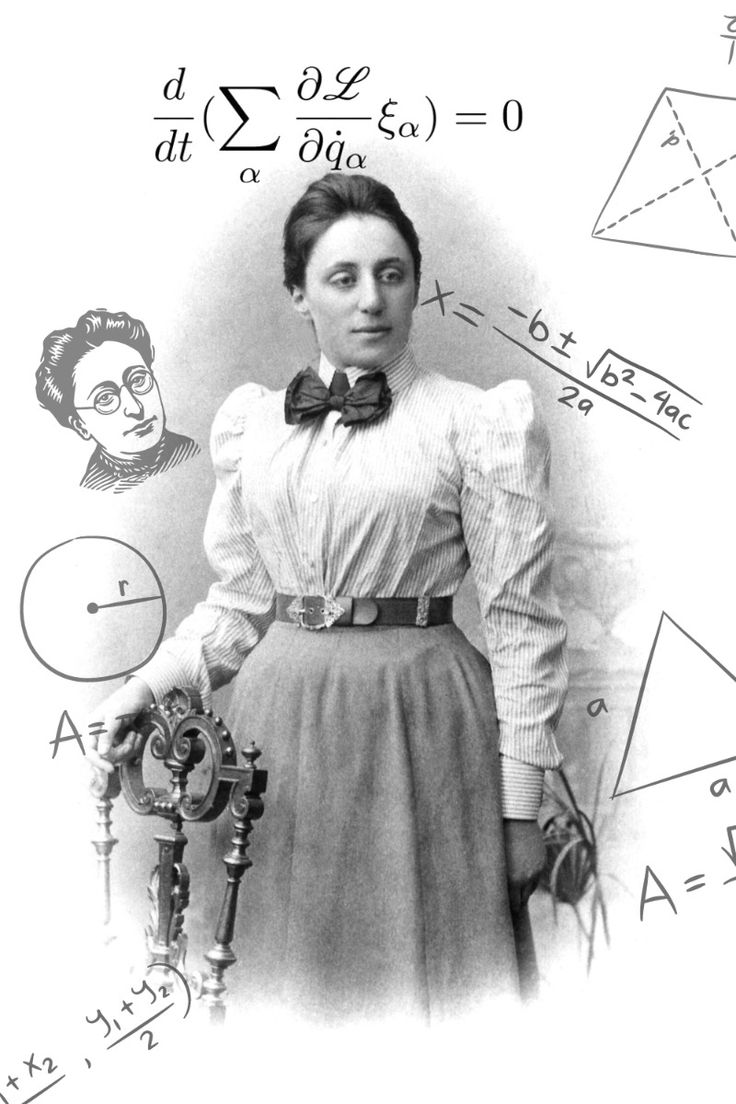
For a long time, women were not allowed to teach or do research, especially before the mid-20th century. This is one reason why there are so few well-known female scientists from earlier periods.
Emmy Noether was a German mathematician who made major contributions to abstract algebra and theoretical physics.
She was born in 1882 and died in 1935. At first, she considered studying languages, which was more socially accepted for women at the time. Instead, she chose mathematics and studied at the same university where her father, Max Noether, taught.
After completing her PhD, she could not get a teaching job because she was a woman. Still, she continued working unpaid for several years.
In 1915, she was invited by David Hilbert to the University of Göttingen to help clarify mathematical aspects of General relativity and to teach. However, she was not officially allowed to lecture under her own name at first and had to teach under Hilbert’s name.
Later, she received the title of “Privatdozent,” which allowed her to teach independently but without a salary. Despite these barriers, her work transformed mathematics, especially in algebra.
Her most famous achievement is Noether's theorem. It shows a deep connection between symmetry and conservation laws in physics. For example, the fact that energy is conserved is linked to the idea that the laws of physics do not change over time. What may seem obvious today was rigorously proven through her work.
This theorem also explains many other principles, such as why certain physical quantities, like momentum, remain constant in symmetric systems.
Albert Einstein praised her work as a major achievement in mathematical thinking.
Her contributions were highly abstract but incredibly powerful, shaping modern physics and mathematics. Today, she is recognized as one of the most important scientists of her time.
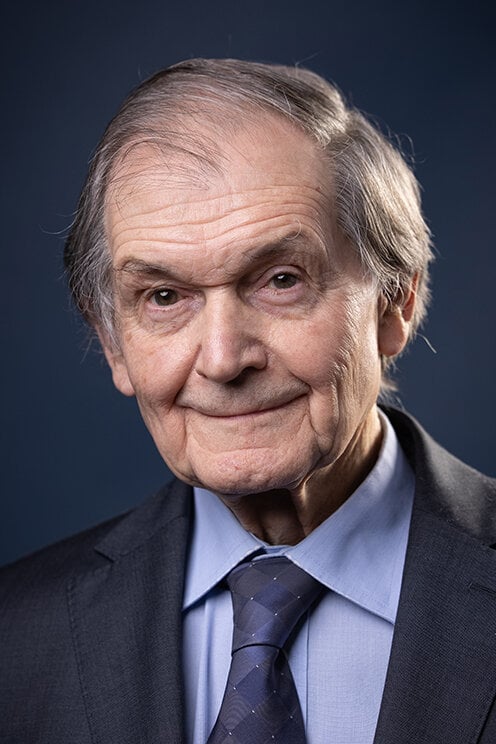
Meet Roger Penrose;
Born in 1931 in Colchester, England, Roger Penrose grew up in an intellectual family, his father was a geneticist, his mother a doctor-turned-artist but he didn’t follow a straight path to physics.
As a child during World War II, he spent years in Canada, returning to England afterward. He studied mathematics at University College London, earning his degree, then pursued a PhD at Cambridge in algebraic geometry, completing it in 1957.
Early on, Penrose’s interests shifted. He briefly explored pure math before his curiosity pulled him toward physics, influenced by lectures from figures like Paul Dirac. He held temporary posts at various universities in England and the US, never quite settling into a conventional academic track right away.
Then he found general relativity.
Working on gravitational collapse, Penrose in 1965 introduced ingenious mathematical tools including the concept of trapped surfaces that proved black hole formation and singularities were inevitable consequences of Einstein’s theory, even without perfect symmetry.
This work stunned the field, showing black holes weren’t exotic curiosities but robust predictions of physics.
What made Penrose unique was not just rigor, but vision. He repeatedly uncovered hidden geometric structures in physical laws. He co-developed the Penrose-Hawking singularity theorems with Stephen Hawking, forever changing our understanding of the universe’s extremes. He invented twistor theory, a radical framework mapping space-time into complex geometry that has influenced quantum gravity pursuits. And his aperiodic Penrose tilings, non-repeating patterns, prefigured the discovery of quasicrystals and blurred lines between math and materials science.
In 2020, he received the Nobel Prize in Physics (shared) for demonstrating that black hole formation is a robust prediction of general relativity. He remains one of the few to bridge mathematics and physics so profoundly.
Within the scientific community, Penrose’s reputation is formidable.
His ideas often challenge consensus, and his lectures can leave audiences rethinking fundamentals.
Yet in person, he is thoughtful, unassuming, and generous often crediting others while quietly pursuing his own unconventional lines of inquiry.
Roger Penrose took a winding route through mathematics before revolutionizing our picture of black holes and the cosmos.
And still, he became one of the most original minds in modern physics and mathematics the quiet visionary many regard as a true pioneer of the field.
Deux auteurs, deux parcours, deux regards. Avec @DamienERNST1 , nous publions bientôt « Au seuil du chaos » : un dialogue dense sur les fractures de nos sociétés, l’IA, l’énergie, la géopolitique et les issues possibles.
Déjà en précommande. Bientôt en librairie.