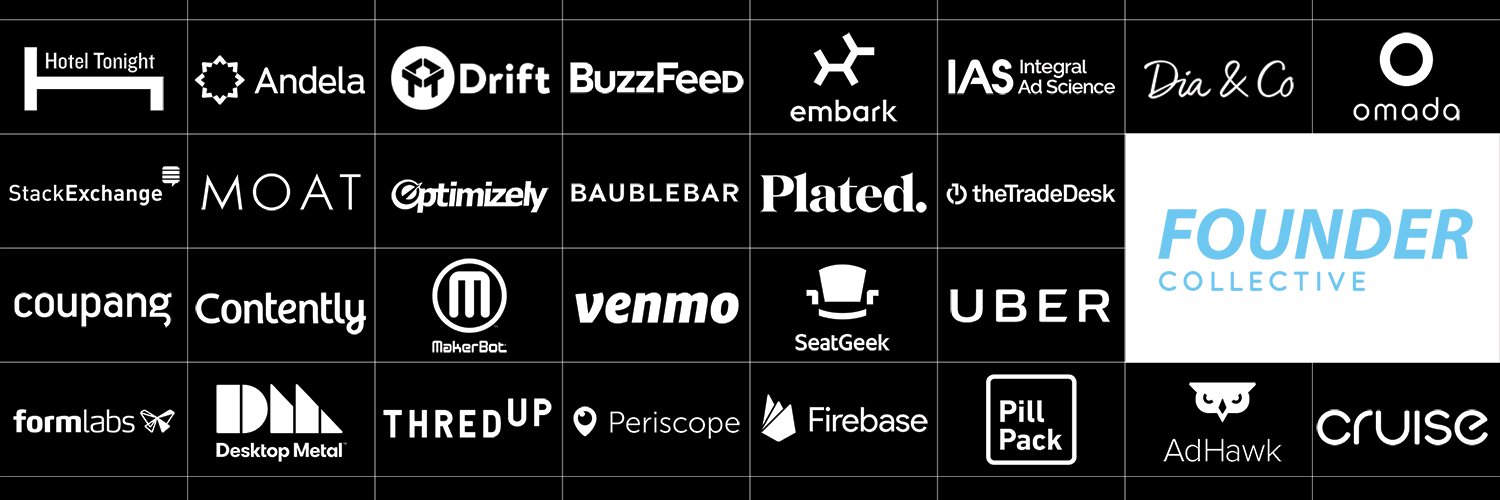
We’re often asked by entrepreneurs, VCs, and others in the entrepreneurial community, “What kinds of companies do you invest in?”
The short answer is – almost anything.
We’ve backed startups developing solutions in industries ranging from AdTech to Zoological DNA tests.
/🧵
Startup Founders Need Windows More Than Mirrors
Jobs and Wozniak. Spielberg and Williams. Knight and Bowerman.
The best creative and commercial partnerships result from a combination of complimentary talents. They don’t divide work, they multiply each other's strengths.
Building a startup is an act of monumental hubris. You are effectively saying that you, starting from scratch, can compete with the most capable organizations in the world despite having a fraction of the resources.
Why make the challenge even harder by doing it solo?
The strongest founding teams are like the two wheels of a bicycle. One wheel provides power, the other direction. Unicycles, while impressive, are not built for long hauls or hard work. Neither is a company built entirely around a single personality or skillset.
I speak to a lot of students and early-career founders. If I could offer one piece of advice, it would be this: put yourself in environments where you're likely to meet people who share your vision and values, but with variation in perspectives. Look for a window into a new world, not a mirror image.
Honored to be named to the first-ever TIME100 Sports list 🙏🏼 truly so many athletes and execs I admire on it. Sport has been core to our foundation at whoop and I’ve always believed that the best athletes inspire us to dream bigger in performance and life. thank you @time
Who > What.
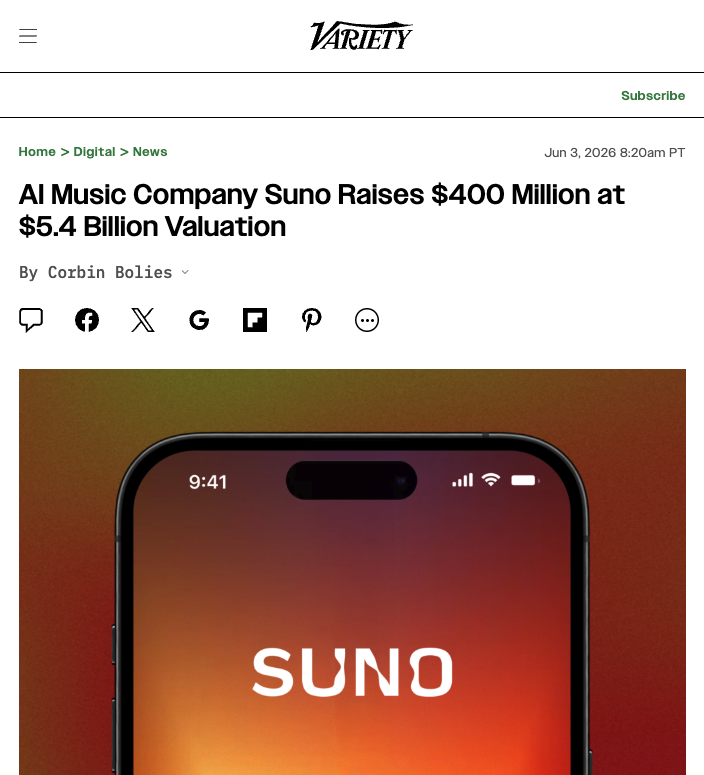
@suno just announced a well-deserved funding round at a $5.4B valuation.
I was fortunate to be their sole pre-seed investor, but I have to confess, I didn’t love the music business when we invested back in 2022. At the time, crypto was king and AI was still a novelty. Music apps are a notoriously challenging category. ChatGPT hadn’t yet landed in the hands of users and showed what was possible.
But this team marched to the beat of their own drum. When I met @MikeyShulman, Martin and Georg, they were a trio of wizards who understood audio and AI better than anyone on the planet.
I had misgivings about the music business, but had total conviction about the team. Suno wasn’t actively fundraising, so I pitched @fcollective.
Luckily Mikey thought we may be able to add some value ...
It was well worth the effort.
Markets evolve, products pivot, and technologies come in and out of fashion, but brilliant, authentic, agentic founders are the constant around which great startups are built.
Invest in the "who,” trust that the “what” will follow.
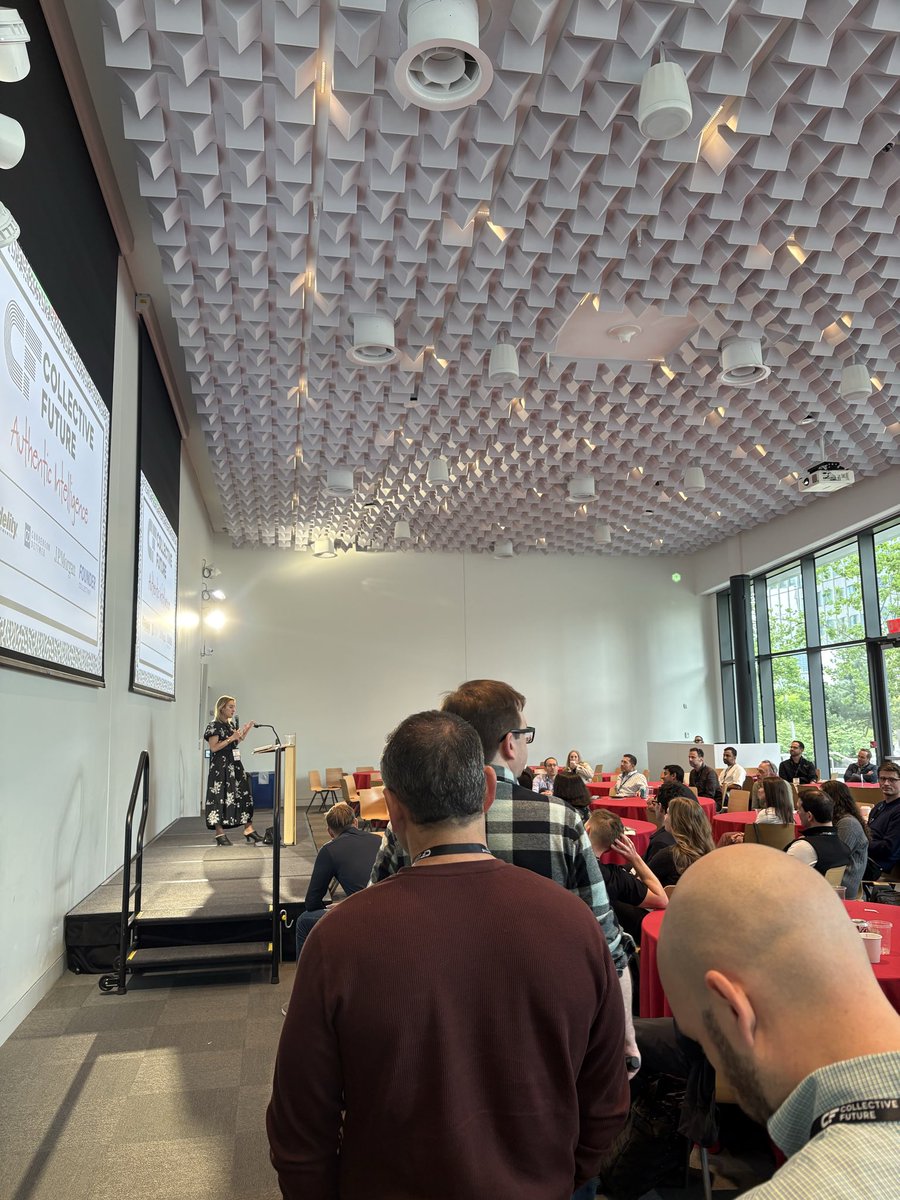
This was great - open discussion on the state of early-stage investing w/ Dave Frankel @fcollective, Giuseppe Stuto @massaicoalition, Jules Deplanck @GenesisFundBOS, Devon Triplett @021Tvc, and Ellen Chisa @Boldstartvc, +moderated by David Horne at @FenwickWest.
Lots of perspectives on where we are in the cycle, and where the opportunities lie for VCs now that the barrier to entrepreneurship is lower than ever. @Techweek_ #BOSTechWeek
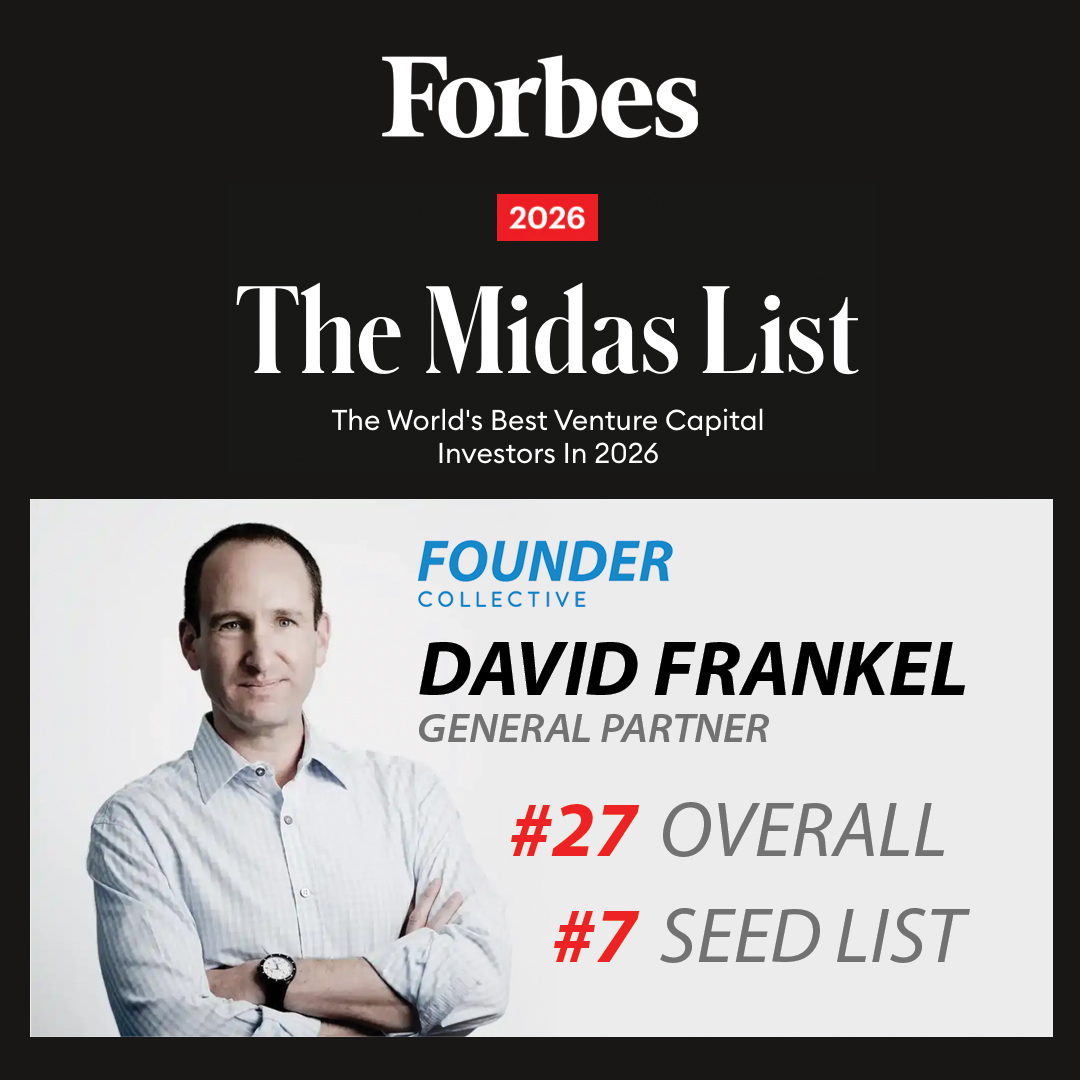
Congratulations to @dafrankel for being named to the @Forbes Midas List for the fifth year in a row!
This appearance marks 10 appearances for Founder Collective!
11 years ago today @rtsengusa and I started @shieldaitech. A month later Andrew Reiter would join as our 3rd cofounder. The mission and vision for the company has remained the same - to protect service members with AI systems, deter conflict, and build a world full of autonomous systems. What I'm most proud of over these 11 years is not the # of employees we've grown to, or the valuation, or revenue generated but the meaningful, life-changing mission impact our products have had for our customers. Thank you to our customers, investors, and Shield AI teammates who have helped build a very special and rare company. Cheers to another 11 years and Happy Birthday Shield AI!
On Portfolio Construction
There are a lot of opinions on X regarding portfolio construction in VC. I, myself, have been historically been dogmatic in my positioning on concentration. Others praise diversification and the power law of outlier outcomes. The truth is that there is no single best approach to portfolio construction, just the one that works best for you.
Investing is a lot like baseball (I’ll pause for the eye roll from those who know me all to well…). There are those that hit home runs and those that hit for average. Both can be extremely valuable, but what’s really dangerous is when you think that you are something that you aren’t. No two hitters are the same, but the best hitters (and investors) find the approach that works for them.
@foundersfund is an incredible firm, but out of the 500-600 investments they’ve made, it’s really 10 that matter for them. They are happy to strike out a lot because when they hit, they hit BIG. That requires broad diversification and the ability to size up, concentrating capital behind those companies. They know how to hit the biggest HRs out there and swing unapologetically for the fences.
That’s very different than funds like @iaventures, which has had equally impressive returns with an approach to getting big ownership in a concentrated portfolio that demonstrates an amazing batting average with hard contact (their hit rate unicorns and decacorns from seed entry is incredible).
This is still wholly different than firms like @fcollective (again, epic returns) who have diversified strategies but have focused on lower dollars cost average and smaller fund sizes, with a swing for he fences approach). They don’t lean in on the momentum of the portfolio, choosing to only swing at the seed stage where they know are positioned best as a team to succeed. While a unicorn might not move the needle for Founders Fund, it certainly moves the needle for them, making the returns from larger outcomes drive even larger fund multiples.
I admire each of these firms in their own way and I’m increasingly convinced that the pattern matching / best practices of portfolio construction is more destructive than informative to performance. We’d be better off stress testing our own capabilities and going through the work to determine where that best enables us to invest.
And that can evolve over time based on the capabilities of the investor and the conditions of the market
I began my career as a “low and slow” hitter - not taking many swings, being very price disciplined, but connecting on a high % of companies. Seed rounds were far more attractively priced than they are today and downstream rounds were overpriced. This resulted in good enough performance for me to play this game as a professional.
Today, I still focus a lot on plate discipline, but I’m more relaxed on entry pricing given the confidence I have in leaning in on the right companies and the relative pricing of Series A/B (from a risk/reward basis) to today’s seed rounds. I’m consciously choosing to sacrifice a bit of my batting average (and early ownership) to swing harder for bigger home runs.
Others on my team my team have their own approach to the plate and I love that. I don’t want them to pattern match to me or to others, but rather to ensure that they invest according to the capabilities they have and the needs of the market. I want them to learn from others, not try to become something they are not. As my good friend @jakesaper once told me “Be king or queen of your own island, not anyone else’s”. We apply that deeply to our sector focus and it’s equally important to stage and sizing. We need to play OUR game…no one else’s. That’s what will result in the best results for our team members and our LPs.
Know what type of hitter you and your teammates are. Build your portfolio construction around that. That’s how you will dominate the plate and drive the returns you need to in this market and those to come.
Compound. Compound. Compound.
A founder in his late 70s gave me that advice ~20 years ago. This week, he sold his company, Restaurant Depot, for $29B.
You may not know the company, or its founder, 94-year-old Nathan “Natie” Kirsh. He isn’t exactly an avid social media user. An episode of Acquired or a chat with @HarryStebbings is overdue at this point.
I remember pitching Natie on becoming an LP in Founder Collective when we first started. He passed saying he didn't do funds. But his advice, “Compound. Compound. Compound,” has stuck with me.
Here’s what his advice about compounding looked like in practice:
He got his start in his family’s milling business in Potchefstroom, South Africa. Then he crossed into Eswatini and built one from scratch. The lessons were compounded into the capital to buy a distribution company.
The distribution company allowed Natie to pioneer a cash-and-carry model, think Costco without the polish, supplying small restaurants and shops at scale. The success compounded, and it became one of the largest food distribution businesses in southern Africa.
In the 1970s, he took the same playbook to New York and started Jetro, selling bulk groceries to bodega owners. In the 1990s, he acquired Restaurant Depot and began rolling out stores. Lessons and leverage compounded, and eventually, there were 166 of them across the country.
At one point, Warren Buffett tried to buy a stake. They couldn’t agree on terms, though it was a serious nod of respect from one legend of compounding to another.
The fascinating thing about Natie’s story is that technology is almost non-existent in the telling.
There’s real sophistication behind this business, decades of world-class execution, and a long list of smart decisions. Still, every business Natie built would be recognizable to a merchant 3,000 years ago. Buy low. Move goods. Repeat.
His edge was perspective not invention. He bought Restaurant Depot at 63 after four decades of grinding, literally and figuratively. Thirty years later, just after his 94th birthday, he sold it for $29B.
Compounding isn’t easy. The discipline to keep going, especially after decades of success, is rare. Failure forces change, but success typically breeds boredom. Most people want to move on.
Natie kept grinding, from his start as a 20-year-old miller to a nonagenarian billionaire. I've carried his three words for nearly twenty years. With luck, I'll spend the next forty proving I was listening. I hope you do as well.
Compound. Compound. Compound.
The Mayo Clinic and Lebron James.
Abbott and Cristiano Ronaldo.
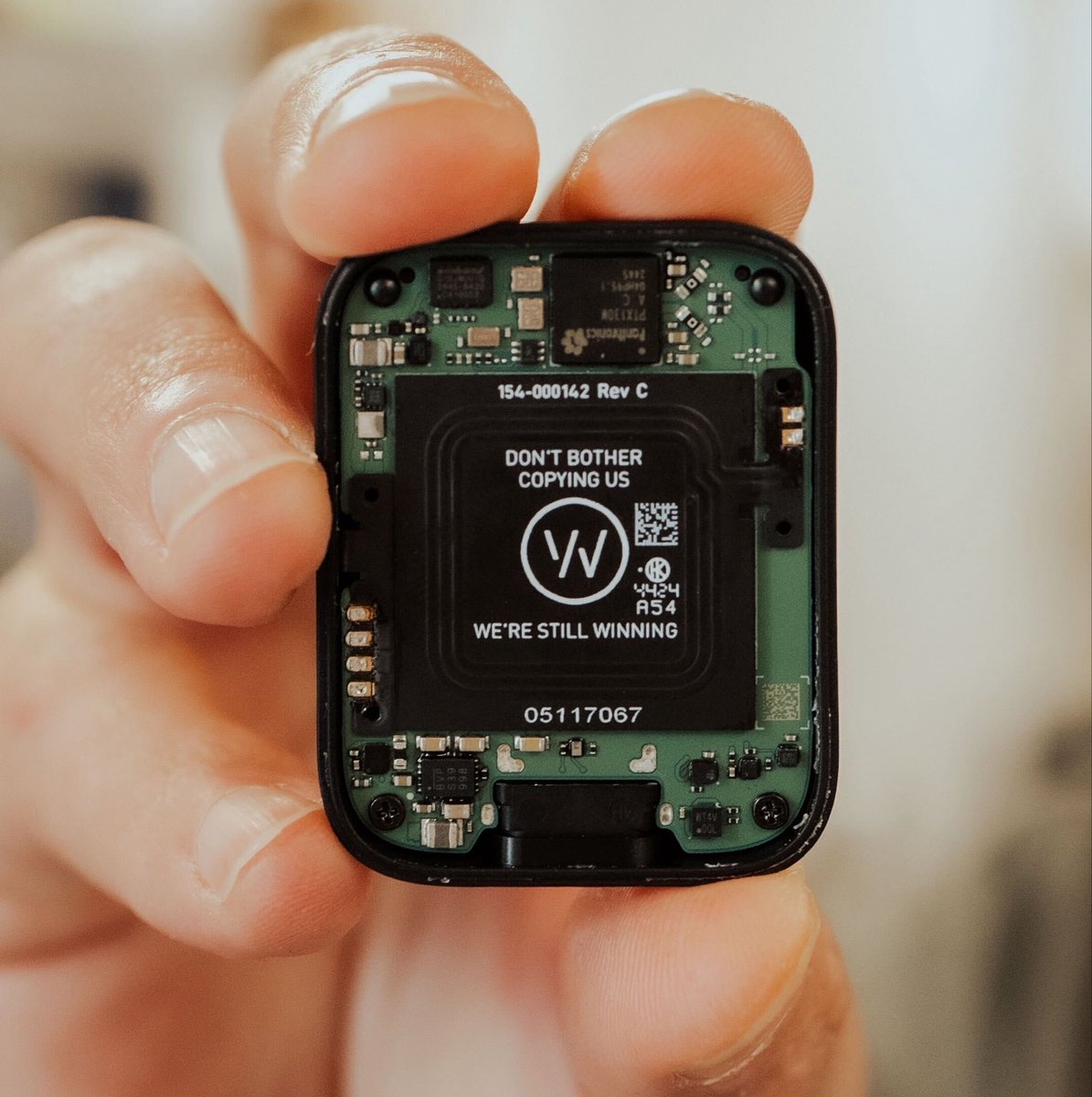
@WHOOP 's cap table includes the most impressive minds in healthcare and competitive sports, and I’m grateful to @epaley for ensuring @fcollective was first on the cap table.
https://t.co/gqTaml9WZM
been super inspiring to watch @willahmed and team build an industry defining product from the seed “Bobo Analytics” stage; upon reflection, three things I deeply admire:
(1) the leader + team lived and breathed their product and their core aspirational customer’s experience - much like Nike, they zeroed into the top performing people on the planet. as a result, they outperformed other players in the category that were marginalizing their product for everyone.
(2) focus as a differentiator - physical health, readiness, an performance, even amidst the rumors of apple watch, remained the center. (and if @willahmed got a dollar for every time someone asked him to add a clock…!)
(3) vision for self-health, where we are all outfitted with the data and intelligence to understand ourselves and optimize our performance - and that this historical data becomes hugely valuable over the course of time as more sources come online (now blood, health records, sleep data, etc) and AI gets better. I suspect those with @WHOOP will have a more enlightened future when it comes to healthcare
oh…and they really cared about design from day 1 (and we found their first data and Infographics designer on @Behance !). huge congrats to the team, and gratitude from a loyal customer too.