the inception fund. helping the bold start. first check for technical founders. Cybersecurity, AI infrastructure, physical AI, agents, the weird. since 2010
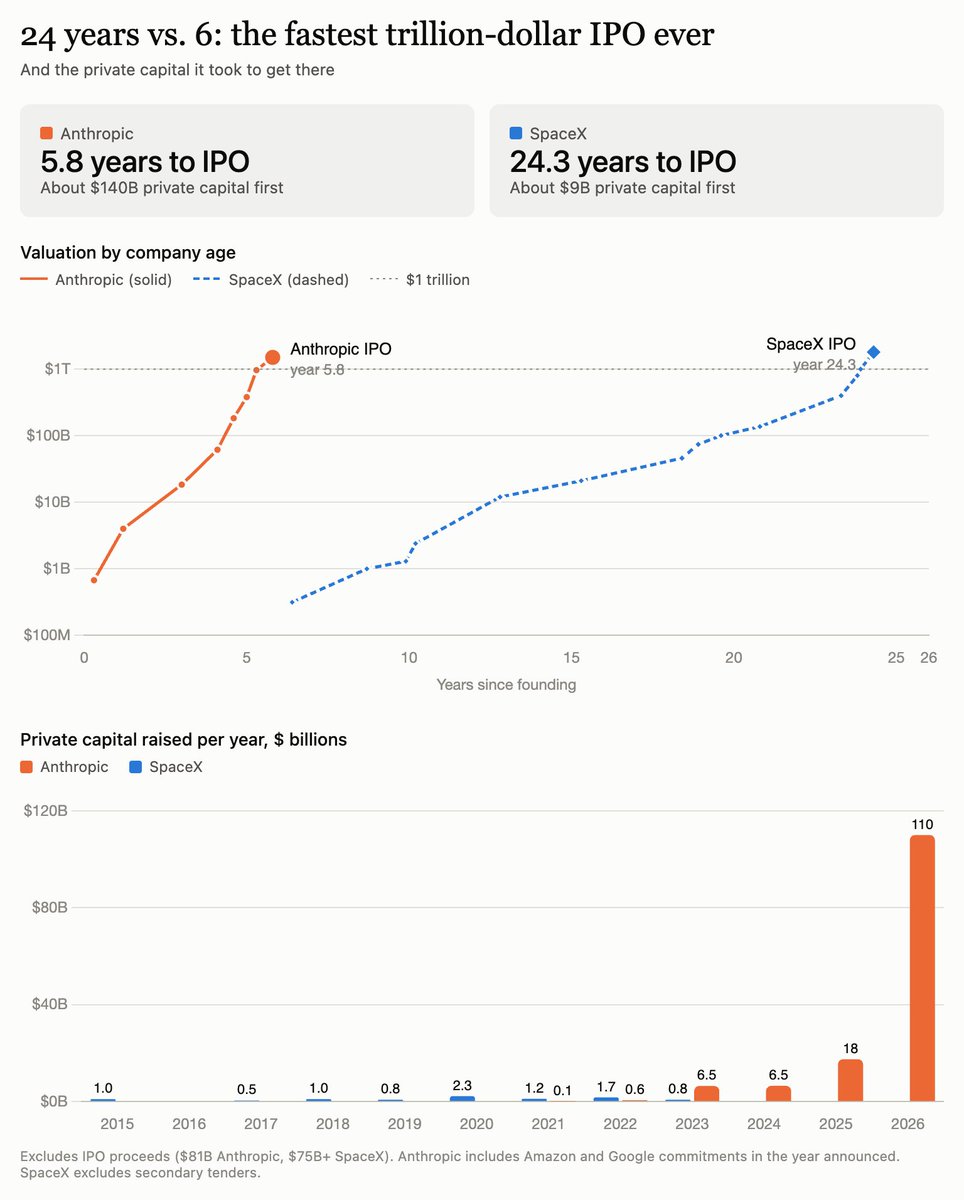
hats off to Anthropic and SpaceX, legendary 🚀
venture has changed forever...
Not only the outcomes but also the capital and speed
$9B raised used to be headscratching but that was done in 24 years versus $100B in under 6 🤯
Question is what happens when everyone underwrites the next one to look just like them, a ton of great businesses worth less than these immortal opps will get missed!
What's 🔥 #525
https://t.co/blxEkwkzcU
"In February, machines outnumbered humans in terms of token consumption. And then I think by September it was 7.8 times. And so, how long will it take before we hit 100 times, right? You have to support that scale, then you've gotta do dynamic access at that scale" - @edsim Founder and General Partner @Boldstartvc
One conversation from a fresh lead to a live GTM play. @clay's global agent plans the play from your business context, then builds it across Search, Audiences, Workflows and Sequencer. Agents that actually do the work.
https://t.co/GA0WsSt80U
MEET THE NEWEST WAY TO BUILD IN CLAY.
Our global agent uses your business context to plan a GTM play, then builds it using our Search, Audiences, Workflows, and Sequencer tools.
> Turn a fresh signal into an end-to-end play in one conversation. @clay uses your account history to find strong fits, skip accounts you already own, and flag dead deals worth another shot.
> Clay gets better every time, suggesting what to remember about your business. You choose what carries into the next play.
> Your agent runs on the same data infrastructure trusted by @AnthropicAI, @OpenAI, and @Canva — with 200+ data providers behind it.
Try it now in open beta!! ↓
Agents passed humans in token consumption in February and hit about 7.8x by September. Access granted once and held forever was built for humans. @edsim on @insecureagents on why every layer of the stack needs to be rebuilt for agents, plus a few founder anti-patterns at the end 🎧
https://t.co/0cJOmitBF9
Access Built for Humans Won't Survive Agent Scale, with Ed Sim (Boldstart Ventures)
"You've gotta do dynamic access at that scale, a millisecond scale, with a thing that's growing 10x, 20x year over year."
Ed Sim (@edsim), Founder & General Partner at @Boldstartvc, joined us live at @AISecSummit. Agents passed humans in token consumption in February, and by September they were at roughly 7.8x. Ed's argument: access granted once and held forever was built for humans, and every layer of the stack has to be rebuilt for agents.
We get into:
> Why buyers want one central policy across every vendor's agent
> Scoping an agent to one database, for one job
> Investing two years ahead: sovereign cyber models, AI data centers, physical AI
> Founder anti-patterns when speed is the only moat
TIMESTAMPS
(00:00) A year after the last AI Security Summit
(00:40) Personal agents as the test bed for agent security
(01:40) Agents are relentless: 200 API calls per hour against a reservation site
(02:50) Every agent gets its own identity, and why banks balked two years ago
(03:50) The fishbowl problem: one identity across every vendor
(04:50) One place for a central policy
(05:50) One database, one job, no forever access
(06:10) Boldstart Fund Seven and the autonomous enterprise
(06:45) Agent tokens pass humans: 7.8x by September
(07:40) OAuth islands and long-lived credentials
(08:30) Investing two years ahead, and why large $100M inception rounds don't always gaurentee teams win
(10:30) Sovereign cyber models, AI data center security, and physical AI
(12:40) Misfit toys: betting on the non-obvious
(13:50) Founder anti-patterns: sell earlier, speed is the moat, go multi-product
Pets vs. cattle, agent edition. Agents at scale need to be programmed, not opinionated, and each one needs its own identity and permissions. That's the problem @KeycardAI is solving.
https://t.co/TxYOe1O9AT
The answer is: it's both - personifying agents helps maybe - when they have distinct context and programmed perspective (e.g. personality) but to get to cattle (instead of pets) you need the former - agents that are programmed, not opioniated.
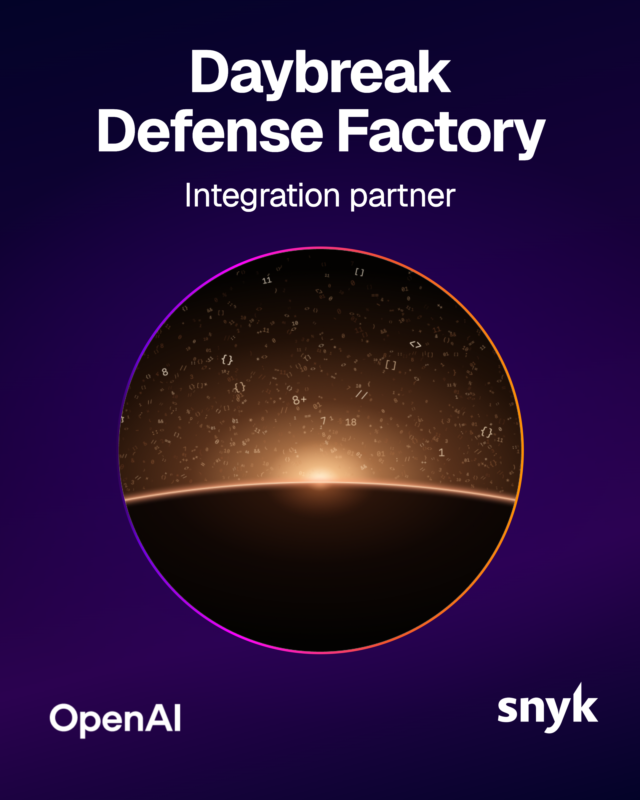
Automated fixing is only as good as what you feed it. @snyksec is one of the first partners in OpenAI's Daybreak Defense Factory, sending real, prioritized findings into the Discovery stage. Fixing a false positive fast is still wasted work.
https://t.co/ETuGPSHxgP
OpenAI just announced Daybreak Defense Factory, an automated defense operation that finds, validates, and fixes vulnerabilities continuously. Snyk is among the first integration partners.
Our findings enter at the Discovery stage, and that placement matters. Automated fixing is only as good as the findings feeding it. A fast fix for a false positive is wasted work. A fast fix for the wrong problem is worse. An agent needs to know what’s real and what to fix first.
Snyk brings more than a decade of security context to that question, and findings can arrive with dependency paths and remediation details. That’s what we’re putting into the Defense Factory.
See how to set up the integration: https://t.co/vLaQrNfnJ5
From $75 to $13 per PR. @tessl_io lays out the path to a software factory: skills that define good, loops that learn, and factories built around outcomes. Worth the read from @guypod.
https://t.co/qKt8mUpBcU
Quality, cost, and safety hold teams back from building a software factory.
The path: skills that define good, loops that learn, and factories built around outcomes. Tessl's cost per PR went from $75 to $13.
@guypod's opening keynote at AI DevCon NYC: https://t.co/ZCGCwfryAr
The service desk is the new front door for attackers. Humanix just launched Complete Call Context to expose voice-based social engineering, flagging a call that doesn't add up before the reset happens.
https://t.co/8kRSr2lPaW
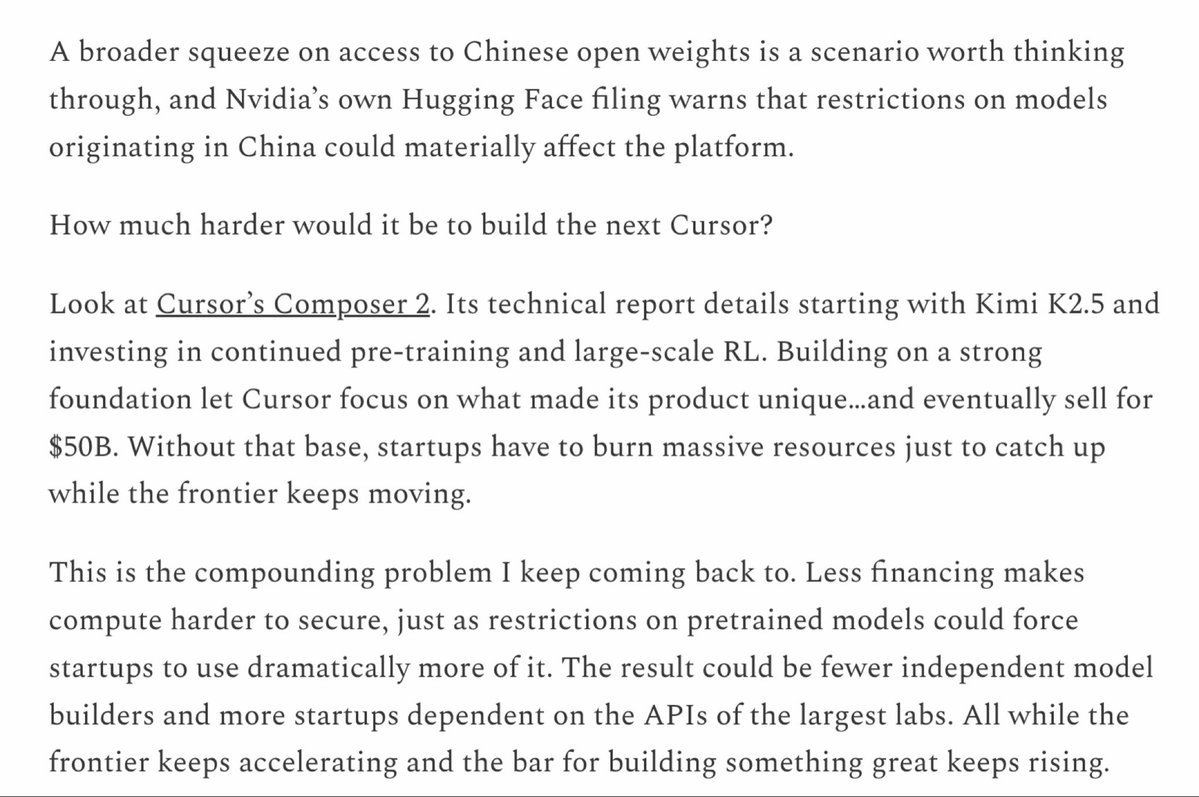
NO!!!
This would be incredibly damaging to our startup ecosystem and limit choice
Assuming we go this path who is going to offer the best sovereign open weight models? Very few can afford to build and offer.
More tokens don't mean more vulns found. @snyksec ran 180 security reviews on 20 vulnerable apps across 9 setups, and spending more on inference didn't reliably find more bugs. Context still wins, and the data is public.
https://t.co/Z4PnNfKIgN
180 security reviews on 20 vulnerable apps. Snyk Code, Claude Code, Codex Security, DeepSec: 9 setups, $1,594 known model cost.
spending more on inference didn't reliably find more vulns
VulnBench 2.0, Snyk research, data is public
Welcome to X, @azaryaniv 👋 X5 Labs builds governed AI that learns how work actually gets done inside regulated enterprises, and it's already building with a top-5 US bank. Give him a follow.
https://t.co/jEePQTuzJi
Hi X,
I'm new here, so I wanted to introduce myself:
I'm Yaniv, co-founder and CEO of X5 Labs. We build governed AI that learns how work actually gets done inside regulated enterprises, and we're building with a top-5 US bank, a global financial institution, and one of the largest hardware manufacturers in the world.
• Studied electrical engineering at NYU and led an algorithm research team there.
• Spent 7 years in the IDF's 8200 unit working on computer vision and machine learning (<1% acceptance rate). What got me in was understanding I didn't know everything, and being built to be trained.
• Went from researcher to research team lead to VP R&D. That's where I learned the gap between a model that works and a model that works in production.
• Led algorithm research at SAIPS, Ford's Israeli autonomous-vehicle subsidiary.
• Co-founded and ran my first company as CEO. When I stepped back, I realized most of what ran it was never written down.
• Started X5 Labs to fix that.
• Spent 72 hours at Super Bowl LX with over 50 CIOs and Fortune 100 VPs where the same questions came up in almost every conversation.
I'll be sharing a lot more here: what happens when an AI agent hits its first exception inside a major bank, what you find when you watch how employees actually work, and why knowing when an agent should stop matters more than letting it run.
Got a question about any of it? Drop it below and I'll answer the best ones.
Your GTM workflows, now inside ChatGPT. @clay relaunched its official MCP connection with @OpenAI, so you can build Clay workflows end to end without leaving the chat.
https://t.co/HO9OYLSiz5
Today, we’re excited to relaunch our official MCP connection with @OpenAI’s ChatGPT so Clay users can create end-to-end workflows without leaving their chat.
This brings the ChatGPT MCP and the Clay CLI functionality to full parity.
Clay users can now casually drop this into ChatGPT via the plugin (https://t.co/iaV74JmjLg)
”Can you give me every CEO hiring for new marketing leaders whose company grew headcount 10% in the last 6 months? Find their emails and phone numbers and send to my CRM and sequencer to begin outreach.”
Anyone on your team, your best builder or your new employee, can create new prospecting lists and enrich them with any data they need, without being a Clay expert.
Check out the video overview from @danerwilliams on our team.
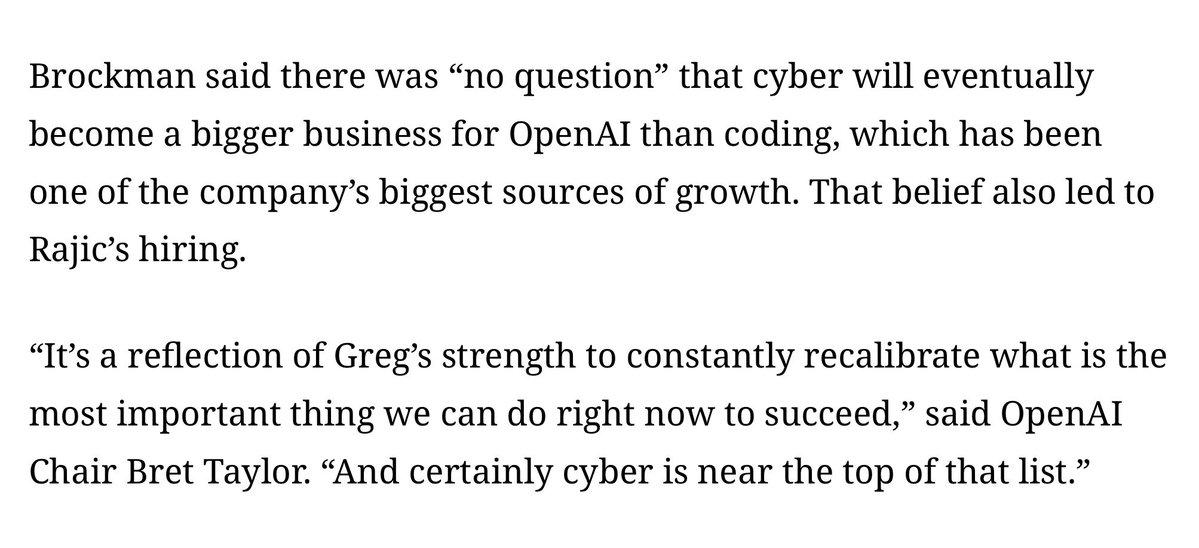
Sure seems that way and glad OpenAI is leading the way
Amazing at finding vulnerabilities but still needs context and deep understanding of systems to patch at scale. Also seeing lots of complaints on cost and still handicapped so can’t defend the way one needs to…
Which means so much opportunity for swarm and intelligence first startups. Market is massive, problems are serious, not winner take all, and will be layered with different players. Keep building 🏗️. Lots to do to keep us all safe 🙏🏼
Proteins move, and the best drug discovery models need to learn how. @ToposBio is now running 2-3x more molecular dynamics with @nvidia cuPotential, and up to 7x with its own optimizations. More physics means better training data for its generative models, which is how you go after targets once considered undruggable 🧬 Proud to back @r_zarcone and @khosra from inception.
https://t.co/6L6G05fKbX
Proteins move. Drug discovery moves with them.
With @nvidia and @NVIDIAHealth cuPotential in our OpenMM workflows, we're running ~2-3× more molecular dynamics. Up to ~7× with our own optimizations: more physics to train our generative models on.
More detail on our blog: https://t.co/kyDK0ghAuY
Yep. Been a long time coming. There is no time to wait. The time is now. You have to fight compute with compute. Cybersecurity has turned upside down and so much opportunity for swarm and intelligent first new companies
https://t.co/cenTBItdaQ
Every KubeCon booth heard the same thing: telemetry cost and noise. Every AI SRE starts at the alert. @grepr_ai starts earlier, at the data.
https://t.co/dmOQ0SawP3
We spent last week at #KubeCon in Salt Lake City. A few things we heard, over and over: Cost and telemetry noise came up first in nearly every conversation. Everyone is building an AI SRE, and the pitches are starting to blur together. And all of them start at the alert, which is already too late. https://t.co/cQDLoaHnKt
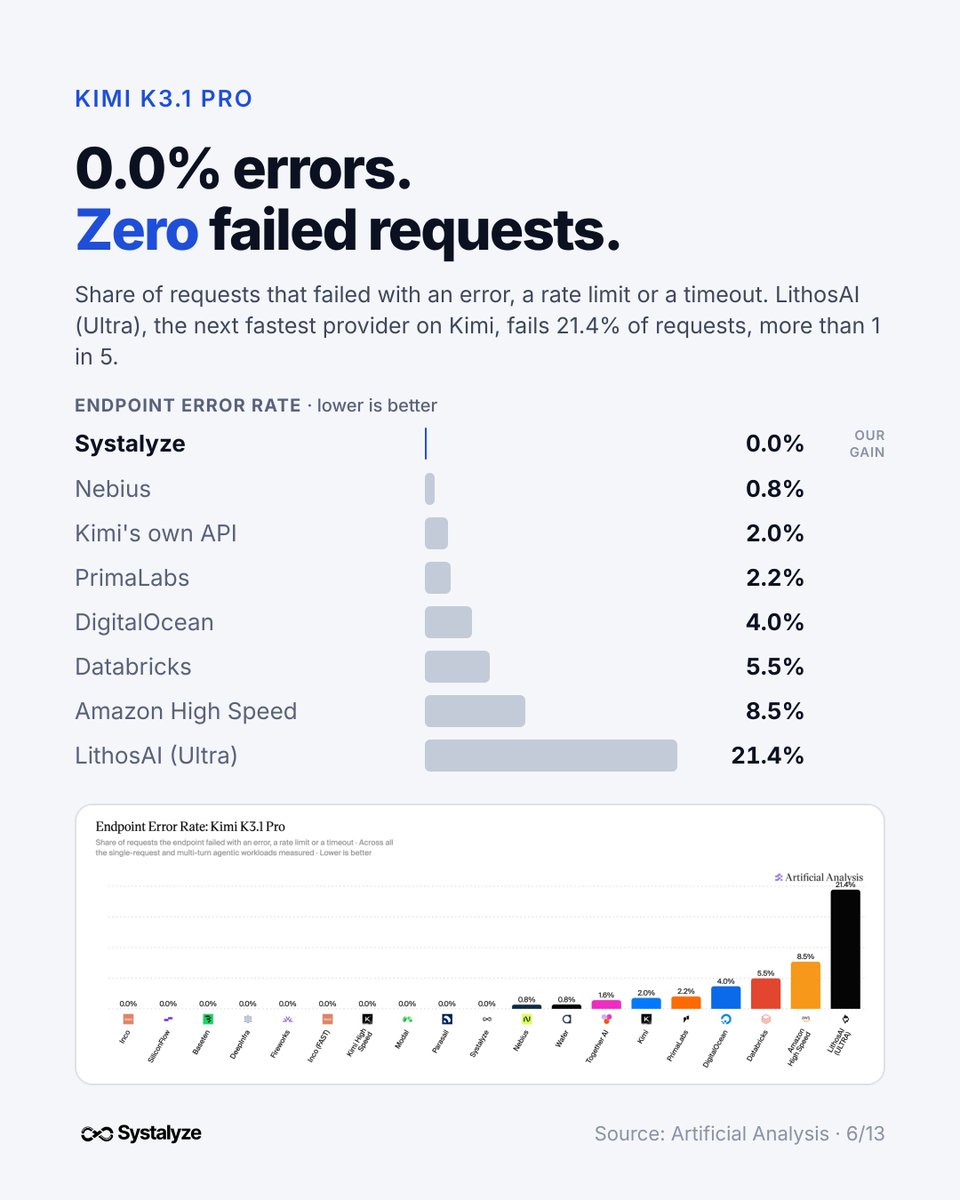
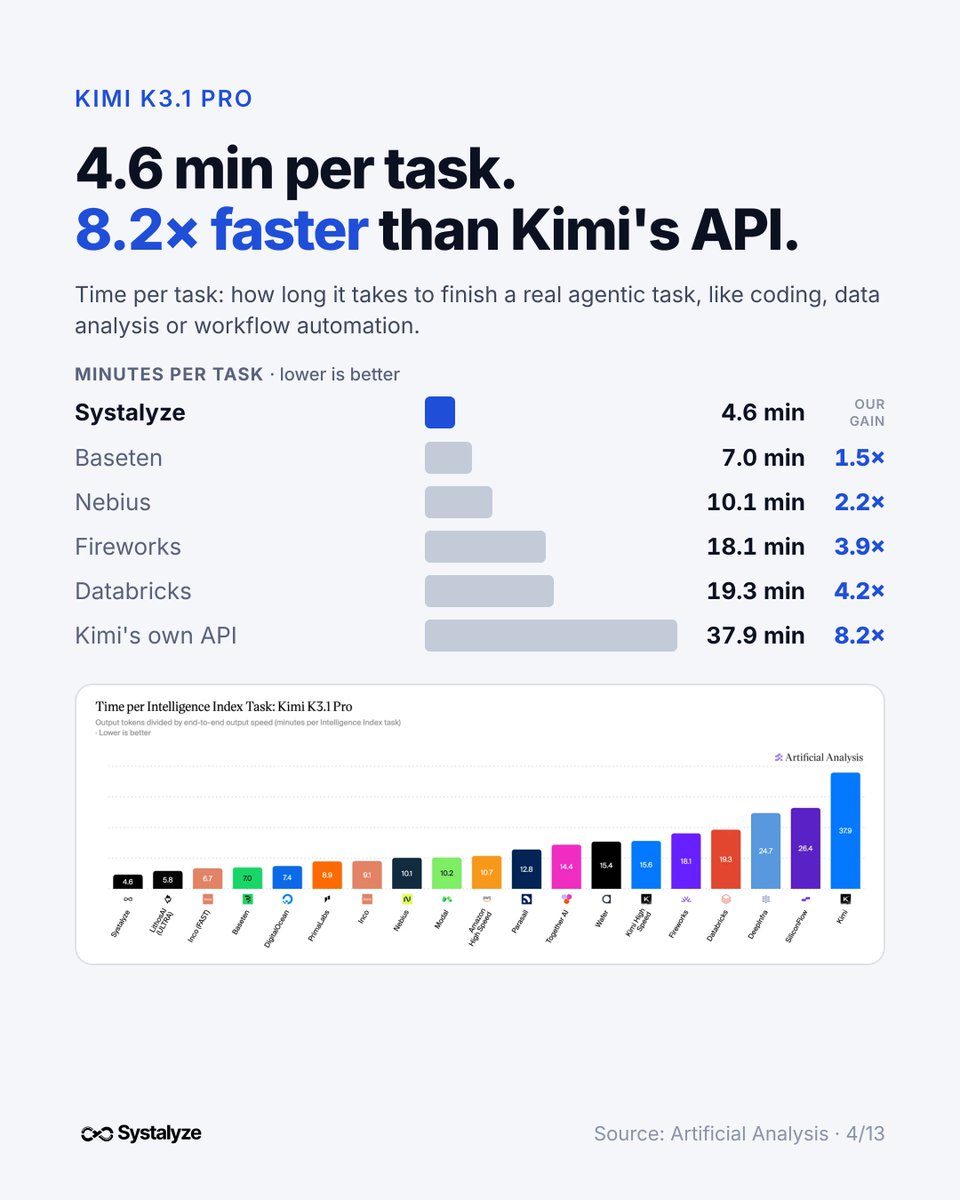
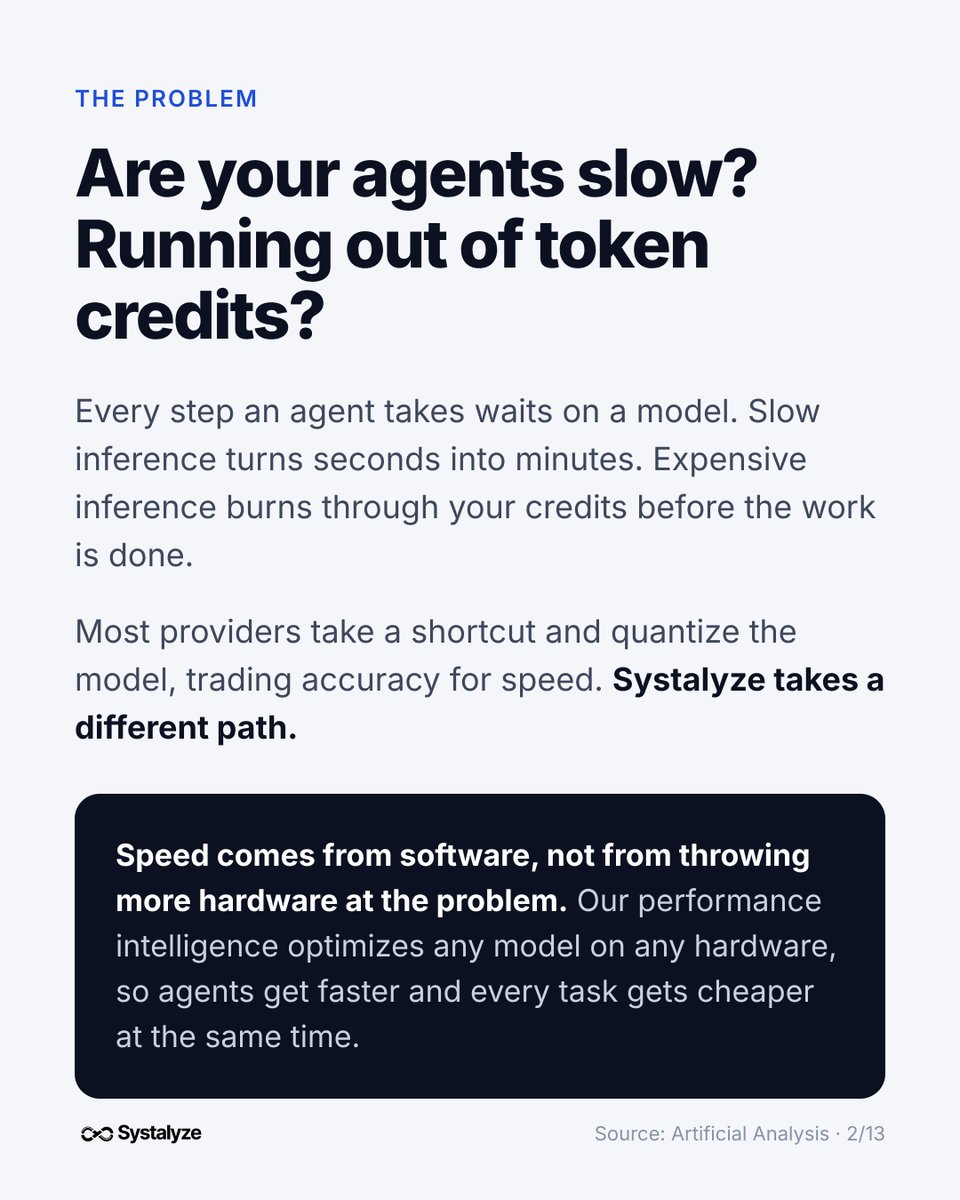
Fast and cheap usually means picking one. @systalyze clocked 8.2x faster than Kimi's own API and 13.8x cheaper than SambaNova, independently benchmarked by @ArtificialAnlys ⚡
https://t.co/SJ9KOkoIrx
The world’s fastest inference, independently benchmarked by @ArtificialAnlys:
⚡ 8.2× faster than Kimi’s own API
⚡ 4.2× faster than Databricks
💸 13.8× cheaper than SambaNova
💸 5.2× cheaper than Fireworks
Fast and cheap, finally both → https://t.co/2T88u09rf5
Nobody starts a company to negotiate the same SaaS contract for the 50th time. Common Paper's Cloud Service Agreement v3 is out.
10,000+ companies have signed on Common Paper, and these standards close hundreds of millions in deals every year. Less redlining, more closing
Common Paper Cloud Service Agreement v3 is out. It’s our most-used standard, and 10,000+ companies have signed on Common Paper. Every version is shaped by those real deals and by our committee of attorneys. Thank you to them.