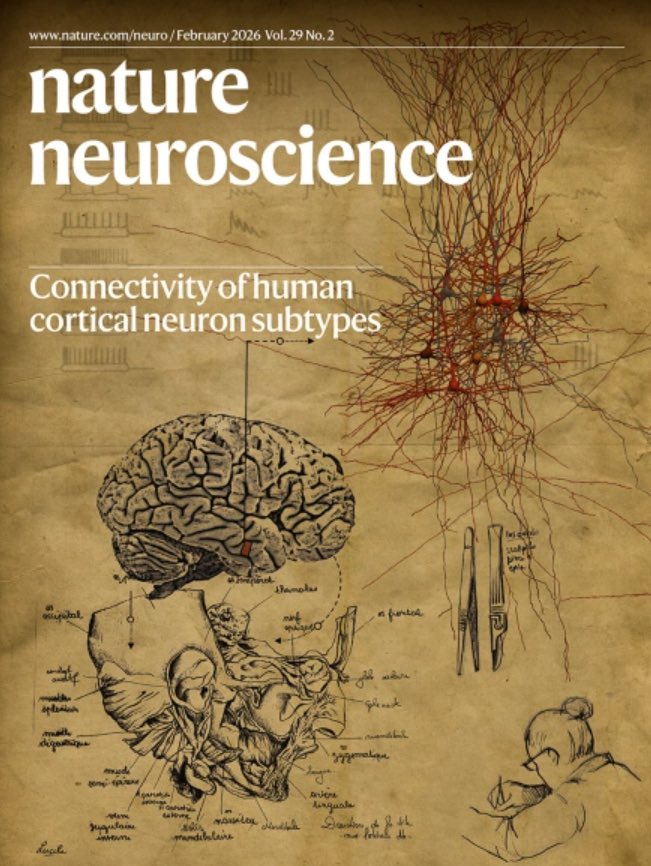
The cover of the February issue of @NatureNeuro features our multineuron patch-clamp study of human cortex! What a rewarding completion of such a years-long project! ⚡️
Thank you to the great team: @YangfanPeng, H.Planert, S.Grosser, J.Geiger + collaborators!
(Link below)
Excited to share our latest human multipatch paper, now out in @NatureNeuro : https://t.co/xwnzMzftqH
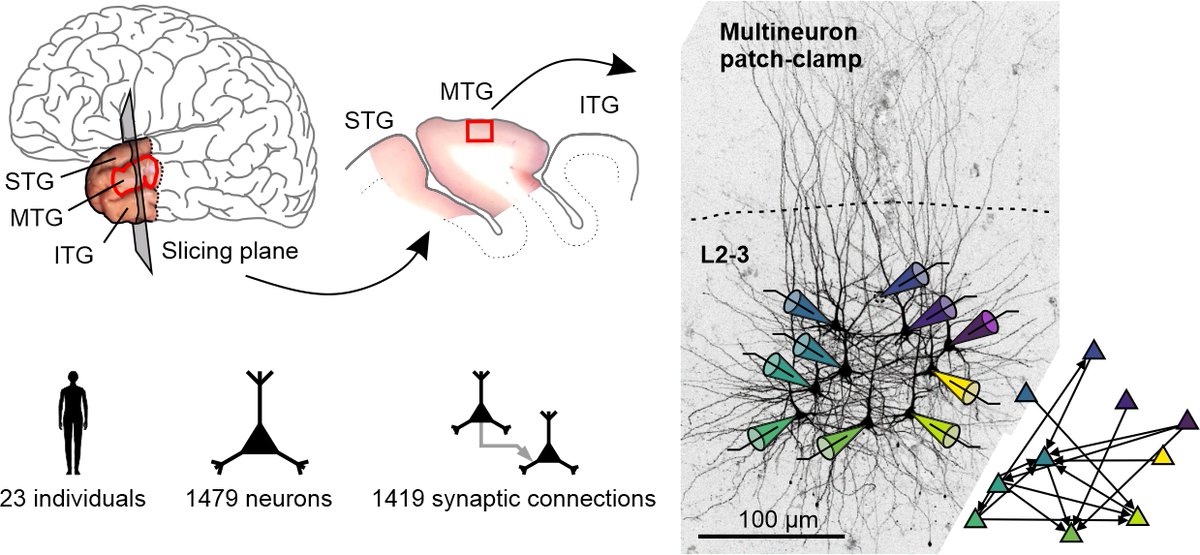
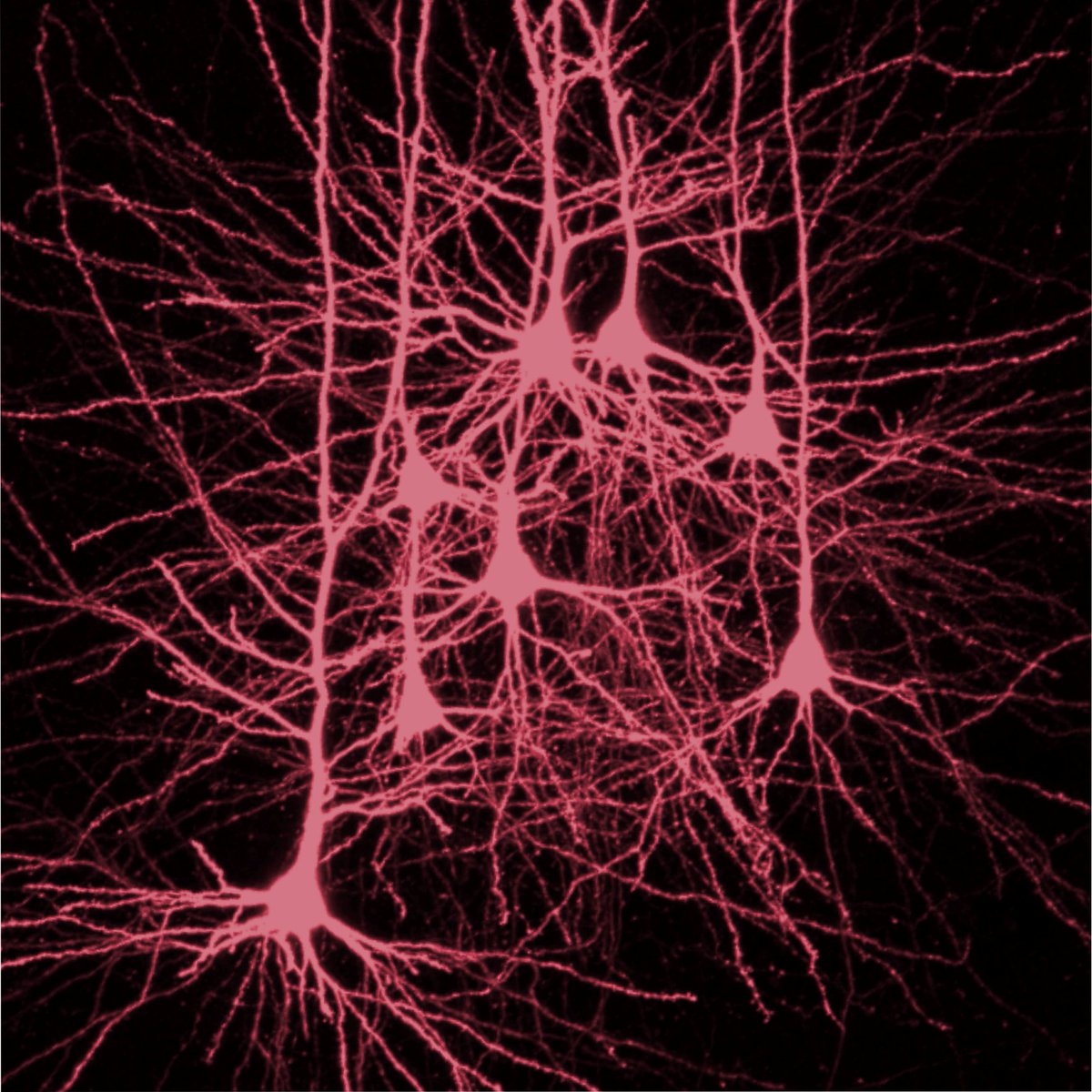
We studied the cellular and synaptic physiology of L2–3 pyramidal neurons from the human cortex and identified subtype-specific connectivity rules.
⚡️Our multi-neuron patch-clamp study on human neurons was published in @NatureNeuro today! We identified functional neuron-types and mapped their connection profile. This revealed connectivity principles that are conserved across individual humans.
Link: https://t.co/wDDKlQXrIi
Here is a cool article by Salon’s Matt Rozsa on our Nature Communications study (link below). I think it’s remarkable that Mr. Rozsa apparently read through the methods section and commented on it. 👍🏻
Article: https://t.co/SlAHNiWk7i
@MJMRowan@MJMRowan , wow!! This is a really cool post!! As someone who grew up in the Geiger lab, I always thought “analog signaling” is kind of a nerdy topic that only very few (including myself of course 😄) are actually interested in. So it warms my heart to read this post! Thank you!
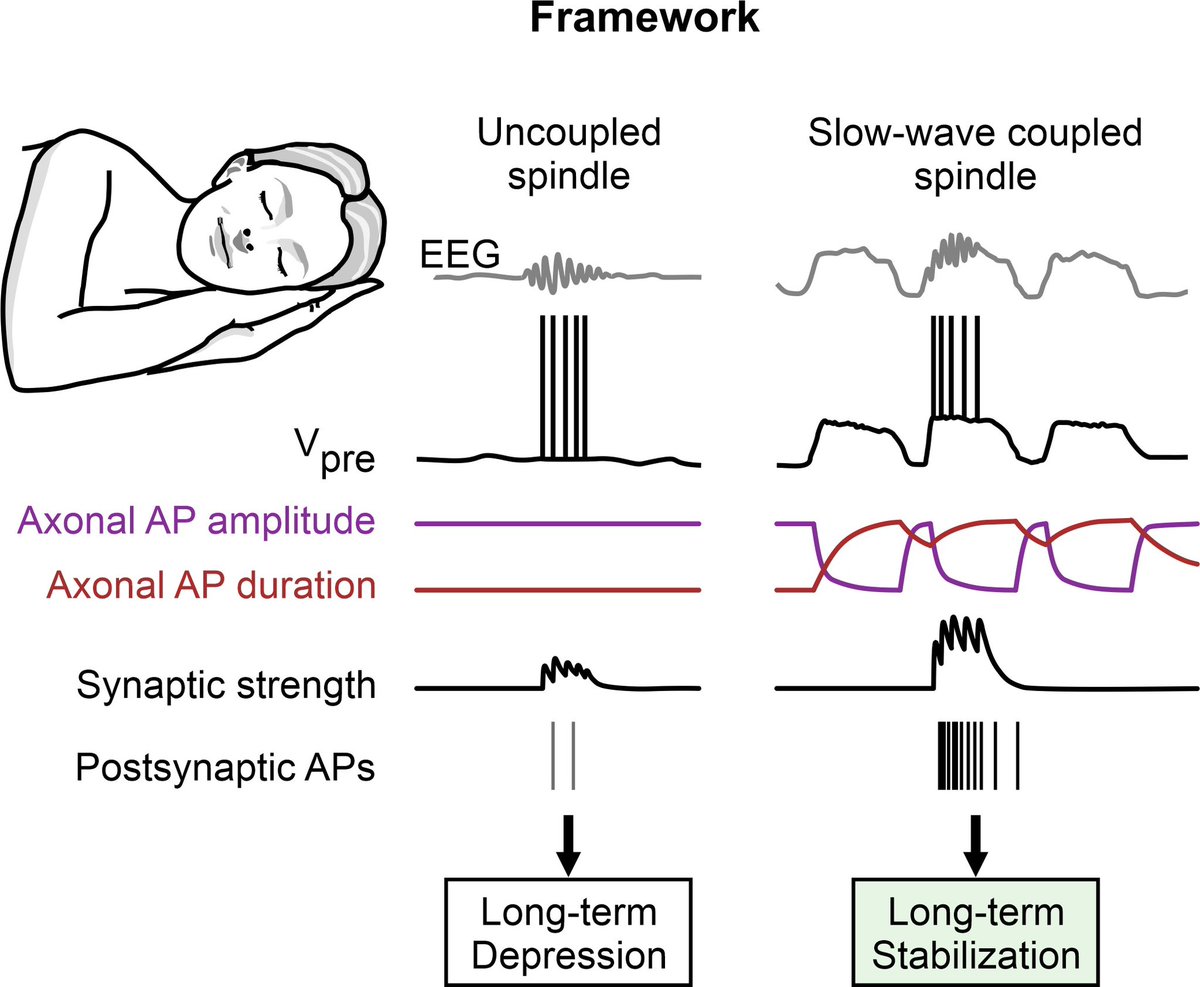
Axonal and synaptic mechanisms in the HUMAN neocortex that could underlie memory consolidation during slow-wave #sleep . Check out our latest research published today in @NatureComms 🎉.
-> Link below ⬇️
🧠Warum lernen wir im #Schlaf? Ein #CharitéBerlin-Team hat endlich eine mögliche Erklärung: Die für den Tiefschlaf typischen langsamen Gehirnwellen verstärken die Verbindungen zwischen den Nervenzellen – und machen das Gehirn so besonders aufnahmebereit. 👉https://t.co/qfDnuEHto8
🧠Why do we learn in our #sleep? A team from #CharitéBerlin finally has a possible explanation: The slow brain waves typical of deep sleep strengthen the connections between human nerve cells, making the brain especially receptive to information. 👉https://t.co/9AmN7CGO9z
We recently published a book-chapter (link in the comments), where we explain how we transport alive human brain tissue samples over larger distances using our BrainCase (video). This allows us to use such precious samples from hospitals that are further away from our laboratory.
Visit my poster at the FENS (Thursday-late breaking session), where we investigate cellular and synaptic mechanisms which could underly memory consolidation during slow wave sleep using multineuron patch-clamp recordings in human cortical tissue⚡️ #FENS2024
We argue that UP/DOWN states can generate windows-of-opportunity with increased presynaptic potency. Neural activity that is coupled to UP/DOWN states will therefore lead to an efficient recruitment of postsynaptic APs which will cause synaptic consolidation.