@The_Umdazz Legal representation is one thing, but it doesn't change the fact that the false information had consequences. The issue shouldn't be brushed aside simply because someone is willing to defend her.
My First 72 Hours Inside the Moku Ecosystem & Grand Arena🧵
I just spent my first 72 hours inside the @Moku_HQ ecosystem, playing around with Grand Arena, and I wanted to share what this experience has felt like so far, in the simplest way possible.
No deep strategy yet.
No “expert” talk.
Just what it’s been like stepping in for the first time.
First things first: what is all this about?
From what I’ve seen, Moku is an ecosystem built around characters called Mokis.
Each Moki isn’t just a picture or a collectible, it has:
✅stats
✅abilities
✅and room to grow over time
Grand Arena is where everything comes alive.
It’s the competitive space where you:
1⃣train your Mokis
2⃣send them into daily matches
3⃣climb the ranks
and work toward becoming a Champion
Very quickly, it becomes clear this isn’t about logging in once and leaving.
It’s about showing up, learning, and improving.
One thing that stood out in my first few hours is how intentional the system feels.
Training matters.
You can see right away that Mokis are meant to be developed, not just owned.
Spending time training them actually feels like part of the game, not a side feature.
Matches are the heartbeat.
Daily matches give the whole ecosystem rhythm.
There’s always something happening, and every match feels like a small step forward.
Progress is visible.
Ranks, Champions, and the push toward the Top 100 give you something clear to aim for, even if you’re just starting out.
------------------
Like any new ecosystem, there’s a learning curve, and honestly, that’s part of the fun.
I’m still exploring things like:
how to balance training and matches
how different #Moki stats really show up in competition
and how strategy will evolve over time
Instead of feeling overwhelming, it feels more like the system opens up gradually as you spend time in it.
After 72 hours, this is my honest takeaway:
Grand Arena feels built for people who enjoy:
progression over time
competitive play with structure
and ecosystems that reward attention and consistency
It doesn’t rush you, but it also doesn’t reward being passive.
You train.
You compete.
You learn.
Then you do it again, a little better than before.
If you’re completely new like me, getting started doesn’t feel complicated, but it does help to take it step by step.
From my experience so far, the basic flow looks like this:
✅Go to: https://t.co/qaBe3qy0JB
✅Connect your @Ronin_Network Wallet.
✅Get a Moki; this is your entry point into the ecosystem. Everything starts here.
✅Train your Mokis; training is part of the core loop, not something to skip.
✅Join matches; daily matches are where progress, learning, and competition happen.
Pay attention to progression, ranks, Champions, and long-term goals start to make more sense as you play.
You don’t need to understand everything on day one.
The system reveals itself as you interact with it, and that’s been part of the appeal for me.
I’m very much still at the beginning of this journey, but I’m interested to see how things change as the preseason unfolds and strategies start to matter more.
If you’re already playing:
what clicked for you early on?
what took you the longest to understand?
And if you’re new like me, what’s the first thing that surprised you?
Bitcoin sits at roughly $1.7T in market cap, yet its onchain TVL and number of active ecosystems are still far behind Ethereum and even Solana.
That gap isn’t because people don’t want to use Bitcoin financially.
It’s because Bitcoin was never designed for fast execution, composability, or smooth UX, and most activity ended up happening around Bitcoin instead of on it.
That’s why Bitcoin-native L2s matter, not as Ethereum alternatives, but as execution layers that respect Bitcoin’s design while making real economic activity possible.
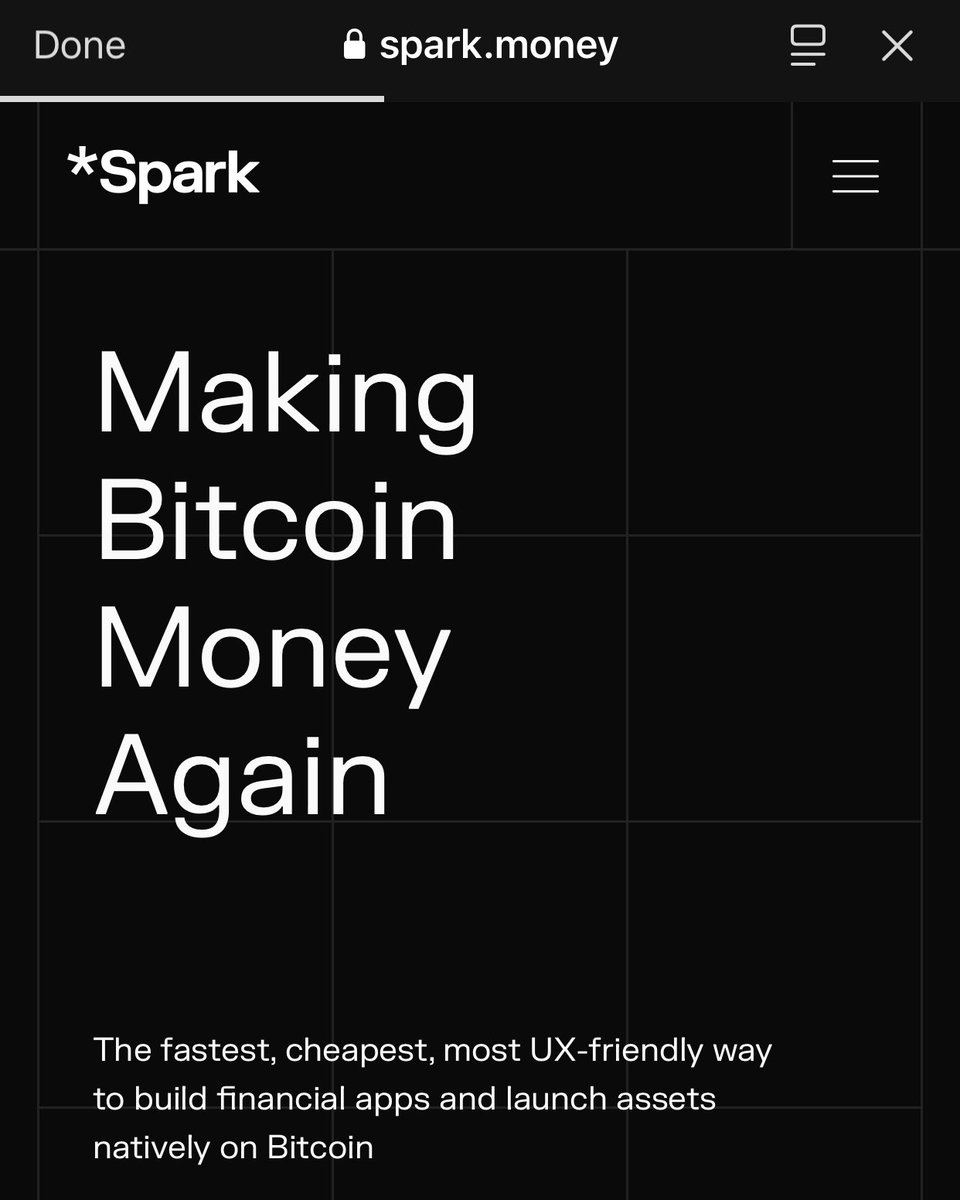
@spark is an interesting example of this direction.
It’s a Bitcoin L2 built around real BTC (not wrapped assets), instant settlement, and zero-fee transfers between Spark wallets, while still allowing users to exit back to Bitcoin L1 at any time without permission.
It also leans heavily into usability:
Lightning integration without node management, simple wallet creation, native token issuance, stablecoins with compliance controls, and optional transaction privacy.
The takeaway for me isn’t that Spark “solves Bitcoin DeFi.”
It’s that #Bitcoin’s low TVL has always been an execution problem, not a capital problem, and projects focused on UX and real $BTC are finally starting to close that gap.
Definitely one to keep an eye on.