In the first of a series of short documentaries from FQxI, Professor Natalia Ares shows us her research at Oxford University that uses carbon nanotube machines to investigate how we can use information as a fuel. @NAresgroup@geoffreylondon
https://t.co/EtHFBWR0Oj
#FQxI
New article in @PNASNews:
We all know that ChatGPT loves to delve, bolster, leverage, encompass, showcase, underscore, et cetera. I analyzed full text of 7.3 million journal articles published 2020-2025, hunting for 228 words that spiked after ChatGPT launched in late 2022.
To end this year’s #AbelWeek, let’s look back at the history of the Abel Prize and its former prizewinners. Find out more about everything from topology, computers, chaos, probability, and much more.
https://t.co/Ew56yih9GQ
My graduate school mentor said "You know a university is in deep trouble when it closes a library because it's the only thing everyone on campus agrees is important".
The day we discovered dark energy was "possibly the worst day in human history", says physicist Adam Brown.
This discovery inevitably consigns human civilization to heat death, unless we can change the way physics works.
And Adam's hope is that we can do exactly that.
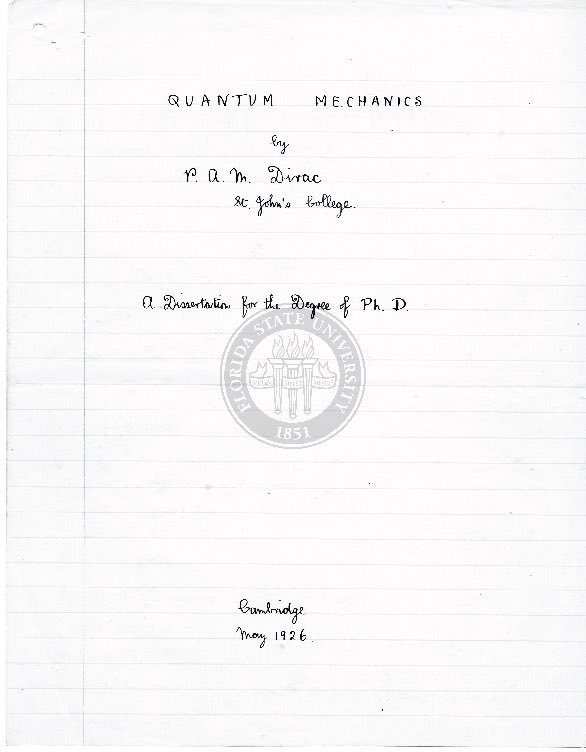
Imagine writing a PhD thesis so foundational that the title is literally just the name of the entire field of study.
Paul Dirac, 1926: "Quantum Mechanics."
The prospect of AI-generated student work that is, in turn, evaluated by AI is a dystopian prospect and represents an existential threat to the sector. Universities should have the courage to recognise this and design AI policies accordingly, however unfashionable that seems. 3/3
Academic writing isn't about producing "content". It's about thinking: grappling with ideas, refining arguments. Students should be encouraged to do that now more than ever. They are entitled, in return, to genuine intellectual encounter with a professor who marks their work. /2
That AI isn't yet "good enough" to mark students' essays ought to be beside the point. Outsourcing such tasks to AI is fundamentally incompatible with the intellectual engagement between student and professor that should be central to higher education. /1
https://t.co/odMAjR88Qw
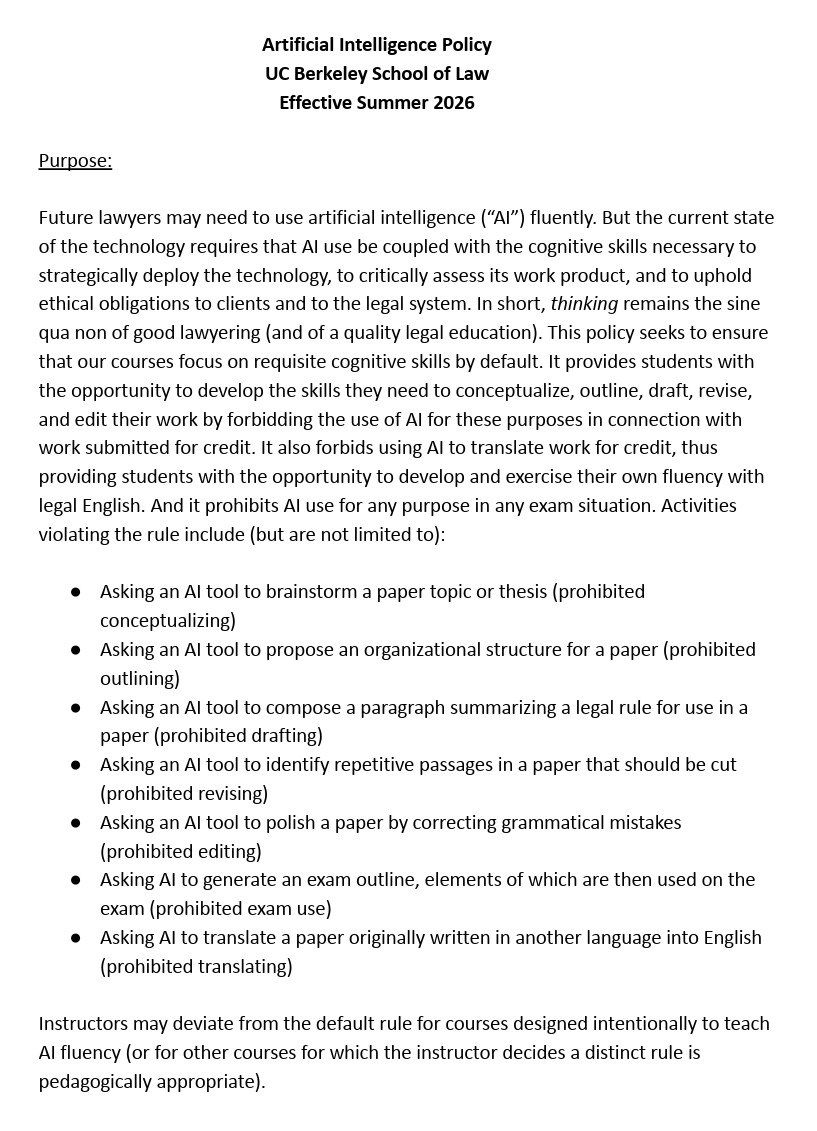
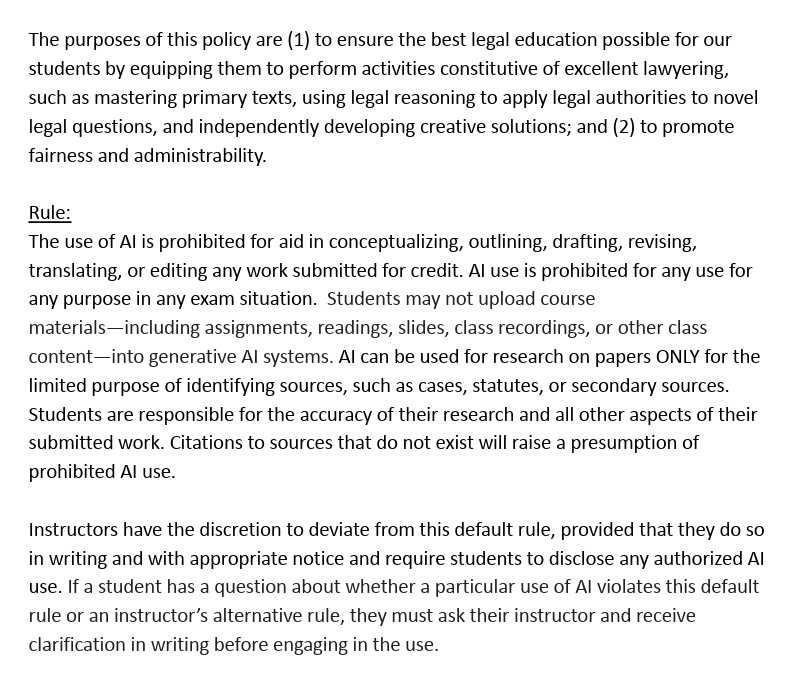
🖥️ The new Artificial Intelligence policy at UC Berkeley School of Law, effective Summer 2026.
📝 Here is the main rule:
"The use of AI is prohibited for aid in conceptualizing, outlining, drafting, revising, translating, or editing any work submitted for credit. AI use is prohibited for any use for any purpose in any exam situation. Students may not upload course materials—including assignments, readings, slides, class recordings, or other class content—into generative AI systems. AI can be used for research on papers ONLY for the limited purpose of identifying sources, such as cases, statutes, or secondary sources."
Fake academic journals are publishing AI-generated papers under real professors’ names
We identified a network of AI-created journals that have published over 100 fake papers, using real professors' names among the AI slop
https://t.co/qKOMmUxrBK
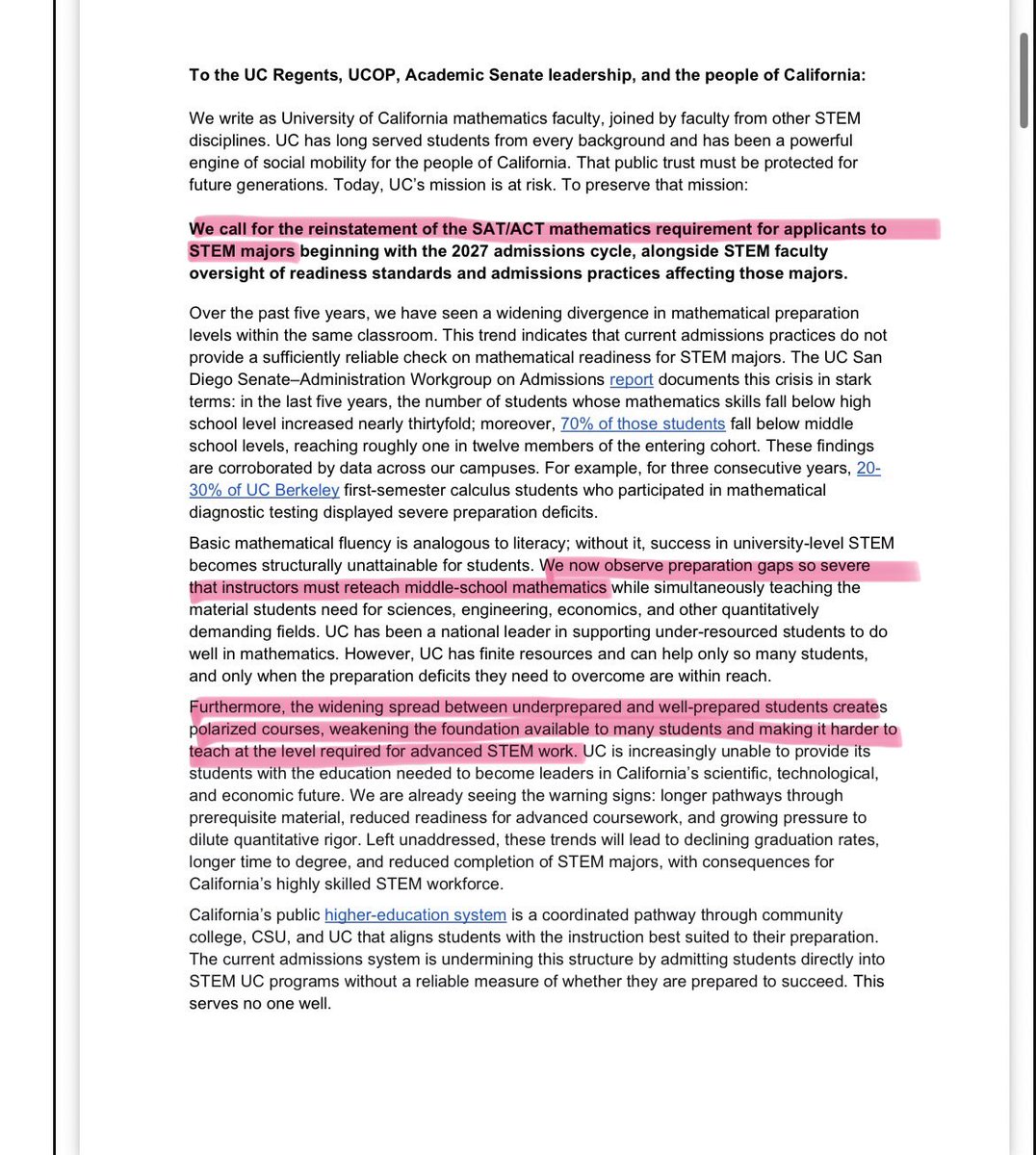
University of California STEM professors want standardized tests back due to severe math deficiencies among students:
“We now observe preparation gaps so severe that instructors must reteach middle school mathematics”
“The current admissions metric, based primarily on GPA & essays, can no longer reliably distinguish readiness for university-level STEM majors in an era of severe grade inflation & AI assisted application essays”
Comments on the "15-year-old open problem in algebraic geometry" from a mathematician:
1. The solution may be correct but is grossly redundant and useless for humans--"not accretive" as @davidbessis notes.