This account has often been accused of cherry-picking slave accounts. This is a standing offer of $100 for anyone who can prove that slave accounts are being skipped or content edited.
Let the former slaves speak!
Mrs. Toombs briefly describes the day that freedom came to the slaves. She complains about modern lack of discipline, says people are wiser but wickeder. #BlackHistoryMonth
Any offensive language is Mrs. Toombs' own.
Jane Mickens Toombs had parents who lived on different plantations. She begins by talking about being conjured, then offers a pleasant depiction of life on the plantation when she was a girl. #BlackHistory
Any offensive language is Mrs. Toombs' own.
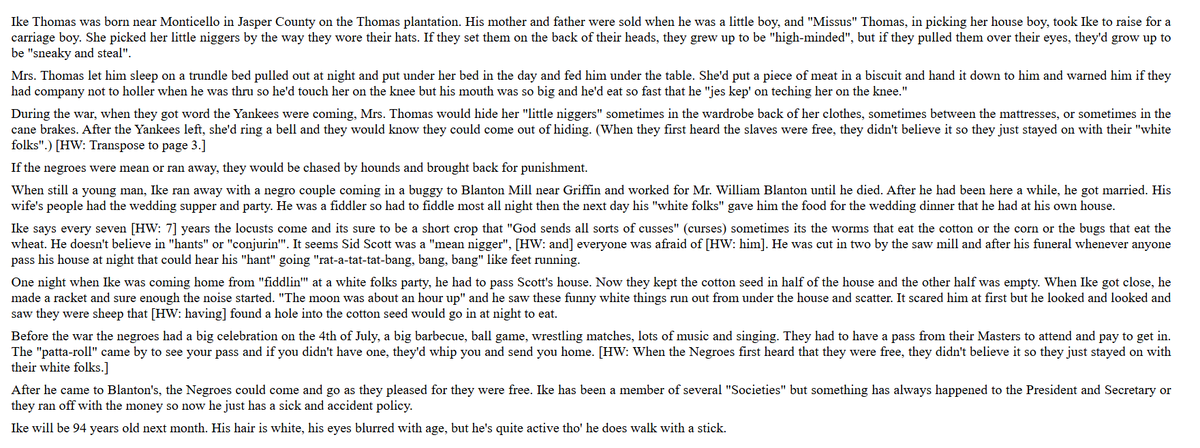
Ike Thomas, 93, of Rio, GA was picked to be a "house boy" for his mistress. He remembers the mistress hiding him from the Yankees, and also describes his life after freedom came. #BlackHistory
Any offensive language is Mr. Thomas' own.
@Geauxmandy These interviews were conducted in the late 1930s as part of the Federal Writers Project. Mrs. Thomas would have been born in the late 1850s and experienced slavery as a young child
Cordelia Thomas, 80, of Athens, GA describes her girlhood recollections of slavery. Eating cracklings during hog killing times was a special treat, but she once got severely burned waiting for them. #BlackHistory
Any offensive language is Mrs. Thomas' own.
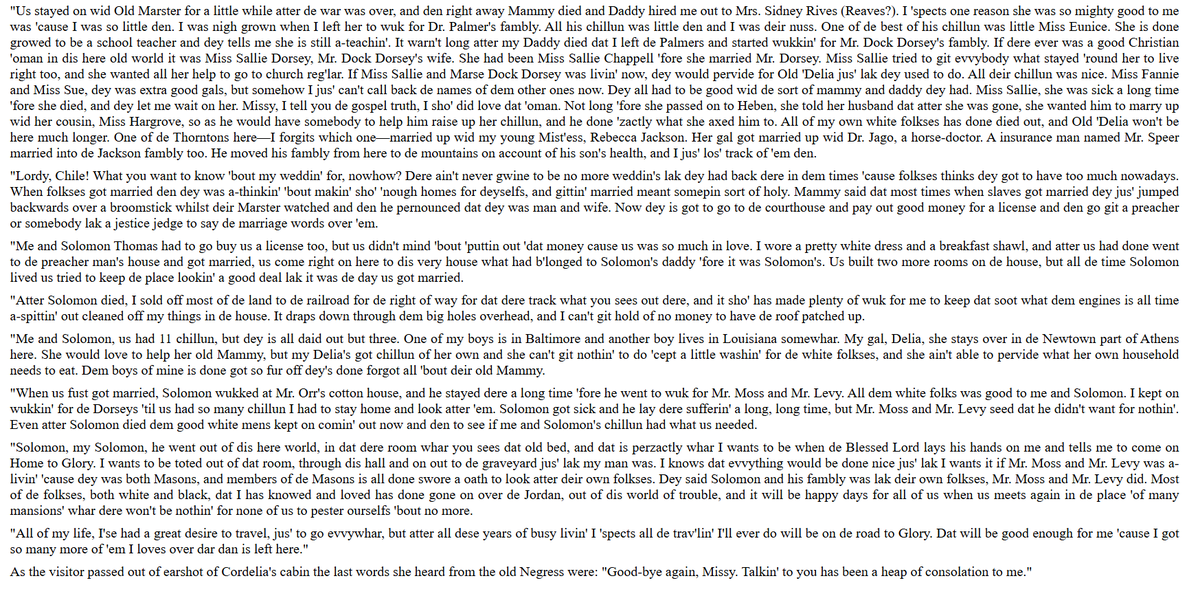
Mrs. Thomas tells about her marriage to her husband, Solomon. Her husband was now deceased, along with her old white folks, and eight of her eleven children. She looked forward to meeting them in Heaven. #BlackHistory
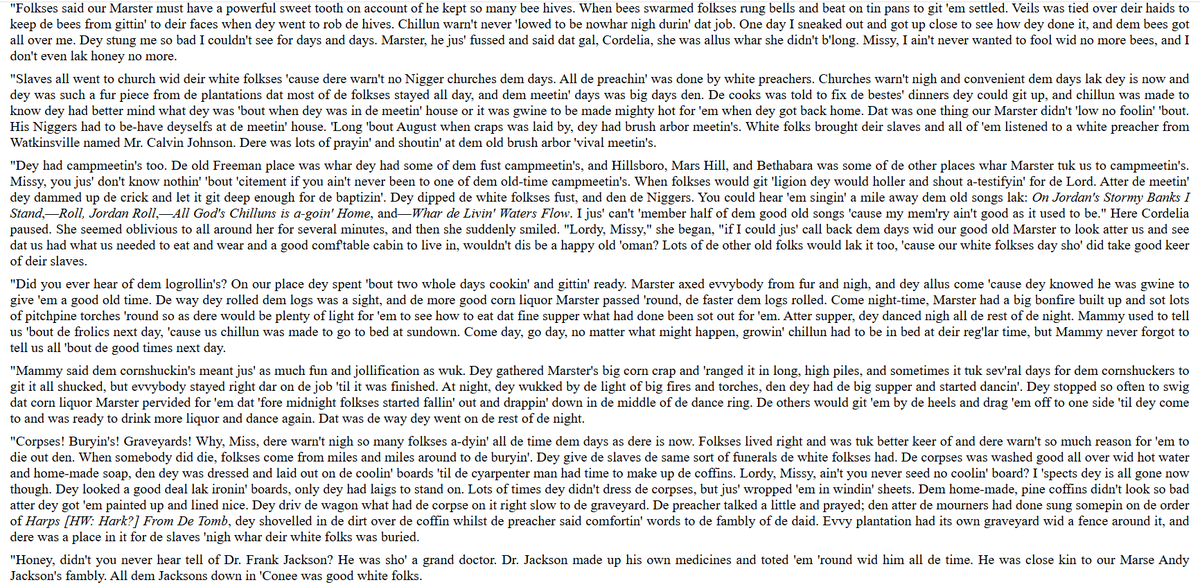
Beehives, religious meetings, and log rollings are the subject of the next section of Cordelia Thomas' recollections. #BlackHistory
Any offensive language is Mrs. Thomas' own.
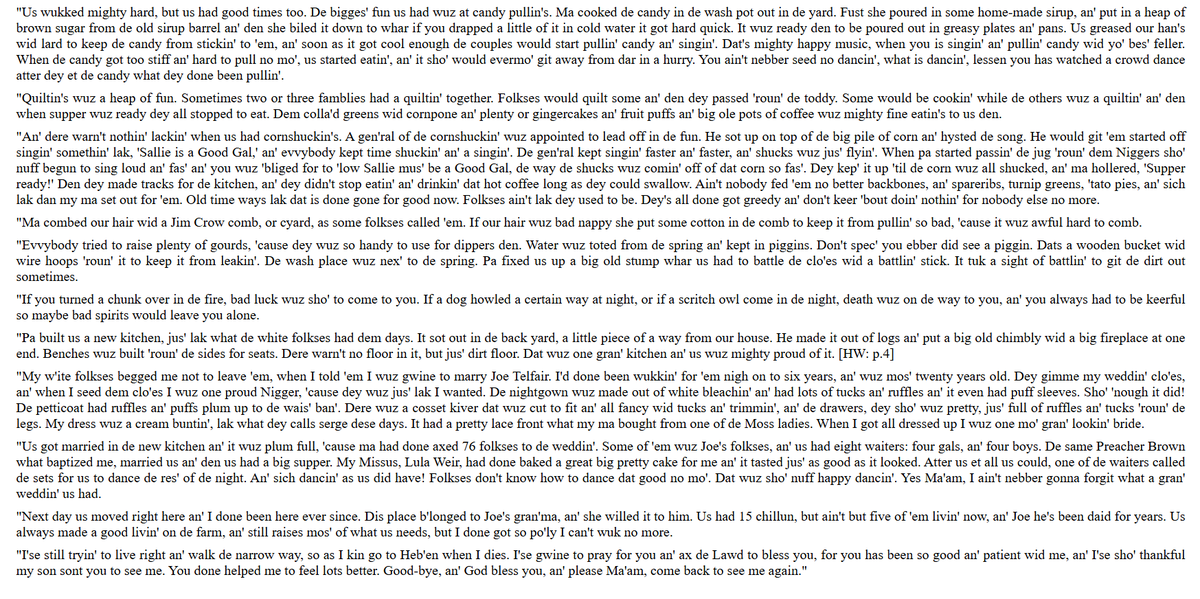
Mrs. Telfair says they worked very hard, but also had great times at candy pullings, quiltings, and corn shuckings. She also describes her wedding to her husband, now deceased. #BlackHistory
Any offensive language is Mrs. Telfair's own.
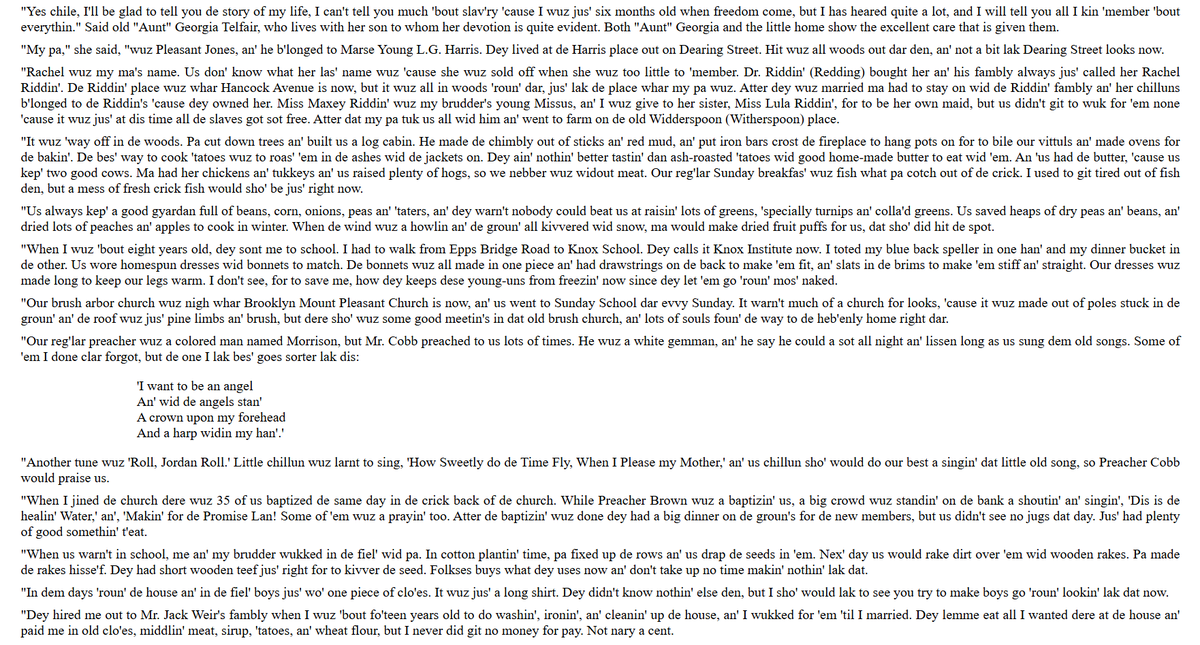
Georgia Telfair, 74, of Athens, GA talks about raising vegetables, going to church, and some of the songs they used to sing when she was a girl. #BlackHistory
Ms. Styles tells about how these superstitions kept a slave from being whipped by his master, and the effects a conjure had on her mother. #BlackHistory
Any offensive language is Ms. Styles' own.
Amanda Styles, 80, of Atlanta, GA says that the Yankees carried off her mother and she never saw her again. Then she begins relating several remarkable stories about conjurers. #BlackHistory
Emeline Stepney was more than 90 when interviewed. Her mother and father lived on different plantations, and so did she and the man she married. They were treated well by their bachelor owner and his overseers. #BlackHistory
Any offensive language is Mrs. Stepney's own.
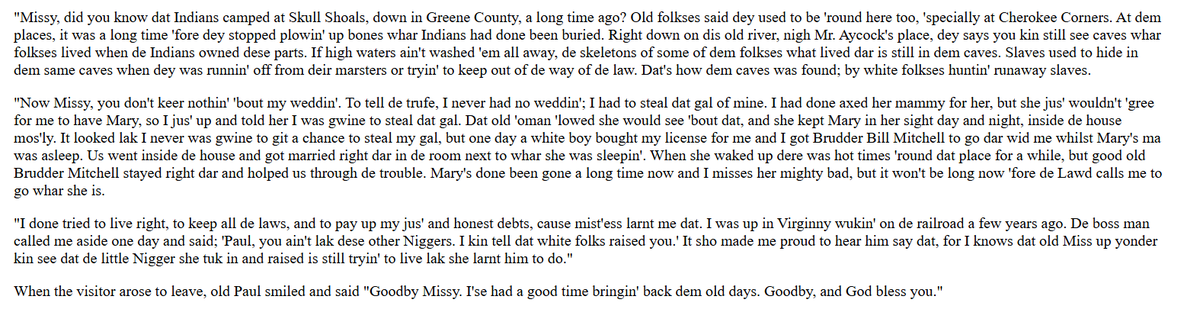
Paul Smith closes by describing how he eloped with his wife, who at the time of the interview was deceased. He hoped to meet her again soon in Heaven. #BlackHistory
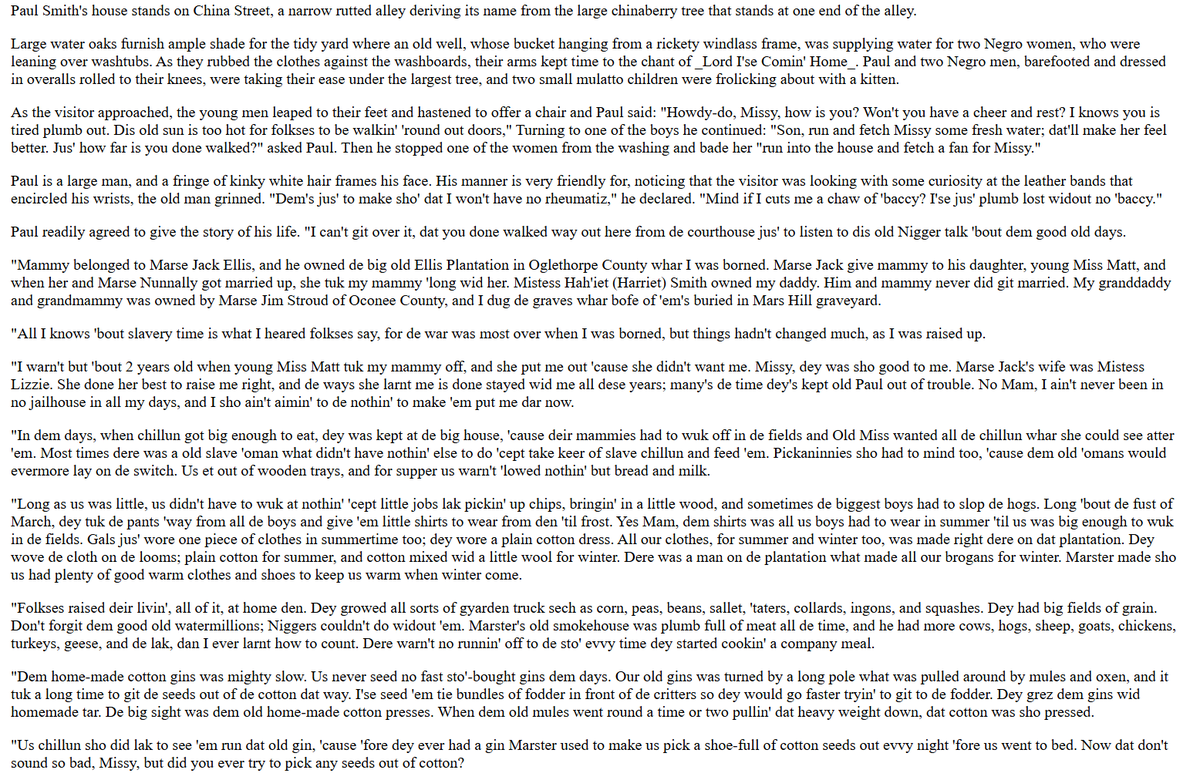
Paul Smith, 74, of Athens, GA gives a lengthy and detailed account of his childhood recollections of slavery. The little children had to work little except for some menial chores. #BlackHistory
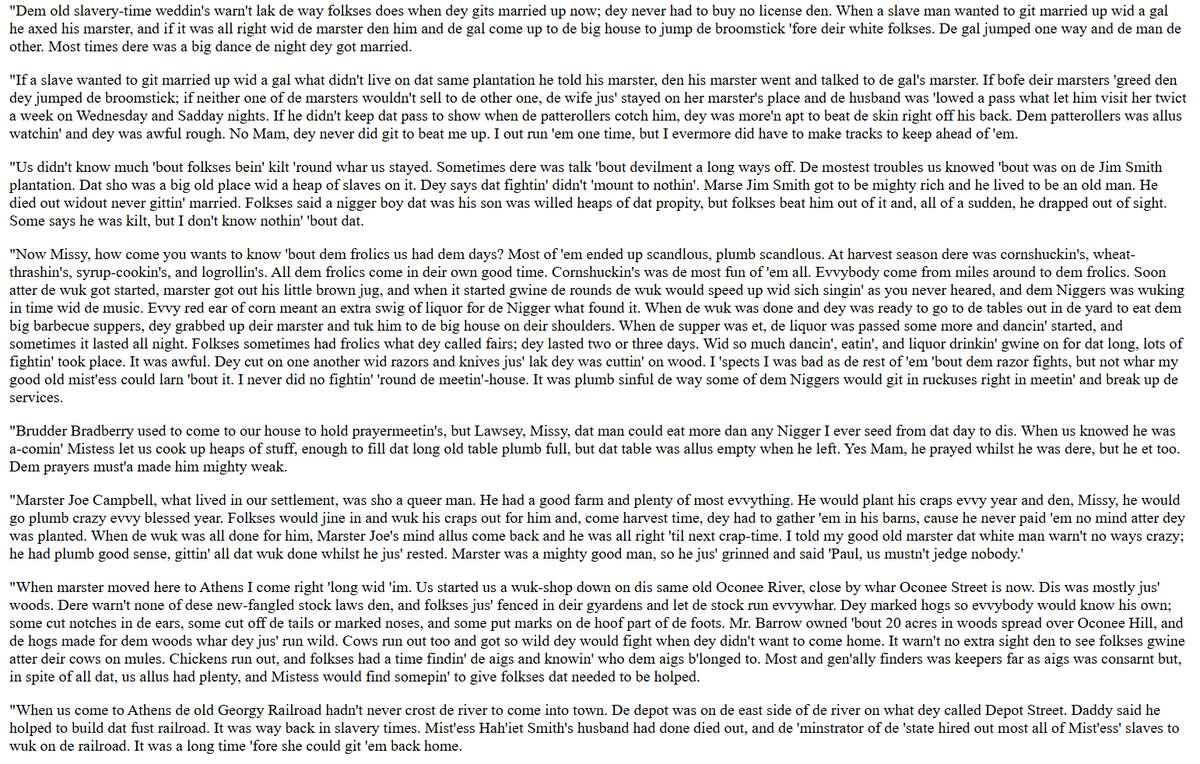
Mr. Smith describes weddings under slavery, and how they worked if the couple lived on different plantations. He also talks about the "scandalous" frolics of the old days. #BlackHistory
Any offensive language is Mr. Smith's own.
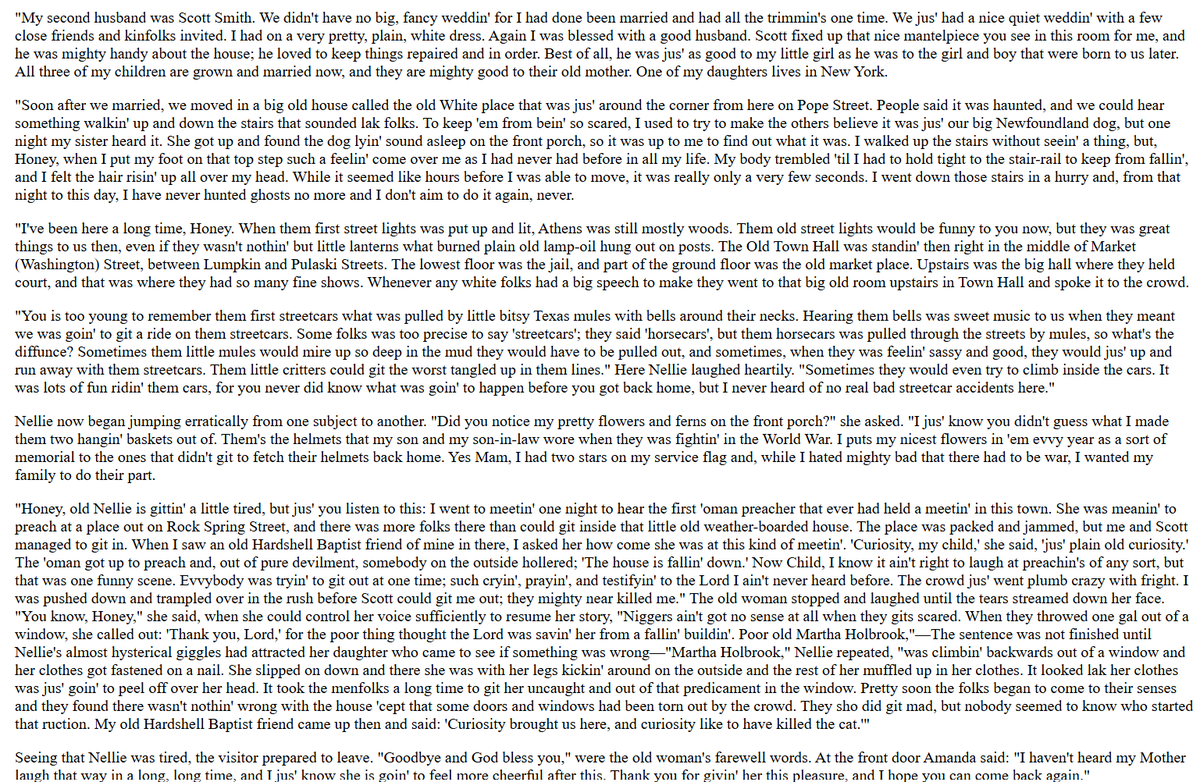
Nellie Smith concludes by describing her second wedding and life afterwards, including the uproar that occurred at a service with a female preacher. #BlackHistory
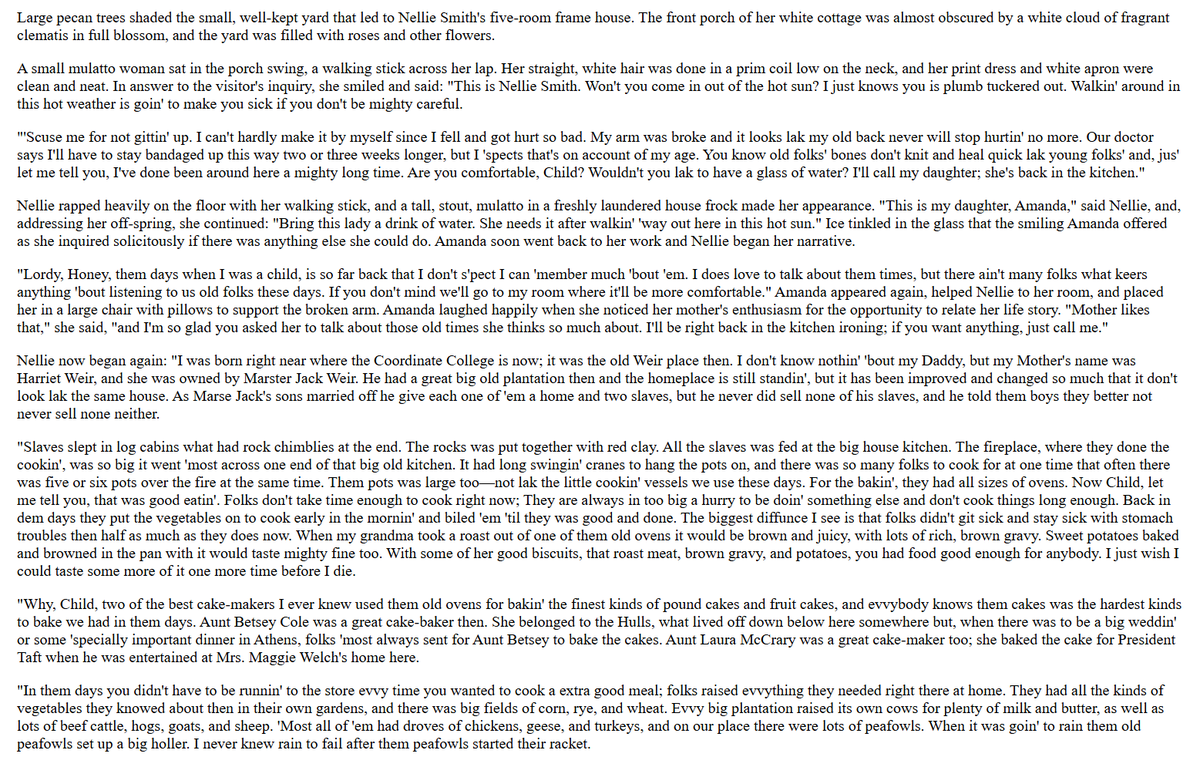
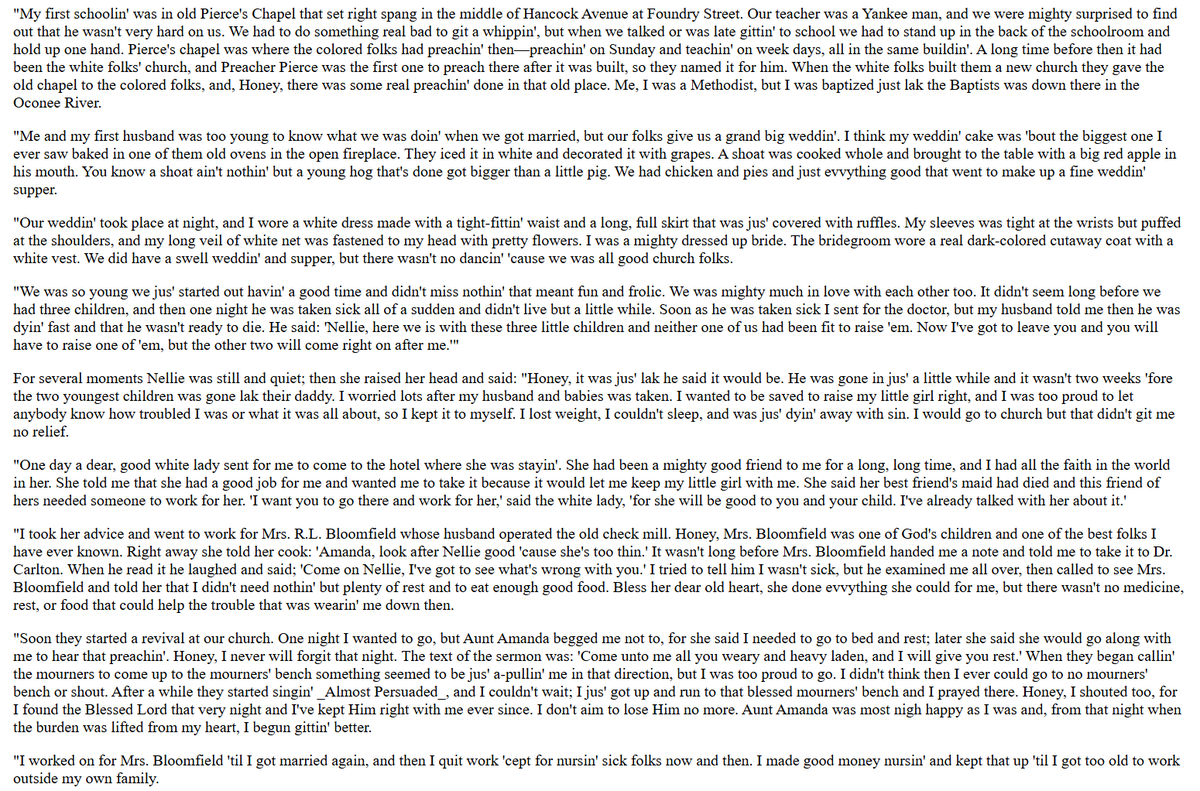
Any offensive language is Mrs. Smith's own.
Nellie Smith, 78, of Athens, GA belonged to a master who would not sell slaves, and warned his children not to sell theirs, either. Talking about the old days was a relief to her in her elderly and crippled condition. #BlackHistory
Mrs. Smith describes her first, fancy wedding, then the tragic story of her husband's death, and how he prophesied the death of two of their children. She then tells about her conversion during a revival meeting. #BlackHistory