New article: “The Language of Responsibility in the United Nations Security Council, 1946–2020” with @felixhaass & @holger_niemann in @ISQ_Jrnl
Article: https://t.co/gy6lcDFwWW
Preprint: https://t.co/PtCsMMdvVY
Data/Code: https://t.co/fdCDscE1g2
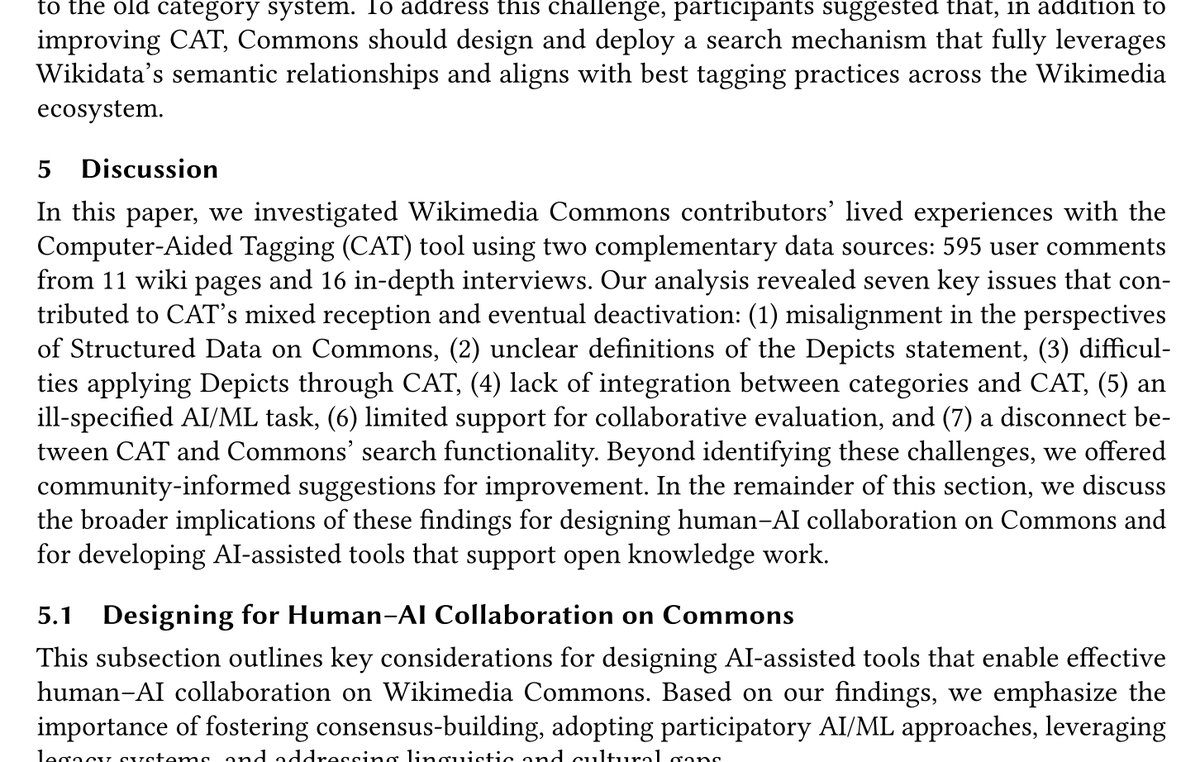
"Designing for Human–AI Collaboration in Open Knowledge Work":
Lessons from the failure of the Wikimedia Foundation's "Computer Aided Tagging" tool on Wikimedia Commons https://t.co/yfSCidpsLc
Dear @OSFramework I receive digest emails every minute, always the same notification. Please check if there is an error with the notification system. Here are my settings:
"Monitoring the gender gap in the coverage of biology professors on Wikipedia" https://t.co/bqjo1WaiVS
Women "were significantly less likely [to be on WP] until 2018. However,the trend reversed in 2022,and women were 25% more likely than men to have a Wikipedia biography in 2024"
This is a cool paper on how conflict plays the role of the transaction cost across Somalia's trade routes. My only issue is, I wish it had cited possibly the only other paper that has previously investigated this very phenomenon (link in the comment).
https://t.co/4b3eAbSAgT
Our paper “Difference-in-Differences Designs: A Practitioner’s Guide” is now published in the Journal of Economic Literature. It took us a while but we are happy!
We put together a lot of material to make the paper useful in practice: https://t.co/30TbAgihlz
Hope you like!
@Ruettinho Vielen Dank für den stark recherchierten Text. Jedes Schlaglicht unserer Horrorsaison, war mir schon bekannt, aber durch die chronologische Darstellung in Ihrem Text, wird es einem nochmal ganz neu bewusst, was da alles von wem verbockt wurde.
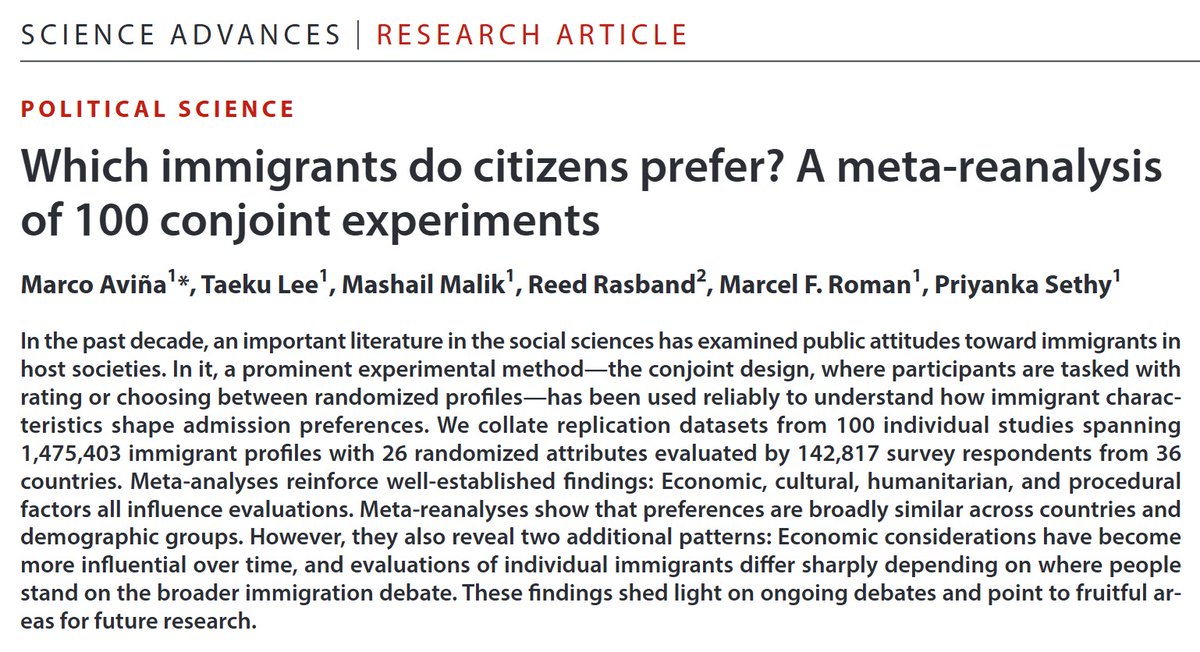
NEW in @ScienceAdvances, after 3 years of work with a great team:
We review and meta-analyze 100 immigrant conjoint experiments in 36 countries.
Immigration preferences are surprisingly similar across people and countries, but changing over time and structured by politics.
🧵
terrible. 20 yrs ago, the internet was full of hobbyist blogs and forums. over time, these have been replaced by paywalled substacks and private discord channels, each a walled garden. google's decision to prioritize AI just makes it less likely ppl will create free, public info
@lakens I do not engage in this kind of correction of public record. The mistakes I found in the work of others, were all in papers and not published work. Others were part of peer review. For In both it worked well in the sense that future versions of the papers corrected the mistakes
@lakens I would contact the journal/editor before going public.
If you start public, you deprive the author of the opportunity to correct it themselves. You can only be "right" in hindsight and only about the outcome, not about the procedure.
If a scientist uses AI to make strong claims in public about the scientific literature, and some references do not exist, and the generated text does not correcfly reflect the findings, should we inform them privately to fix the text or should we share this information publicly?




![WikiResearch's tweet photo. "Monitoring the gender gap in the coverage of biology professors on Wikipedia" https://t.co/bqjo1WaiVS
Women "were significantly less likely [to be on WP] until 2018. However,the trend reversed in 2022,and women were 25% more likely than men to have a Wikipedia biography in 2024" https://t.co/Ciao3KoUJt](https://pbs.twimg.com/media/HJ3rO73a4AAIWDI.jpg)