Building the mobile interoperability layer for onchain transactions.
Making payments and wallets native to everyday apps.
Stablecoin & crypto payments infra
Monday craft:
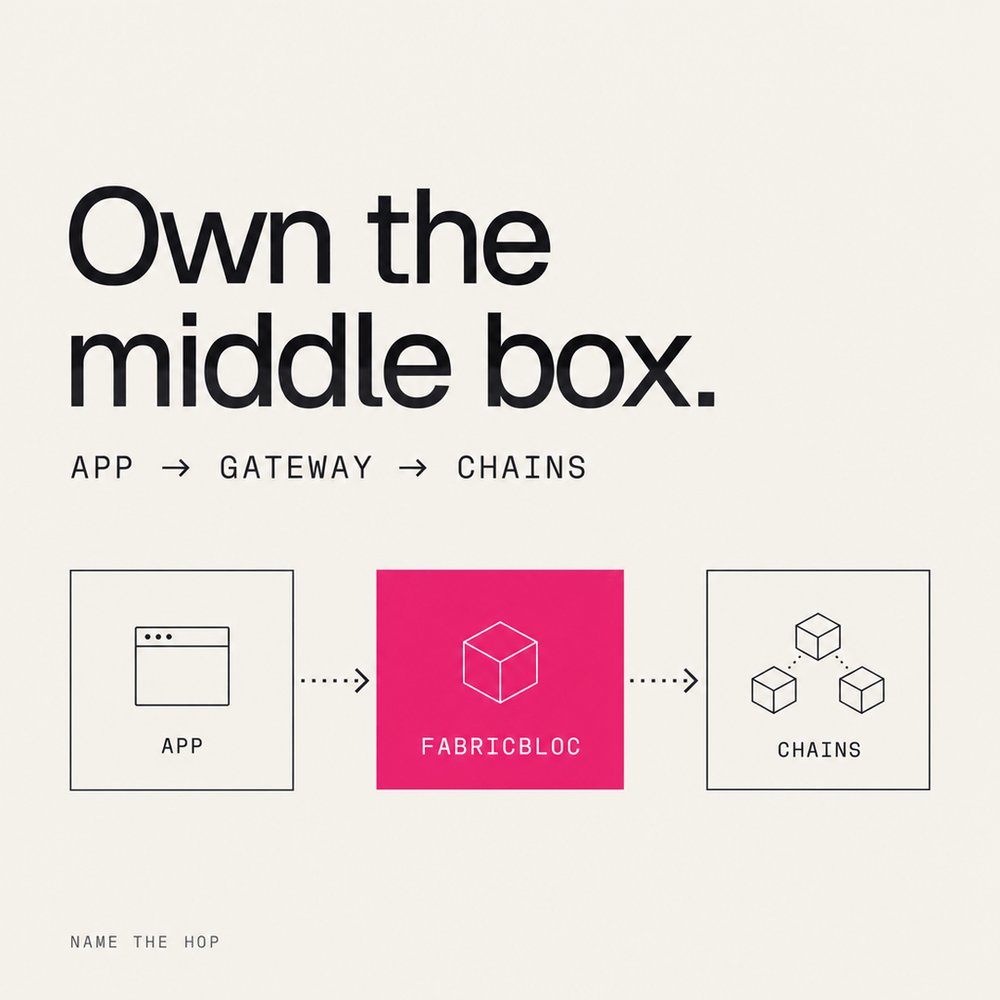
If the middle box on your diagram is blank, you don't own the stack — someone else's roadmap does.
Fill it: APP → GATEWAY → CHAINS.
FabricBloc is one way to own that box.
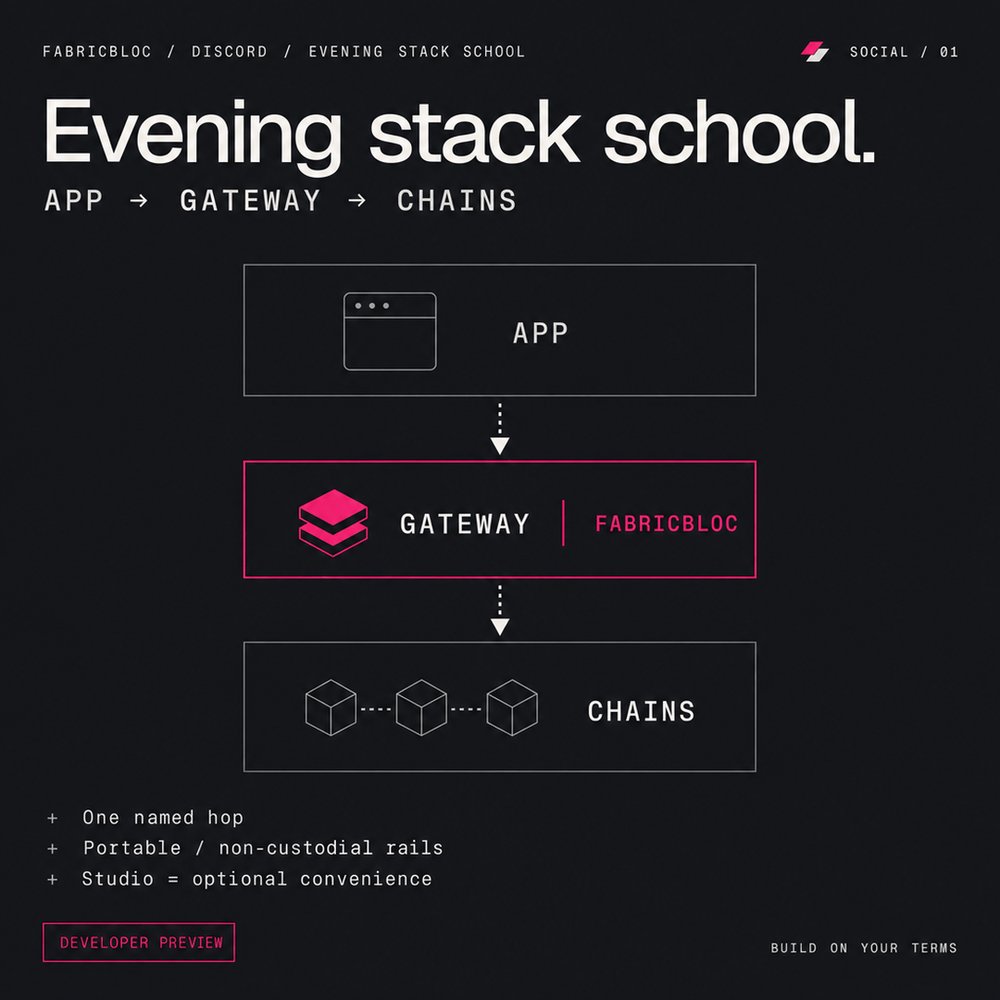
Evening stack school:
APP → GATEWAY → CHAINS
FabricBloc is the gateway layer — portable rails between your app and the chains you use.
The onchain stack, named out loud.
Weekend ask for builders:
Last time an app→chain hop failed on you — was it the RPC, the SDK, auth, or “we never named the gateway”?
Genuinely curious. Reply with the boring truth.
Building FabricBloc in public this month — the onchain stack, named.
If you want early access when doors open:
waitlist / docs / site.
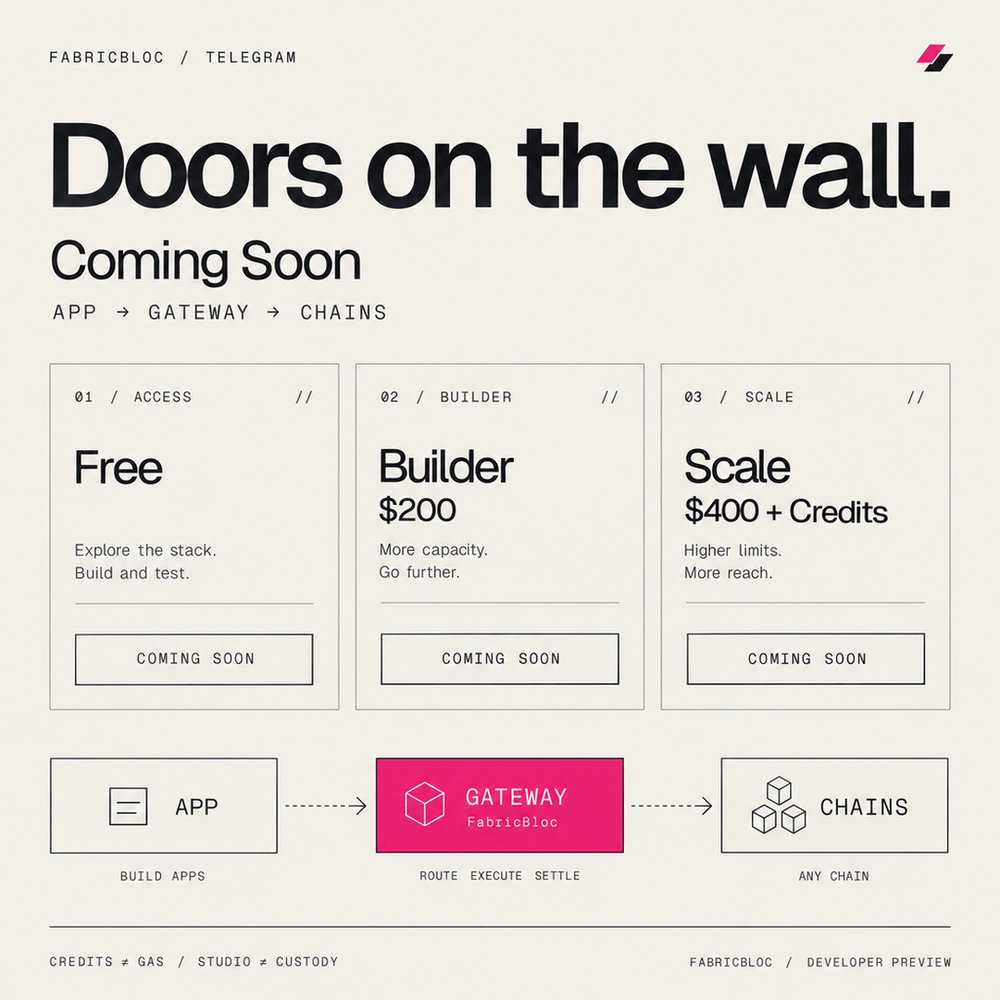
Pricing doors (Coming Soon): Free · Builder $200 · Scale $400 + Credits
Credits = stack work, not gas.
No urgency theater. Just a soft open.
The creator of Rails (@dhh) is moving his own email app off Rails.
DHH at Rails World 2026: HEY goes to 6 native apps plus a Rust back end, all written by agents. @37signals is done writing code by hand.
The 63 min keynote in 2 min 👇
https://t.co/AS40AUGYqs
OPENAI JUST PRICED GPT-6.1 SOL EXACTLY LIKE SONNET 5.5: $2/$10. CACHE READS COST HALF OF ANTHROPIC'S
from today's devday keynote:
> gpt-6.1 sol: "very near astra level intelligence at a fifth of the price". $2 in, $10 out per million tokens, vs astra's $10/$50
> cached input $0.10, a 95% discount. sonnet 5.5 and opus 5.5 read cache at $0.20
> ultrafast: 8x the speed at 6x the price, 300 tokens a second. on astra now, on 6.1 sol "soon"
the side-by-side in the clip is one prompt, a rocket in the devday colors. the ultrafast one is already lifting off while the regular one is still an empty launch ring
for an agent that resends a 50k-token prompt, 49 cache reads cost $0.49 at $0.20 and $0.245 at $0.10
catch: price per token isn't price per task. sonnet 5.5 is also $2/$10, and artificial analysis clocked it at $7.60 a task on max effort. 6.1 sol's real bill depends on how many tokens it spends, and that comes from independent runs, not the keynote
I used my codex reset to cut this @OpenAI Dev Day recap, where I cover my favorite releases for the day (spoiler alert: I'm now an expensive Ultrafast girl)
What I cover:
(00:58) Dots: early impressions and rough edges
(06:57) Spaces: working with humans and agents
(10:37) Sites, connectors, and sharing internal tools
(13:06) Models and platform: GPT-6.1 Sol
(14:36) Decisions API: fast decisions with vision
(17:17) Astra ultrafast: speed, pricing, and possibilities
(22:25) Agents API, computer use, plugins, and plan updates
(23:03) What I’d try first
Full ep on YT: https://t.co/GP8lYJvoAl
This is so cool. DHH absolutely roasting the frontier-lab doomer class, at Rails World 2026 in Austin.
taking a sledgehammer to the “I worked at a frontier lab, therefore trust my apocalypse forecast” mindset.
"Maybe we should lean in with a little bit more optimism, with a little bit of P-Bloom instead of oh so much P-Doom. The chances of this panning out and us getting abundance and joy is so vastly greater than us getting the doom."
----
From "Ruby on Rails" YT channel, (link in comment)
@BomBaPhat App Kits as a unified layer is the right conversation. We think APP → GATEWAY → CHAINS — one clear hop between what you build and where it lands.
@LiegeAgents Wallet signing staying in-app is the right default. Portable rails beat rented lock-in — auth + local signing is the pattern builders keep asking for.
@0PTIMUS_ONE@sablenetwork If an agent can hold money, the hop it takes matters. We map that as APP → GATEWAY → CHAINS — explicit path, keys stay where they belong. Solid Know Your Agent thread.
Protocol mental model:
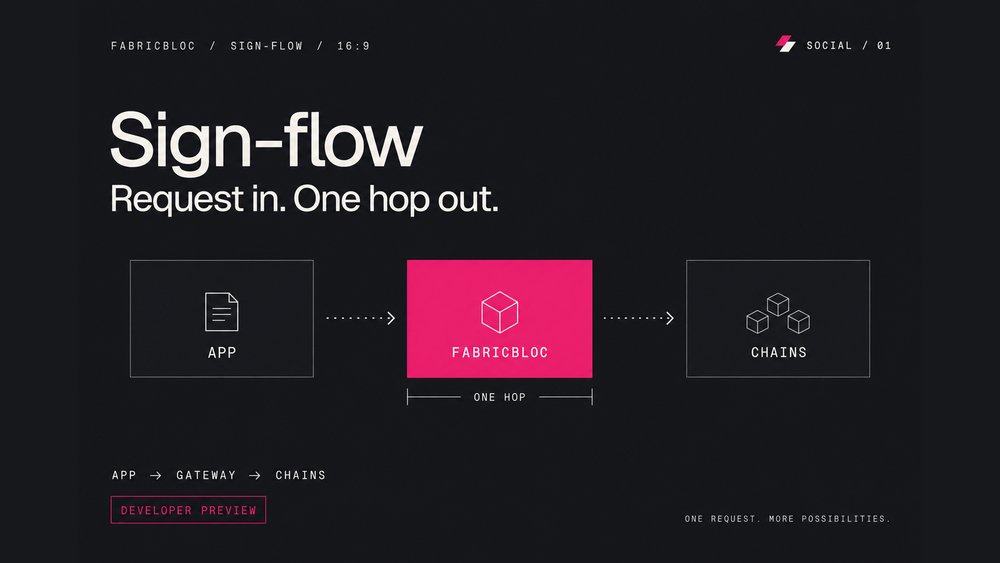
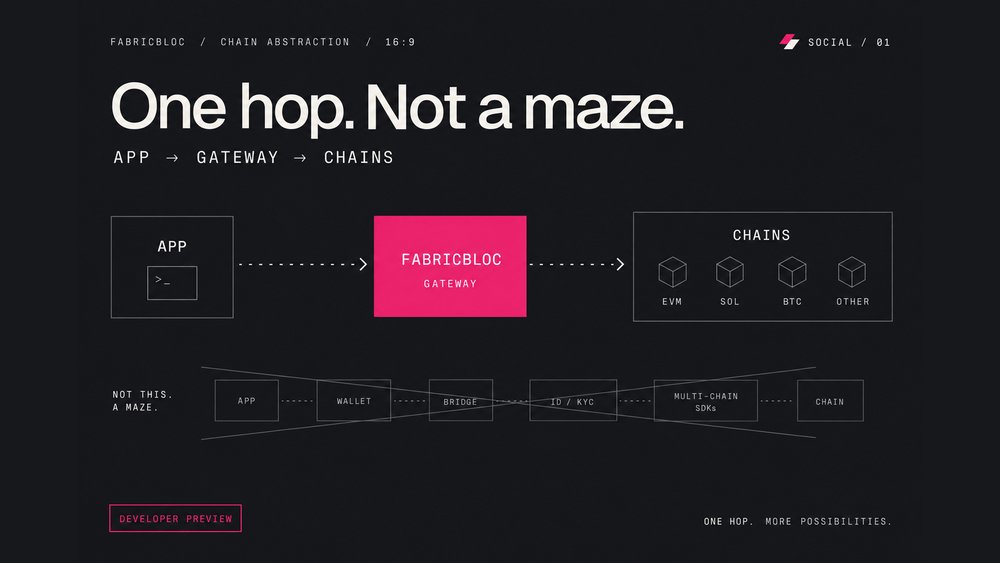
Your app makes one hop through the gateway.
FabricBloc → chain.
No maze of middlemen. One intentional path.
That's the onchain stack mental model.
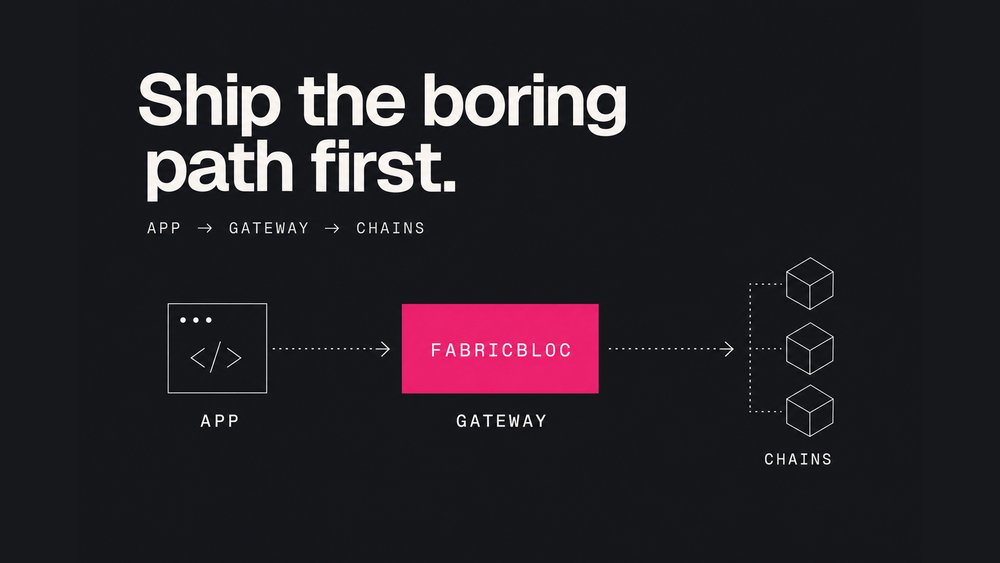
Builder craft: ship the boring path first.
One hop. Named gateway. APP → GATEWAY → CHAINS.
Fancy comes after the path is dull enough to trust.
FabricBloc is that dull, intentional middle.
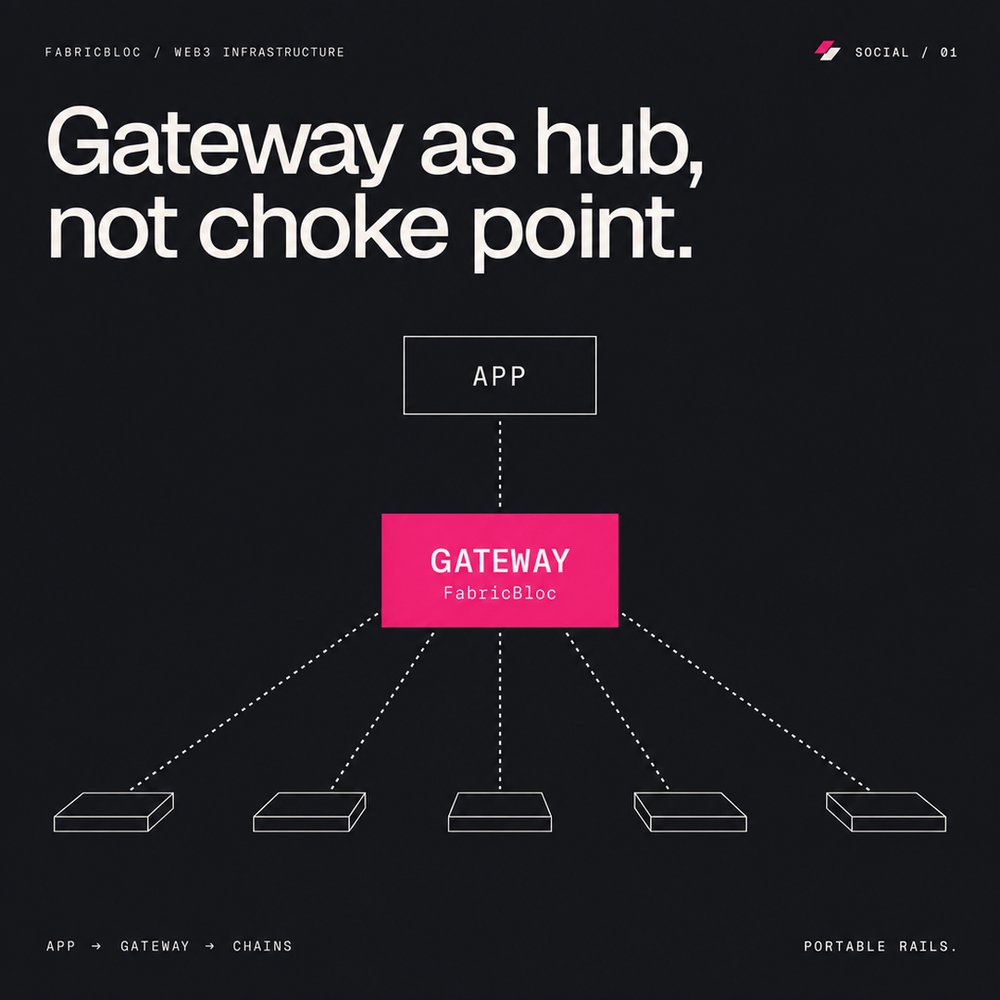
A gateway should be a hub — spokes out to chains — not a choke point you can't leave.
FabricBloc: APP → GATEWAY → CHAINS
Portable rails. Own the stack.
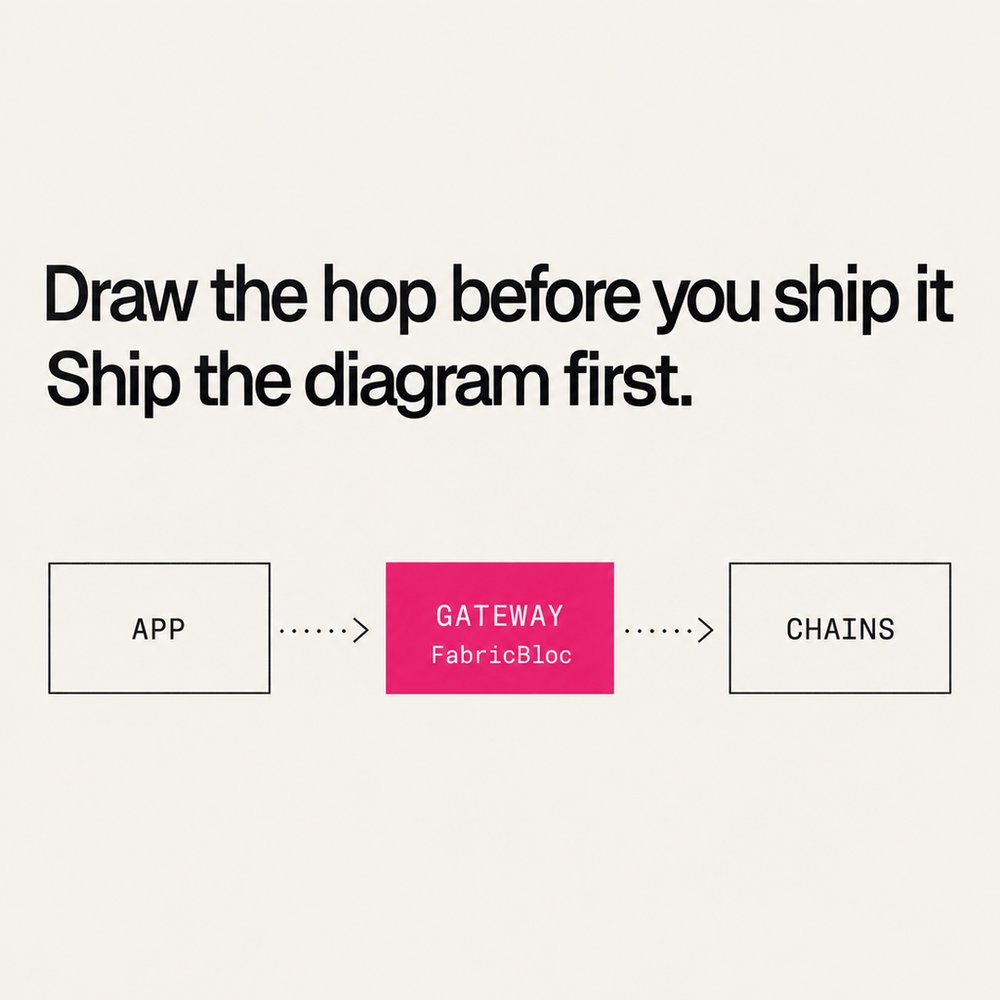
If you can't draw APP → GATEWAY → CHAINS on a napkin, you don't have a stack — you have a dependency.
FabricBloc is the gateway hop. Explicit. Portable. Non-custodial.
Ship the diagram first.
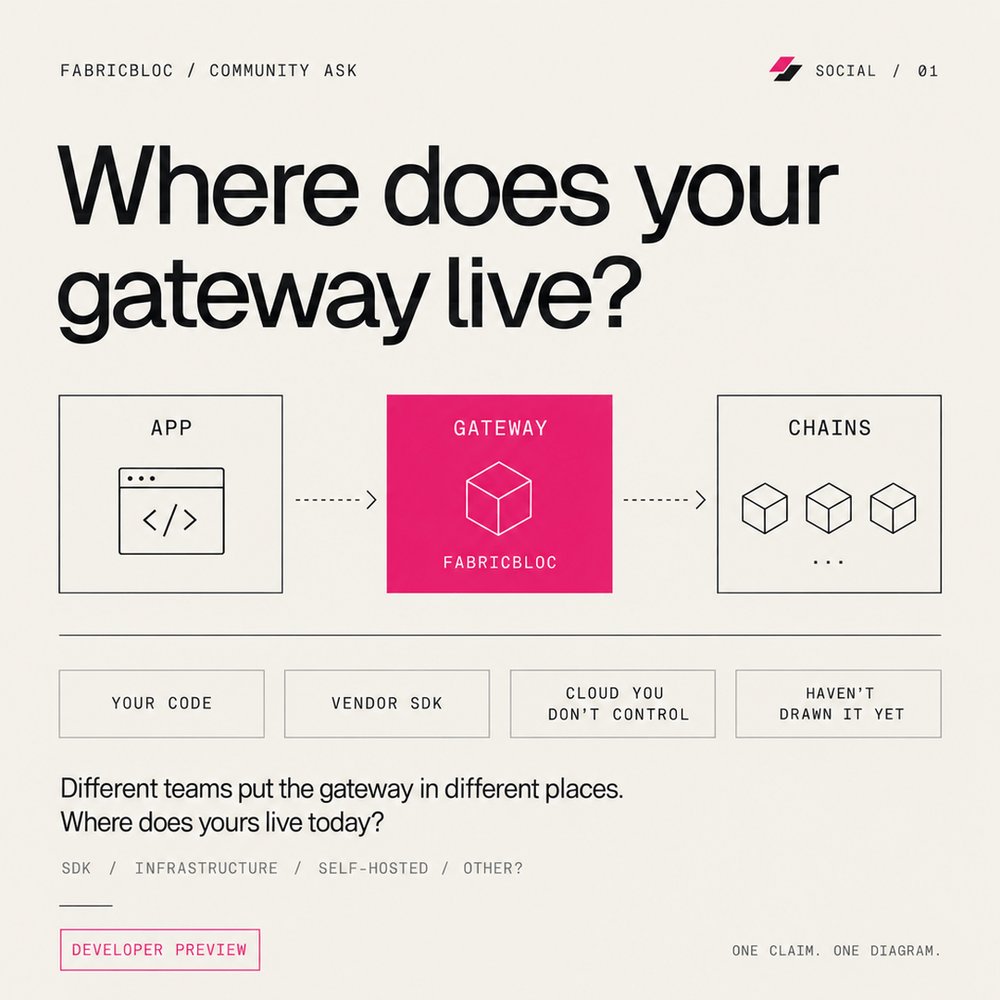
Honest question for builders:
When your app talks to a chain, where does the gateway actually live — in your repo, a vendor SDK, or a cloud you don't control?
Curious what's real for you. Reply or quote.
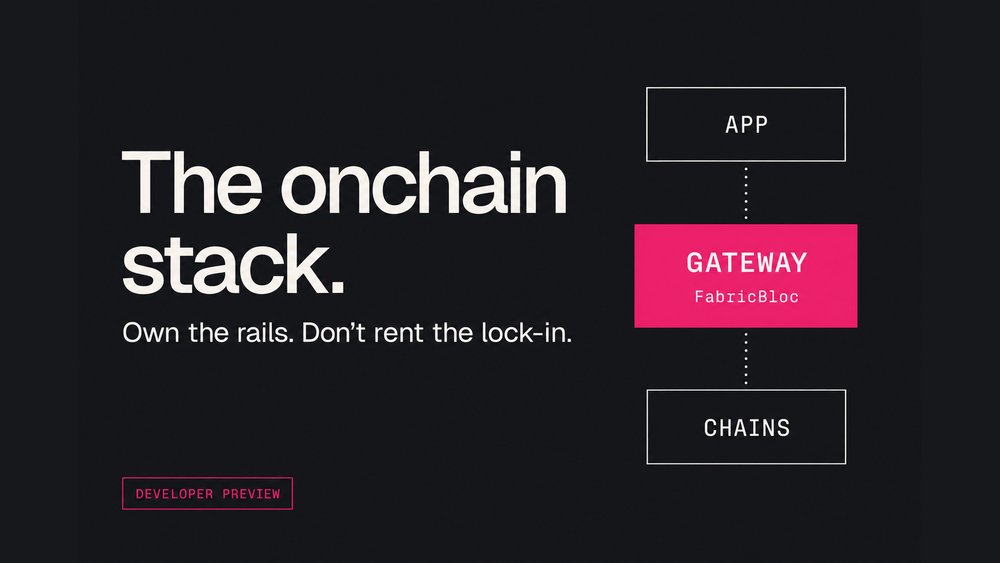
The onchain stack.
APP → GATEWAY → CHAINS.
FabricBloc sits at the gateway — one hop between your app and the chains you ship on.
Own the rails. Don't rent the lock-in.