The FDA’s "Secret Ingredient" Loophole is Closing.
For decades, food plants could add new synthetic additives or packaging chemicals to food without telling the FDA.
Under "Self-Affirmed GRAS" rules, if a company's hired experts deemed a substance safe, it could hit store shelves secretly.
The FDA's proposed new rule forces mandatory disclosure for all GRAS ingredients.
Hidden formulation chemistry is finally going on the public record.
What RFK JR is attempting to do with the GRAS Loophole is one one the greatest things any HHS secretary has ever done…
To truly appreciate it, you have to understand the history.
In 1958, the U.S Government created the designation “Generally Recognized as Safe” or (GRAS), so we can make common ingredients like salt or baking soda exempt from testing.
But over the decades, GRAS has been widely abused by food companies and cooperative legislators, and regulators are now determining if a substance is “safe”.
In European nations, EVERY ingredient is required to be proven safe before becoming a food ingredient.
—— in America, it’s just the opposite, and food ingredients are not deemed unsafe until after millions of Americans are harmed.
- Kennedy highlights a stark contrast: Europe permits only about 400 legal food ingredients under rigorous standards.
- In the US, he states that HHS and the FDA do not even know the precise number of ingredients in American food, with estimates varying widely between 4,000 and 10,000.
He has directed the FDA to explore rulemaking that would eliminate the self-affirmed GRAS pathway, which currently allows companies to declare new food ingredients "Generally Recognized as Safe" without notifying the FDA or providing safety data publicly. This change would require mandatory notification and transparency for all ingredients.
https://t.co/SLkDYncuLV
Space and time reconstructed in 4D
Is this how higher dimensional beings see us - every moment at once?
Starting to understand what Vonnegut meant by humans being “great millipedes” - clearly it applies to our four legged friends too!
Geolocated 2d video → per frame 3d gaussians → each left precisely where & when it happened
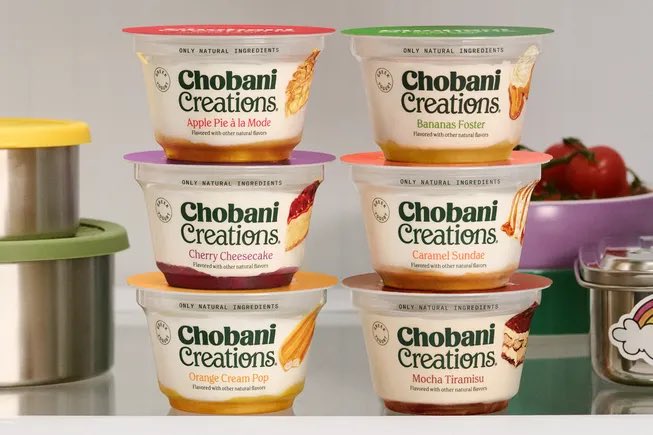
Keurig Dr Pepper is cashing out of Chobani for $800M and selling Chobani the factory too.
Another $125M gets Chobani KDP’s 1.5M sq. ft. Allentown manufacturing site.
Chobani plans to pour $1.2B more into that plant.
@DrinkAriZona AriZona literally printed 99¢ on the can to stop stores from marking it up.
Their scale of co-packer and co-manufacturer network always amazes me ! Kudos to the team.
AriZona literally printed 99¢ on the can to stop stores from marking it up.
Their scale of co-packer and co-manufacturer network always amazes me ! Kudos to the team.
@SteaknShake Do you also require your suppliers to switch to beef tallow for pre-cooking fries before they arrive frozen at the restaurants or is the tallow only used for the final fry in-store?
it reminds of another example about “UNCURED” bacon. Many “uncured” bacons still use celery powder/juice which is a natural source of nitrates/nitrites.
That’s why the label often says, No nitrates or nitrites added except those are naturally occurring in celery powder. Same chemistry consumers are trying to avoid.
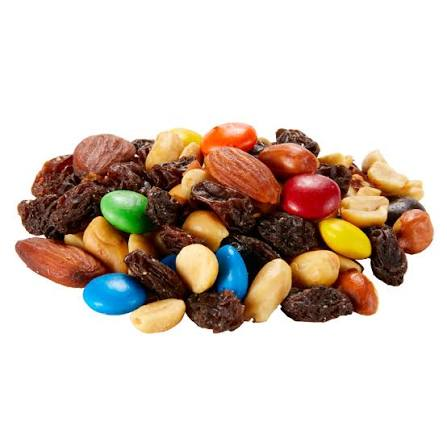
Ever opened trail mix and felt ripped off because all the good nuts were gone?
The factory may have mixed it perfectly. A $5 bag of trail mix can literally un-mix itself after packing.
Every vibration from the filler, conveyor, pallet and truck lets smaller raisins and seeds fall downward while bigger nuts rise. It’s called the Brazil Nut Effect. So the top of the bag can be premium nuts… while the bottom turns out to be full of raisins.
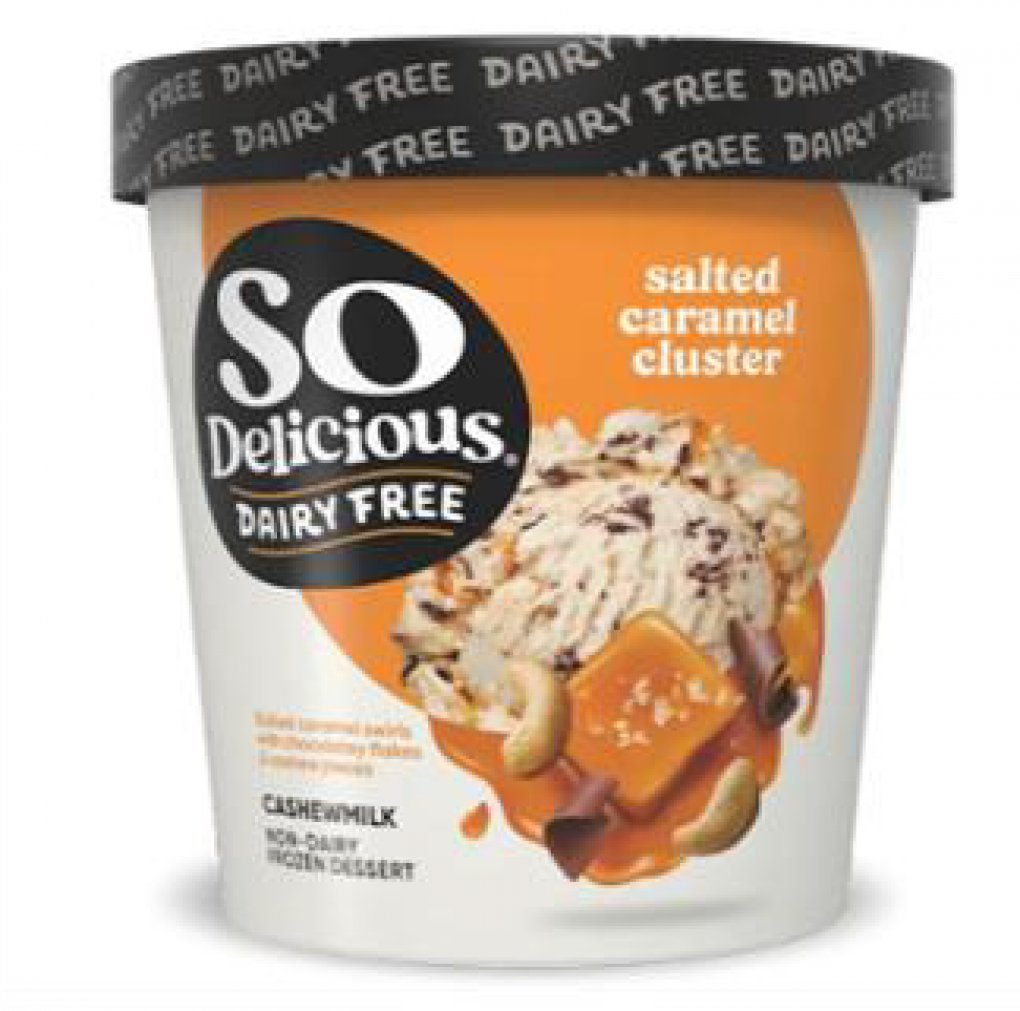
Danone recalled "So Delicious Dairy Free" salted caramel cluster pints after reports of small stones and other hard objects. The issue wasn’t the ice cream base ,the foreign material was in the cashew inclusions. In food supply chain, your finished product is as good (& safe) as your ingredients.
Danone recalled "So Delicious Dairy Free" salted caramel cluster pints after reports of small stones and other hard objects. The issue wasn’t the ice cream base ,the foreign material was in the cashew inclusions.
In food supply chain, your finished product is as good (& safe) as your ingredients.
Danone recalled "So Delicious Dairy Free" salted caramel cluster pints after reports of small stones and other hard objects. The issue wasn’t the ice cream base ,the foreign material was in the cashew inclusions.
In food supply chain, your finished product is as good (& safe) as your ingredients.
That #Starbucks Frappuccino you grab at Walmart, Target, or a gas station is not just a Starbucks café drink put in a bottle.
Starbucks and PepsiCo created a joint venture called the North American Coffee Partnership in 1994 specifically to build Starbucks ready-to-drink beverages. PepsiCo says the partnership develops and distributes products like bottled Frappuccino, Doubleshot and other Starbucks RTD drinks.
Starbucks bottled Frappuccino became a billion-dollar brand, and its supply chain grew to nine production sites across the U.S. Milk is sourced from Dairy Farmers of America while Starbucks supplies the coffee.
All major brands outsource manufacturing. Brands can outsource manufacturing, they can’t outsource food safety accountability
This is why co-manufacturing changes the food safety game.
In 2024, TreeHouse Foods recalled frozen waffles made at one facility over potential Listeria contamination.
Those waffles weren’t sold under one brand. They appeared under private labels sold through Walmart, Target, Aldi, Kroger, Publix, HEB, Whole Foods and others.
https://t.co/Desxru1TTz
American food brands should build safety into the line, not wait for a recall. Strong US manufacturing starts with accountable operators. https://t.co/tVdI2J04lU
Why is one canned margarita $12… and the one next to it $22?
Could be beer sitting in cocktail’s costume.
Real tequila/vodka? Distilled spirits.
“Flavored malt beverage”? Fermented base made to drink like a cocktail.
They can look almost identical on the shelf but they’re made, taxed, and priced under very different economics.
“Big Bean” actually has a pretty wild supply chain
At Bush’s Chestnut Hill, Tennessee plant, they can fill roughly 1,200 cans per minute
The beans aren’t simply cooked, then canned.
Dried beans are hydrated, filled with sauce, sealed into the can, and then the sealed can itself is pressure-cooked so the product becomes shelf-stable.
At that scale, a tiny change in bean hydration can practically get bulging cans and unsafe beans
There is a FDA documented recall in 2017 due to incorrect seam on cans.
Humans are not meant to eat these. They are little pockets of dirt.
You don't even like them, you've just been brainwashed into it because they're cost effective.
Wake up. Rebel against Big Bean.™️
Honey Nut Cheerios has more sugar than honey. Sugar is the second ingredient, honey is further down, and there's brown sugar syrup after that. General Mills says the 12 grams of sugar in a serving come from sugar, real honey and brown sugar syrup and it's 24% of your recommended daily amount.
There are no nuts in it either. The nut in Honey Nut is natural almond flavor, which is why the allergen line says contains almond ingredients instead of contains almonds. The box says made with real honey. That's true. It just isn't the main sweetener.
Under FDA regulation, refined peanut oil is legally exempt from being classified as a major food allergen
The free bulk peanut boxes sitting in the dining room serves as "A visual warning sign" . Sort of insulate them legally. Cant claim that you were not informed about peanuts in the restaurant 🥜🥜🥜
Five Guys built a massive chain frying everything in peanut oil, one of the top allergens in the country and they still put free peanuts out for everyone. How is this still a thing and how did they become so successful?
whole "use high smoke point oils for cooking" rule is pretty misleading.
Smoke point just tells you when an oil starts visible smoking not when it actually breaks down chemically.
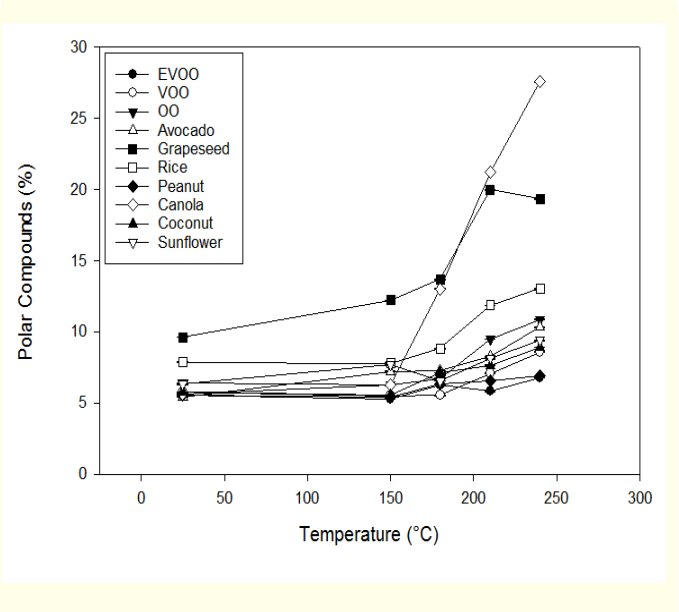
When labs heated popular oils to high temperatures (460°F), seed oils like Canola broke down into over 22% polar compounds.. Extra Virgin Olive Oil stayed down around 8.4%.
Seed oils are packed with polyunsaturated fats, which have multiple double bonds that snap easily under heat. EVOO is mostly monounsaturated fat (one double bond) and naturally loaded with antioxidants that protect the oil from breaking down.
If you're cooking at home, molecular stability matters a lot more than smoke point.
Cooking oils ranked by toxic breakdown compounds after heating:
10. Canola oil: 22.43%
9. Grapeseed oil: 19.79%
8. Sunflower oil: 15.57%
7. Rice bran oil: 14.35%
6. Refined olive oil: 11.65%
5. Avocado oil: 11.60%
4. Peanut oil: 10.71%
3. Virgin olive oil: 10.71%
2. Coconut oil: 9.30%
1. Extra virgin olive oil: 8.47%
Researchers heated all 10 t
o 240°C, then held them at 180°C for 6 hours, measuring polar compounds: breakdown byproducts mechanistically linked to oxidative damage implicated in cancer and neurodegeneration. Regulatory safety limit: 24-27%.
EVOO produced the least of any oil tested, despite a mid-range smoke point of 206.67°C.
De Alzaa, Guillaume, Ravetti, Acta Scientific Nutritional Health, 2018
Ditching seed oils for 100% beef tallow sounds simple, but its operations nightmare.
- Commercial fries are pre-cooked (par-fried) at processing plants before freezing. Steak 'n Shake had to pay suppliers to swap factory par-fry oil to tallow , not just their restaurant fryers.
- Beef Tallow solidifies at room temp, line equipment requires heated storage tanks and heated pipes to prevent clogging.
- Switching from soy/canola eliminates vegetable oil allergens, but Legally removes vegetarian/vegan menu status.
Surely huge net positive for them in short run, but it brought down unit margins and it locks them into a high cost supply chain which wont be easy to undo.
Ultra-processed foods are fueling America’s chronic disease crisis. Under President Trump’s leadership, we flipped the food pyramid and put REAL FOOD back at the center of the American plate. 🇺🇸
Now, the food industry is responding.
Companies like Steak ’n Shake are answering Americans’ demand for real ingredients and better food. This is how we Make America Healthy Again: disrupt the status quo, raise the standard, and give Americans better choices.