Neuroscientist at @TelAvivUni @LabNir
Interests: sleep 😴 computational neuroscience 👩💻 system neuroscience 🧠 || Former full-stack engineer & team leader
Back from @ESRS_Sleep in Maastricht, where I had the chance to present our work from @LabNir on neuromodulation during sleep and its effects on epileptic activity.
Great science, good company, and probably not enough sleep for a sleep conference 🤓
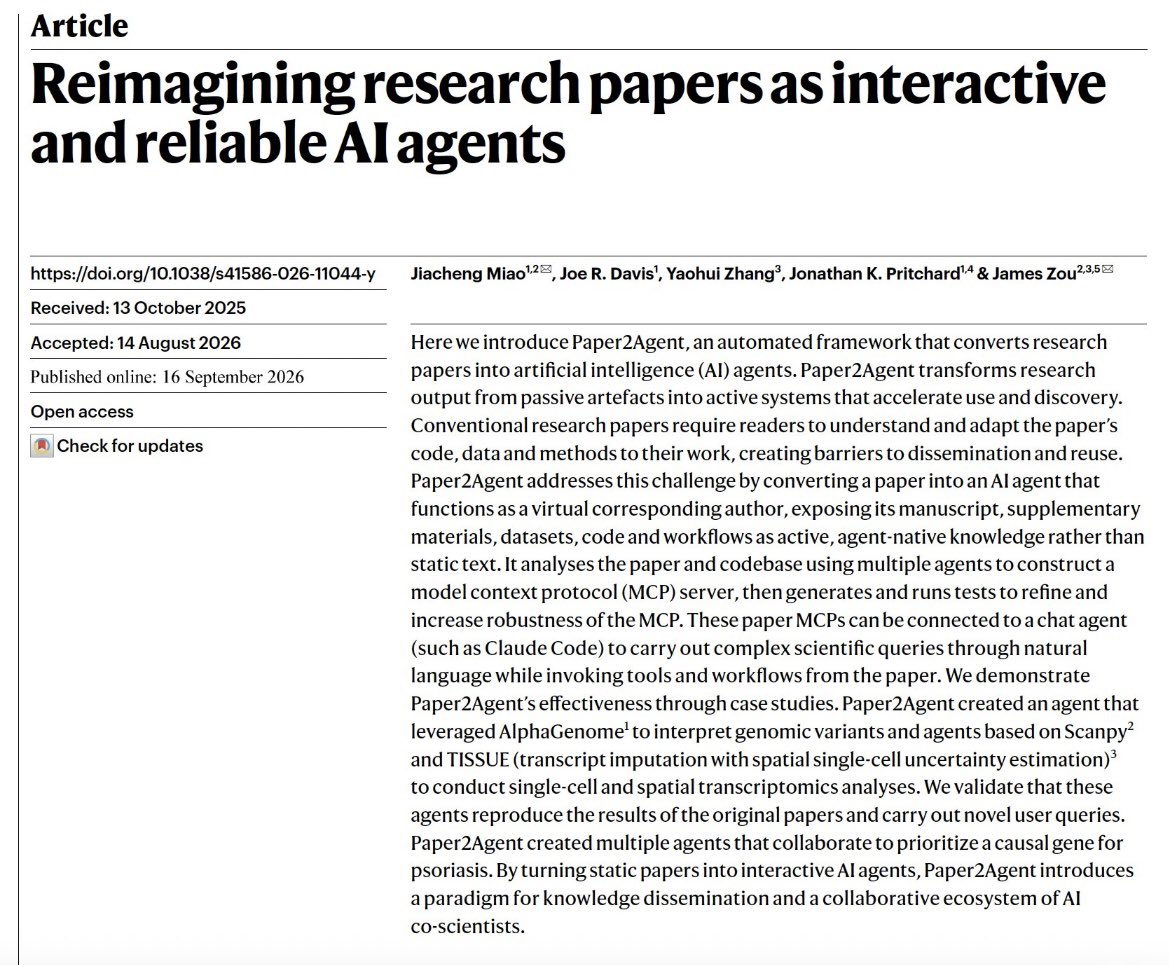
Nature has just published a pretty incredible paper.
The authors introduce a framework that turns research papers into interactive AI agents.
Rather than engaging with a paper only as static text, researchers can question its agent, ask it to reproduce an analysis, or apply the paper’s methods to new data.
This could make research methods much easier to understand, reproduce, and use.
It also opens up a strange possibility: research papers that can, in a sense, talk to one another. The authors demonstrate this by connecting agents derived from different papers so that they can combine their methods and data.
Used carefully (and with human scientific judgment still firmly in the loop) this could become a powerful new form of scientific communication.
*
Full paper in the first reply
https://t.co/xYo6TBUtFq : Browse, view, and download fMRI neuromarkers, population-level predictive brain models that can be applied to new studies and populations
Psychedelics align brain activity with context - new in @Nature from Devon Stoliker @dpsyc42@adeelrazi & many others (including me, very minorly). Full pdf #openaccess is here https://t.co/ZvAmwcxnLe - commentary by Stefan Borgward and Mihai Avram here: https://t.co/xDXDfwkEJX
Memories can survive even after the brain temporarily loses more than half of its synaptic connections, according to a new mouse study in Science, which challenges the long-held view that long-term memories depend on stable individual synapses.
Learn more: https://t.co/6PbiaMd1F8
Memories can survive even after the brain temporarily loses more than half of its synaptic connections, according to a new mouse study in Science, which challenges the long-held view that long-term memories depend on stable individual synapses.
Learn more: https://t.co/6PbiaMd1F8
I've been lucky to work with an amazing team and mentor on some really cool (and important!) projects 😊 Looking forward to finally sharing some of the work we've been cooking up over the past few years 👀
Congratulations @FalachRotem for Michaelson's Excellence Award in Alzheimer's Disease Research! very proud of you & your achievements in developing novel methods for detecting abnormal sleep activities in Alzheimer's. Publication soon stay tuned 🤩 @of_sagol@TAUMedFaculty
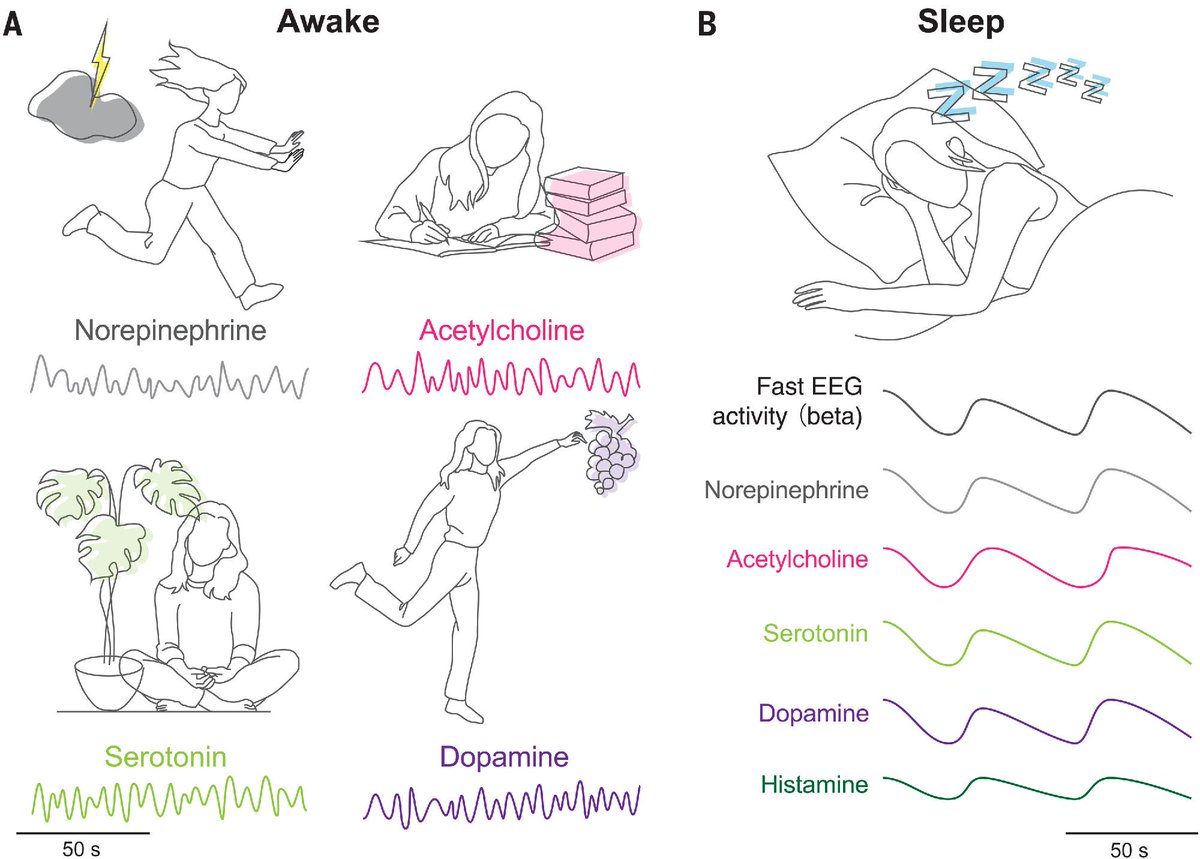
Recent studies have revealed the synchronization of neuromodulators including norepinephrine, serotonin, acetylcholine, dopamine, and histamine during sleep.
A new #ScienceReview explores what potential role the synchronization of these oscillations may play in health. https://t.co/fcDdHm1SDP
Sleep physiology and dementia, a new 5★ review @ScienceMagazine, gets into glymphatics, blood volume, heart rate variability, vasoactive amines, and neuromodulators. by @MaiNedergaard
https://t.co/zBMc1XQZcX
This is one of craziest papers I’ve ever read.
They made a new color by using a laser to individually stimulate particular cells in your eyes.
Apparently it looks like an impossibly saturated teal, but you can’t know what it looks like without experiencing it directly.
Just out in @NatureNeuro! Eyelash-sized Neuropixels probes show how brief electrical bursts between seizures ("interictal spikes") arise from consistent neurons in human cortex layers, hijack neurons used for cognition, & can be predicted up to 1-sec ahead
https://t.co/9vYLC56ic8
@Ryo_epidemiol@NatureHumBehav This is a really useful and well-designed summary. One thing though: in the “box and dot plot” example, the figure shown is actually a bar chart with overlaid dots, not a box plot. Personally I prefer box plots since they represent the data distribution much better.
This paper has been a long time coming. Instead of reanalyzing the same old resting-state fMRI datasets, we combined nearly all datasets around the world. Note that we didn't exactly find indisputable evidence for "default mode network disintegration."
https://t.co/xVeALnbj2b