Humvee hit the front line. Then it came back to the workshop. 🔧🛡️
The repair crew of the 78th Brigade welds, reinforces and constantly improves anti-drone protection for combat vehicles. This Humvee has already taken an FPV strike — the mesh held, the crew was unharmed, and the vehicle kept moving. 💥🚙
Every modification comes from combat experience. Every improvement can save a life. 🇺🇦
And when the guys return and say, “It works” — that’s the best reward. 💪
#Ukraine #Defence #FPV #Drones #AirAssaul
The second cohort of the Ukrainian Veterans Leadership Program (UVLP) by the Victor Pinchuk Foundation is now open. The programme invites ambitious Ukrainian veterans and veteran women who are motivated to learn, grow and strengthen their leadership and strategic skills.
Participants will take part in a 5-day intensive programme at @Yale’s Jackson School of Global Affairs, focused on leadership, strategic thinking and decision-making in complex environments.
Find out more and apply via the link: https://t.co/hLdaCDaJsq
The experience gained by military medics during years of full-scale war must be integrated into the training of civilian doctors.
This was stated by Colonel Oleksandr Falshtynskyi, Chief of the Medical Service of the 7th AAF Rapid Response Corps, during an interview with Army FM.
According to him, every doctor in Ukraine should understand the specifics of combat trauma and be capable of treating gunshot wounds, shrapnel injuries, and blast-related trauma.
“In 2014, we saw that many civilian medical professionals simply did not know how to deal with gunshot wounds,” he said.
Falshtynskyi stressed that tactical medicine should not remain a niche specialty but should become a fundamental skill for both healthcare professionals and civilians.
He also explained how modern warfare has transformed casualty evacuation. Due to the widespread use of FPV drones, it is no longer possible to speak about a predictable average evacuation time.
According to the officer, when battlefield conditions permit, wounded soldiers are delivered to surgical care within the so-called “golden hour.” However, on some sections of the front, evacuation can take one day, two days, or even a week.
He noted that the Air Assault Forces’ medical service urgently requires more mobile solutions, including specialized all-terrain ambulances, intensive care evacuation vehicles, electronic warfare systems, drone detection equipment, additional vehicle protection, and unmanned ground vehicles (UGVs).
“For the enemy, a Red Cross is not protection—it is a target. We constantly lose battalion-level medical evacuation vehicles,” Falshtynskyi said.
One of the most promising areas, he added, is the development of unmanned ground vehicles. In the future, these systems should take on logistics missions and assist with casualty evacuation, reducing the risks faced by military medics.
Falshtynskyi also pointed out that military medical personnel who have been serving continuously since 2022 are experiencing severe physical and psychological exhaustion. He believes civilian healthcare professionals should be more actively involved through short-term contracts and rotational deployments.
Such an approach would allow frontline medics who have been carrying the burden of wartime medical care since the beginning of the full-scale invasion to rest and recover. At the same time, civilian specialists returning from service would bring valuable battlefield medical experience back into Ukraine’s healthcare system, helping strengthen its overall resilience.
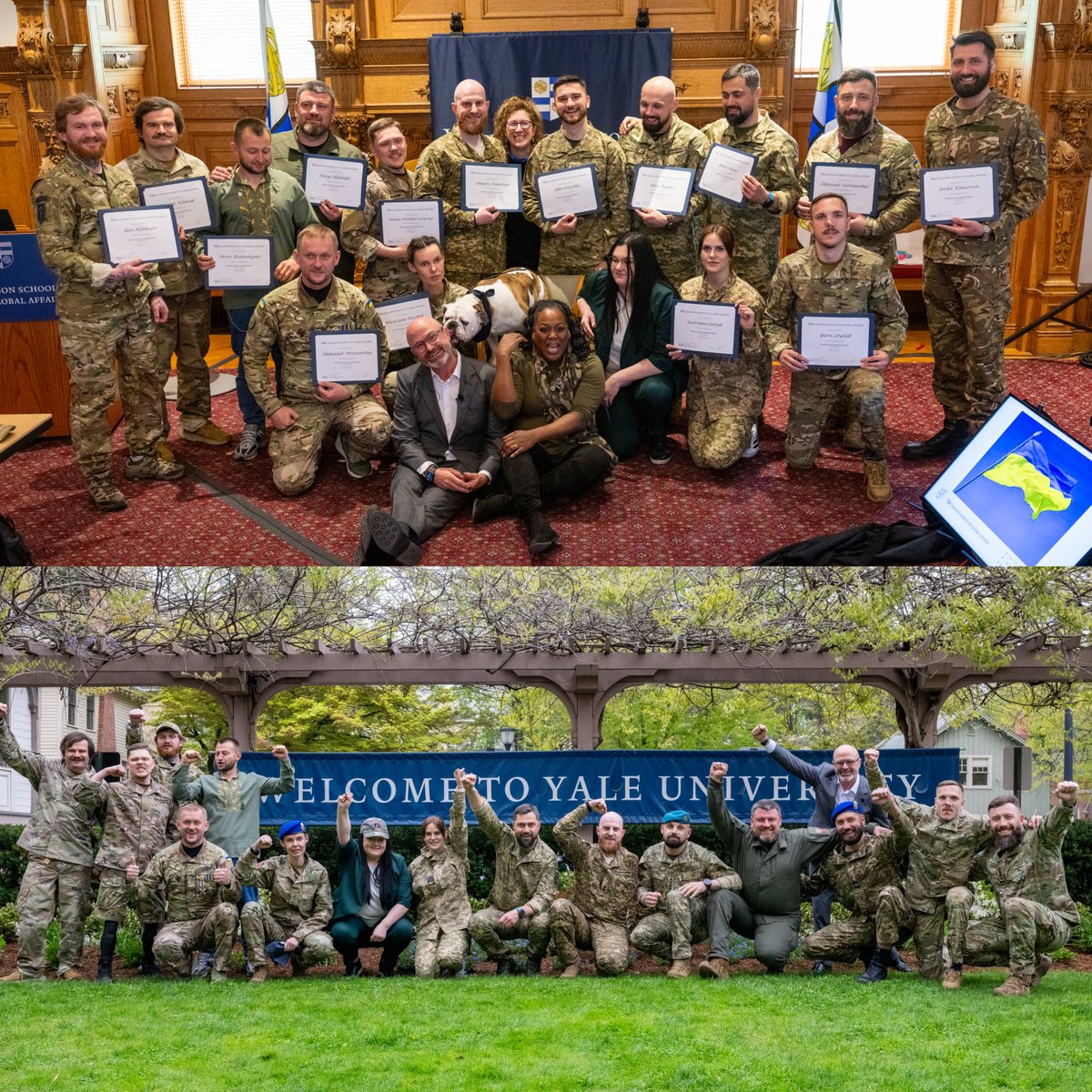
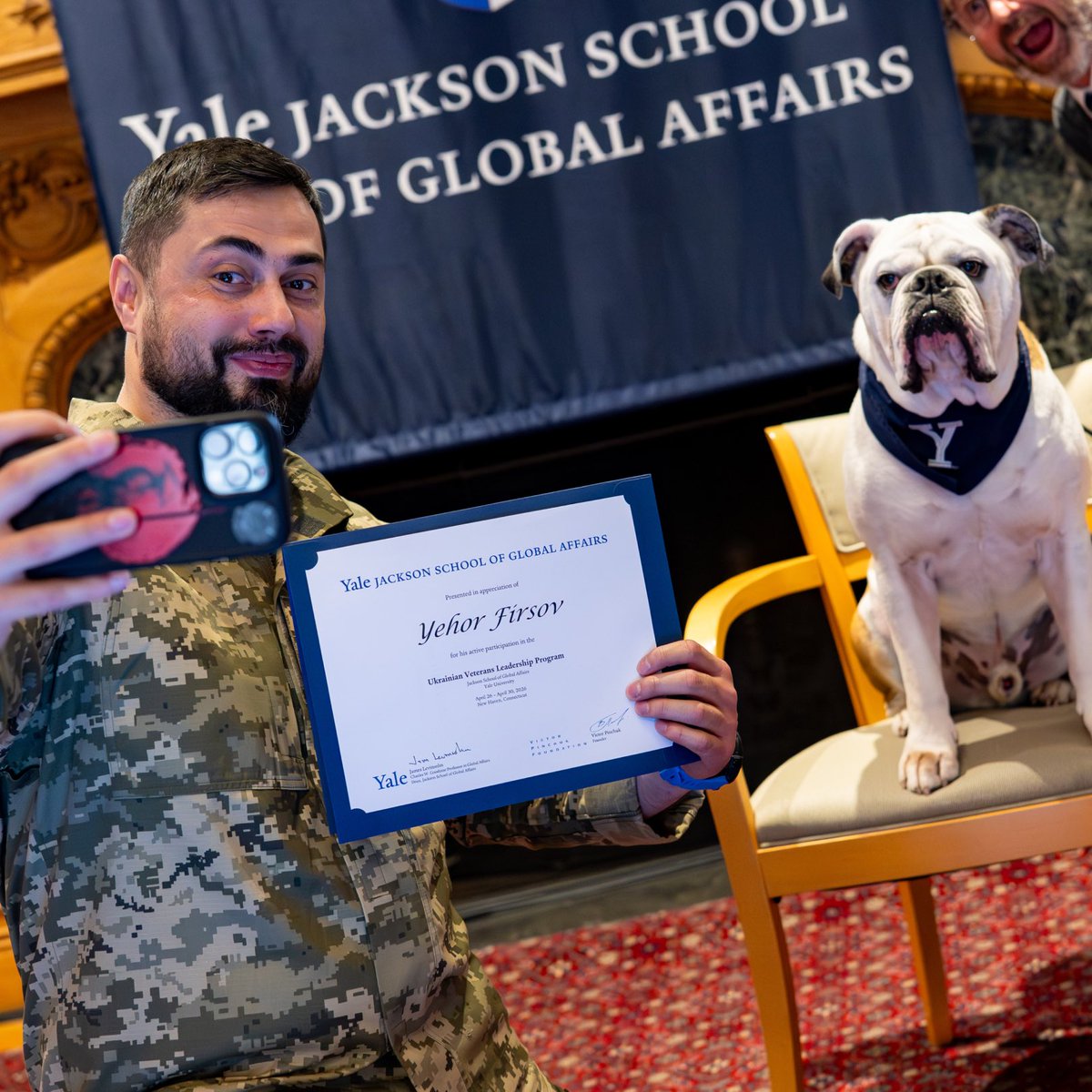
The first cohort of Ukrainian veterans has completed the Ukrainian Veterans Leadership Program of the Victor Pinchuk Foundation at @yalejacksonsch Yale Jackson School of Global Affairs.
For five days, participants worked with leading scholars and practitioners on leadership, ethics, communication, global challenges, Ukraine’s role in the world, and the role of veterans in society.
The program combined lectures, practical sessions, and interactive discussions led by a range of scholars and practitioners. Among them were @TimothyDSnyder, Richard C. Levin Professor Emeritus of History and Global Affairs, discussing the meaning of this moment in history; @Rob_Malley, Senior Fellow at Yale Jackson, speaking about the changing dynamics of war and peace; Emma Sky and Yuval Ben-David from the International Leadership Center, leading a session on imagining scenarios for Ukraine in 2050; @BrandonNappi of Yale Divinity School, whose session on ethics, mindfulness, and transformative leadership helped participants reflect on the values they are fighting for.
The next cohort will launch in late 2026, with applications opening this summer.
Iran may attack U.S. forces with $400 cost interceptor drones — like rus-sian «Molniya». Its significantly cheaper than the Shahed drone and has a range of up to 60 km, when the width of the Strait of Hormuz is 40–50 km.
While the missiles for Patriot systems — likely to be often used by the U.S. to intercept these threats — cost about $4M. How do you like that cost ratio?😉
In this video, we’ll discuss how 7 Corps experience can help in countering Iran. And about the capability to mass-produce low-cost interceptor drones (with @generalcherry).
Watch the video, like and share this post!👍
Massive blood loss is №1 causes of death among the wounded. How modern technologies stop death on the front line and what the work of Air Assault Forces medics involves,- the Head of Medicine Service of the 7th Air Assault Corps, Colonel Oleksandr Falshtynskyi (@Falshtik), explains. It covers blood component storage systems, mobile solutions for stabilization points, as well as special devices that allow rapid warming and transfusion of blood.
Like and share this video and subscribe to our channel!
🧬 Field research by the pilots of the 155th Mechanized Brigade in the area of responsibility of the 7th Air Assault Corps.
The subject of observation: a typical Russian occupier.
Our FPV drone got stuck at the entrance to his hole. But instead of the instinct of self-preservation, the subject suddenly displayed a strong looter instinct. The Russian decided to take the “trophy.”
Evolution clearly skipped this individual — the drone detonated right in his hands. 💥
The experiment was successfully concluded.
The video captures a unique moment — the “curious researcher” expression on the Russian’s face just seconds before the FPV detonates.
#Ukraine #UkraineWar #DroneWar #FPV #UkrainianArmy
The head of medical support department of the 7th AAF Corps, Oleksandr Falshtynskyi, at the YES Meeting shared how technology saves lives on the frontlines: drones and unmanned ground vehicles replace soldiers in dangerous tasks — logistics, evacuation of the wounded, and returning the fallen to their families.
The future of warfare where data is the new ammunition, lethal robots become autonomous and, dare I say it, the human in the loop is no more, my weekend essay for @thetimes https://t.co/hPKBfAWIPz
Voices from the frontline of the 🇺🇦 defense against 🇷🇺 aggression . Determination - I feel a greater confidence than a year ago. It’s been hard, but 🇷🇺 fails time after time in its attempts to break through.
Six months of intense fighting for the Pokrovsk agglomeration. In autumn, the enemy concentrated one of its largest force groupings here, expecting a rapid breakthrough. Instead, it faced strong resistance from Ukrainian units in the defense zone of the Air Assault Forces’ 7th Rapid Response Corps. The price of their so called blitzkrieg is extremely high.
In six months:
▪️ About 15,000 killed and wounded occupiers. A number that could fill the entire Red Square ⚫
▪️ About 1,000 destroyed and damaged vehicles. A stadium full of scrap metal 🚛🔥
▪️ About 150 hit artillery systems and MLRS. A column up to 1.5 km long 🎯
▪️ About 23,000 shot down or suppressed attack drones 🛸💥
This is the scale of the threat that Ukrainian defenders have stopped. Ukrainian soldiers continue to hold the line and destroy the enemy every day. 🇺🇦🛡️💪
#Ukraine #StandWithUkraine #UkrainianArmy #AirAssaultForces #Pokrovsk #StopRussia #RussianLosses #UAarmy
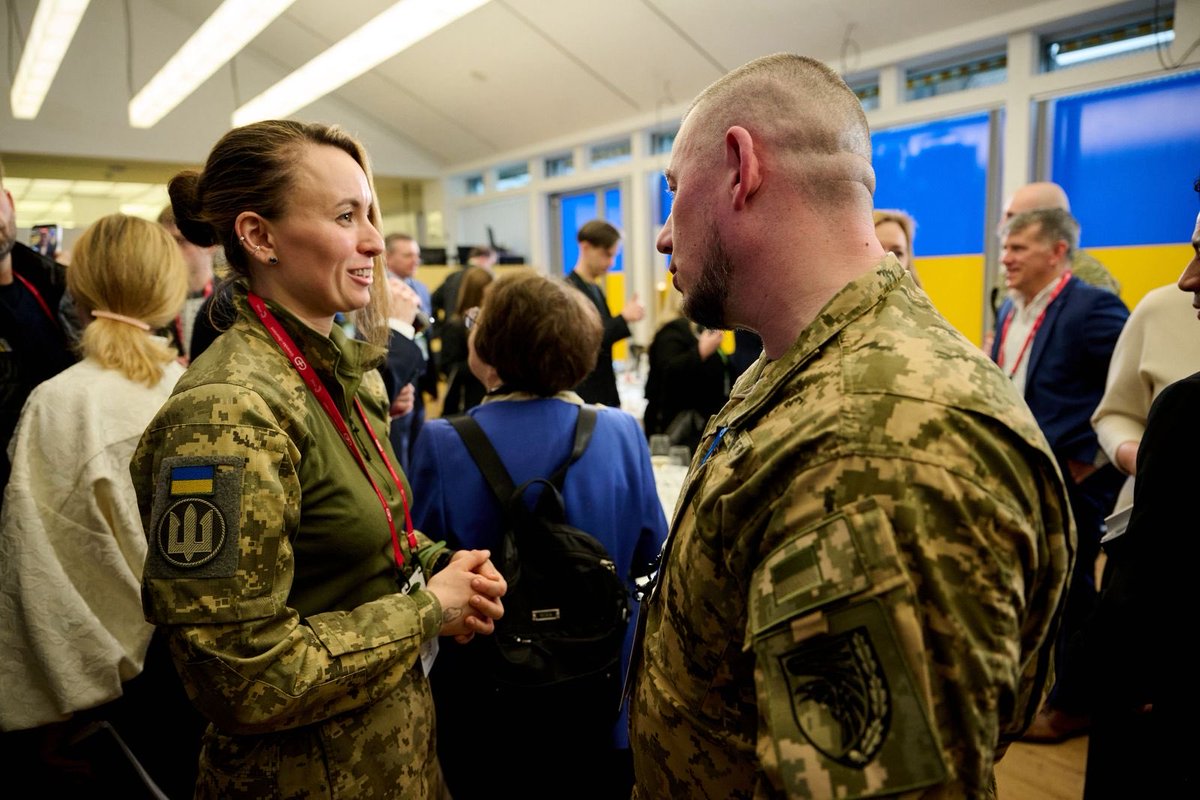
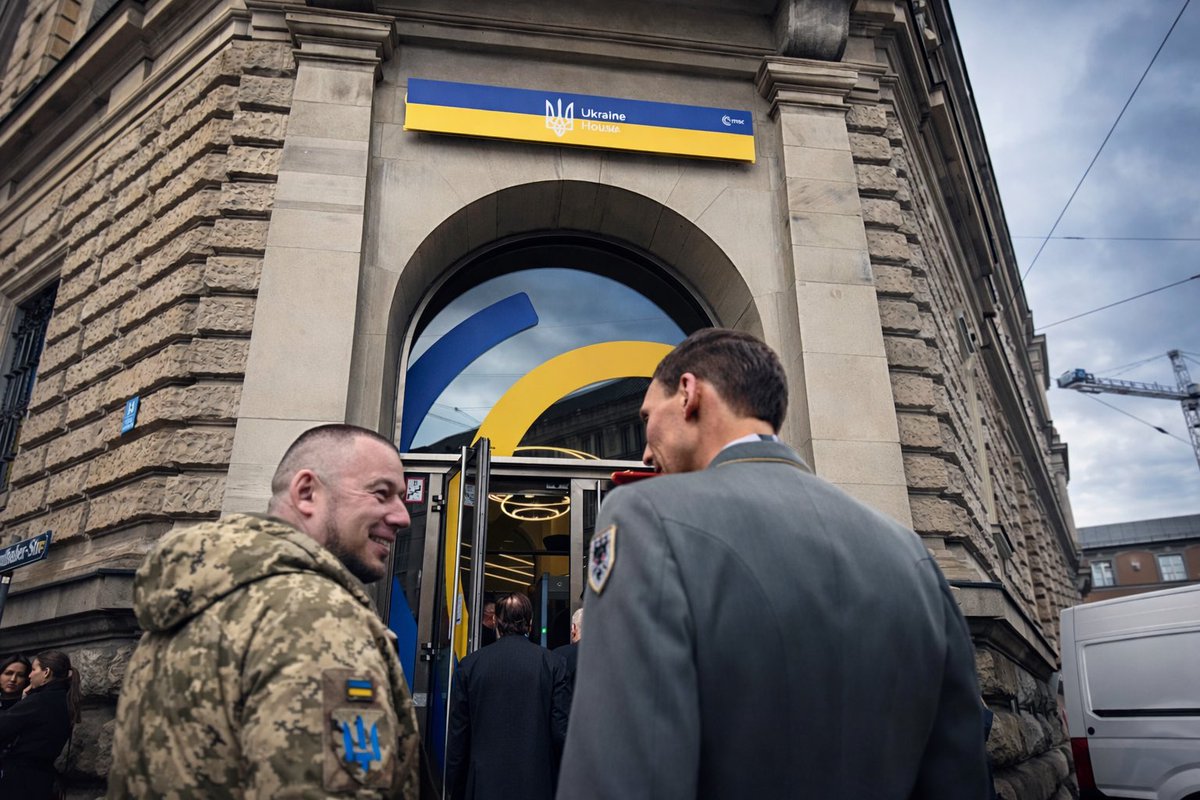
At the launch of Ukraine House at the Munich Security Conference, Colonel Oleksandr Falshtynsky, a corp surgeon in Ukraine, says: "We need to evolve faster than the enemy The enemy changes every day.
Change or die. It is a warning for Europe, you need to prepare yourselves before war comes to you."
German ambassador to Ukraine says his country is the biggest supporter of Ukraine, both militarily and financially, as he accuss Putin of war crimes at the launch of Ukraine House at Munich security conference
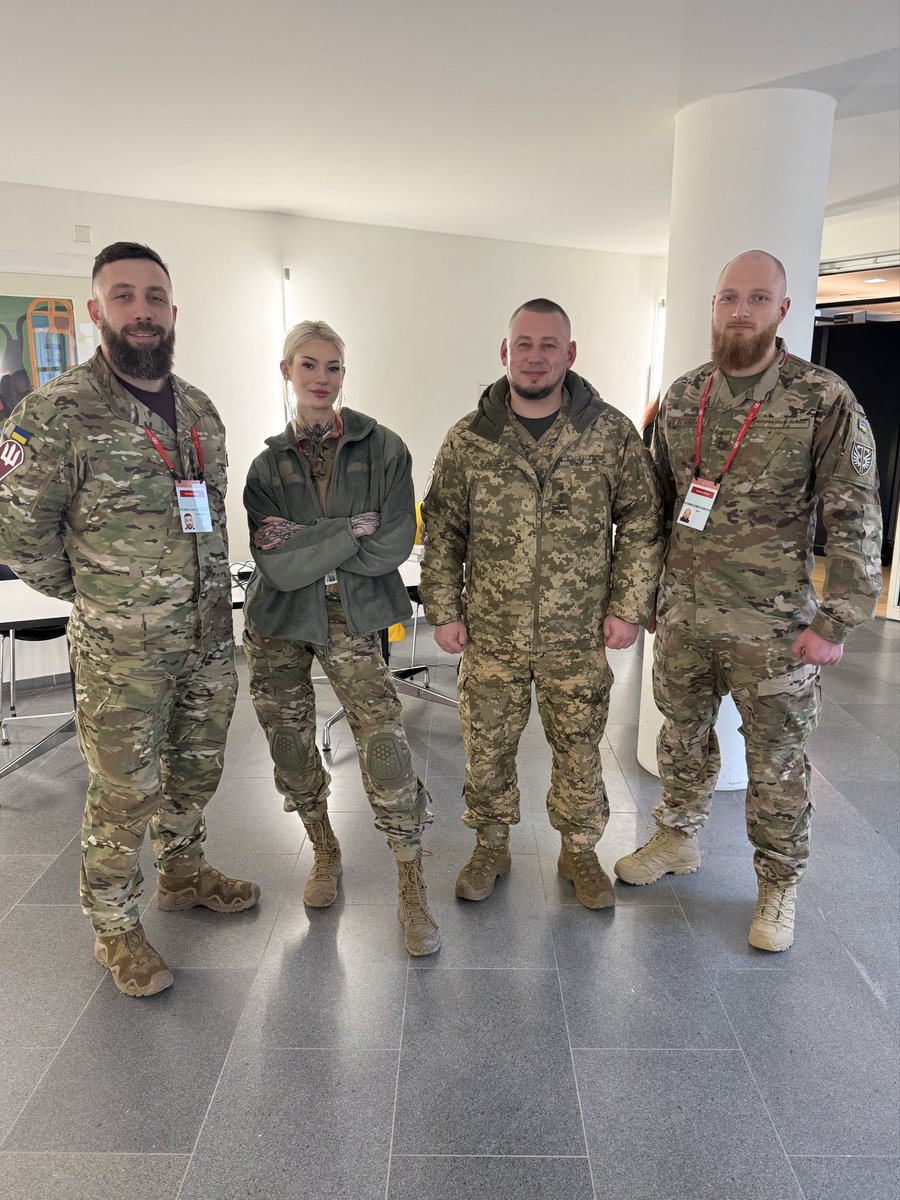
Ukraine House officially opened today at #MSC2026.
A live workspace, a meeting point, and an exhibition showcasing #Ukraine’s resilience—all under one roof. 🇺🇦
Ці кілька днів у Мюнхені були інтенсивними.
Багато говорили про роль Європи. Її відсутність за столом переговорів виглядає слабкою позицією для самого континенту. Очевидно, що рішення про майбутню безпеку мають ухвалюватися разом із тими, кого вони безпосередньо стосуються. Європа має бути за столом переговорів (!).
Виступ Президента був чітким і по суті.
Головний акцент на єдності, адже саме її московія намагається зруйнувати. Принципово, щоб гарантії безпеки були погоджені до будь-яких домовленостей про завершення війни.
Також важлива думкою є те, що технологічна еволюція озброєння випереджає політичні механізми реагування. Це змінює характер ризиків і вимагає швидшої та більш скоординованої відповіді.
Посилення ППО та енергетична стійкість залишається безумовним пріоритетом для України. Ракети до Patriot, NASAMS і IRIS-T критично важливі.
Паралельно також відбулася серія важливих зустрічей.
У кулуарах Конференції мав розмову з Метью Вітакером, Послом США при НАТО, обговорили ситуацію на лінії зіткнення. Особливо цінно, що він відзначив мужність і результативність наших воїнів. Приємно передати побратимам слова підтримки та високу оцінку їхньої хоробрості й професіоналізму.
Окрема зустріч із Марко Рубіо стосувалася гарантій безпеки, дипломатичного процесу та подальшої координації, зокрема у тристоронніх форматах.
І з Генеральним секретарем НАТО Марком Рютте обговорили подальшу реалізацію програми PURL та її практичне наповнення.
Не менш важливий блок — оборонна кооперація. Українські спроможності дедалі глибше інтегруються в європейську систему. Показовий приклад — запуск виробництва українських безпілотних систем у Німеччині в межах спільного підприємства Quantum Frontline. Це вже не просто підтримка, а спільна промислова база.
На панелях і в кулуарах постійно звучала одна думка: Європа має діяти швидше, узгодженіше і масштабувати те, що вже працює. Підтримка має не залишатися на рівні заяв, а втілюватися у конкретні рішення та відчутні результати.
Підсумок Мюнхена простий.
Мюнхен-2026 показав, що Україна не сприймається лише як країна на фронті.
Саме наш досвід і рішення (!!) стають частиною спільної європейської безпекової логіки.
І це реальність, яку визнають і підтримують партнери.
Scuta premite!
Nunquam retrorsum!