2021 rewarded attention.
2025 rewards utility.
Liquidity was the product.
Narratives pulled in capital long before anything shipped, and most systems had no obligation to do real work.
When the cycle turned, there was nothing underneath to keep them alive.
This time, the signals look different.
Open any DePIN or infra dashboard to see actual activity: GPUs rented, TBs stored, compute delivered, tasks routed, nodes proving reliability.
These flows don’t disappear because sentiment is bad.
They disappear only when the underlying economics stop making sense.
That’s the distinction the market is slowly waking up to.
Attention creates volatility.
Utility creates durability.
And in a cycle like this, durability is the only metric that matters.
Been around @Cardano long enough to recognise when something actually moves the needle, and @ApexFusion is one of those projects that arguably shifts the whole lane for us holders.
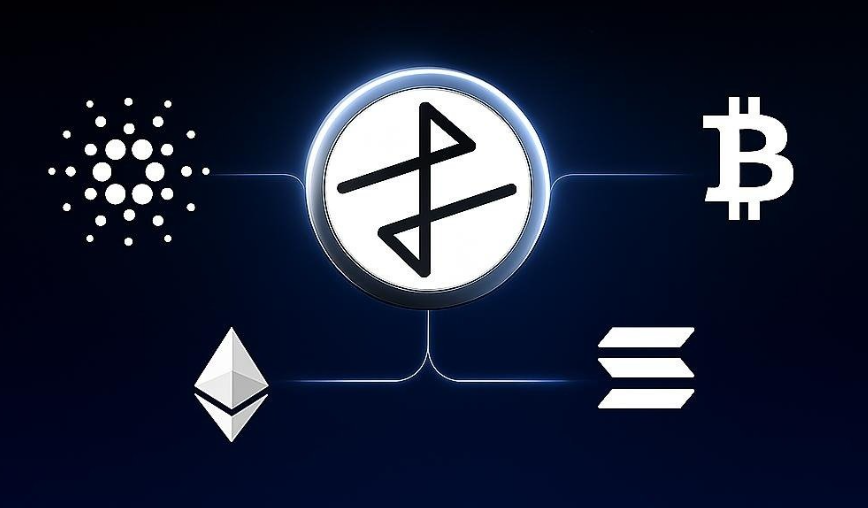
Apex Fusion basically gives Cardano the multi-chain rails it's been missing.
➡️ USDC liquidity routed straight into the ecosystem
➡️ UTxO <> EVM flow finally opening up for devs who want flexibility
➡️ Vector running with near-instant finality while staying aligned with Cardano principles
In hindsight, this is the kind of upgrade that quietly sets the stage for an ecosystem to break out.
Interoperability was always the unlock, and the Apex team delivered it in the cleanest way possible.
My personal view? This interop layer is going to pull far more flow, builders, and attention into $ADA than most people realize.
Depressed markets are the only time you can see which systems earn their keep.
When everything turns red, speculation evaporates instantly.
What doesn’t evaporate is the work decentralized networks are economically obligated to perform:
> Storage networks still store because someone needs the data available tomorrow.
> Compute networks still route training jobs because models have to ship.
> Payment rails for agents still clear because machines will keep talking to machines.
Sentiment collapses quickly.
Utility rises slowly.
When the noise filters out, you’re left with the layers that clear in every regime.
Those are the layers that quietly survive every cycle.
Not saying this is for everyone, but after today I'm genuinely shifting a chunk of my stack.
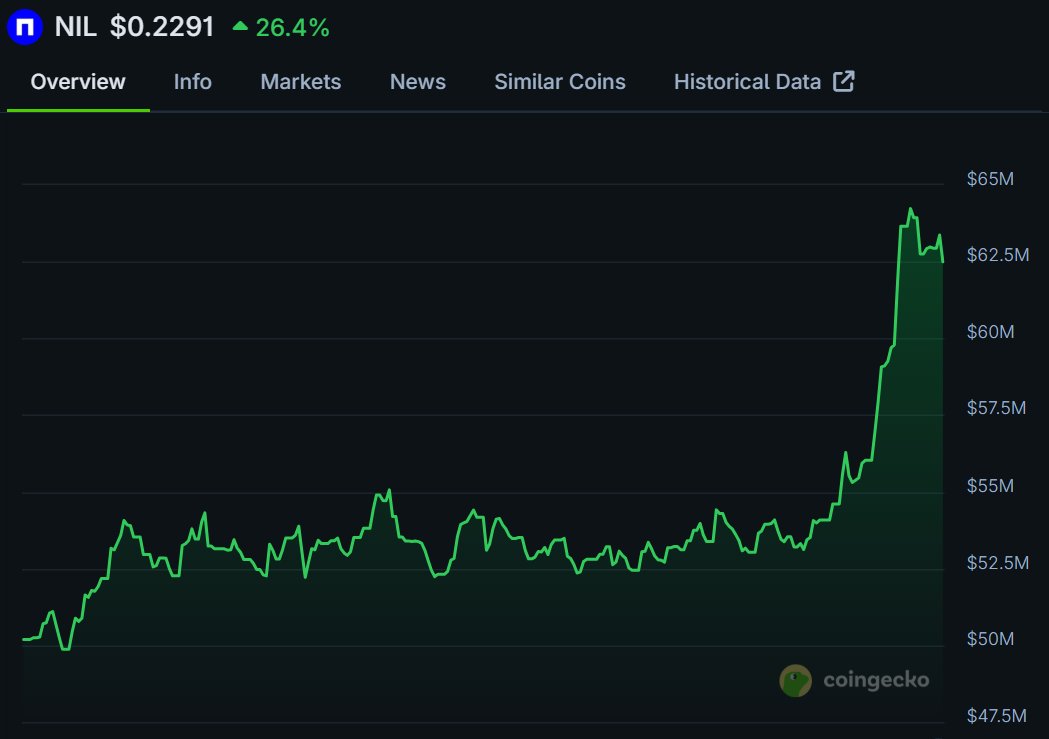
I watched $ZEC wake the privacy lane… but $NIL straight up outperformed everything in sight.
I'm betting its mcap doesn't stay this tiny for long.
200–400M is lightwork.
bought $NIL as a trickle-down play from the $ZEC pump and it might be my best trade so far
>AI alignment + privacy narrative hitting perfectly
>recent $ETH expansion puts it in the conversation instantly
>main beneficiary of the emerging AI-infra narrative
>has the cleanest upside among its peers
>currently outperforming 90% of coins in the market
Markets rarely reward enthusiasm.
They reward necessity.
AI capex pushing toward hundreds of billions a year turned high-intensity compute into a non-negotiable item.
Once something becomes mandatory for intelligence at scale, capital stops treating it like a bet.
The same thing is happening to instant, borderless settlement as the networked economy, DeAI, and DePIN go global.
When machines transact across borders in real time, the rails can't be optional; that's where crypto as neutral infra actually makes sense.
Hope doesn't drive adoption.
Obligations do.
And obligations favor systems the world can't function without.
The easiest way to read crypto infra now is to follow where fees accrue around intelligence, not speculation.
Who earns when models run, data moves, and GPUs light up?
That’s where the flywheels form.
Better intelligence → better builders → stronger loops → real moats.
Equities → AI → crypto is now a predictable rotation.
Not because these rotations are driven by hype, but by the limitations each system runs into:
> Equities price incumbents. They move at the speed of mature businesses and quarterly reporting cycles.
> AI consumes every dollar of available compute. It’s bottlenecked by hardware. Capital rushes into GPUs, data centers, and chips because that’s the limiting factor.
> Crypto settles what moves too fast and too globally for legacy rails. That’s where TradFi infra hits its wall.
Each layer carries a different choke point.
Stocks choke on incumbency.
AI chokes on compute.
Legacy finance chokes on global speed.
Capital keeps rotating because it keeps running into these limits and searching for the next system that can handle the load.
In the end, the rails that stay open at machine speed aren’t the most familiar ones... they’re the most permissionless ones.
Every cycle has a moment where the timeline goes quiet and people start questioning the whole premise.
I’ve lived through enough of these to recognize the emotional pattern.
What’s different today is the structural layer underneath.
In 2021, most activity was reflexive. Tokens moved because traders moved. Projects lived or died on narrative velocity. When the market flushed, the entire system froze because almost nothing had utility outside of speculation.
This cycle feels painful, but the base layer is sturdier.
We finally have networks coordinating actual work: storage being written, compute being delivered, agents and apps settling tasks across open rails. Not just AI workloads - though that’s a growing category - but real usage across DePIN, identity, payments, and coordination.
The market can collapse overnight.
Throughput doesn’t.
And utility that keeps clearing during a flush is the only real heuristic I trust.
I don’t confuse that with optimism.
It’s just the first time I’ve seen crypto infra push forward even as sentiment refuses to.
Prices can lie.
Systems with real users don’t.
Builders don’t disappear when candles turn red.
They stay because infra demand tracks workloads, not sentiment.
Models still need GPUs.
Agents still need routing.
Robots still need inference close to the user.
Prices move. Workloads don’t.
In 2021, crypto mostly synchronized with speculation.
Today, DeAI rails coordinate real production: proofs move, tasks settle, data stays local.
The panic on the timeline just reminds me that sentiment is noisy while throughput is steady.
If you're here for the narratives, it feels late.
If you’re here for the infra, it feels early.
Buying $CORE on a day like this feels like one of those moves you look back on and laugh about. December is usually the month everything wakes up, charts fly, and everyone suddenly turns euphoric.
Load up now so you can thank yourself by New Year's.
Are you going to ignore that fact that the @aave community went throught the same thing?
Temporary HF dips, delayed liquidations, and liquidity crunches during flash crashes. That's how on-chain lending works when volatility outpaces oracles.
Colend can't "freeze liquidations." It uses open liquidator calls like every Aave-style protocol. If bots didn't execute instantly, it's a market condition.
Thin liquidity isn't unique to Core either. Try liquidating $4M in $COMP or $CRV on-chain without slippage, it's impossible.
100% utilization and high borrow APRs are pressure valves, not signs of insolvency. The model literally forces rebalancing by making borrowing expensive and attracting new supply.
And that claim about "minting unbacked tokens" is completely false. There's zero on-chain proof for that.
My verdict: Normal behavior under extreme volatility.
What happens if CIP-9 actually passes?
The proposal doubles the $CORE requirement for all dual-staking tier. I think this shift will directly tightens supply and makes $CORE even more central to earning higher $BTC yields.
If it goes through, we could see stakers rushing to rebalance before activation, driving fresh buy pressure and liquidity movement across the ecosystem. The stronger the ratio, the more valuable each slot becomes, especially for long-term participants.
I'm honestly surprised to see so many people voting no. The new rules mean stakers will need to accumulate more $CORE, and I get that not everyone can afford that right now. But considering how deep this recent dip's been, it actually feels like the perfect window for activation.
Bandwidth is the new scarce resource for autonomy.
It's not just about raw compute; it's about network speed.
If a robot has to constantly send data to the cloud to make decisions, it’s slowed by internet bandwidth and latency (the delay in sending/receiving data).
A crop robot with 5ms local inference beats a cloud model in a rural field.
So you architect where inference runs: tiny local models for reflexes, aggregated cloud models for strategy, and private proofs for data sharing.
Throughput and latency decide who gets the predictive edge.
Winners optimize locality, not just model size. Closer means faster.
Autonomy won’t scale on intelligence alone.
It scales on physics.
2025 might be remembered as the year crypto started becoming post-human.
Tens of thousands of agents are already live today, some spun up from memes, others quietly managing liquidity. They read intent, simulate routes, bridge, and settle.
"DeFi UX" with interfaces and dashboards becomes irrelevant.
It shrinks into a single text box over a machine-to-machine economy, where you just tell the system what you want.
Users express goals; AI executes them.
And at trillion-agent scale, this only works on open rails.
The permaweb just got smarter.
Arweave has always been about permanence, storing data that never dies. @ar_io_network builds on top of it, making that data fast and accessible across hundreds of gateways.
Now with @nillion, that data becomes private, usable, and monetizable. Developers can process information on the permaweb without ever decrypting it.
@deradnet's one of the first showing it in action, using Nillion's #nilDB to encrypt flight data keys and run a paid API directly on Arweave.
I think this is a great step towards building the missing layer that lets permanent data become intelligent, where information can be stored forever, computed on securely, and monetized without ever losing control.
If you only measure $CORE by the price, you'll always miss the bigger picture.
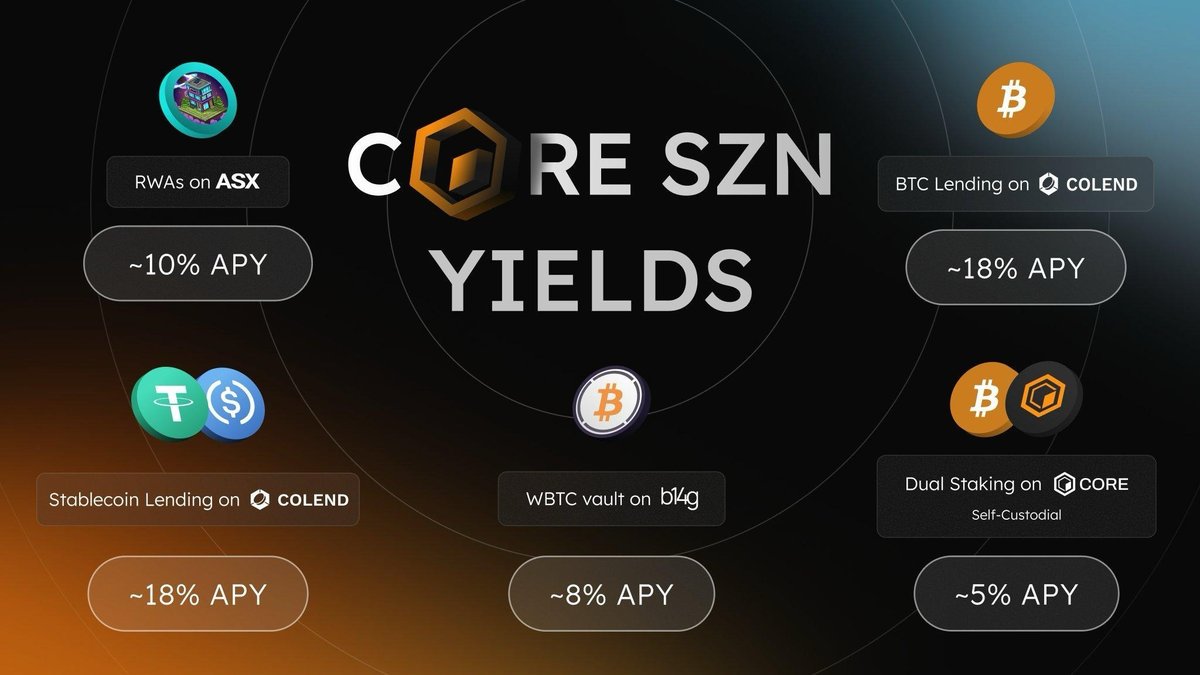
This is a long-term network play built around yield, BTC staking, RWAs, native liquidity, and real on-chain revenue.
That's what keeps me here, not the chart.
Binance should really look at listing $CORE.
The network's basically built a full onchain yield stack that includes RWAs, BTC lending, stablecoin markets, even native $BTC staking that stays self-custodied.
Usually wanting yield means taking on risk. Here, it's the opposite; secure, self-custodied, and trustless.
I've been watching these yields play out for months, and honestly, they're exactly what the industry needs.
If Binance wants to list real innovation in the BTC economy, this one's it.
.@ApexFusion is at @CardanoSummit right now!
Connecting with builders, partners, and community members across the @Cardano ecosystem.
Vector, interop, and DeFi connectivity are in focus.
Couldn't make it to Berlin? You can still catch it live ⬇️
https://t.co/PTRkKmXWGh
Join us tomorrow to talk about Apex Fusion's presence at the Cardano Summit, meeting ecosystem partners, friends, and contributors, and share what’s next.
📅 Thursday, Nov 13th, 7PM CET / 5PM UTC
https://t.co/On504nq1bd