...and @IsabelRF84 will be talking about the collection, and use, of foam samples. Others will be sharing tips and experiences. See you there! @FUNACTION_EU@BritMycolSoc
Only three days now until our first online session on #AquaticHyphomycetes There’s still time to sign up by emailing [email protected]@andibruder will be giving us a quick overview of this special ecological group...
A new Zoom-based chat group focussing on #AquaticHyphomycetes will be starting on 8th October. Join us in the evening (BST) to chat and learn about this fascinating group of fungi. Contact me at [email protected] if interested. @BritMycolSoc
There are experts waiting to foster your knowledge and enthusiasm for this unique group of fungi. Book your free place now at [email protected] and come and join us.
What would you like to learn about #AquaticHyphomycetes if you came along to these online sessions? How aquatic hyphomycetes fit into the ecology of rivers & streams? How to collect them? How to identify them? Where to find ID resources? What questions would you want to pose?
A new Zoom-based chat group focussing on #AquaticHyphomycetes will be starting on 8th October. Join us in the evening (BST) to chat and learn about this fascinating group of fungi. Contact me at [email protected] if interested. @BritMycolSoc
Researchers Andreas Bruder and Isabel Fernandes from SUPSI in Switzerland, and Jennifer Anderson and Ziming Wang from SLU in Sweden will be supporting the group.
A new Zoom-based chat group focussing on #AquaticHyphomycetes will be starting on 8th October. Join us in the evening (BST) to chat and learn about this fascinating group of fungi. Contact me at [email protected] if interested. @BritMycolSoc
This video from Jennifer Anderson, a leading researcher into the evolution and ecology of aquatic hyphomycetes, gives a great overview of this fascinating fungal group. https://t.co/QyU8Bb7qqN
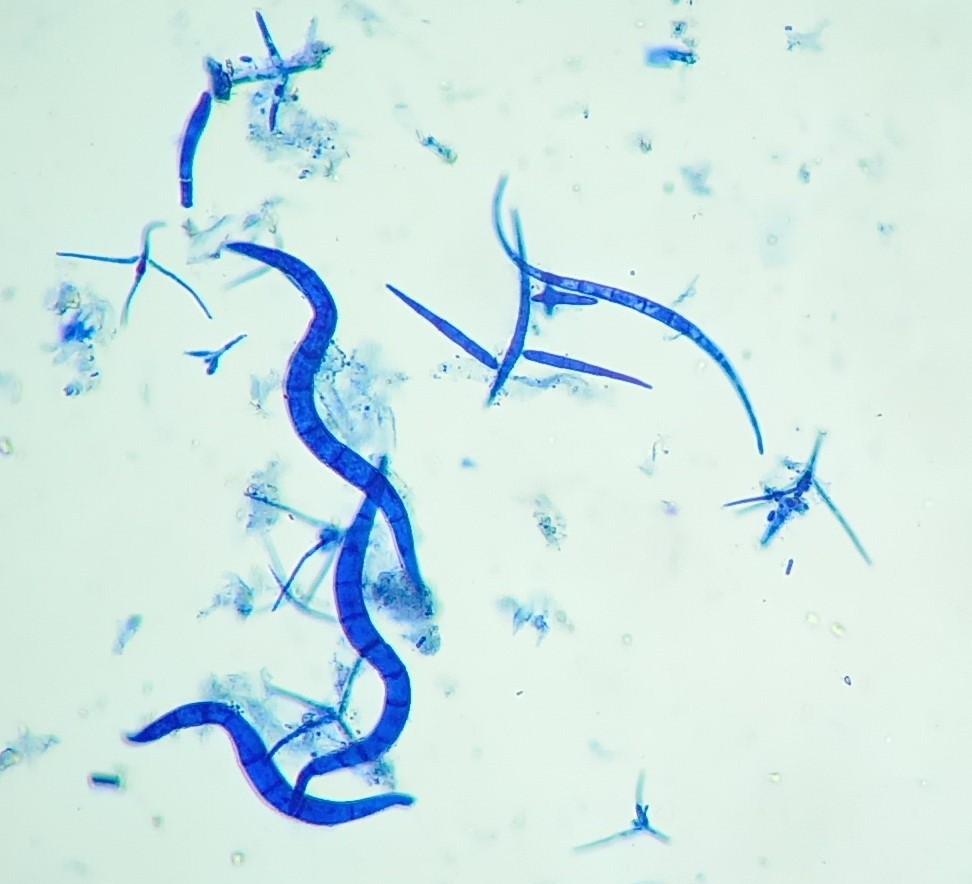
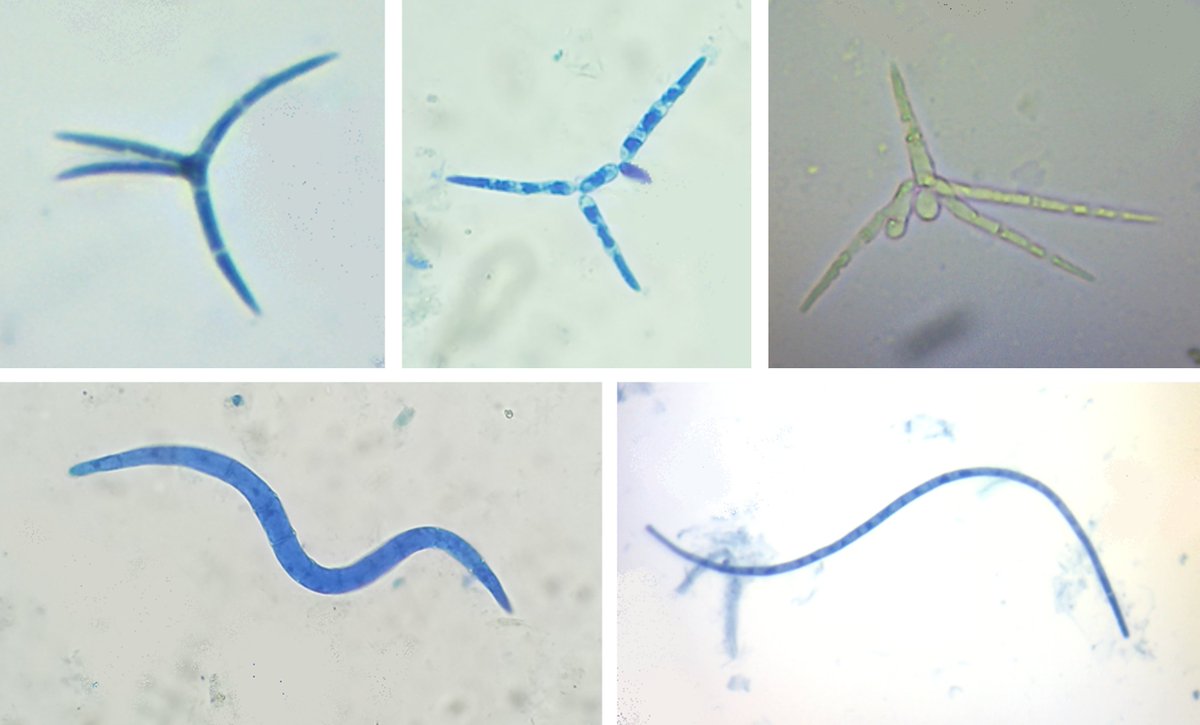
Aquatic hyphomycetes are a fascinating group of aquatic fungi. Most of them feed on dead leaves in flowing water. Their spores are usually either sinuous or four-armed to enable them to catch on to new food sources. @BritMycolSoc
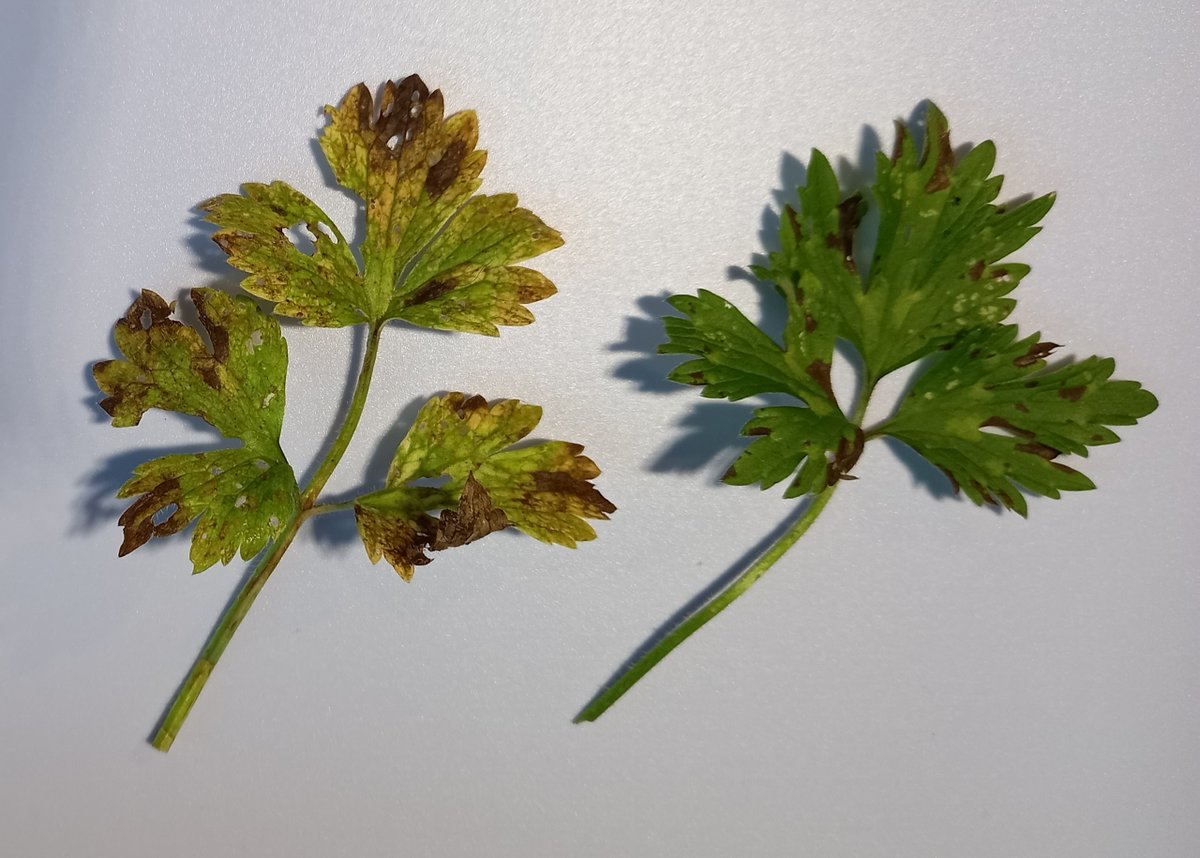
Two different diseases on Ranunculus repens. Leptotrochila ranunculi on the left with yellowing around brown rotting areas and apothecia not restricted to brown areas. Ramularia simplex on the right with veins delimiting black infected areas where sporulation occurs.
@specanatura@BritMycolSoc @NorfolkNats When I've seen the apothecia for this species they have not been as contorted as shown here. In situations like this, where I start to doubt my own understanding, I'd reach for a microscope and check whether I had an asexual form or apothecia. Are asci present?
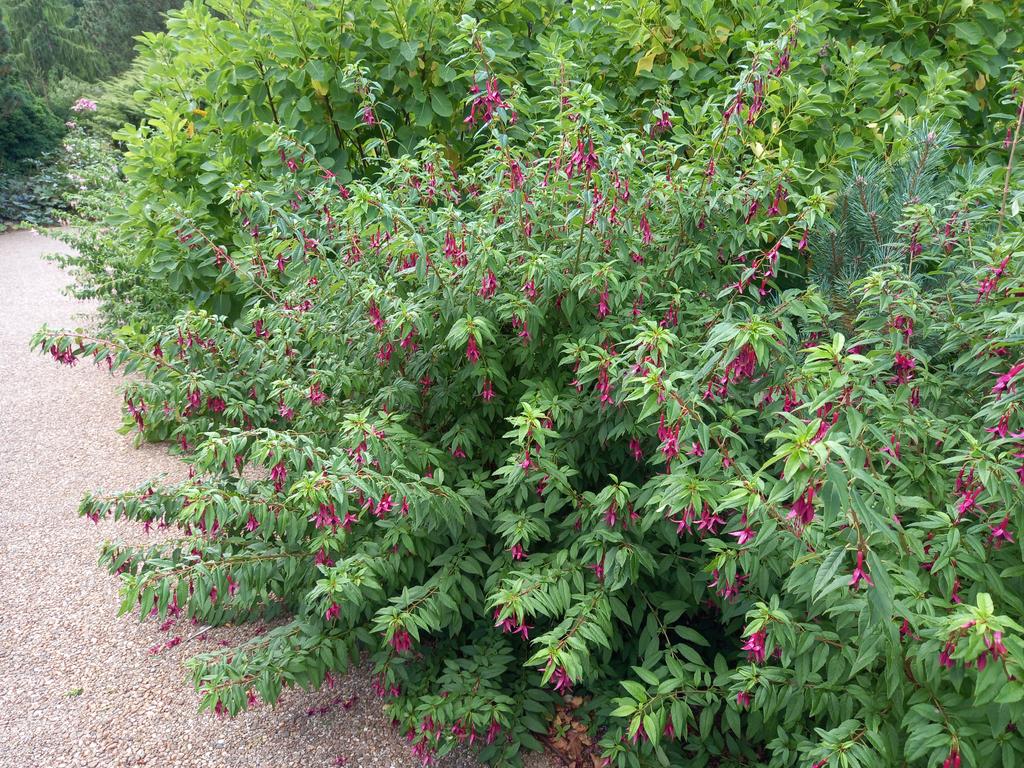
My plant of the week @RHSHarlowCarr. Fuschia 'Whiteknight Amethyst' with less contrast between its pink sepals and purple corolla than on the more usual Fuschia magellanica.
Looking forward to hearing the talk by Nicholas Carter on "Lichens and Heritage Conservation at Blenheim Palace" at the BLS Zoom Lichen Chat and Improvement Group on Tues 13 Aug at 7pm.
Interested? @BLSlichens@NEA_Carter@ynuorg
https://t.co/TsVtG4InnE
"I have kept young by trying never to lose my childhood sense of wonderment. I’m glad I still have a vivid curiosity about the world I live in."
~ Helen Keller
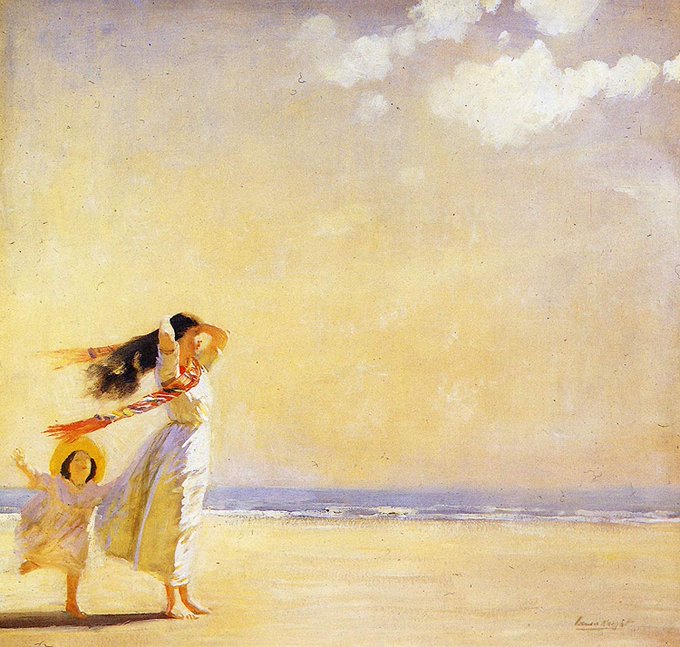
Untrodden Sands (1912)
🎨 Laura Knight
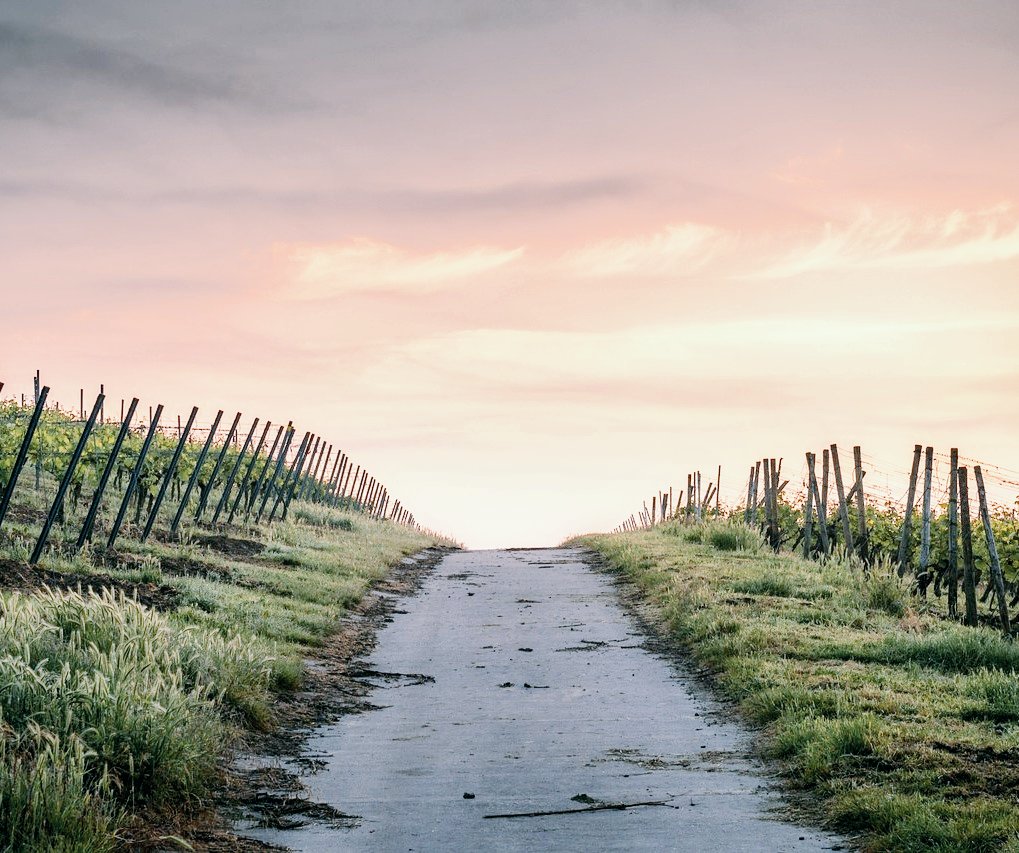
"For all its material advantages, the sedentary life has left us edgy and unfulfilled. Even after 400 generations in villages and cities, we haven’t forgotten: the open road still softly calls like a nearly forgotten song of childhood."
~ Carl Sagan
Bluebell woods are believed to be intricately woven with fairy enchantments, used by these mischievous beings to trap humans.
It is also said that if you hear a bluebell ring, you will be visited by a bad fairy, and will die not long after 🫤
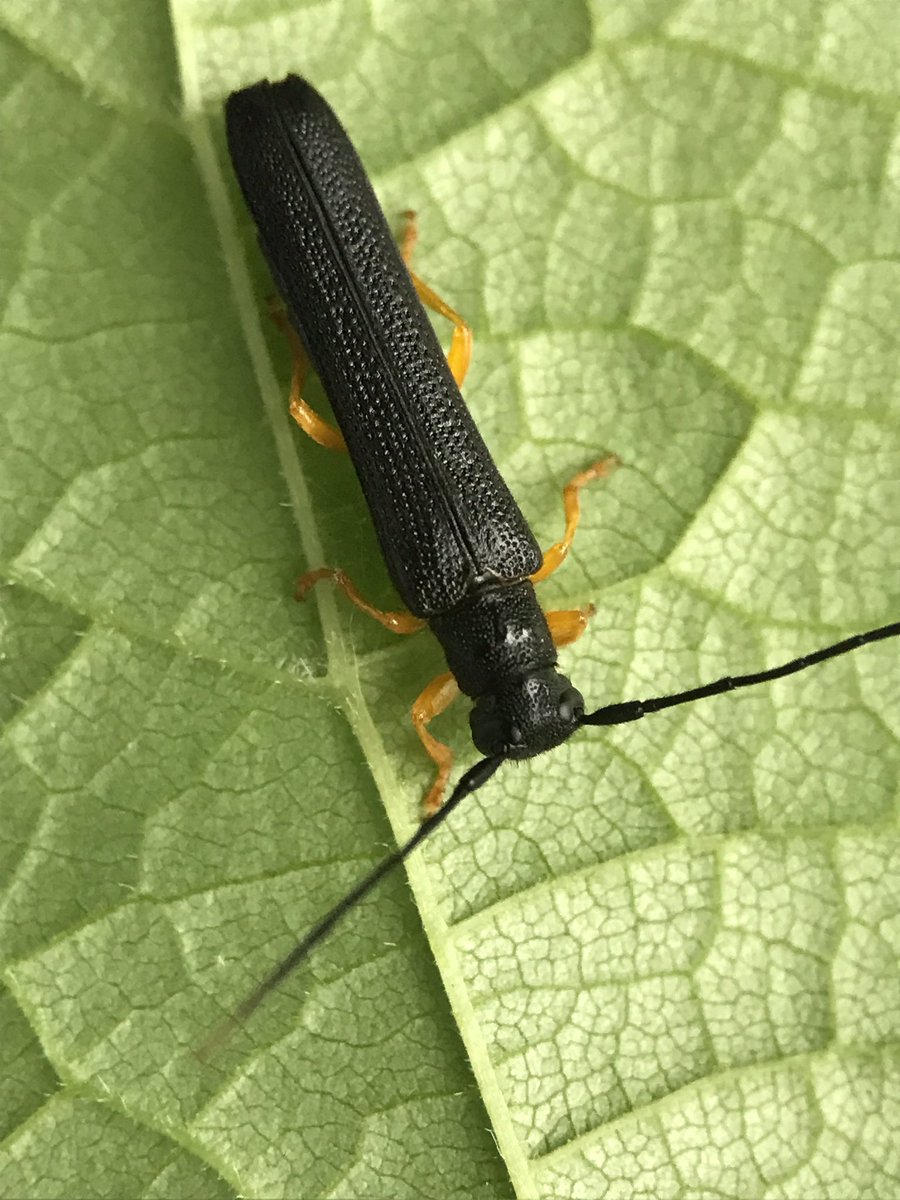
New to UK longhorn beetle Oberea linearis!
Native to continental Europe. Presumably imported. Life cycle 2 years in hazel twigs.
Hackney Marshes seems to be a good place to find new species of longhorn.
#LonghornBeetles#cerambycidae#lamiinae#oberea#oberealinearis