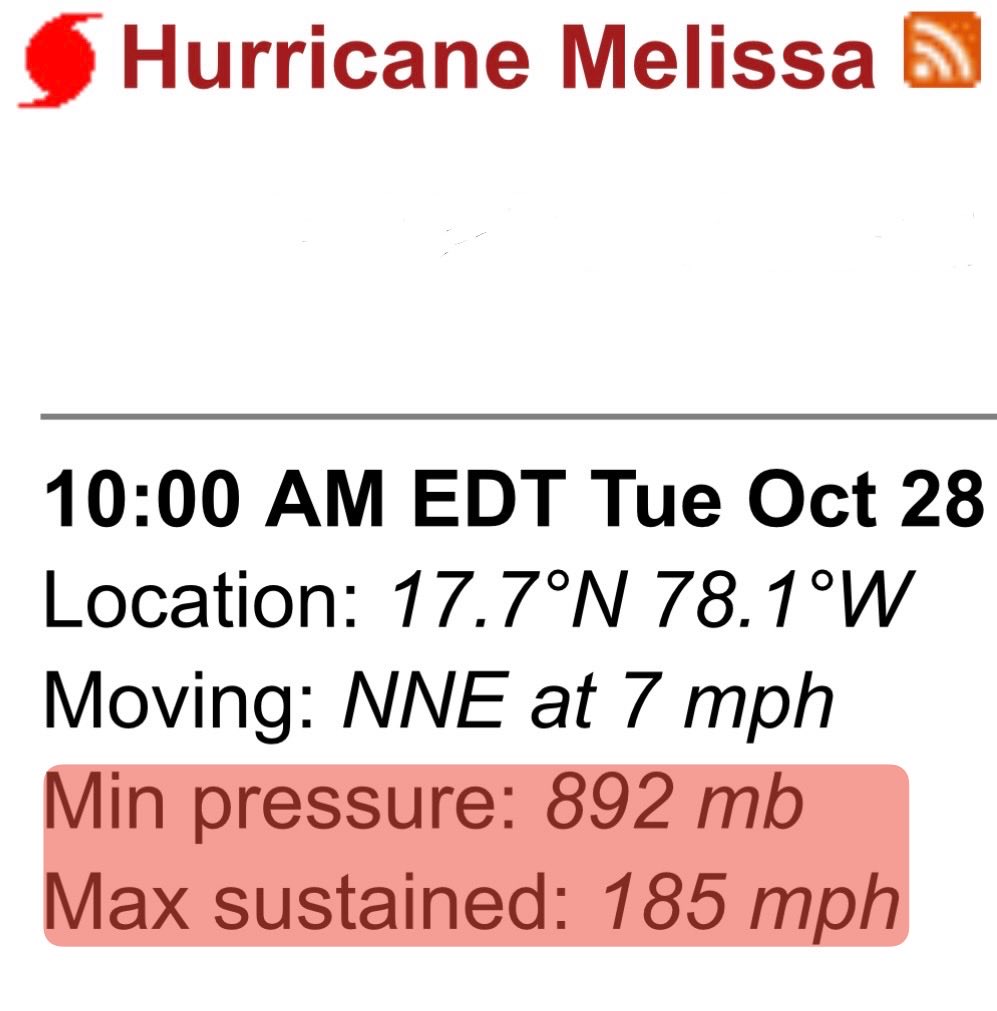
And it keeps getting worse. #Melissa now tied for 2nd strongest winds ever recorded, and tied for 3rd lowest pressure. This would tie the 1935 Labor Day hurricane for the strongest most intense landfall ever. And the worst part is there’s still time to surpass that. 🙏 #Jamaica
Satellite imagery shows Hurricane #Melissa's growth from its formation on October 21 to a Category 5 hurricane through October 27, 2025. #HurricaneMelissa
Melissa is absolutely perfect — in the worst possible way.
Achieving a storm of this magnitude using only air, water and heat requires absolute meteorological perfection.
Tragically, that perfection is deadly.
Update on Melissa:
Major Hurricane #Melissa historical lifetime loop starting Fri Oct 17-28 (current) to show the random & chaotic motion of her tropical track over the last 11 days. Satellite data only goes back seven days, why IR loop only starts animating the last 7 days. #HurricaneMelissa
#Melissa is truly a top tier hurricane, I hate that it has to do this so close to Jamaica 😢
#Melissa honestly might be the prettiest looking hurricane I've ever tracked in the Atlantic.
Imagine telling someone living 100 years ago that people will soon be flying into the strongest storms on the planet to investigate them.
Now try to imagine what people will be doing 100 years from now.
Stunning.
This has to be some of the best footage of a plane emerging into the centre of a hurricane I’ve ever seen.
Meteorologically, Melissa is absolutely textbook.
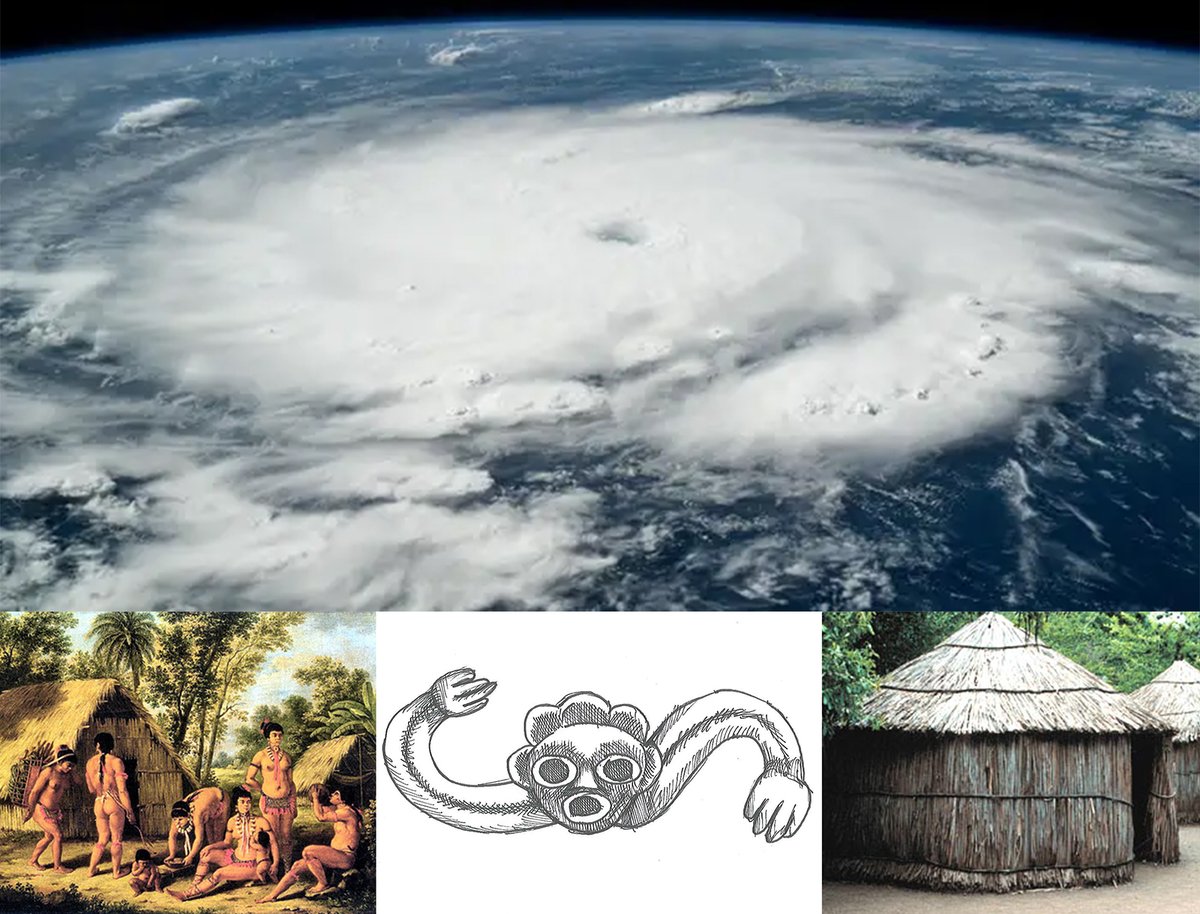
Indigenous peoples in #Jamaica, wider #Caribbean, Taíno, Carib, Arawak, developed sophisticated strategies to prepare for hurricanes, which they recognised as powerful natural events. They relied on keen environmental observation, oral traditions, and adaptive practices.
Environmental Observation: They closely monitored natural signs - changes in wind patterns, cloud formations, animal behaviour (e.g., birds flying inland), and ocean swells.
Appropriate Architecture: They built resilient homes, called bohíos (Taíno) or caneyes. These structures used strong, flexible materials like palm, cane, and hardwood, anchored deeply into the ground. Circular designs with steeply pitched roofs helped deflect high winds, and elevated platforms protected against flooding.
Food Security: To prepare for potential crop destruction, they stored surplus food like cassava, maize, and dried fish in secure locations, such as elevated or underground storage. Cassava, a hurricane-resistant root crop, was a staple, processed into durable flatbreads (casabe - bammy).
Community Coordination: Social structures emphasised collective action. Leaders and shamans (kasikes, behiques) guided preparations, organising communal efforts to secure dwellings, store resources, and relocate to safer areas, like caves or higher ground.
Spiritual Practices: Hurricanes were often seen as manifestations of spiritual forces (e.g..,Taíno deity Guabancex, the goddess of destructive storms). Rituals, offerings, and ceremonies were performed to appease these forces, fostering community resilience and psychological preparedness.
• 6. Mobility and Relocation: Some groups, particularly the more nomadic Caribs, moved to sheltered areas or inland locations during storms. Their knowledge of the landscape helped them identify safe zones, such as caves or dense forests. #AncientWisdom #LessonsForToday
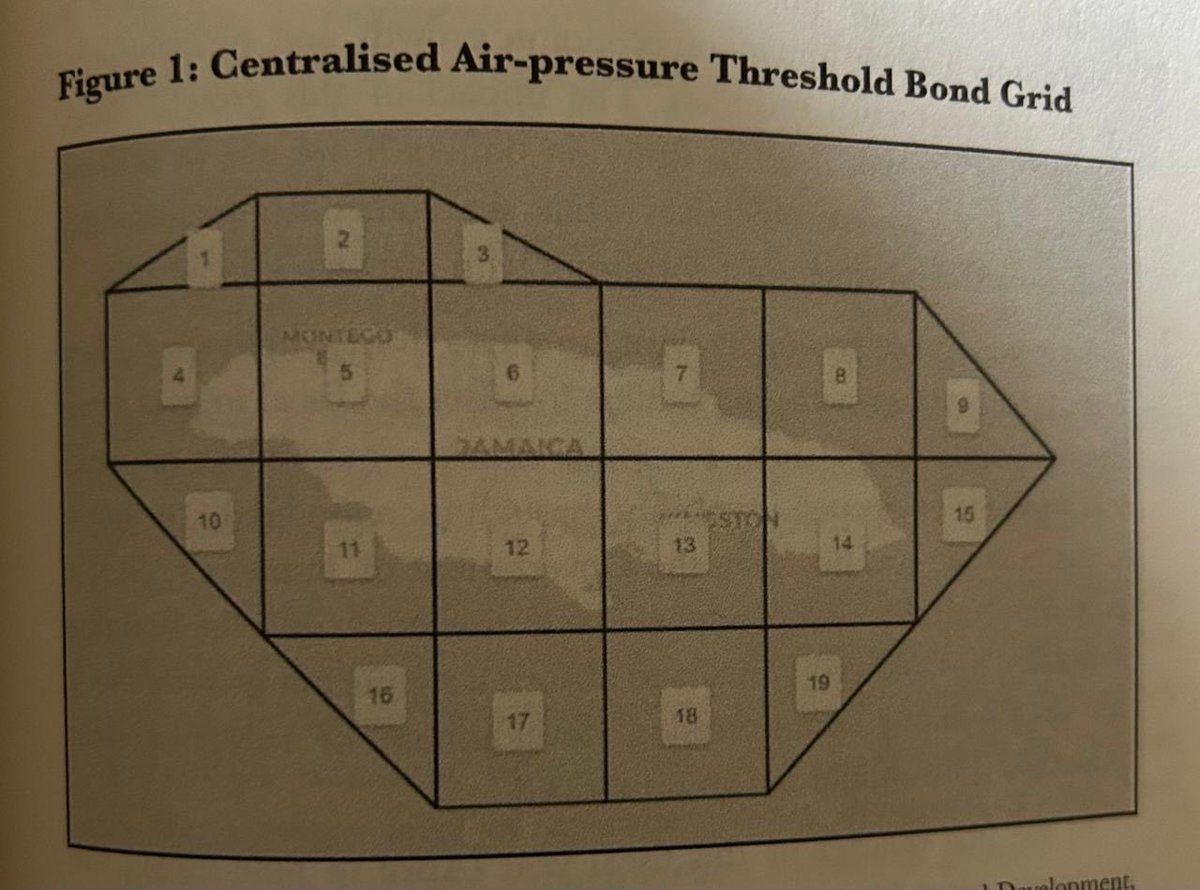
As per @NigelClarkeJa how JA’s Cat Bond is triggered - from Pg 243 & 252-53 of his book. Based on (i) centralized air pressure of Melissa @ 8am (ii) knowing it’ll only get lower as it intensifies & (iii) the currently projected path, it looks as if the Cat Bond could be triggered
Jamaica Residents:
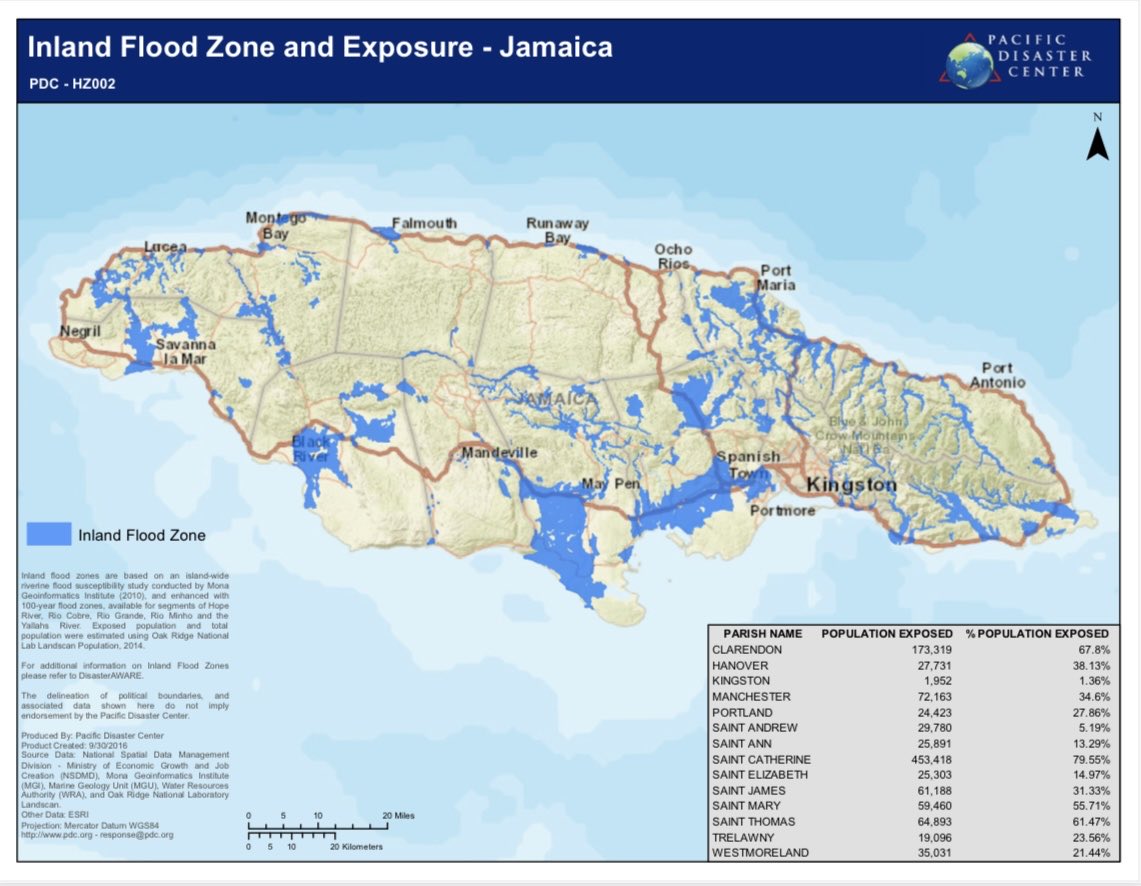
This is a great share. This is the 100-year flood map for riverine flooding.
If you live in a flood plain highlighted in blue, I urge you to consider relocating elsewhere for the duration of #Melissa.
If you know anyone who lives in these areas, alert them.