There is no point arguing with someone who does not want to celebrate the Mawlid. Love cannot be taught, it is only gifted.
- Shaykh Ahmad Saad Al-Azhari (May Allah preserve him)
How many times did we say that the Mawlid is not an Eid, nor do we consider it an Eid because it is bigger, greater, and nobler than an Eid.
- Shaykh Sayyidi Muhammad 'Alawi al-Maliki (May Allah be pleased with him)
The word was “midaad” (مداد), which means ink (well, hibr also means ink)
Simple enough tho, But in Arabic, nothing is ever simple. The root means “to extend, to stretch, to provide.”
Arabs didn’t see ink as something that stains a page. Its like they saw it as something that stretches your mind beyond what your body can reach 🤯
Nearly four thousand years ago, in a desolate valley between rocky mountains, a father and son (Prophet Abraham & Ishmael) raised the foundations of a house dedicated to the One God.
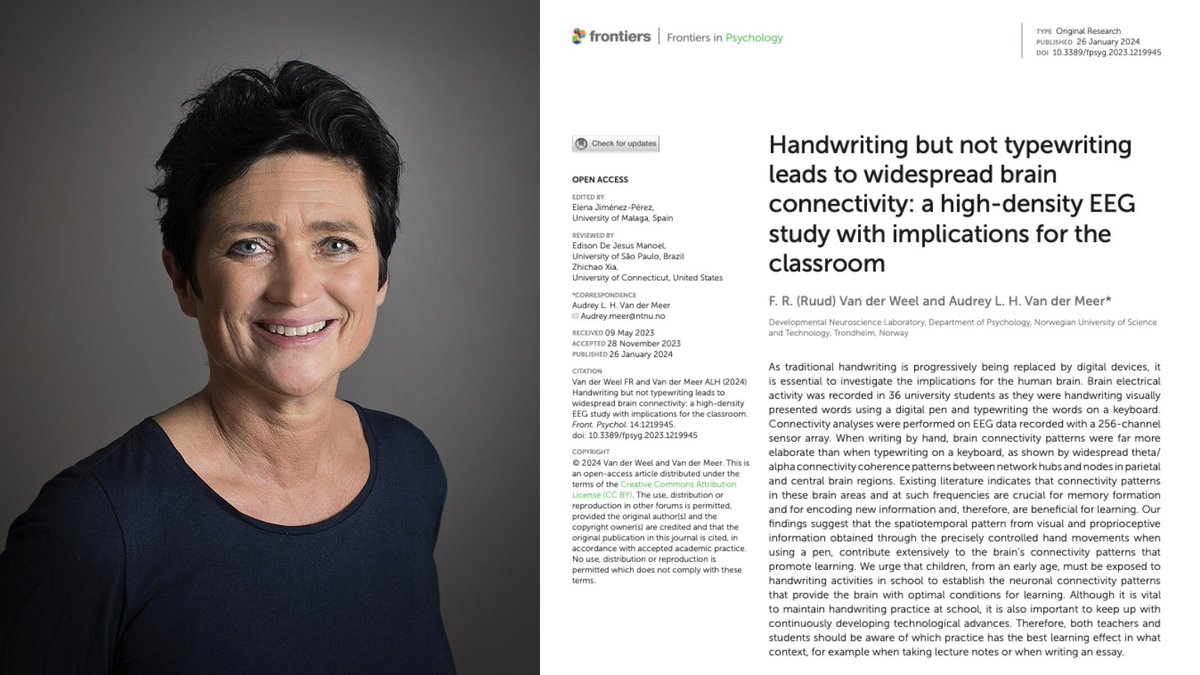
A Norwegian neuroscientist spent 20 years proving that the act of writing by hand changes the human brain in ways typing physically cannot, and almost nobody outside her field has read the paper.
Her name is Audrey van der Meer.
She runs a brain research lab in Trondheim, and the paper that closed the argument was published in 2024 in a journal called Frontiers in Psychology. The finding is brutal enough that it should have changed every classroom on Earth.
The experiment was simple. She recruited 36 university students and put each one in a cap with 256 sensors pressed against their scalp to record brain activity. Words flashed on a screen one at a time.
Sometimes the students wrote the word by hand on a touchscreen using a digital pen, and sometimes they typed the same word on a keyboard. Every neural response was recorded for the full five seconds the word stayed on screen.
Then her team looked at the part of the data most researchers had ignored for years, which is how different parts of the brain were communicating with each other during the task.
When the students wrote by hand, the brain lit up everywhere at once.
The regions responsible for memory, sensory integration, and the encoding of new information were all firing together in a coordinated pattern that spread across the entire cortex. The whole network was awake and connected.
When the same students typed the same word, that pattern collapsed almost completely.
Most of the brain went quiet, and the connections between regions that had been alive seconds earlier were nowhere to be found on the EEG.
Same word, same brain, same person, and two completely different neurological events.
The reason turned out to be something nobody had really paid attention to before her work. Writing by hand is not one motion but a sequence of thousands of tiny micro-movements coordinated with your eyes in real time, where each letter is a different shape that requires the brain to solve a slightly different spatial problem.
Your fingers, wrist, vision, and the parts of your brain that track position in space are all working together to produce one letter, then the next, then the next.
Typing throws all of that away. Every key on a keyboard requires the exact same finger motion regardless of which letter you are pressing, which means the brain has almost nothing to integrate and almost no problem to solve.
Van der Meer said it plainly in her interviews.
Pressing the same key with the same finger over and over does not stimulate the brain in any meaningful way, and she pointed out something that should scare every parent who handed their kid an iPad.
Children who learn to read and write on tablets often cannot tell letters like b and d apart, because they have never physically felt with their bodies what it takes to actually produce those letters on a page.
A decade before her, two researchers at Princeton ran the same fight using a completely different method and ended up at the same answer. Pam Mueller and Daniel Oppenheimer tested 327 students across three experiments, where half took notes on laptops with the internet disabled and half took notes by hand, before testing everyone on what they actually understood from the lectures they had watched.
The handwriting group won by a wide margin on every question that required real understanding rather than surface recall.
The reason was hiding in the transcripts of what the two groups had actually written down.
The laptop students typed almost word for word, capturing more total content but processing almost none of it as they went, while the handwriting students physically could not write fast enough to transcribe a lecture in real time, which forced them to listen carefully, decide what actually mattered, and put it in their own words on the page.
That single act of choosing what to keep was the learning itself, and the keyboard had quietly skipped the choosing and skipped the learning along with it.
Two studies. Two countries. Same answer.
Handwriting makes the brain work. Typing lets it coast.
Every note you have ever typed instead of written went into your brain through a thinner pipe. Every meeting, every book highlight, every idea you captured on your phone instead of on paper was processed at half depth.
You did not forget those things because your memory is bad. You forgot them because typing never woke the part of the brain that would have made them stick.
The fix is the thing your grandmother already knew.
Pick up a pen. Write the thing down. The slower road is the faster one.
France gathered 400 Muslim scholars and beheaded them. In 1917 AD, during the occupation of Chad. In 1852, when France entered the city of Laghouat in Algeria, it killed two-thirds of its population in a single night and burned them alive.
France occupied Algeria for 132 years. In the first 7 years after their arrival, the French eliminated 1 million Muslims, and in the last 7 years before their departure, they eliminated 1.5 million Muslims. The French historian Jacques Gorky estimated that the total number of Muslims killed in Algeria from France's arrival in 1830 to its departure in 1962 was 10 million.
France occupied Tunisia for 75 years, Algeria for 132 years, Morocco for 44 years, and Mauritania for 60 years.
When France entered Egypt during its famous campaign, French soldiers on horseback entered mosques and raped free women in front of their families. They drank wine in the mosques and turned them into stables for their horses.
It is strange to see some people boasting about and defending French civilization, forgetting all its dark history. This is France; remind them of its history.
🔻 When France entered the city of Aghwat (Laghouat) in Algeria in 1852, it burned two-thirds of its inhabitants to death in just one night.
🔻 France conducted 17 nuclear tests in Algeria between 1960 and 1966, resulting in an unknown number of deaths estimated between 27,000 and 100,000 and the effects persist to this day.
🔻 When France left Algeria in 1962, it left behind 11 million landmines more than the total population of Algeria at the time.
🔻 France occupied Algeria for 132 years. In just the first seven years of their occupation, they massacred one million Muslims, and in the last seven years, they martyred another 1.5 million Muslims.
🔻 France is the fourth largest holder of gold reserves in the world, with 2,436 tons of gold stored at the Bank of France, even though France has no active gold mines.
🔻 In contrast, Mali one of the world's largest gold producers with 14 official gold mines has no gold reserves of its own.
🔻 Similarly, the Republic of Congo, which ranks seventh among gold-producing countries, also has no gold reserves in its central bank.
Your brain physically rewrites itself every time you pick up a pen.
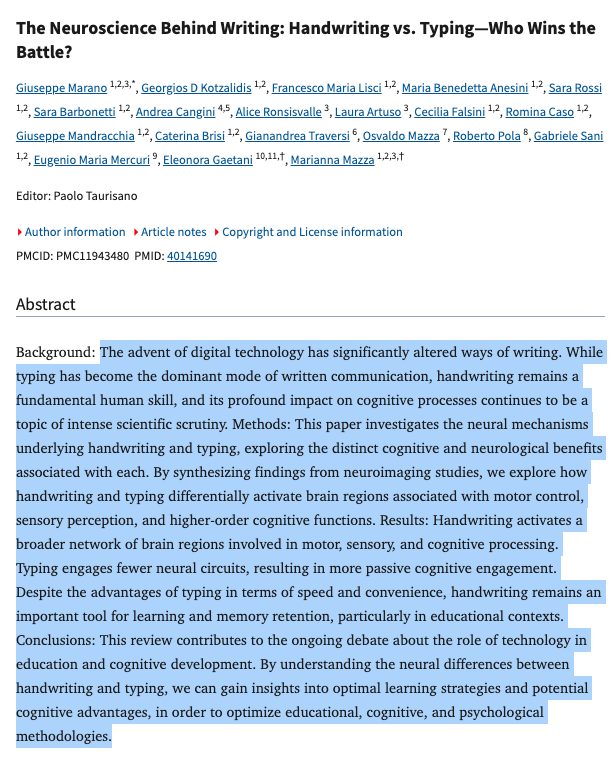
Neuroscientists at Norwegian University scanned students' brains while they handwrote letters versus typing the same letters on a keyboard.
The results shattered decades of assumptions about how we process information.
Handwriting activated massive networks in the sensorimotor cortex, the visual processing centers, and the hippocampus simultaneously. Complex neural symphonies lit up across multiple brain regions, creating rich interconnected pathways between motor control, visual recognition, and memory formation.
Typing the same letters? The brain activity looked like someone had dimmed the lights across entire cognitive districts. The neural networks that flourished during handwriting simply went dark.
The difference?
When you form letters by hand, your brain constructs elaborate spatial maps of each character. The motor cortex learns the precise pressure, angle, and trajectory needed to create an 'A' versus a 'B.' Your visual system tracks the ink flowing from pen to paper in real time. Your parietal lobe integrates hand position with eye movement. Your hippocampus encodes not just what you wrote, but how the writing felt, where you paused, which words required more pressure.
Typing activates almost none of that circuitry. You press a key, a letter appears. The motor movement is binary. The visual feedback is uniform. The spatial relationship between thought and symbol gets mediated by a machine that standardizes every character into identical fonts and spacing.
Your brain treats these as fundamentally different cognitive tasks.
The evolutionary context makes this obvious once you see it. Human hands developed for manipulation, creation, and fine motor control over millions of years. We painted on cave walls, carved bone tools, and shaped clay vessels long before we invented written language. When writing emerged 5,000 years ago, it built on top of existing neural infrastructure that already connected hand movement with symbolic thinking.
Keyboards appeared 150 years ago. Touchscreen typing maybe 20 years ago. From an evolutionary timeline perspective, we started using them approximately yesterday. Our brains are still running ancient software that expects physical engagement with symbols.
That software produces dramatically different learning outcomes.
Students who take handwritten notes consistently outperform students who type the same information on memory tests, comprehension assessments, and creative applications of the material. The difference persists even when researchers account for typing speed, note length, and time spent studying.
The act of forming letters by hand forces deeper processing at the moment of information encounter. You cannot handwrite as fast as someone speaks, so your brain must actively filter, summarize, and prioritize information in real time. The motor effort required to form each word creates additional memory traces that typing does not generate.
Children who learn to write letters by hand develop reading skills faster than children who learn letters primarily through typing or screen interaction. The sensorimotor experience of creating letterforms helps their brains recognize those same letterforms when they encounter them in text.
Adults who handwrite shopping lists, daily schedules, or meeting notes remember the information better than adults who type identical lists into phones or computers. The spatial memory of where you wrote something on a page provides retrieval cues that digital text does not offer.
These findings collide directly with how education and work environments have evolved over the past two decades. Schools replaced handwriting instruction with typing classes. Offices converted from paper systems to fully digital workflows. Students take notes on laptops. Professionals draft documents on screens.
We optimized for speed and efficiency while accidentally severing the neural pathways that evolution spent millions of years developing.
The implications reach beyond memory and learning into fundamental questions about human cognition. If the physical act of forming symbols changes how your brain processes ideas, what happens to thinking itself when you remove the physical component?
Digital text is infinitely searchable, instantly editable, and perfectly shareable. But it may be creating brains that process information more superficially, store memories less durably, and connect ideas more weakly than brains that regularly engage in handwriting.
The neuroscience suggests we traded cognitive depth for technological convenience without realizing what we were giving up.
Some of the most innovative thinkers across history were obsessive handwriters. Darwin kept detailed handwritten journals. Einstein worked through complex theories in handwritten notebooks. Virginia Woolf wrote her novels by hand before transcribing them. Steve Jobs famously took handwritten notes during Apple meetings even as he was building the most advanced computers on Earth.
Perhaps they intuited something about the relationship between hand, brain, and insight that we measured in brain scanners but somehow forgot in practice.
Your pen is literally a cognitive enhancement device that activates neural networks digital keyboards cannot reach.
I have a bachelor’s degree and a master’s in Arabic linguistics. I’ve been living in the Arab world for 14 years.
And honestly? The more I learn about this language, the less I feel like I know.
Because Arabic doesn’t just name things. It connects them in ways that make you stop and rethink everything.
Let me give you a few examples.
The U.S. killed 168 little girls in Iran.
A school reduced to rubble.
Families shattered.
The world went silent.
Don’t forget these children.
Don’t forget these war crimes.
Dear Parents,
I want to share one parenting secret with you. The one you won’t find in your regular blogs. And trust me, regardless of your faith, you will find this tip beneficial.
I want to explain why some kids become completely stubborn the more you punish them. I am doing this because I got some messages yesterday from people who have kids in the diaspora and how their kids have become stone-hearted to their parents’ warnings. It is indeed painful.
Remember that I mentioned the monumental book of Imam Al-Ghazali, Ihya’ Ulum al-Din. We have more things to learn from it.
In this book, he talked about a fragile part of a child's mind called the “Veil of Shame.” Note: Every child has this because they are born upon Fitrah (purity of the soul).
When a child does something bad for the first time, they usually try to hide it. They are afraid of being caught because they still value their dignity in your eyes.
The scholars explained that if a parent exposes the child, screams, yells at them, and punishes every mistake, you are tearing down their veil of shame.
Once a child realizes you already see them as a bad person, the humiliation has happened. They stop caring. You have destroyed their internal brakes. When they have no dignity left to protect, they will start doing those bad things openly and boldly.
How do you notice this in your child?
You can tell this is happening in your child when they stop trying to hide their mistakes and start becoming brazen or "strong-headed" when caught. This is a sign that the veil is thinning.
To fix this, you need to use a concept called Taghaful. It translates to intentional ignorance or pretending you did not see a fault.
Our Prophet (peace be upon him) taught us this. He did this with a young companion called Usama bin Zaid. But I see that our parents, due to their high expectations, are often too impatient to look away.
If you catch your child doing a hidden wrong, sometimes the most powerful thing you can do is pretend you did not see it. Do not confront them and strip them of their respect.
Instead, bring up the topic later in a general conversation. Tell a story about why that action is destructive, without looking at them or accusing them. Let their own conscience do the punishing. Let them repent and fix it in secret.
A parent who hunts down every small mistake will end up raising a child who has no shame left to lose.
Let me know if you want more of these scholarly parenting tips. I will be willing to share. My DM is full with different issues. I cannot answer everything, but I am sure with these tips, a lot of those issues will be solved by God’s grace.
Thank you for your attention.
Allah knows best.
Let it be remembered in history
We have never started a war.
We have never invaded anyone.
We have not killed children.
We have protected our homeland, dearer to us than our lives.
They never forgave Vietnam for winning.
They never forgave Cuba for surviving.
They never forgave Iran for revolting.
They never forgave anyone who looked them in the eye and said: No.
That "No" is the most dangerous word on Earth.
Use it.
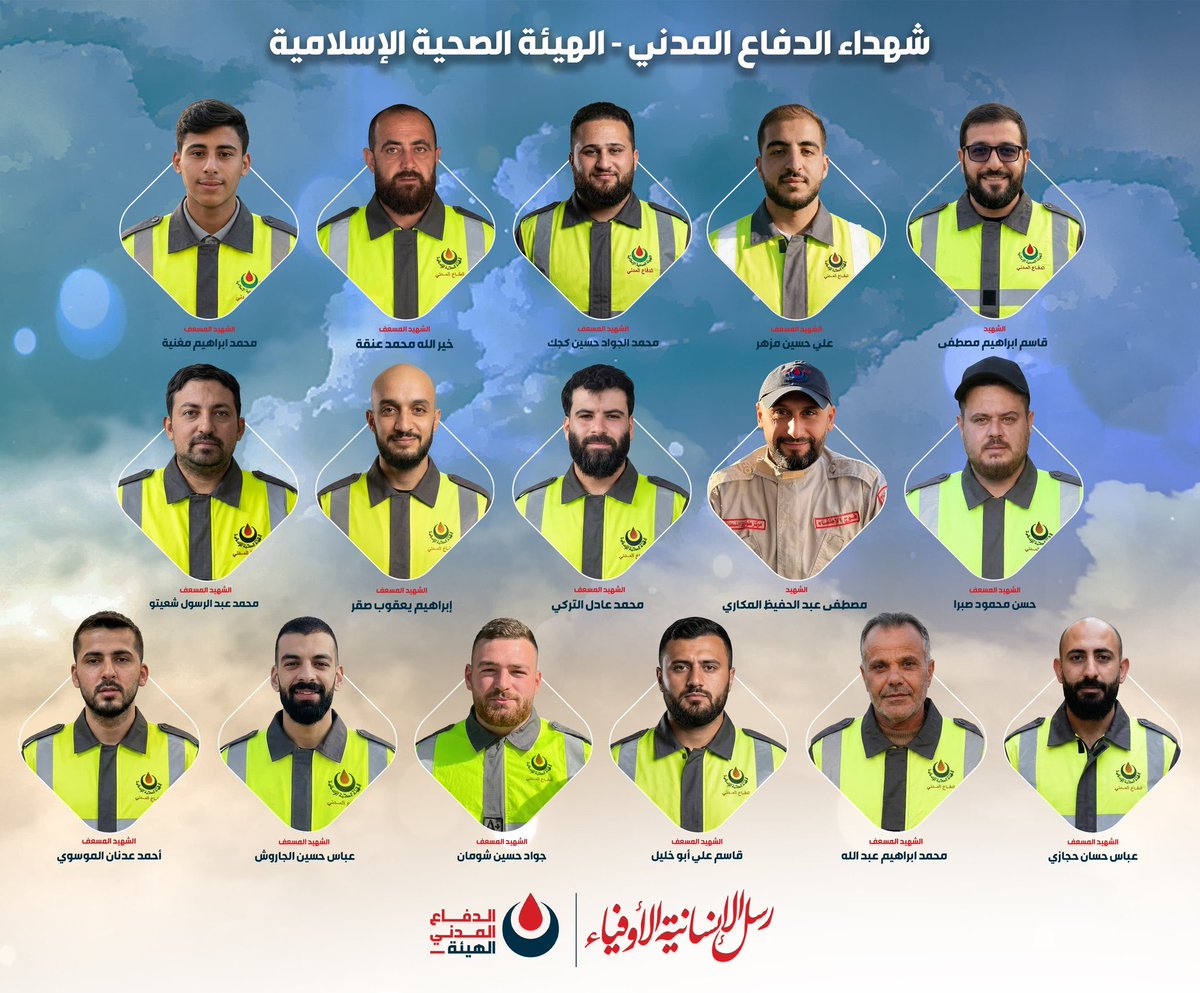
Israel killed every single paramedic in this photo today in South Lebanon.
12 paramedics slaughtered in one Israeli strike.
Israel DELIBERATELY targeted their medical center.
Killing medics is a war crime.
Killing medics is a crime against humanity.
This is medicide.
Israel is bombarding, literally bombarding, two Middle East capitals, Beirut and Tehran, killing 100s of civilians, and yet the US and UK media continue to portray Iran as the threat to the region.
Israel has nukes, but Iran is the nuclear threat.
We live in Orwellian times.
We all agree this war is asymmetrical.
How could it not be?
On one side you have people like:
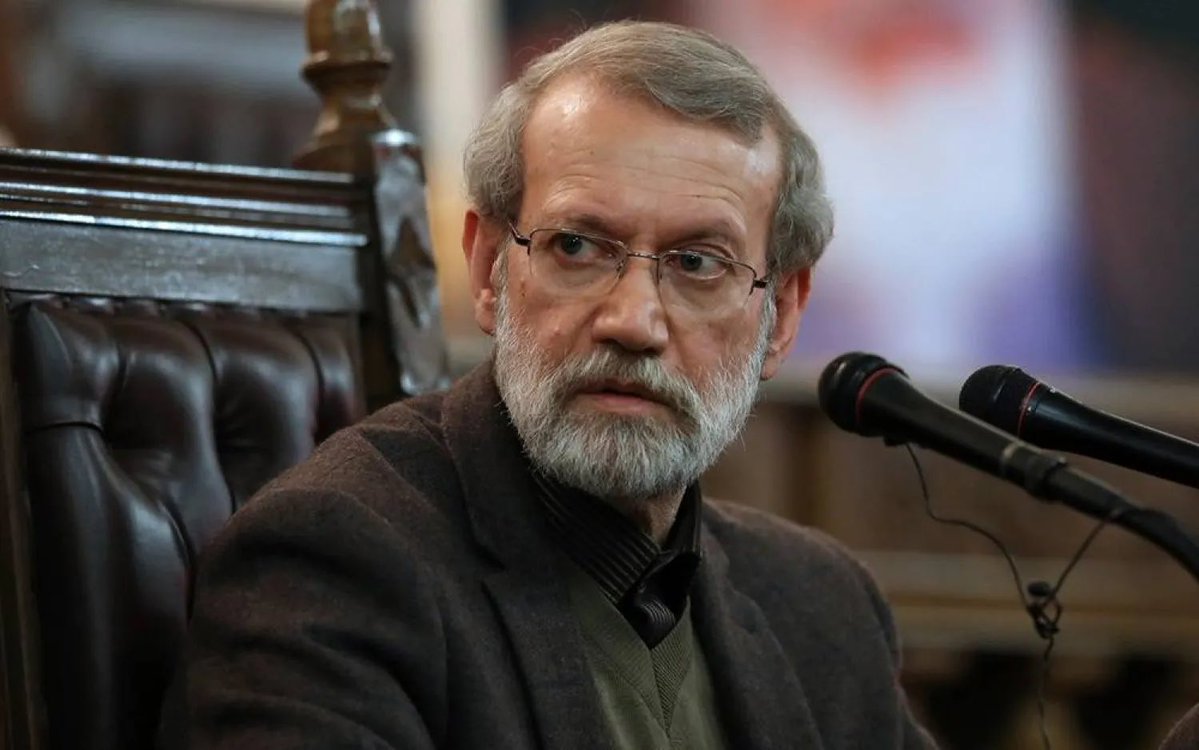
Dr. Ali Larijani (Secretary of the Supreme National Security Council of Iran) author of three essays on Immanuel Kant, his writings are studied in Western universities:
• The Mathematical Method in Kant’s Philosophy
• Metaphysics and the Exact Sciences in Kant’s Philosophy
• Intuition and the Synthetic A Priori Judgments in Kant’s Philosophy
And:
Dr. Abbas Araghchi (Minister of Foreign Affairs of Iran) PhD from the University of Kent.
His doctoral thesis:
“The Evolution of the Concept of Political Participation in Twentieth-Century Islamic Political Thought.”
And on the other side?
Donald Trump.
A man whose vocabulary barely exceeds 200 words.
Most famous quote:
“Grab ’em by the pussy.”
They mocked our azadari.
They laughed at our tears and our beating of chests.
Now they see what it built.
The remembrance of Imam al-Husayn at Karbala was never mere mourning, it was a school of resistance. It kept the fire of justice alive when tyrants thought it had died.
Empires faded. The message remained.
Let history testify: it was the remembrance of Husayn and his companions that forged this unbreakable spirit. A spirit that refuses humiliation and rejects tyranny in every age.
Labayka Ya Husayn!
Proportionate? Iran's not trying to be proportionate. Proportionate would be for Iran to kill Trump. Kill his entire cabinet. Kill his opposition. Bomb the shit out of New York and Los Angeles. Bomb a school full of American kids. Bomb some hospitals. That would be proportionate.
Iran is a seasoned adult on the world stage. 7,000 years old. Entire civilizations have risen, grown old and senile, and crumbled in a moment of Iran’s history. China, India, Egypt, as a matter of fact the entirety of Africa, because Africa is our mother and everything traces back to it. Greece, Italy, the indigenous of the Americas. These are people who’ve been around and seen shit. The United States, on the other hand, is 249 years old. A destructive teenager. Israel is its baby brother. Both are bastards of the British.
Israel and the United States, and all those who support this war, are the true enemies of humanity. Our enemy is not Iran, but the deadly Epstein-class cabal that rules us.
Our enemies are the parasitic billionaires who run this country and are literally eating children. And raping them.
We saw what they did in Iraq. We saw what they did in Afghanistan.
We saw how they sold those fake humanitarian wars in Libya, Syria, and Yemen.
They bombed every single school, destroyed our education system in Gaza, and targeted and killed our children.
A woman delivered a powerful speech at a rally in Minneapolis protesting the US-Israeli war against Iran.