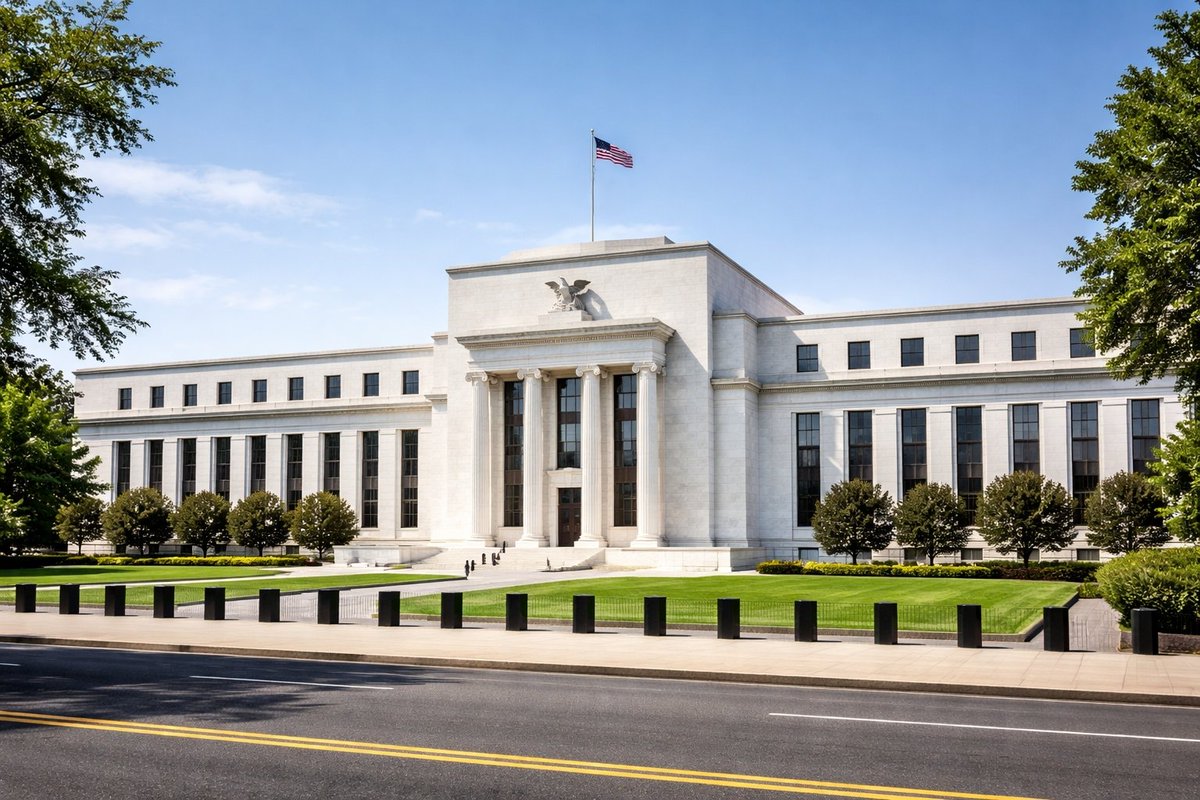
Banks do not take money on deposit and lend it out. They create it, from nothing, with a few keystrokes, and the entire system depends on you never noticing.
When you deposit $10,000 in cash at JPMorgan Chase, the bank records a liability to you and an asset for itself. Under fractional reserve banking, the Federal Reserve requires banks to hold only a fraction of deposits as reserves. For decades, that requirement sat around 10%, and in March 2020 the Fed dropped it to zero. That means JPMorgan can lend out the full $10,000 you deposited, while still owing you that $10,000 on demand. The borrower who receives that $10,000 deposits it elsewhere. That bank then lends it out again. The same dollars multiply through the system, spawning new purchasing power at each stage without a single additional dollar being printed.
Murray Rothbard called this counterfeiting conducted through respectable institutions, and I think that word fits. If you printed money in your basement and spent it, you would transfer real wealth from later dollar-holders to yourself. Banks do precisely this, they just call the process "credit creation" and charge interest for the privilege of doing it.
The price you pay seems hidden at first. Every new dollar dilutes your "old" dollars. When credit expansion drives a housing boom, as it did between 2003 and 2007, asset prices rise first for the people closest to the new money, the borrowers, the developers, the leveraged speculators. By the time ordinary wages and savings adjust, you have already been taxed by dilution of purchasing power without a single congressman casting a vote.
This system contains the seed of every business cycle. Cheap credit manufactured by banks sends false signals to entrepreneurs, who invest in projects that the real pool of savings cannot support. The boom turns to bust when reality reasserts itself, usually violently, usually on your tab through bailouts.
Fractional reserve banking is state-licensed privilege, enforced by deposit insurance and central bank backstops that socialize the losses while the gains flow upward. This is how the rich become richer, and the poor get poorer, not "capitalism," as economically illiterate politicians like to claim.
INVESTORS HAVE GONE COMPLETELY RISK-OFF.
US Treasury bonds are seeing their longest rally in nearly 5 months amid growing concerns over the AI boom.
And bond yields have crashed from their 2026 highs:
• 2-year: down 31.7 bps
• 5-year: down 42.0 bps
• 10-year: down 42.1 bps
• 20-year: down 40.9 bps
• 30-year: down 39.9 bps
“They” were always going to break Bitcoin’s power law to the downside before forcing the next major run.
Why? Positioning.
Wall Street was never going to embrace Bitcoin’s scarcity premium without first attempting to compress that premium and establish the lowest possible entry point.
But there was always a delicate balance.
Push Bitcoin too far below its historical valuation framework, and you risk triggering the very game theory that makes Bitcoin so powerful.
At sufficiently attractive valuations, sovereign nations, competing institutions, or other large capital allocators could begin aggressively accumulating Bitcoin on-chain, forcing a scarcity-driven repricing before Wall Street has completed its positioning.
They cannot control the timing of the upside if an external actor forces their hand.
That is why the power law model is so important.
It provides a historical valuation framework around which institutional capital can position itself. Break the model far enough to eliminate speculative premium and manufacture capitulation, but not so far that you trigger an uncontrollable scramble for Bitcoin’s finite supply.
The objective isn’t to destroy Bitcoin. It’s to accumulate exposure before the next major repricing.
And once that positioning is complete, watch how quickly the narrative changes.
The same power law model being declared broken today will suddenly become the foundation for an institutional investment framework, justifying Bitcoin as a historically undervalued asset with extraordinary asymmetric upside.
The narrative will flip, and it will flip aggressively bullish.
I believe the catalyst will be something far bigger than another halving cycle or liquidity injection.
It will center on the growing recognition that Bitcoin is the monetary counterbalance to centralized artificial intelligence.
As AI accelerates the concentration of intelligence, productivity, and economic power, the importance of decentralized money becomes increasingly difficult to ignore.
True human agency cannot survive in a world where both intelligence and money are controlled by the same centralized institutions.
Bitcoin offers something fundamentally different: absolute monetary scarcity, decentralized ownership, and an asset that cannot be arbitrarily manufactured to accommodate the demands of an increasingly automated economy.
That is when scarcity will reassert itself in the market narrative.
The institutions that spent years questioning Bitcoin’s valuation will begin selling that very scarcity as the foundation of a new investment thesis.
They will flip from compressing the premium to aggressively leveraging it on the long side.
And when that transition occurs, I believe the recovery will be extraordinarily violent, catching much of the market completely off guard.
The ultimate irony?
The same institutions that helped compress Bitcoin’s monetary premium may become the loudest advocates for its expansion.
They will sell Bitcoin’s absolute scarcity as the investment opportunity of a generation, while positioning themselves as the gatekeepers to an asset specifically designed to eliminate the need for gatekeepers.
The power law may be breaking. Bitcoin’s scarcity is not.
And ultimately, Wall Street doesn’t control Bitcoin’s game theory. It can only attempt to position itself before that game theory takes control of the market.
INVESTORS HAVE GONE COMPLETELY RISK-OFF.
US Treasury bonds are seeing their longest rally in nearly 5 months amid growing concerns over the AI boom.
And bond yields have crashed from their 2026 highs:
• 2-year: down 31.7 bps
• 5-year: down 42.0 bps
• 10-year: down 42.1 bps
• 20-year: down 40.9 bps
• 30-year: down 39.9 bps
We have lost our minds.
I can't believe what I'm reading from some in the MSTR community right now.
For the past 6 months, I've watched yields rise across the credit spectrum, including on AAA-rated debt.
The risk-free rate keeps climbing and the Fed is likely to keep hiking.
No credit product is immune to the wider yield environment, least of all a new, variable-rate, Bitcoin-backed product like STRC.
Bitcoin credit is also highly sensitive to Bitcoin's volatility. When Bitcoin rises, the collateral behind the products grows and the credit strengthens. When Bitcoin falls, the collateral shrinks and the credit weakens.
So we have a double hit of rising yields and a falling Bitcoin price, both making Bitcoin credit less attractive.
In Strategy's case, the falling share price means the converts are trading as debt again rather than equity. That adds more claims above STRC in the capital stack and weakens it further.
Strategy could have raised STRC's rate by 0.5% or 1% to keep pace, costing $50M or $100M a year in extra dividends. Instead, it spent $2.7B on buybacks in a few short months, funded by diluting MSTR at rock-bottom prices.
It could then have sat tight and waited for Bitcoin to recover.
Rather than rewarding long-term STRC holders with a higher rate to compensate for the added risk and rising yields, Strategy has provided exit liquidity for traders and short-term holders.
Now MSTR trades below 1x mNAV and STRC has slipped to $95. The mission of cash-like volatility has failed. You can't mechanically force this thing to par and buybacks don't stimulate demand.
Don't talk to me about the institutions either. Where are they now? How have they rewarded us for sacrificing the common equity to prop up STRC? We were first to Bitcoin, and we were first to embrace Bitcoin credit.
They are here because we are here, not the other way around. They will adopt Bitcoin credit because it's the superior product and because the people embraced it first.
You don't sell out the common shareholder.
🇺🇸 Anthropic paid $1.63 MILLION to two Trump-connected lobbying firms, and their ties to Rubio are now drawing attention after the memo that helped bring down fmr. NVIDIA CEO Jensen Huang.
One firm, Continental Strategy, received $740,000 and is led in Washington by Rubio’s former Senate chief of staff. Another partner is Susie Wiles’ daughter.
The other, Ballard Partners, received $890,000 and previously employed Wiles herself.
Federal filings show the firms lobbied offices including the National Security Council and State Department, both overseen by Rubio.
And here's where things get INTERESTING.
Huang was pushing open AI models that could compete with Anthropic’s closed systems. His departure potentially benefits its rivals.
But the filings contain NO evidence that Anthropic orchestrated his removal or that its lobbyists influenced Rubio’s memo.
Source: Zero Hedge / Writer: Sol
The reason Bitcoin survives every savage correction is that 90% of the people holding BTC have already lost faith in every alternative and you can’t scare someone who has nowhere else to go