📚 Leer libros largos tiene grandes beneficios: adolescentes que leen obras de más de 100 páginas logran un año académico extra en comprensión lectora. Las familias juegan un papel clave en fomentar este hábito desde casa.
De un cajón a Viena: la joya oculta de Anthony HopkinsPocos lo saben, pero en 1964 —con solo 26 años— Anthony Hopkins compuso un impresionante vals titulado «And the Waltz Goes On». Por pura modestia, la partitura quedó olvidada en un cajón durante casi cinco décadas. Todo cambió cuando su esposa se la envió en secreto al maestro André Rieu, quien la estrenó por todo lo alto en Viena en 2011.
Es imposible escucharlo y no pensar en el famoso «Vals n.º 2» de Shostakóvich. Mantiene ese mismo dramatismo, una profundidad en tono menor y esa melancolía que es a la vez punzante y luminosa.Escúchenlo ustedes mismos: ¡es de esos temas que erizan la piel! Amparito!!
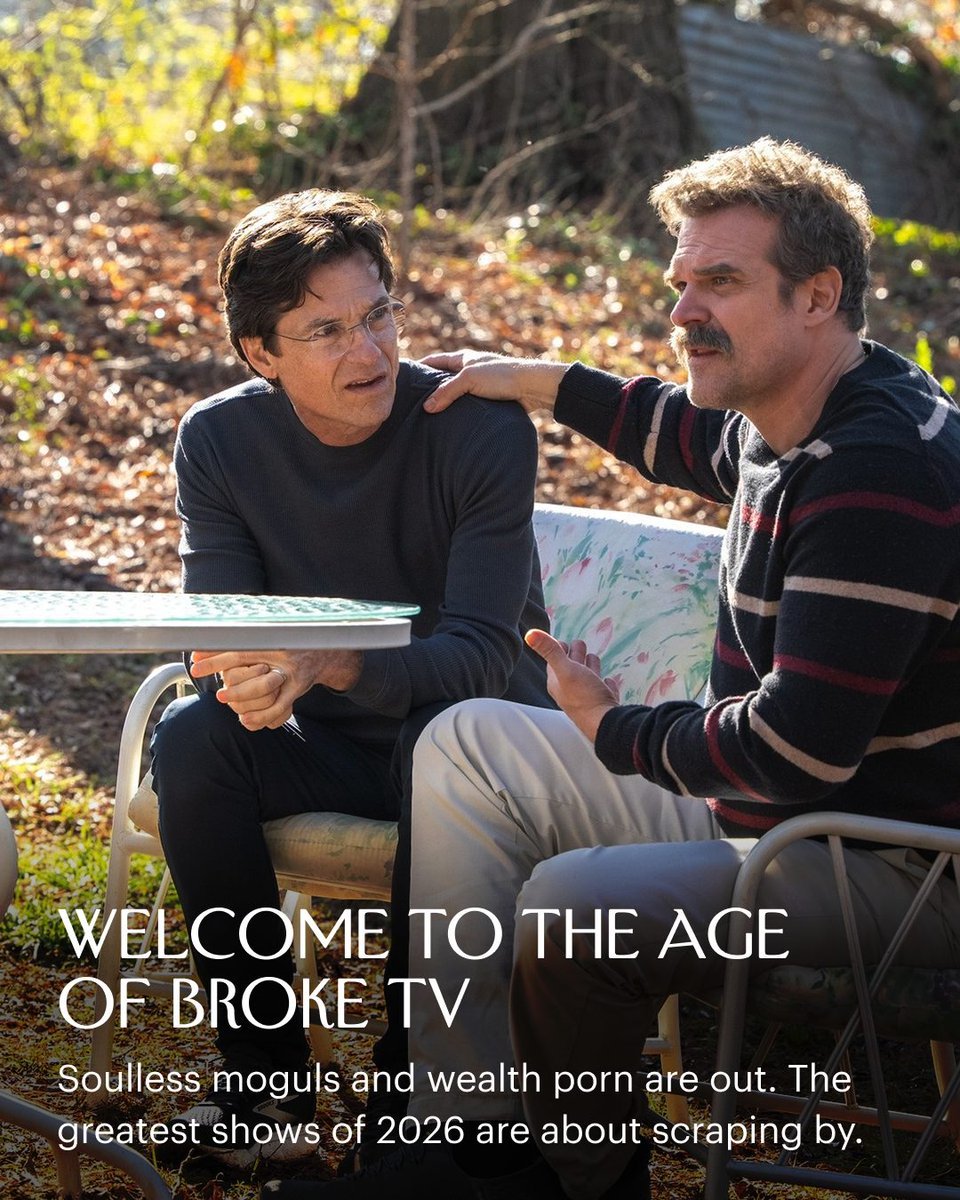
Television has historically presented affluence as the norm. Recent shows like “Succession,” and “The White Lotus,” have taken this tendency even further, inviting viewers to hate the über-rich while coveting their five-star amenities. A new set of shows, however, have taken a different approach. Three new offerings center on society’s sinking middle, portraying financial woes and their resultant emotional tensions. They're also the best series of the year thus far, Inkoo Kang writes. Read about how “DTF St. Louis,” “Beef,” and “The Comeback” feel tailor-made to meet our moment of inflation anxiety, affordability crises, and fiscal doomerism: https://t.co/viALD8W069
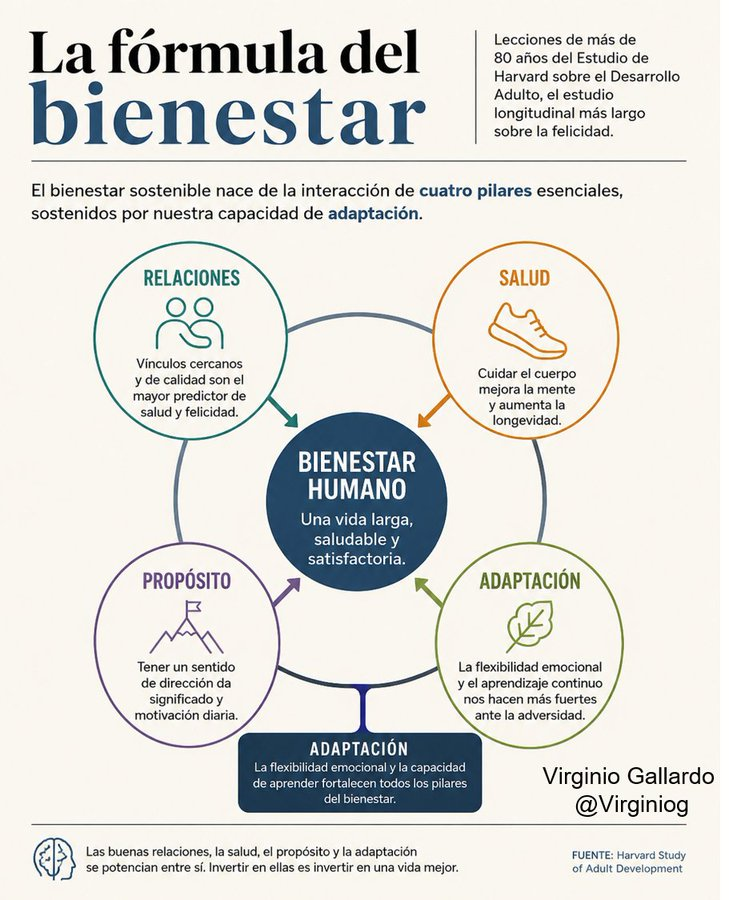
Para Harvard, la mejor estrategia para envejecer personalmente y (profesionalmente) se resumiría en:
"Nunca dejes de relacionarte, nunca dejes de adaptarte y nunca dejes de aprender de la vida"
Un psiquiatra de Stanford afirma que la ansiedad moderna no la provoca el peligro, sino pequeños hábitos diarios que te hacen entrar en pánico.
6 hábitos que están disparando tu ansiedad sin que te des cuenta:
1. Coger el móvil en cuando te sientes incómodo.
El ingeniero que construyo Claude Code acaba de soltar un video de 28 minutos donde te enseña a escribir prompts que realmente funcionan
He visto cursos de 300 dolares que no llegan ni a la mitad de lo que explica en los primeros 10 minutos
Archivos CLAUDE.md, atajos de memoria, sesiones paralelas y patrones de prompting que cambian el juego
Todo en un solo video y completamente gratis
Da igual si eres principiante, desarrollador o ya llevas meses usandolo
Esto te va a hacer usar Claude como nunca antes
Reminder: Argentina’s identity as a “white” and “European” society is socially constructed. Like all racialisations, it is inward looking. A lot of Args who are racialised white in Arg would be discriminated in Europe as “non-white”.
Reading recommendation:
Argentina’s behavioral crisis in the World Cup final has brought to light traits many of us in Latin America have internalized and that we need to come to terms with.
In many countries, emotional self-control and the ability to admit mistakes are seen as virtues. A behavioral problem in parts of Latin America is that there are social circles where the opposite is often celebrated.
This is the idea that someone who remains in control of their emotions is a coward or, depending on the situation, a traitor.
If someone offends you, your family, your team, the reaction that is celebrated in these circles is not restraint but flipping the table. The more berserk you go, the more you show that you care. That is a harmful value to hold, and also, one that many of us once shared. I certainly had it internalized when I left Chile 20+ years ago. In fact, I’ve spent much of my adult life trying to unlearn what I grew up believing was the socially acceptable behavior.
The second trait is an unwillingness to admit mistakes. You can always find an excuse, move the goalposts, or, once again, start a fight instead of publicly accepting that you’ve made a mistake. Admitting fault is a sign of weakness. Defending a losing position is a symbol of courage or, in sports, a test of loyalty.
Together, these two traits are behavioral dynamite. People explode because they cannot admit fault, and double down. Instead of learning from their mistakes, they become prisoners of them.
I grew up watching football with my father. When I was 10 or so, I was learning what was right and wrong from the way he interpreted the game. This included behavior both on and off the field. Only later in life did I realize that every penalty he called for, or contested, had little to do with the play itself. Whether a call was fair depended entirely on which team benefited. He was happy if his team received a nonexistent penalty or an opposing player got an undeserved red card.
These traits are among the things that pushed me away from the continent. They are certainly not exclusive to Latin America or the Southern Cone. I’ve encountered them in people all over the world. In an important sense, these are behaviors that all of us exhibit as children. What strikes me as unusual from the place I am from is having been part of social circles where these behaviors were not seen as flaws of character but as virtues to be admired, celebrated, and enforced.
These excessive forms of pride are not conducive to learning. They make it psychologically difficult to update one’s beliefs, accept responsibility, or improve. Although they become particularly visible in sports, they are by no means confined to them.
Something I am proud to have learned is to apologize quickly and often. Not because it is too difficult, but because it was like learning a new language at old age. That doesn’t mean becoming a pushover. But I’ve learned that a man who never apologizes cannot be a man of integrity, because we all make mistakes.
Argentina’s behavior on and off the field during the World Cup final was, to me, a particularly blatant expression of values that many people continue to defend. In some circles, these attitudes have become intertwined with ideas of national identity and loyalty. Yet they are shackles that ultimately limit our development, not because they make us lose a football match, but because they make it harder for us to learn from our mistakes.
The right thing to do now is the least likely: offer an honest apology. If my interpretation is even partially correct, we are more likely to see the opposite. Never back down. Never apologize. Never control your emotions. There is such a thing as having the wrong values. I hope that one day we can do better.
Crece el interés por Filosofía, humanidades y escuelas de pensamiento entre jóvenes que buscan algo más que empleabilidad inmediata.
La nota de corte de Filosofía llega al 8,5 en algunos casos.
Quizá no todo era productividad, STEM y “skills”. @olgarsanmartin en https://t.co/62WqFNnjQF
No necesitas 500 páginas para encontrar una historia que te cambie.
Estos 10 libros son cortos, intensos y puedes terminarlos en una sola tarde.
Pero alguno seguirá contigo durante años:
HILO 🧵
Algunas personas escuchan las palabras en sus cabezas mientras leen. La lectura en silencio activa áreas auditivas del cerebro que "escuchan" nuestra voz interna, como la corteza auditiva y áreas temporales. Este estudio con pacientes epilépticos muestra que leer no solo es visual, sino una experiencia multisensorial compleja donde se integran respuestas neuronales visuales y auditivas https://t.co/Z8XTweIJbr https://t.co/ZGE7AiixZF
🚨 Google Gemini ahora puede reprogramar por completo tu cerebro para que aprendas cualquier cosa a velocidad relámpago.
Aquí tienes 7 prompts de Gemini para aprender cualquier cosa 10 veces más rápido:
From @TheAthleticFC: It wasn’t pretty. It wasn’t easy. But England are in the World Cup semifinals after needing extra time to beat Norway 2-1. But was Norway robbed? We analyzed the dramatic and controversial quarterfinal. https://t.co/ChjC5ceVIE
El más famoso y riguroso estudio de Bienestar es el Estudio de Harvard sobre George Vaillant y Robert Waldinger
80 años de investigación nos dicen que la calidad de las relaciones humanas es el factor individual más importante (también en el trabajo)
Nos vendieron el cuento de que el éxito a los 40 era tener una gerencia, andar de traje y vivir pegado al celular resolviendo emergencias que no son tuyas.
Falso.
Para mí, el verdadero éxito de la vida adulta es tener la capacidad de apagar la laptop a tu hora y pasar todo el tiempo posible con tu familia.
Que un alumno esté sentado y en silencio no significa que esté pensando.
La OCDE (2025) define el “compromiso cognitivo” como esfuerzo sostenido para entender ideas complejas y resolver problemas. Está asociado a mejores resultados, motivación y autoestima.
Claves docentes: desafío adecuado, contexto real, múltiples enfoques y metacognición https://t.co/7zv4fmPoJD