A message addressed to “dear Donald” triggered a striking response – here is the Norwegian prime minister’s message.
Norwegian newspaper VG has now published the full wording of the message that prompted U.S. President Donald Trump to send a notable reply to Norway’s Prime Minister, Jonas Gahr Støre.
The message was sent at 3:48 p.m. on Sunday, 18 January.
It is signed “Alex and Jonas,” with “Alex” referring to Finland’s president, Alexander Stubb:
“Dear Mr President, dear Donald – regarding transatlantic relations – regarding Greenland, Gaza, Ukraine – and your tariff announcement yesterday.
You know our positions on these issues. However, we believe that we should all work to calm the situation and de-escalate – so much is happening around us, and we need to stand together.
We propose a call with you later today – with both of us or individually – please give us a hint as to what you prefer!
Best regards – Alex and Jonas.”
According to VG, Trump’s response followed shortly thereafter, at 4:15 p.m. the same day:
“Dear Jonas: Since your country decided not to award me the Nobel Peace Prize for having stopped more than eight wars, I no longer feel an obligation to think exclusively about peace, although it will always be dominant, but can now think about what is good and right for the United States.”
–Berlingske (Danish newspaper)
Friedrich #Merz meint, wer mit so schlechten Umfragewerten, wie den seinen, nicht seine Kommunikation, seine Politik und seinen Regierungsstil ändert, der ist respekt
I wrote earlier about working hours across the world, but that study has been superseded. This is the definitive study on working hours; they use World Bank data which has hitherto never been publicly accessible to cover 97% of the world population. Now let’s look at some graphs!
🧵THREAD | Summary of the advisory opinion issued today by the International Court of Justice on Israel's obligations regarding the presence and activities of the United Nations, other international organizations, and third states in and in relation to the Occupied Palestinian Territory.
It reiterates Israel's obligations as an occupying power:
Das Vertrauen in die #CDU/#CSU ist auf einem absoluten Tiefpunkt angekommen und es ist keine Überraschung.
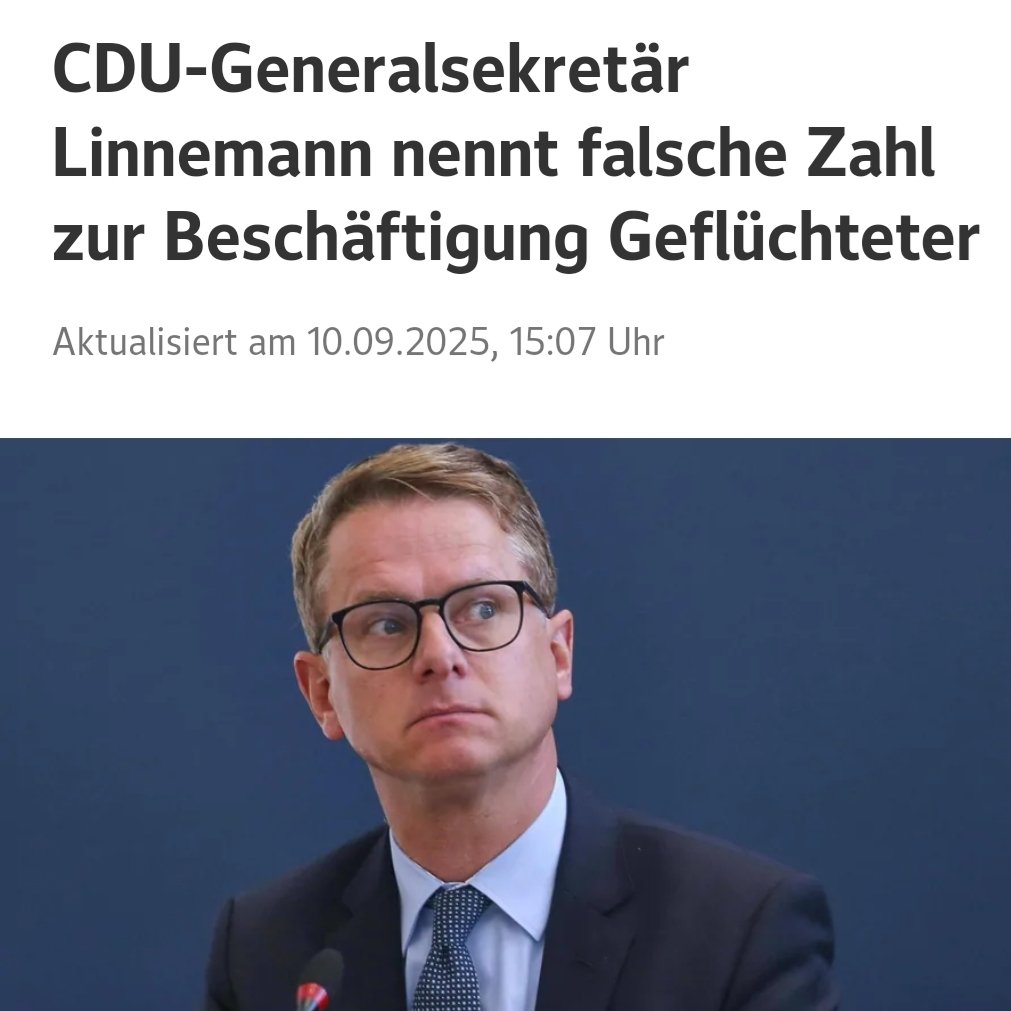
Um weiter gegen Migrant*innen hetzen zu können, vermischt #Linnemann verschiedene Statistiken.
Auf der einen Seite nimmt er die Arbeitsquote der Menschen, die 2015 zu uns
#Prognose
1996 sagte der Weltklimarat (IPCC) für 2023 einen Meeresspiegelanstieg von 8 cm voraus. Satellitendaten zeigen heute: Es wurden 9 cm. Diese nahezu punktgenaue Übereinstimmung widerlegt die verbreitete Behauptung, Klimamodelle seien unzuverlässig.
#Fakten
Die damaligen Unsicherheiten waren groß: keine Satellitenreferenz, wenig Rechenleistung, kaum Daten zu Eisschilden. Trotzdem lagen die Schätzungen insgesamt erstaunlich richtig. CO₂-Prognose: 427 ppm für 2024 – gemessen wurden 423 ppm.
#Fehleinschätzungen
Einzelne Bestandteile wurden falsch eingeschätzt. Das Abschmelzen der großen Eisschilde wurde stark unterschätzt, die thermische Ausdehnung leicht überschätzt. Doch im Endergebnis glichen sich diese Abweichungen fast aus.
#Vertrauen
Diese Ergebnisse zeigen: Die physikalischen Grundlagen der Klimamodelle sind solide. Wer ihnen pauschal misstraut, ignoriert wissenschaftliche Realität und belastbare Daten. Das Vertrauen in heutige Klimaprojektionen ist berechtigt.
Famine confirmed for first time in Gaza
FAO, UNICEF, WFP and WHO reiterate call for immediate ceasefire and unhindered humanitarian access to curb deaths from hunger and malnutrition
More than half a million people in Gaza are trapped in famine, marked by widespread starvation, destitution and preventable deaths, according to a new Integrated Food Security Phase Classification (IPC) analysis released today. Famine conditions are projected to spread from Gaza Governorate to Deir Al Balah and Khan Younis Governorates in the coming weeks.
The Food and Agriculture Organization of the United Nations (@FAO), @UNICEF, the United Nations World Food Programme (@WFP) and the World Health Organization (WHO) have collectively and consistently highlighted the extreme urgency for an immediate and full-scale humanitarian response given the escalating hunger-related deaths, rapidly worsening levels of acute malnutrition and plummeting levels of food consumption, with hundreds of thousands of people going days without anything to eat.
The agencies reinforced that famine must be stopped at all costs. An immediate ceasefire and end to the conflict is critical to allow unimpeded, large-scale humanitarian response that can save lives. The agencies are also gravely concerned about the threat of an intensified military offensive in Gaza City and any escalation in the conflict, as it would have further devastating consequences for civilians where famine conditions already exist. Many people – especially sick and malnourished children, older people and people with disabilities – may be unable to evacuate.
By the end of September, more than 640 000 people will face Catastrophic levels of food insecurity – classified as IPC Phase 5 – across the Gaza Strip. An additional 1.14 million people in the territory will be in Emergency (IPC Phase 4) and a further 396 000 people in Crisis (IPC Phase 3) conditions. Conditions in North Gaza are estimated to be as severe – or worse – than in Gaza City. However, limited data prevented an IPC classification, highlighting the urgent need for access to assess and assist. Rafah was not analyzed given indications that it is largely depopulated.
Classifying famine means that the most extreme category is triggered when three critical thresholds – extreme food deprivation, acute malnutrition and starvation-related deaths – have been breached. The latest analysis now affirms on the basis of reasonable evidence that these criteria have been met.
Almost two years of conflict, repeated displacement, and severe restrictions on humanitarian access, compounded by repeated interruptions and impediments to access to food, water, medical aid, support to agriculture, livestock and fisheries and the collapse of health, sanitation, and market systems, have pushed people into starvation.
Access to food in Gaza remains severely constrained. In July, the number of households reporting very severe hunger doubled across the territory compared to May and more than tripled in Gaza City. More than one in three people (39 percent) indicated they were going days at a time without eating, and adults regularly skip meals to feed their children.
Malnutrition among children in Gaza is accelerating at a catastrophic pace. In July alone, more than 12 000 children were identified as acutely malnourished – the highest monthly figure ever recorded and a six-fold increase since the start of the year. Nearly one in four of these children were suffering from severe acute malnutrition (SAM), the deadliest form with both short and long-term impacts.
Since the last @theIPCinfo Analysis in May, the number of children expected to be at severe risk of death from malnutrition by the end of June 2026 has tripled from 14 100 to 43 400. Similarly, for pregnant and breastfeeding women, the number of estimated cases has tripled from 17 000 in May to 55 000 women expected to be suffering from perilous levels of malnutrition by mid-2026. The impact is visible: one in five babies are born prematurely or underweight.
The new assessment reports the most severe deterioration since the IPC began analyzing acute food insecurity and acute malnutrition in the Gaza Strip, and it marks the first time a famine has been officially confirmed in the Middle East region.
Since July, food and aid supplies entering Gaza increased slightly but remained vastly insufficient, inconsistent and inaccessible compared to the need.
Meanwhile, approximately 98 percent of cropland in the territory is damaged or inaccessible – decimating the agriculture sector and local food production – and nine of ten people have been serially displaced from homes. Cash is critically scarce, aid operations remain severely disrupted, with most UN trucks looted amid growing desperation. Food prices are extremely high and there is not enough fuel and water to cook and medicines and medical supplies.
Gaza’s health system has severely deteriorated, access to safe drinking water and sanitation services has been drastically reduced, while multi-drug resistant infections are surging and levels of morbidity – including diarrhoea, fever, acute respiratory and skin infections – are alarmingly high among children.
To enable lifesaving humanitarian operations, the U.N. agencies emphasized the importance of an immediate and sustained ceasefire to stop the killing, allow for the safe release of hostages and permit unimpeded access for a mass influx of assistance to reach people across Gaza. They stressed the urgent need for greater amounts of food aid, along with dramatically improved delivery, distribution and accessibility, as well as shelter, fuel, cooking gas and food production inputs.
They emphasized that it is critical to support the rehabilitation of the health system, maintain and revive essential health services, including primary health care, and ensure sustained delivery of health supplies into and across Gaza. The restoration of commercial flows at scale, market systems, essential services, and local food production is also vital if the worst outcomes of the famine are to be avoided.
“People in Gaza have exhausted every possible means of survival. Hunger and malnutrition are claiming lives every day, and the destruction of cropland, livestock, greenhouses, fishery and food production systems has made the situation even more dire,” said FAO Director-General QU Dongyu. “Our priority must now be safe and sustained access for large-scale food assistance. Access to food is not a privilege – it is a basic human right.”
“Famine warnings have been clear for months,” said Cindy McCain, WFP Executive Director. “What’s urgently needed now is a surge of aid, safer conditions, and proven distribution systems to reach those most in need – wherever they are. Full humanitarian access and a ceasefire now are critical to save lives.”
“Famine is now a grim reality for children in Gaza Governorate, and a looming threat in Deir al-Balah and Khan Younis,” said UNICEF Executive Director Catherine Russell. “As we have repeatedly warned, the signs were unmistakable: children with wasted bodies, too weak to cry or eat; babies dying from hunger and preventable disease; parents arriving at clinics with nothing left to feed their children. There is no time to lose. Without an immediate ceasefire and full humanitarian access, famine will spread, and more children will die. Children on the brink of starvation need the special therapeutic feeding that UNICEF provides.”
“A ceasefire is an absolute and moral imperative now,” said WHO Director-General Dr Tedros Adhanom Ghebreyesus. “The world has waited too long, watching tragic and unnecessary deaths mount from this man-made famine. Widespread malnutrition means that even common and usually mild diseases like diarrhoea are becoming fatal, especially for children. The health system, run by hungry and exhausted health workers, cannot cope. Gaza must be urgently supplied with food and medicines to save lives and begin the process of reversing malnutrition. Hospitals must be protected so that they can continue treating patients. Aid blockages must end, and peace must be restored, so that healing can begin.”
#OTD (11.8.1904) jährt sich Schlacht am Waterberg (und Völkermord an den Herero Nama) zum 121. Mal. Da Geschichtsrevisionismus und Kolonialapologetik wieder stärker wird, habe ich die Fakten einmal aufgeschrieben. Auch zum Stand der Aussöhnung
Link👉 https://t.co/uSc8gNXU0l
@hwieduwilt Und irgendwie hart verwirrt, wenn du anstelle von "wokeness" Universalismus einforderst. Das ist doch genau der Kern der "woken" Idee: gleiche Rechte für alle. Nicht mehr, nicht weniger.
@hwieduwilt Das du Wokeness dazu dichtest als Ursache ist so als würdest du sagen Jüdinnen sind Schuld am Antisemitismus, Muslima am Rassismus gegenüber Muslimen und Menschen aus den Arbeiterklassen am Klassismus, etc.. Die Position würde ich dann doch mal überdenken. Oder Zitate liefern.
A video-text summary of my argument that we now live in the age of TECHNOFEUDALISM (in 16', 2000 words):
Wherever we turn, we witness the triumph of capital. Capital has prevailed everywhere: in warehouses, factories, offices, universities, public hospitals, the media – in space but also in the microcosm of genetic engineering. So, how do I dare claim that capitalism has been killed? By whom? The deliciously ironic answer is that capitalism was killed by its own hand… by capital!
If I am right, the issue is not what AI will do to us in the future but what has already happened: Capital became so dominant that it mutated into a variant so toxic that, like a stupid virus, it killed off its host, capitalism, replacing it with something far, far worse.
This new mutant capital, that killed capitalism, lives in the proverbial cloud – so, let us call it cloud capital.
What is cloud capital? What makes it so different?
Cloud capital, of course, does not really live up in the cloud. It lives down on Earth, comprising networked machines, server farms, cell towers, software, AI-driven algorithms – and of course it lives on our oceans’ floors where untold miles of optic fibre cables rest.
Unlike traditional capital, from fishing rods to the steam-engines of the Industrial Revolution to today’s modern industrial robots that are produced means of production, cloud capital does not produce anything – it comprises machines manufactured so as to modify human behaviour.
That’s what Amazon’s Alexa or Google’s Assistant or Apple’s Siri is: It is a produced means of behavioural modification. It is a machine, a piece of capital, which we train to train us to train it to determine that which we want. And, once we want it, the same networked machine sells it to us, directly, bypassing markets.
As if that were not enough, the same machinery succeeds in making us sustain the enormous behavioural modification machine network to which it belongs with our free voluntary labour. We are sustaining it as we post reviews, rate products, upload videos, rants, photos - we help reproduce cloud capital without getting a penny for our labour. In essence, it has turned us into its cloud serfs!
Meanwhile, in the factories and the warehouses, where waged proletarians work under increasingly precarious conditions, the same algorithms that modify our behaviour and sell products to us directly – those algorithms are deployed, usually by digital devices tied to the workers’ wrists, to make proletarians, workers in the warehouses, in the factories work faster, to direct and to monitor them in real time.
I started by saying that wherever we turn, we stumble on the triumph of capital. But it is cloud capital that is the real winner. It is amazing how it performs, at once, five roles that used to be beyond capital’s capacities: Cloud capital grabs our attention. It manufactures our desires. It sells to us, directly, outside any traditional markets, that which is going to satiate the desires it made us have. It drives proletarian labour inside the workplaces. And it elicits massive free labour from us, its cloud-serfs.
Is it surprising that the owners of this cloud capital – let’s call them cloudalists – have a hitherto undreamt power to extract? To extract gargantuan surplus value from proletarians; untold quantities of free labour from almost everyone; and mind-numbing cloud rents from vassal capitalists – from sellers? Is it a wonder that they are vastly more powerful than Henry Ford or Rupert Murdoch could ever be?
“Hang on”, I hear you say. “Is Jeff Bezos really different to Henry Ford? Aren’t they all a species of monopoly capitalists? Monopolists?” No, https://t.co/fw3K5QRhqN is not a monopolistic capitalist enterprise.
The moment you enter https://t.co/fw3K5QRhqN you have exited capitalism altogether! Sure enough, the place is teaming with buyers and sellers. So, yes, it is an enormous trading platform but, no, a market it certainly is not! One man called Jeff owns everything. But he is much, much more than a mere monopolist.
Jeff doesn’t own the factories that produce the stuff sold on his platform by traditional capitalists who have to use it to ply their trade. What he does own is more important: Jeff owns the algorithm that decides which products you see and which you don’t – the very algorithm that you have trained to know you perfectly so that it matches youwith a seller, whom it also knows perfectly well, with a view to maximising the probability that every such match, transaction, will generate, for Jeff, the highest rent that Jeff can charge the seller for what you buy: up to 40% of what you pay is pocketed by Jeff, the cloudalist!
The mind rebels at the enormity but also the radical novelty of this kind of exploitation: The same algorithm that we help train in real time to know us inside out - that same algorithm both modifies our preferences and administers the selection and delivery of commodities that will satisfy these preferences.
If you and I were to type “electric bicycles” or “binoculars” while in https://t.co/fw3K5QRhqN, you and I would get totally different recommendations. In a traditional market or shopping mall it would be as if you and I were walking next to each other, our eyes trained in the same direction, the same shop window, but we were to see different things depending on what Jeff’s algorithm wants each one of us to see.
Everyone navigating around https://t.co/fw3K5QRhqN – except Jeff Bezos of course – everyone in https://t.co/fw3K5QRhqN is wandering around in algorithmically constructed isolation as if in a Panopticon where, unable to see each other, we only see Jeff’s all-seeing algorithm or, more accurately, only what his algorithm allows us to see with a view to maximising his cloud rent – which is, of course, today’s version of the ground rent that the feudal lords used to extract from their vassals and their peasants.
This is not capitalism. Ladies and gentlemen, welcome to technofeudalism!
How did cloud capital kill capitalism? How did it rise up? Who paid for it?
Capitalism, lest we forget, had two pillars: markets and profit. Of course, markets and profit remain ubiquitous. Nevertheless, cloud capital has evicted both markets and profit from the centre of our socioeconomic system, pushing them out to its margins, and replacing them:
Markets, the medium of capitalism, have been replaced by cloud fiefs – digital trading platforms like https://t.co/fw3K5QRhqN or Alibaba which, as we saw, look like, but are not, markets.
And Profit? The fuel of capitalism? Well, that has been replaced by its feudal predecessor: rent. But, specifically, a new form of rent, a cloud rent that must be paid for access to those cloud fiefs or digital platforms.
But how did cloud capital emerge?It began life in the late 1990s when the original Internet, which was a Commons – it functioned as a capitalism-free-zone – that original Internet, Internet 1.0 if you want, was privatised by the emergent Big Tech.
Who paid for the trillions it cost to manufacture and to accumulate cloud capital so quickly in the hands of so very few cloudalists? The startling answer is: The G7 countries’ central banks, mostly! How did that happen? Well, by accident, or – to be more precise – by… crisis!
After the financial sector collapse of 2008, our central bankers printed up to $35 trillion to bail out the bankers at a time when the governments were subjecting our peoples to harsh austerity. Capitalists were clever enough to foresee that the many would be too impecunious to buy their stuff. So, instead of investing, they took the central bank money to the stock exchange and the bond markets, where they bought shares, bonds – along with yachts, art, bitcoin, NFTs any ‘asset’ they could lay their hands on. The only capitalists who actually invested in capital were Big Tech owners. For example, 9 out of every 10 dollars that went into creating Facebook came from these central bank monies! That’s how cloud capital was financed and how the cloudalists became our new ruling class.
As a result, real power today resides not with the owners of machinery, buildings, railway and phone networks, industrial robots. These old-fashioned, terrestrial capitalists continue to extract surplus value from waged labour, but they are no longer in charge, as they used to be. They have become vassals in relation to the owners of cloud capital, of the cloudalists. As for the rest of us, we have returned to our former status as serfs, contributing to the wealth and power of the new ruling class with our unpaid labour — in addition to the waged labour we perform, when we get the chance to do it.
But surely, someone will say, this is still capitalism, isn’t it?
So, you are still unconvinced? I know, it is hard to part with the term, with the word, capitalism. It is not just liberals who think of capitalism like fish think of the water they swim in – as natural. Socialists too need to feel that our purpose in life, the reason we landed on this Earth, is to overthrow capitalism. The news that I bring that capital beat us to it, and now we have something worse in capitalism’s place, that news is hard to accept. Indeed, it is mostly my fellow-travelling leftist friends who try to dissuade me – to convince me that, yes, cloud capital may be important but “this is still capitalism mate”.
Let’s call it rentier capitalism or monopoly capitalism, they suggest. But that simply will not do! Cloud rent is not like ground rent, because it requires massive investment in new tech. And it is not monopoly rent either, because Bezos and Zuckerberg, instead of monopolising markets to sell their manufactures (like Ford and Eddison did), Bezos and Zuckerberg have replaced markets and have no interest in manufacturing anything (unlike Henry Ford and Thomas Eddison).
How about surveillance capitalism? Again, no, it won’t do. Cloudalists do not simply use algorithms to brain wash us on behalf of advertisers in an otherwise capitalist setting. No, cloud capital reproduces itself through our free-labour, it directly exploits waged labour, and it squeezes cloud rents from vassal capitalists in trading platforms that are not markets. This is not capitalism folks! Any kind of capitalism.
But what about the observation that technofeudalism is parasitic on the capitalist sector within it? Yes, it is true. Were the conventional capitalists to die out, cloudalists would perish, unable to skim off cloud rents from the manufacturers. So what? After capitalism overthrew feudalism, capitalists were also parasitic on landowners, in the sense that, without private land producing food, capitalism would wither. Similarly, now: While the traditional capitalist sector feeds technofeudalism, it is cloud capital and cloud rent that dominate.
Does it matter whether we call it technofeudalism or some form of capitalism?
At this point, it is important to recall Marx’s maxim that the point is not to interpret but to change the world. So, does it matter if this is still capitalism or whether we call it technofeudalism? I think it does.
Recognising that our world has become technofeudal helps us grasp the enormity of what it will take to organise the victims of exorbitant power, the exploited who, now, include not only waged labourers but also the hordes of cloud serfs who are reproducing the very cloud capital that keeps them in a state of deepening precarity.
The concept of technofeudalism drives home the point that organising auto-workers and nurses, while still essential, is insufficient. It elucidates what it will take to organise the movements against the fossil fuel cartel when our means of communication are run on cloud capital primed to poison public opinion. It explains how the shift to electric cars caused German deindustrialisation, as profits due to precision mechanical engineering are being replaced by rents extracted by owners of the cloud capital keeping tabs on the drivers’ routes and in-cabin habits. Elon Musk’s decision to buy Twitter suddenly makes a lot more sense. Twitter for Musk is an interface between his mechanical capital stock at Tesla and SpaceX and cloud capital. The New Cold War between the USA and China, especially after the war in Ukraine, is explained as the repercussion of an underlying clash between two technofeudalisms, one whose cloud rents are denominated in dollars the other in yuan.
Isn’t it mindboggling? It took mind-bending scientific breakthroughs, fantastical neural networks, and imagination-defying AI programs to accomplish what? To create a world where, while privatisation and private equity asset-strip all physical wealth around us, cloud capital goes about the business of asset-stripping our brains. To own our minds individually, we must own cloud capital collectively. Once we have reclaimed our minds, we can put them collectively to work out a way to create a new cloud capital commons. It will be damned hard. But it’s the only way we can turn our cloud-based artefacts from a produced means of behaviour modification to a produced means of human collaboration and emancipation.
Cloud serfs, cloud proles and cloud vassals of the world, unite! We have nothing to lose but our mind-cloud chains!
US Edition: https://t.co/W3myKAfRMz
UK Edition: https://t.co/86CJyJL2CX
Greek Edition: https://t.co/4w64r7Mmse
Heute ist der Gedenktag am ersten deutschen Völkermord an den Herero & Nama in Namibia. Auslöser war ein Massaker an 1000 Deutschen durch Herero-& Nama-Milizen... Ich fragte heute, ob dieses Massaker in irgendeiner Weise eine Rechtfertigung für den anschließenden Genozid war
@DrSamuelBHume A very significant one left out: Population wide survival rates by age for people currently in poverty and not in poverty in the US. From @DaveBrady72, Uli Kohler and Hui Zheng (2023). Source is this incredible paper here: https://t.co/LEezV9fVyf.
Ohne finanziellen Ausgleich für die CO2-Bepreisung sehen Wissenschafter:innen negative soziale Folgen. Dazu kommt: Zum Erreichen der #Klimaziele müsste der CO2-Preis viel höher sein.
#Österreich#Ungleichheit
👉https://t.co/HqkH921yIR via @webstandardat
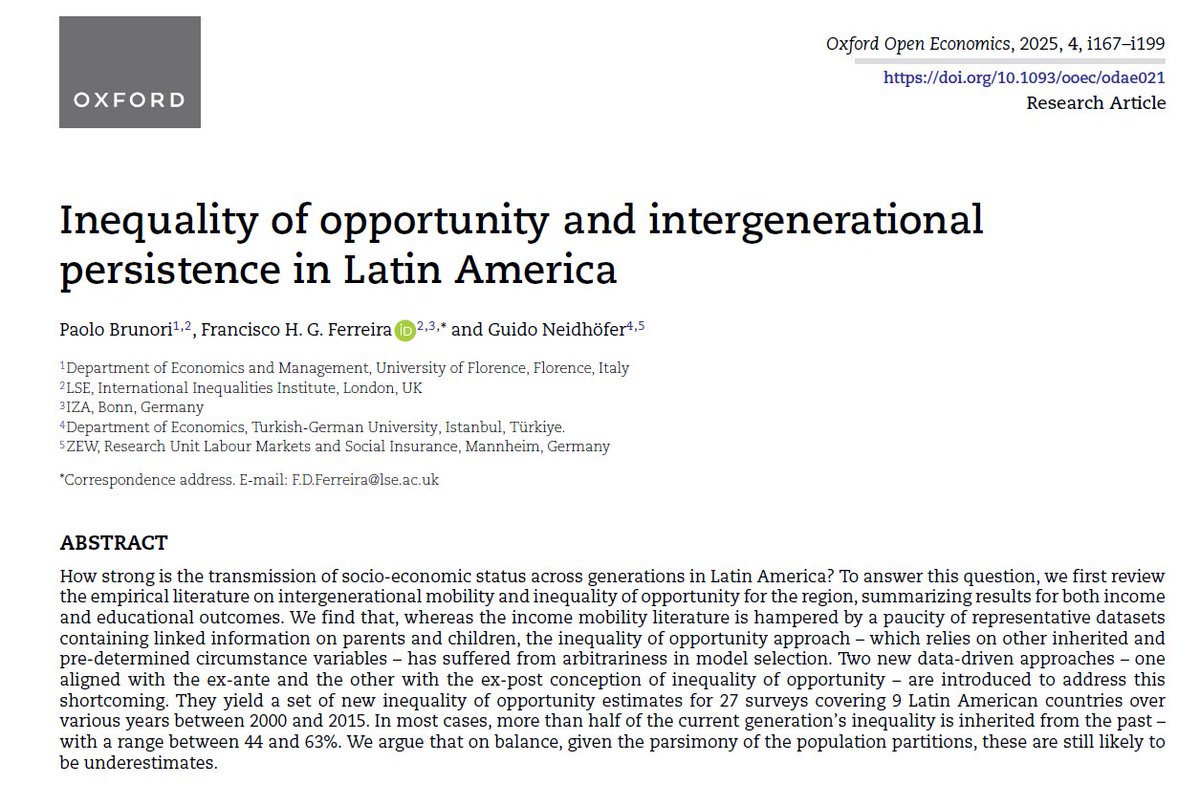
📢New publication: Inequality of opportunity and intergenerational persistence in Latin America (Paolo Brunori, Francisco Ferreira, @GNeidhofer) - recently published in open access as part of the #LACIR-Supplement in Oxford Open Economics.
https://t.co/UI6Ak4E2jR
@pengzell i read to understand what is going on discoursively how in this other bubble to which i barely have any other connect. I do though consider to not post anymore as to not symbolically and materially support this theater. And i read Kareem Carr's posts.
Das liegt daran, dass das Bundesverfassungsgericht 2019 dem Großteil der Sanktionen für verfassungswidrig erklärt hat. Außerdem darf eine Sanktion laut Gesetz nicht als Strafe missbraucht werden. #haltDieFresseBild
@kareem_carr How can UBI be disempowering? What about peop whose skill set is not complementary to AI use? Hungry but making funny cat pics? I think we should socialize AI or tax AI profits so high as to minimize its profit potential. Task AI to equalize conditions by redistributing gains.
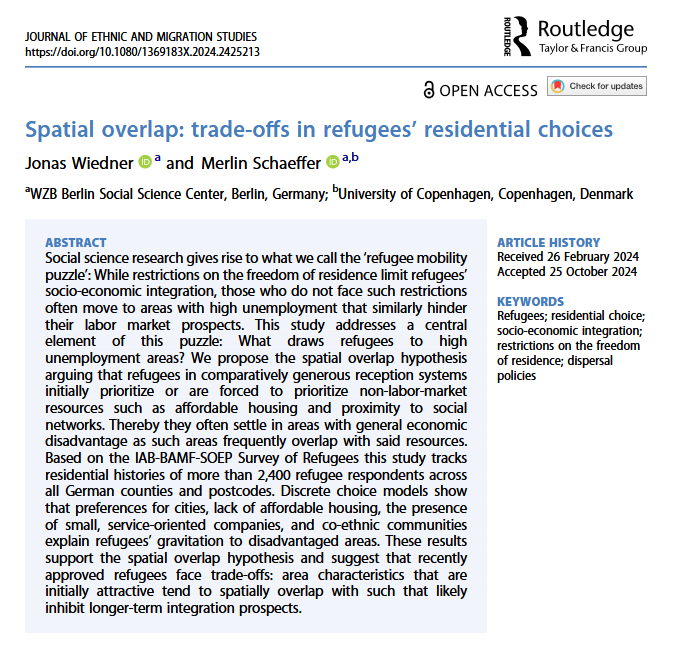
Refugees in 🇩🇪 are not allowed to relocate for some time after arrival. We know this is bad for integration. So, once they are allowed to, refugees move to places with opportunity, right?
On average: no, as Merlin Schaeffer and I show in a new publication @scmrjems . Thread👇
Let me take you back for a moment to 2018.
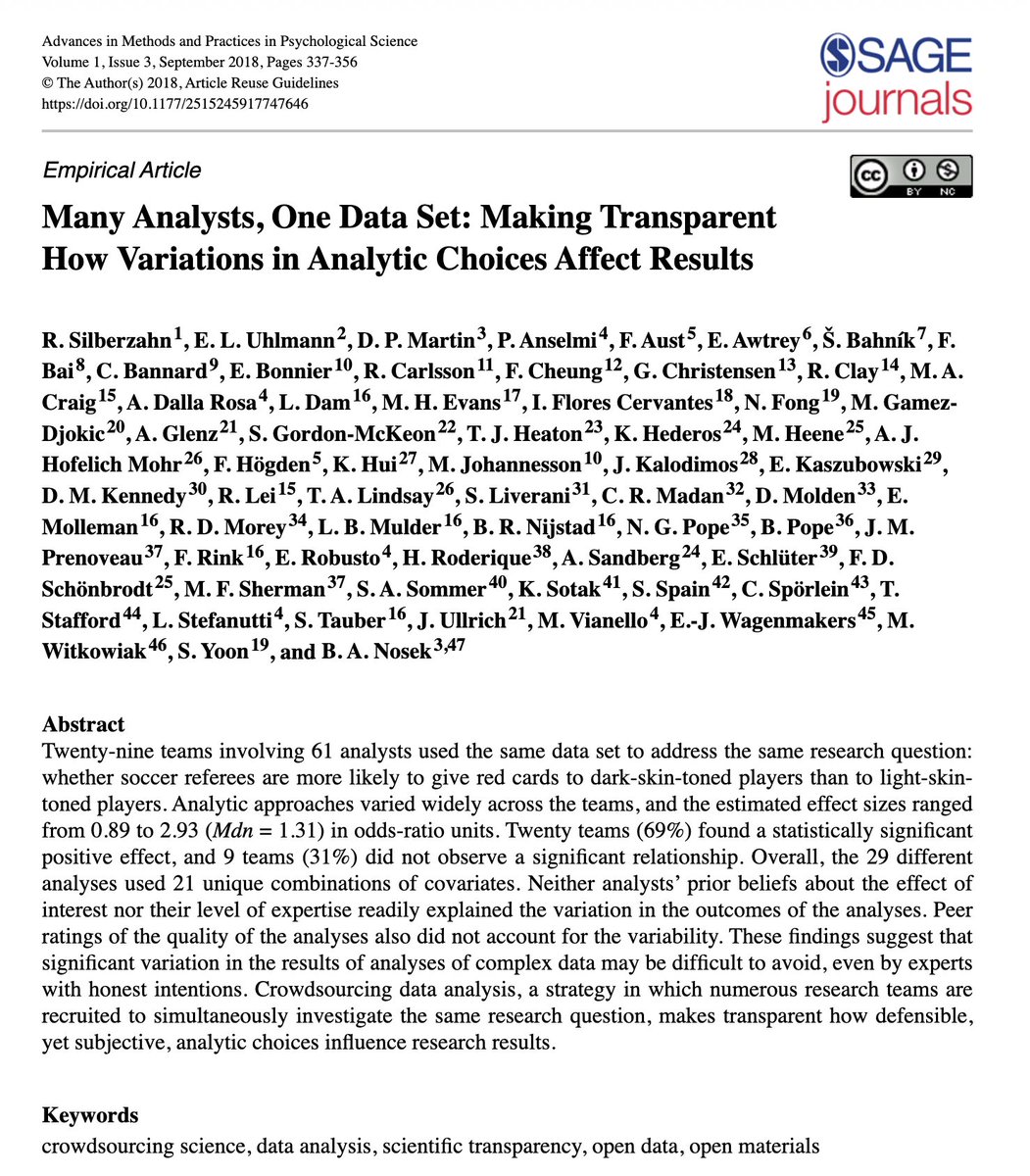
A team of powerhouse psychologists have just published a (seemingly) groundbreaking article.
The premise of the article was simple--give multiple research teams the same research question with the same dataset.
Would teams with the same research question and the same data come to the same conclusions?
The research question was: are soccer referees more likely to give red cards to players with dark skin tone than light skin tone?
The results obtained by the teams differed extensively.
Many concluded from this widely noted exercise that the social sciences are not rigorous enough to provide definitive answers.
This finding was widely shared in the popular press and on social media.
Fast forward a few years: a new (less covered) article comes out and shows that the main reason teams came to different answers was the original research question was unclear.
Teams differed in their interpretation of the research question and therefore used diverse research designs and model specifications.
When you reanalyze the data with a clear research question, a precise definition of the parameter of interest, and theory-guided causal reasoning, results across teams don't vary that much.
From the authors of the new study: "The broad conclusion of our reanalysis is that social science research needs to be more precise in its `estimands' to become credible."