We're recruiting science ideas to build on the FOBOS #Astro2020 white paper (https://t.co/qhfcYjefn7). 1800 fibers, 0.31-1 um, R~3500, IFU modes, and DEEP! A next generation facility for @keckobservatory.
We are joining #Strike4BlackLives and #shutdownSTEM today and taking time to educate ourselves about anti-Black racism, injustice, and violence against Black lives. We seek to find, support, and build meaningful tools for change.
Excited about cosmology and galaxy probes with small-scale clustering. The bane is "fiber collisions." DESI collision radius is ~63'' but for FOBOS Starbugs, it's only 12''. #FiberCollisions
Ah, NSF Fastlane.. you make us nostalgic for the late-90's internet. When a mistimed click on the back button could doom everything. It's fun to write words like "innovative" and "state-of-the-art" into a 20-year-old text field that can't flow text without chopping the lines.
Excited about key programs: faint spectroscopy for massive galaxy / dark energy work; ultra-deep IFU maps of z=2 CGM *in emission*; IGM tomography (no doubt!); and 100,000 stars in the M31 disk and satellites, IFUs on young star clusters. Wow...
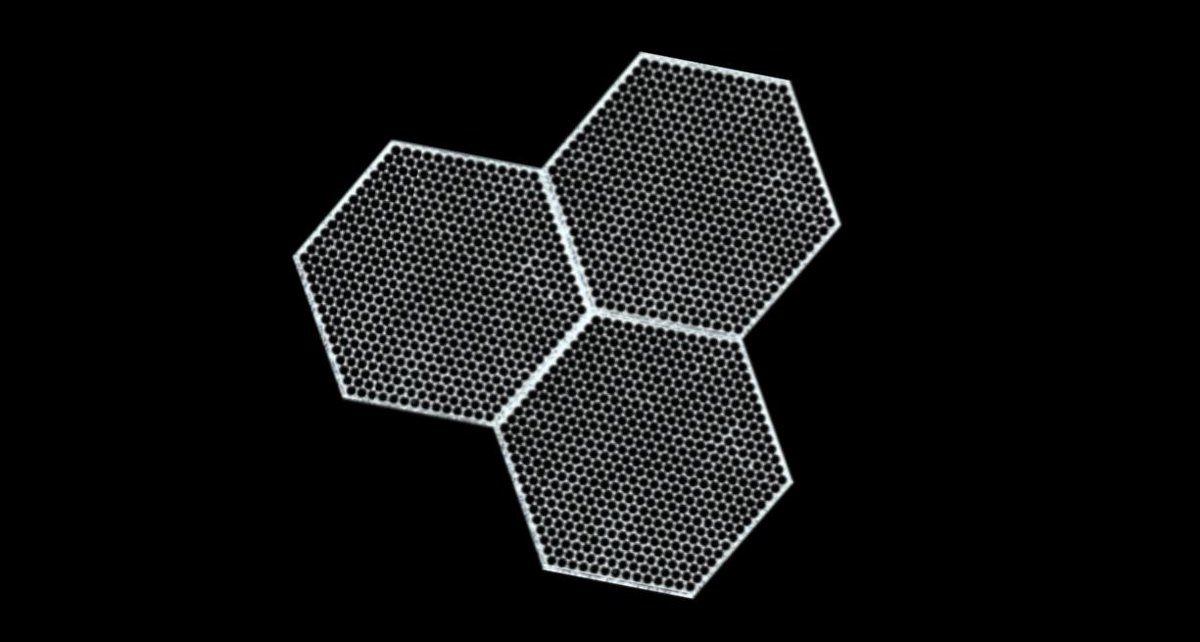
In addition to single fibers and multiple IFUs, we're exploring a 3rd FOBOS targeting mode: A 30''-wide monolithic IFU. Would look something this 1641-fiber bundle (from @sdssurveys's LVM design).
Nice conversation today with @caltechipac about expanding the @keckobservatory archive (KOA) for FOBOS. We want to automate cross referencing of panoramic photometry for optimized target allocation, program definition, and serving of data products. Also in the time-domain.
Nick MacDonald is at Berkeley's Space Science Lab today working with DESI's Claire Poppett, Tim Miller, and Mike Lampton on FOBOS design. I think he brought some fiber with him!