@FondationFG launches the I2CELL Seed Award (€250,000) to experimentally address the algorithmic processing of information in biological systems. Please retweet ! https://t.co/0Duq6yzgjc
I2CELL is an initiative to foster a research community on using information processing concepts & tools in cell biology. It started by a seminar summarized in EMBO reports and it continues with a seed award of €250K during 3y for an experimental project. https://t.co/y5mYmss9BN
It just seems implausible this is what we are made of, essentially, nanotechnology about a billion years beyond anything we can design or make ourselves.
How does an embryo reliably "compute" its form - "cell by cell" - using only local interactions and mechanics, yet produce a precise global body plan? I’m excited to share our Nature Methods paper "MultiCell: geometric learning in multicellular development", presenting #AIxBiology research led by @HaiqianYang and the result of a great collaboration with Ming Guo, George Roy, Tomer Stern, Anh Nguyen and Dapeng Bi.
A long-standing challenge in developmental biology is to predict how thousands of cells collectively self-organize as tissues fold, divide, and rearrange. In MultiCell, we represent a developing embryo as a dual graph that unifies two complementary views of tissue mechanics with single-cell resolution: cells as moving points (granular) and cells as a connected foam (junction network). This lets the model learn dynamics from both geometry and cell–cell connectivity.
On whole-embryo 4D light-sheet movies of Drosophila gastrulation (~5,000 cells), our model predicts key cell behaviors and the timing of events, including junction loss, rearrangements, and divisions with high accuracy, at single-cell resolution. Beyond prediction, the same representation supports robust time alignment across embryos and offers interpretable activation maps that highlight the morphogenetic "drivers" of development. The broader goal is a foundation for cell-by-cell forecasting in more complex tissues, and eventually for detecting subtle dynamical signatures of disease.
Kudos to the team for this inspiring collaboration with brilliant researchers to push the boundary of AI for biology!
Citation: Yang, H., Roy, G., Nguyen, A.Q., Buehler, M.J., et al. MultiCell: geometric learning in multicellular development. Nature Methods (2025), DOI: 10.1038/s41592-025-02983-x
Code/data links are in the manuscript.
Welcoming Lesaffre & Genopole as supporters of the BioInnovation Summit at the 2025 iGEM Grand Jamboree!
Join founders, corporations & investors on Oct 30 to chart the path from breakthrough science to scale-ups. Tickets include access to all events:
https://t.co/GazLn6YUTs
As you know I'm obsessed with power laws in biology, which is a biological consequence of fundamental principles, like energy conservation from the first law of thermodynamics. Geoffrey West showed how highly optimized biological networks—think blood vessels or respiratory systems—lead to allometric scaling. Specifically, the energy production per unit of body mass (mass-specific metabolic rate) scales as body mass (M) to the power of -0.25. This is part of what's known as Kleiber's law (or as we've dubbed it in our research, the Kleiber-West law), where whole-body basal metabolic rate scales as M^{0.75}. It's why elephants burn energy more efficiently per gram than mice, but mice live fast and die young.
What's interesting, is that this same scaling pops up in something as everyday as sleep. Across mammals, daily sleep duration follows a similar power law: it decreases with body size as roughly M^{-0.25}. Smaller animals like shrews might snooze 15+ hours a day, while giants like whales get by on just a few.
This is a clue that sleep is deeply tied to metabolism. Nervous systems are energy hogs, guzzling up to 20% of our body's oxygen despite making up only 2% of our mass. In smaller creatures, those fractal-like distribution networks deliver more oxygen per cell, letting their brains run "hotter" with faster firing rates and higher energy demands. But this revved-up metabolism exhausts resources quicker, creating energy deficits that sleep likely evolved to fix. Essentially, tinier mammals burn through their neural fuel faster and need more downtime to replenish.
In this view, sleep isn't just rest—it's an ancient fix for the energy trade-offs imposed by Kleiber-West scaling, ensuring that high-metabolism critters don't fry their circuits. Sure, sleep does fancy stuff today. In humans and other mammals, it consolidates memories by pruning unnecessary synapses during REM phases and clears brain toxins via the glymphatic system, which ramps up during non-REM sleep to flush out waste like beta-amyloid.
The relation of sleep and metabolism may have evidence from evolutionary history. The emergence of anaerobic metabolism could be tied the Great oxygenation event, 2B years ago. The next oxidation event (Neoproterozoic Oxygenation Event , 750M years ago) set the stage for Cambrian explosion leading to emergence of neural systems across species. And we had never had enough oxygen ever since.
The link to a great Nature paper by @RafSarnataro et al, and some practical implication of that study are in the next comment. As usual, please like and repost - this is cool science (thank you @Alexey_Kadet for bringing this up)
1/2
"Our studies suggest that proteins have evolved to harbor at least two types of codes, one for folding and another for intracellular compartmentalization"
In Science today: https://t.co/wulQgdG3jw
New #preprint from @FrancescoSacco1 and @DaltonSakthi - physics, #self-organization, #diverseintelligence:
https://t.co/cpAwm64SSp
"Topological constraints on self-organisation in locally interacting systems"
Abstract:
All intelligence is collective intelligence, in the sense that it is made of parts which must align with respect to system-level goals. Understanding the dynamics which facilitate or limit navigation of problem spaces by aligned parts thus impacts many fields ranging across life sciences and engineering. To that end, consider a system on the vertices of a planar graph, with pairwise interactions prescribed by the edges of the graph. Such systems can sometimes exhibit long-range order, distinguishing one phase of macroscopic behaviour from another. In networks of interacting systems we may view spontaneous ordering as a form of self-organisation, modelling neural and basal forms of cognition. Here, we discuss necessary conditions on the topology of the graph for an ordered phase to exist, with an eye towards finding constraints on the ability of a system with local interactions to maintain an ordered target state. By studying the scaling of free energy under the formation of domain walls in three model systems -- the Potts model, autoregressive models, and hierarchical networks -- we show how the combinatorics of interactions on a graph prevent or allow spontaneous ordering. As an application we are able to analyse why multiscale systems like those prevalent in biology are capable of organising into complex patterns, whereas rudimentary language models are challenged by long sequences of outputs."
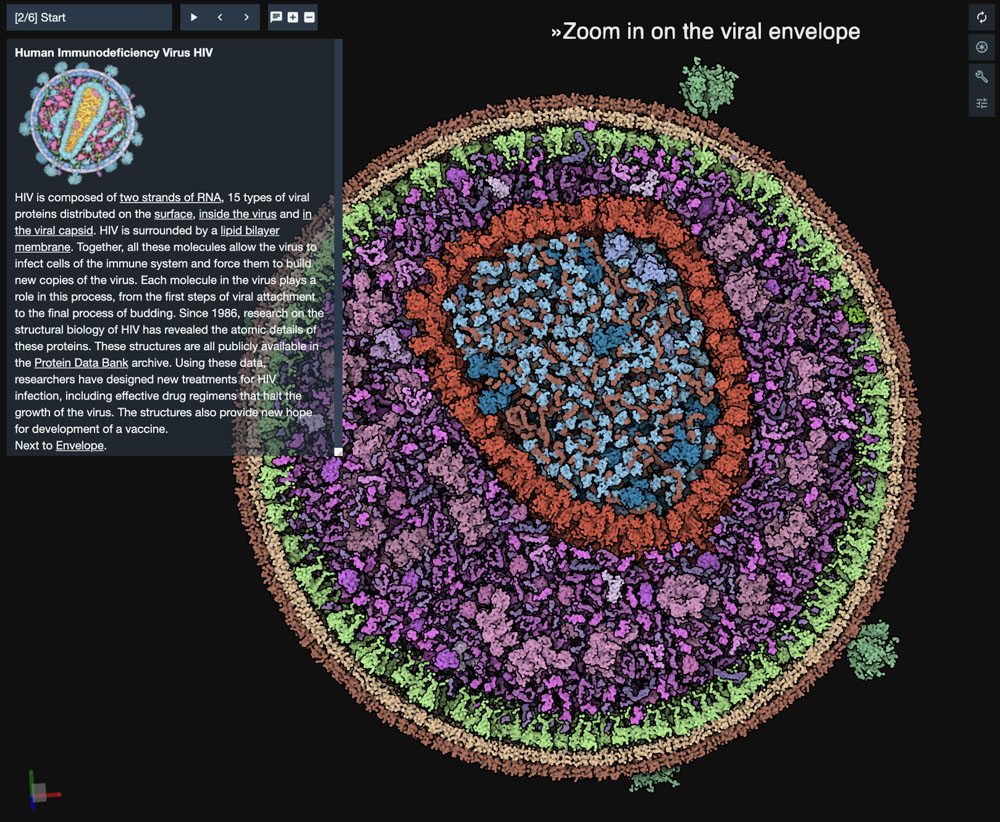
I'm very happy to announce that I have retired! I'm equally happy that @janetiwasa has agreed to continue the Molecule of the Month @buildmodels. Read about this at https://t.co/fs5LBpfL9E
I'm also very happy to announce that @ludovic_autin will be continuing the cell modeling work, so stay tuned for exciting developments on his profile. For example, take a look at the Mesoscale Explorer https://t.co/SvOzLZ8fmW
The #Top10 Countdown rolls on! Revealing spot #6 most viewed for 2024: The Ribosomal Core ! Stay tuned for more!
See for yourself at https://t.co/mDIdKeBphC
#biology#animation#education#science
Excited to share our recent work on the power of RNA to encode physical information and how this can be embedded in the genetic code https://t.co/08BIjLLD4U
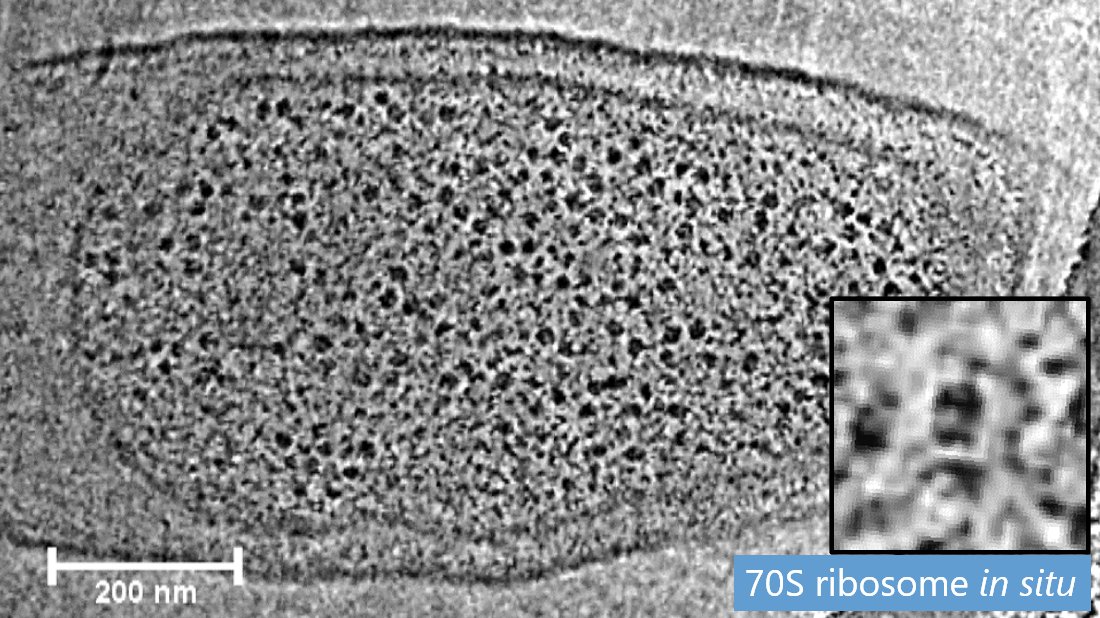
@bengeliscious Thanks Ben! You're right! This slice of an E. coli tomo (obtained by Julio Ortiz) should have gone with the tweet 🙂. A lot of ribosomes here too.
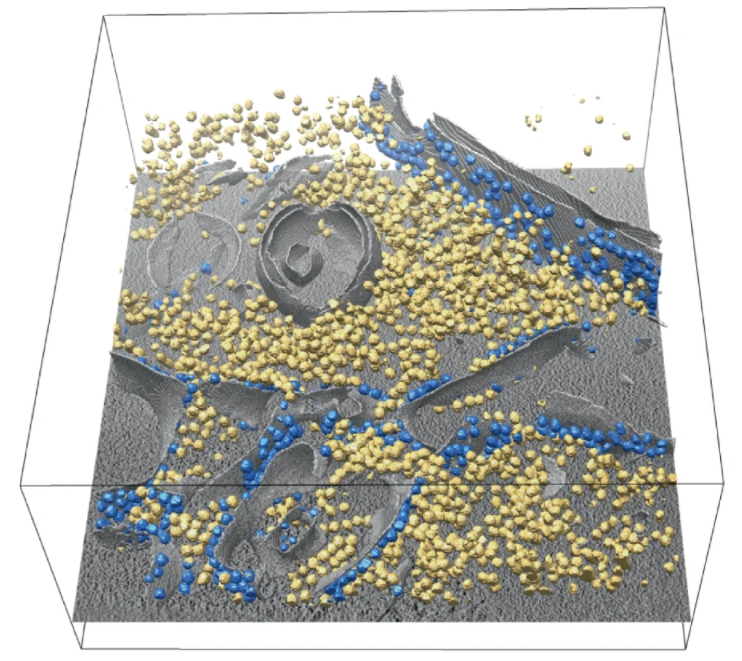
An E. coli tomogram is made mostly of small and rounded proteins. Labelling its content is highly difficult. We designed DeepFinder to help with this challenge.
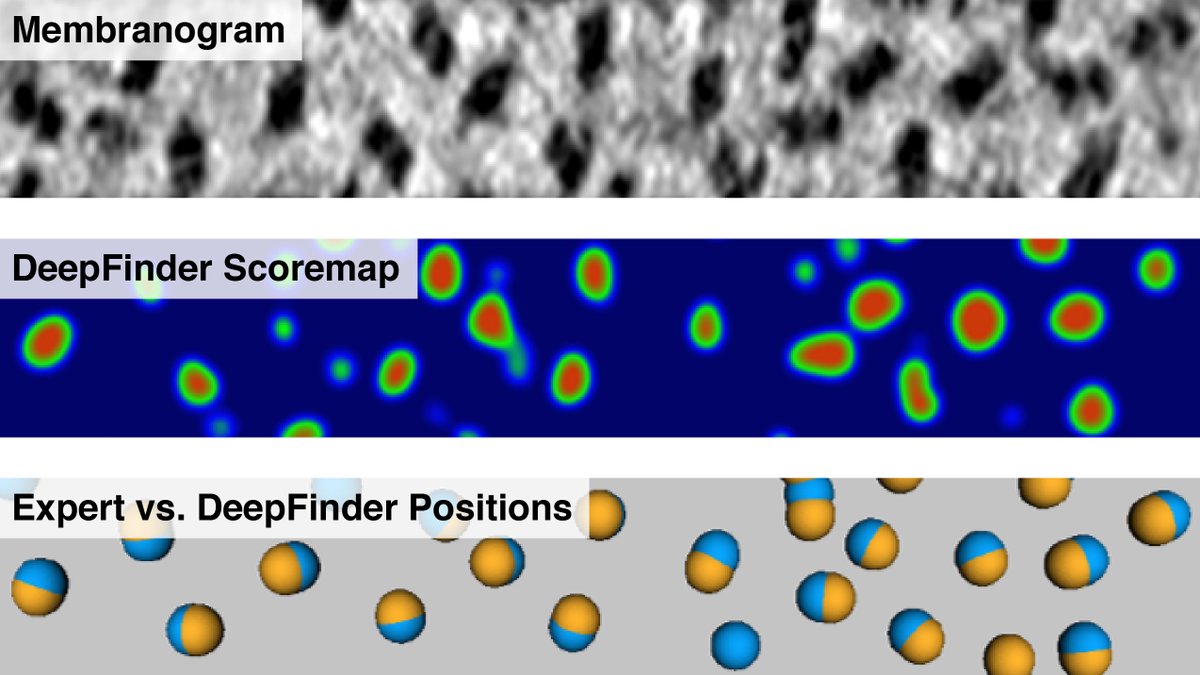
We are pleased to support the structural biology community to push the boundaries towards automation like DeepFinder, which is based on artificial neural networks (https://t.co/ijMX8aonlP) published @naturemethods by @bengeliscious and colleagues. #EMDB_EMPIAR#GoTeamTomo
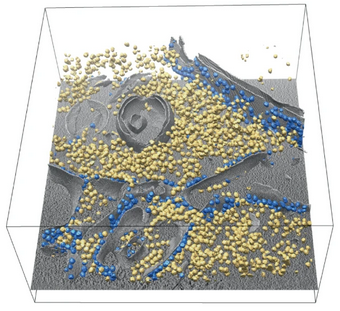
Out yesterday! DeepFinder is a deep learning-based tool for identifying macromolecules in cellular cryo-electron tomograms that performs with an accuracy comparable to expert-supervised ground truth annotations. https://t.co/KHJz9XRkRu
The #DeepFinder paper is online @naturemethods!
Paper📜 https://t.co/IosPVU6C3a
Code🧑💻 https://t.co/YbRvSqceWo
Press📰 https://t.co/iVCqdLnHm1
New #DeepLearning🤖🧠 software for identifying molecular complexes inside cellular tomograms. I hope it helps #TeamTomo. Try it out!!
Is walking in protists dictated by an internal algorithm? If so, how is such an algorithm implemented at the molecular level? A great team led by @WallaceUcsf gives some insights into these fascinating questions.
Excited to have the opportunity to present this work. Maybe the first time I will be presenting it to an outside audience. It's fun to think that this all started as a side project during an MBL Physiology Course rotation.
Thanks to the Fondation Fourmentin-Guilbert for funding
Virus must tap into the host's metabolic ressources to multiply. Because it is the most difficult to make, the availability of CTP could be a dominating driving force in the way RNA viruses like SARS-CoV-2 evolve a new progeny. @SfAMtweets https://t.co/yy00FDwxyU