@openservai
Being selected as the core AI agent technology for a multi-year Hitchhiker’s Guide to the Galaxy campaign is more than a partnership.
It’s a bridge between the world that imagined the future of technology and the companies actually building it.
Everyone is focused on what AI agents can do.
I’m more interested in what they’ll need to operate at scale.
Trust.
Reliability.
Auditability.
Payments.
That infrastructure is where $SERV comes in.
If the agent economy takes off, the demand for these rails could be massive.
few can endure the path to Fuji
what that truly means is holding
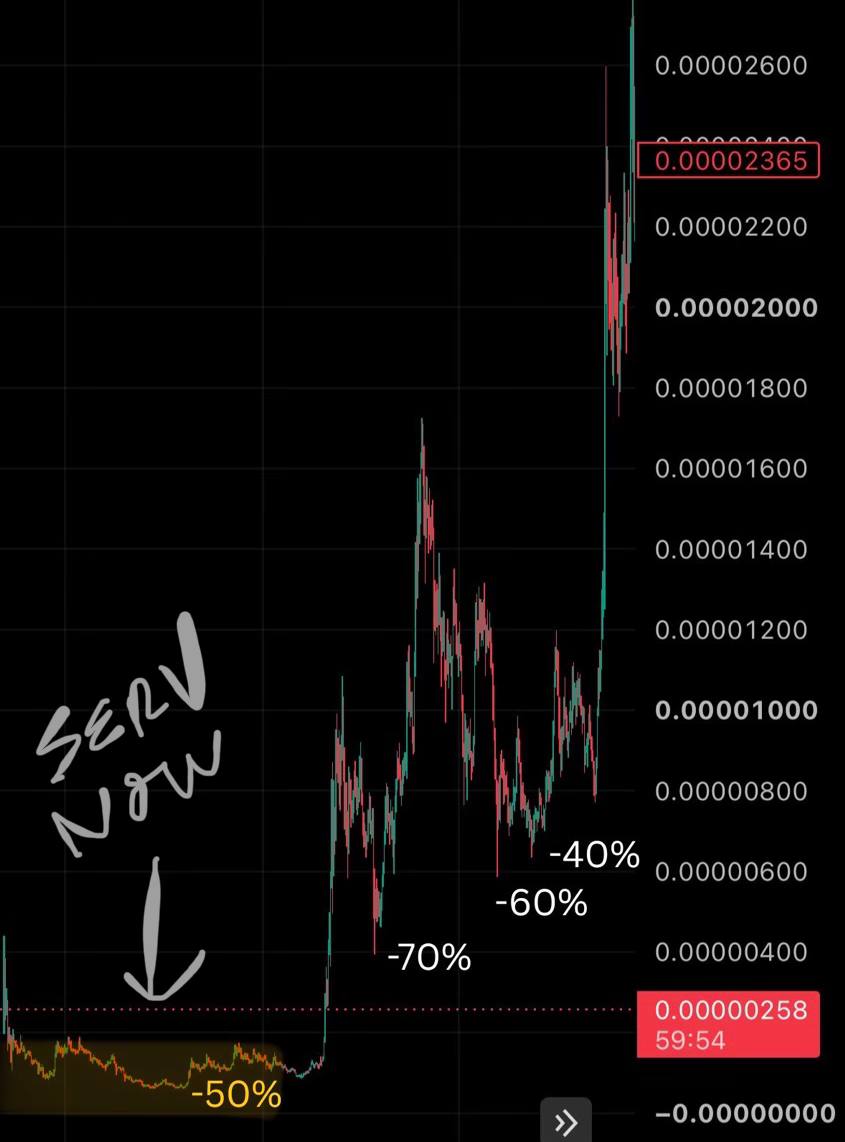
thru 20x gains and 80% losses, and then doing the same thing many times over
if you can hold $SERV longterm, thru all the ups and downs, the gains you'll ultimately see on this project will set you for life
Just looking at the numbers for a moment 👀
At around a $20M market cap, $SERV is still tiny compared with many projects in the AI and crypto space.
The big question is simple:
What happens when the market starts pricing $SERV as real infrastructure for the agent economy? 🚀
Just a thought experiment but lets play with the numbers 👀
$SERV is still sitting around a $20M market cap
If @openservai ever reached today’s valuations of:
VIRTUAL → ~18x
Bittensor → ~90x
HYPE → ~580x
And this is while OpenServ is already building around enterprise AI, reliability, auditability, banking and agentic payments with reported production usage and Tier-1 bank/enterprise conversations
Obviously these projects are very different and none of those valuations are guaranteed
But here’s the question:
What happens if OpenServ actually lands a major bank, payment provider or global enterprise and proves SERV can become infrastructure for the agent economy?
Is $20M really where this story ends… or are we looking at one of the biggest valuation gaps in AI x crypto? 👀
Just a thought experiment but lets play with the numbers 👀
$SERV is still sitting around a $20M market cap
If @openservai ever reached today’s valuations of:
VIRTUAL → ~18x
Bittensor → ~90x
HYPE → ~580x
And this is while OpenServ is already building around enterprise AI, reliability, auditability, banking and agentic payments with reported production usage and Tier-1 bank/enterprise conversations
Obviously these projects are very different and none of those valuations are guaranteed
But here’s the question:
What happens if OpenServ actually lands a major bank, payment provider or global enterprise and proves SERV can become infrastructure for the agent economy?
Is $20M really where this story ends… or are we looking at one of the biggest valuation gaps in AI x crypto? 👀
This is a conversation the AI agent space needs.
Building agents is one thing. Knowing what they can actually be trusted to do in production is another.
Looking forward to hearing Tim and @dashersw break down the gap between AI hype and real-world agent reliability
Excited to be speaking on Tuesday, 18 August, about OpenServ and the intersection of web3 x AI!
A lot of teams are shipping agents before settling what the model can actually be trusted to do. We'll go through what today's AI can genuinely handle, what it can't, and how to make up the difference before it reaches production.
I'll also be joined by OpenServ CTO, @dashersw
Come listen in!
4pm UK / 11am ET - Link below in thread
The biggest opportunity in AI might not be another chatbot.
It’s AI that can actually get work done.
Agents need reasoning, skills, tools, and infrastructure to operate without constant human input.
That’s the part of the AI stack @openservai is going after.
$SERV v3 is where AI agents get serious.
Not just smarter agents more visibility, control, reliability, and cost efficiency.
Graph Sharding is bringing a new level of transparency to how agents reason, operate.
SERV v3 is built for the next generation of autonomous
$SERV is still early.
AI agents, enterprise infrastructure, reasoning, global payments, and real-world adoption are all moving forward.
When the market catches up to the fundamentals, the conversation could look very different
Stay focused. The build is happening.@openservai
The future of payments won’t be humans clicking send.
It will be intelligent agents making transactions automatically.
For that to work, every decision needs to be reliable, secure, and auditable.
That’s the infrastructure $SERV is building.
Traditional payments infrastructure isn't built to handle the AI agents era - SERV is getting ready for it.
TLDR: agentic payments are projected to hit $5T by 2030, and are already live across 30+ card issuers.
SERV is being built as the engine that handles them at scale.
Where this is all heading:
Traditional rails are too slow, too expensive, and weren't built for machines transacting with machines. They can't keep up: settlement takes days, fees eat margins at scale, and they require a human is on each side. Blockchain fixes settlement: it's instant, programmable, and borderless.
But raw AI making financial decisions without structured reasoning is like building with sand. The future belongs to whoever turns raw intelligence into 'concrete' that you can build with - by making the reasoning behind every transaction reliable, auditable, and secure at institutional scale.
What we're doing now to be ready:
- we're bulding the reasoning infrastructure for regulated finance, with SERV v3 tooling in development that enables auditability of agents, further boosts their reliability, security and cost-efficiency at scale.
- we're positioning at the center of global payments, including some of the fastest growing markets in the World in Africa and Asia, as well as the largest economies - joining necessary industry-leading networks like EPAA and more.
- we're pursuing SOC 2, ISO 27001, and GDPR certifications, the keys to doing business with regulated institutions, while establishing legal presence across the US, Europe, Singapore, and Africa to enable enterprise contracts globally.
The agentic payments era is arriving. We're building to be at the center of it.
Big move for SERV
Joining the Emerging Payments Association Asia puts SERV alongside major global financial players and directly into one of the fastest-growing payments markets
$SERV bring AI agents into the global financial system and help shape the future of agentic payments
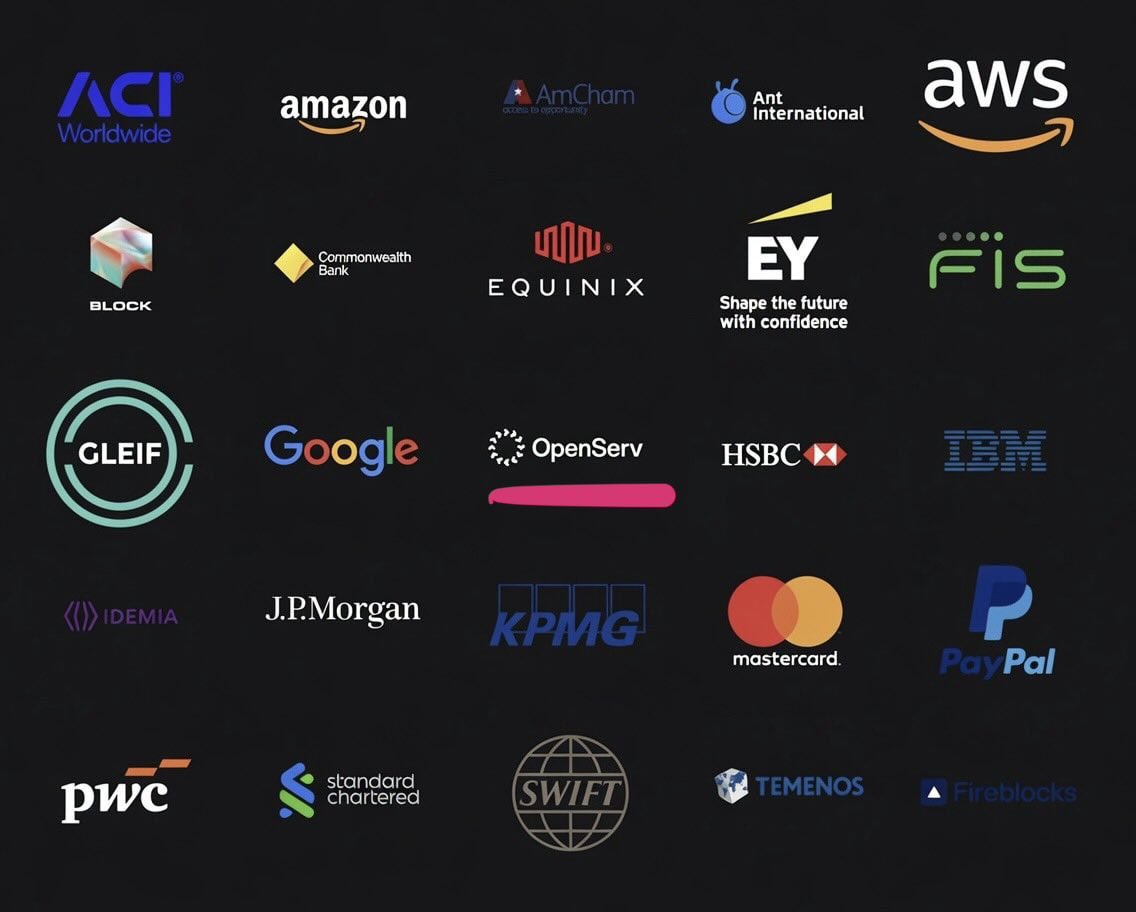
We’ve officially secured a seat at the Emerging Payments Association Asia (EPAA) alongside global giants like Mastercard, PayPal, and HSBC.
Our mission in 2026?
Bring SERV AI technology to the global financial core.
1) Shaping the Future
The Asia-Pacific (APAC) digital payments market is scaling to $33.08 Trillion. By joining the EPAA, SERV will be positioned in one of the fastest-growing financial region on earth, and able to co-author the regional Agentic Payment Rulebook - as part of our goal to position SERV in the most dynamic global markets.
2) The Enterprise Pipeline
This will put SERV infrastructure directly in front of tier-1 institutional buyers, establishing immediate compliance trust and establishing our tech as the industry benchmark for autonomous agent execution.
3) Unlocking Institutional Demand
From multi-million dollar enterprise infrastructure licensing to capturing micro-fees on agent-to-agent transactions, regulatory alignment will allow us to anchor the long-term utility of the SERV ecosystem.
We aren't just adapting to the future - we are writing it.
--
Read more about our global expansion plans below 👇
Local deployment of open-source models is a great goal for enterprises but performance is what really matters.
That's where $SERV changes the equation. It helps agents deliver more reliable, production-ready results instead of inconsistent outputs that slow teams down.
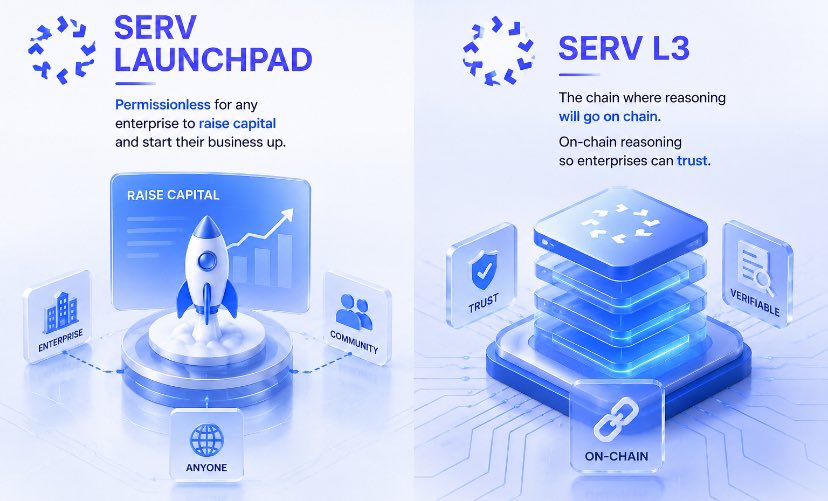
The $SERV Launchpad is permissionless for any enterprise to raise capital to start their business up.
The @openservai L3 is the chain where reasoning will go on chain. On-chain reasoning so enterprises can trust what was done, was done.
The AI agent stack is evolving fast.
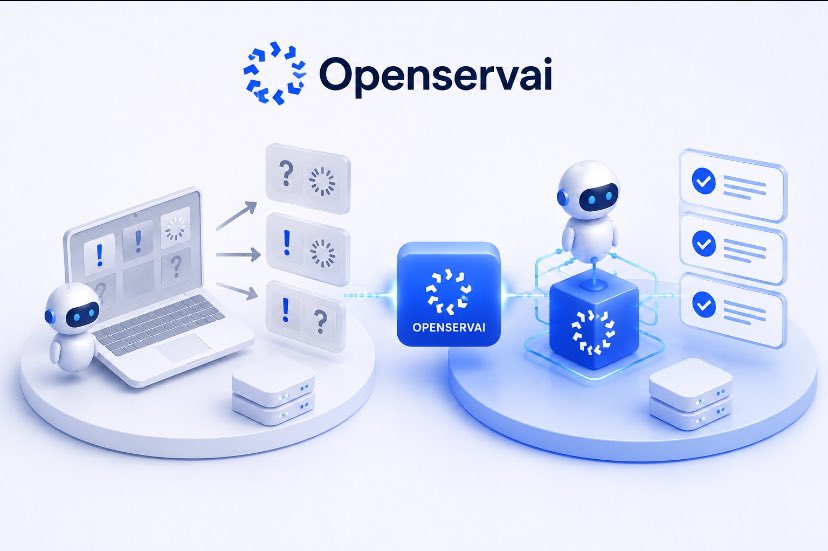
With $SERV Reasoning v3, it’s no longer just about running agents, it’s about seeing, managing, auditing, and optimizing every decision they make.
This is infrastructure built for enterprise-scale @openservai
If you've ever been curious about what’s happening under the hood of SERV Reasoning, the graphic below breaks it down.
What we’re especially excited about next is Graph Sharding, coming with SERV Reasoning v3.
> v3 is where SERV Reasoning evolves from an API into a visual suite for building, managing, and auditing entire enterprise agent systems - directly addressing the largest painpoints these entities face.
Designed for organizations running large numbers of agents across critical workflows, Graph Sharding provides a level of visibility, control, and precision that existing solutions simply do not offer. Teams will be able to understand exactly how their agents operate, manage every step of the reasoning process, identify failures, control costs, and maintain a complete audit trail across their entire stack.
Together with the API, Graph Sharding makes SERV Reasoning the first complete infrastructure layer for reliable, auditable, and cost-efficient agents in enterprise and regulated industries..
and combining all these together is exactly how we embed SERV right into the heart of the market's biggest opportunities.
Still holding $SERV?
Congratulations you survived the challenge. Not wavered by weak ass FUD.
You have that dog in you. I like it.
Welcome to the brotherhood. Now let’s fuck some shit up!
Generational run starts now, mark it.
SERV is solving it. Their vision is 100% reliability in reasoning. Making @openservai the only solution for banks, enterprises, and government wating to scale up Al agent fleets.
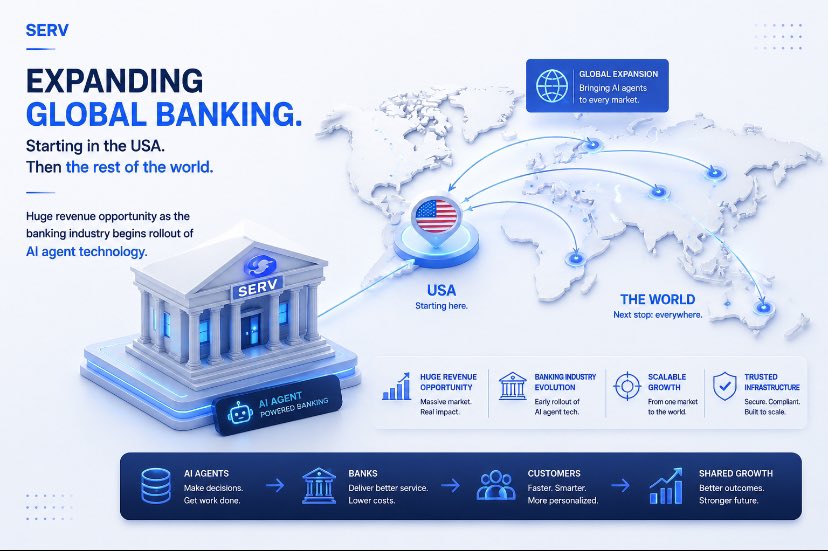
The AI agent wave in banking is just getting started.
@openservai is beginning with the U.S., but the opportunity extends far beyond one market.
As more financial institutions adopt AI, the addressable market only gets bigger.
Financial institutions are projected to spend $97 billion on Al by 2027, growing at a 29% CAGR, exceeding $200 billion annually by 2030.
Even if base:0x5576d6ed9181f2225aff5282ac0ed29f755437ea gets a small fraction of this money, it's billions in revenue to
SERV.
McKinsey est. the annual value of Al in banking at $200-340 billion and
Citi projects that Al will add $170
billion in global banking profits by 2028, helping push sector profits toward $2 trillion.