$NVDA just told you exactly where to invest your money.
They just poured $4 billion dollars into photonics.
Here are 10 of the most important photonics companies you need to be aware of:
1. $LITE - Lumentum (Lasers)
The laser source that powers photonics interconnects. NVIDIA just invested $2B with a multibillion-dollar purchase commitment for advanced laser components. Building a new 240,000 sq ft InP laser fab in North Carolina. Added to the S&P 500. When NVIDIA writes a $2B check to secure your supply, the market is telling you something.
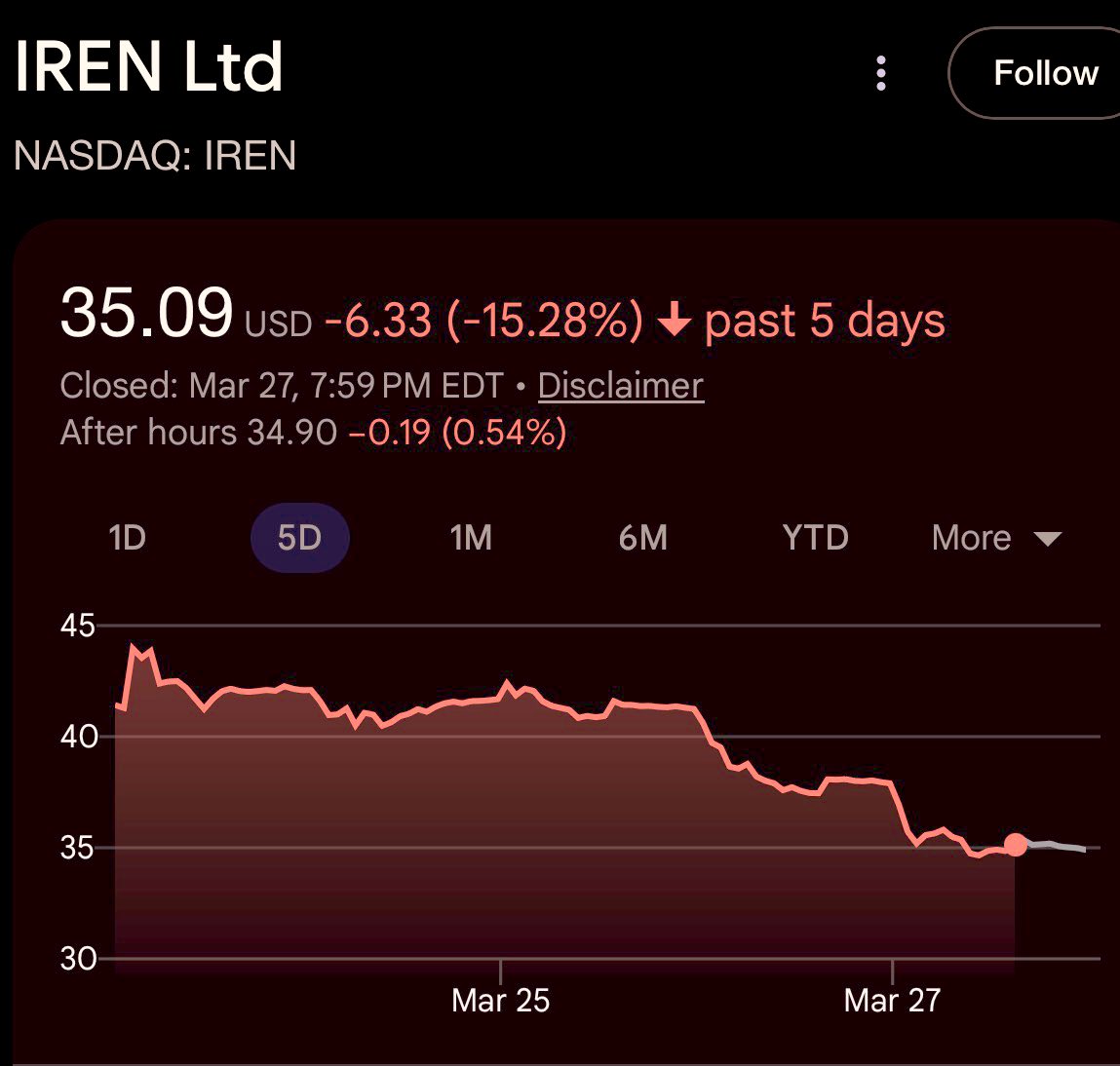
$IREN filed to dilute $6,000,000,000 at a $11.7B MC.
That is not noise.
This is Iren's way to monetize their 4.5GW capacity by selling all those new shares onto the open market.
If you want some history on how this turns out:
Look at $BKKT that crashed 99% with Mike and $IREN board of directors history with excessive ATMs. Or his recent company $ASST.
It’s accretive to the company and executives: Because it wipes out all retail shareholders and they can always issue SBC.
So they don’t actually care what stock price it needs to be at to sell.
After they’re finished, they have $6B in new cash to use for scaling without paying interest.
But the reason why convertible notes with interest, and $NVDA funding balance sheets is much better for retail capital:
Is because it doesn’t wipe out retail equity to achieve this. Because at this point $IREN looks like the $AMC of datacenters with a dwindling moat, and looming $6B in shares sold into the open market.
Reason I post about $IREN is because
- people dismiss a $6B ATM as “Noise”
- it’s one of the most popular retail “buy the dip” companies that they’re buying into a $6B dilution machine
- people still don’t understand the risk at all.
- the amount they have now is not enough to finance GPUs/GW capacity monetization.
- they likely will have to use the ATM, it’s not “optionality”
Again: I have zero positions in the company.
I’m just warning retail investors that this ATM structurally wipes out your equity appreciation by how structural mechanics of $6B+ ATMs work.
Because $IREN likely needs to sell new shares at any price to monetize their GW, otherwise there would be zero need to file it.
Executives actually don't need to care because they can make up for stock price dropping by issuing SBC like $SNAP.
If you have to wonder if your equity gets wiped out from an excessive ATM:
There are better longs out there than $IREN.
After years of selling cash-secured puts, here's the system that works for me consistently:
The setup I look for:
- Stock on my watchlist that I'd own for years
- RSI oversold on daily, ideally weekly confirming
- Price at or near meaningful support levels
- High IV environment so premiums are worth the risk
- Tight bid-ask spreads and strong open interest
- 30 DTE, ~0.20 delta
- Strike at or below support where buyers have historically stepped in
The rules:
- Close at 50% profit and redeploy. The annualized math crushes holding to expiration.
- If assigned, flip to covered calls above cost basis. That's not a loss. That's the wheel working.
- Premium collected gets reinvested into the next CSP or used to DCA into long-term holdings.
- Base hits compound. I'm not swinging for home runs.
Names I'm selling puts on right now:
$IREN - high IV, AI infrastructure thesis I have deep conviction in
$HOOD - extremely liquid chain, friendly premiums, would happily own more shares
$ONDS - defense/drone demand accelerating, elevated premiums on pullbacks
$SOFI - $1B quarterly revenue, CEO buying stock, premiums are rich after the selloff
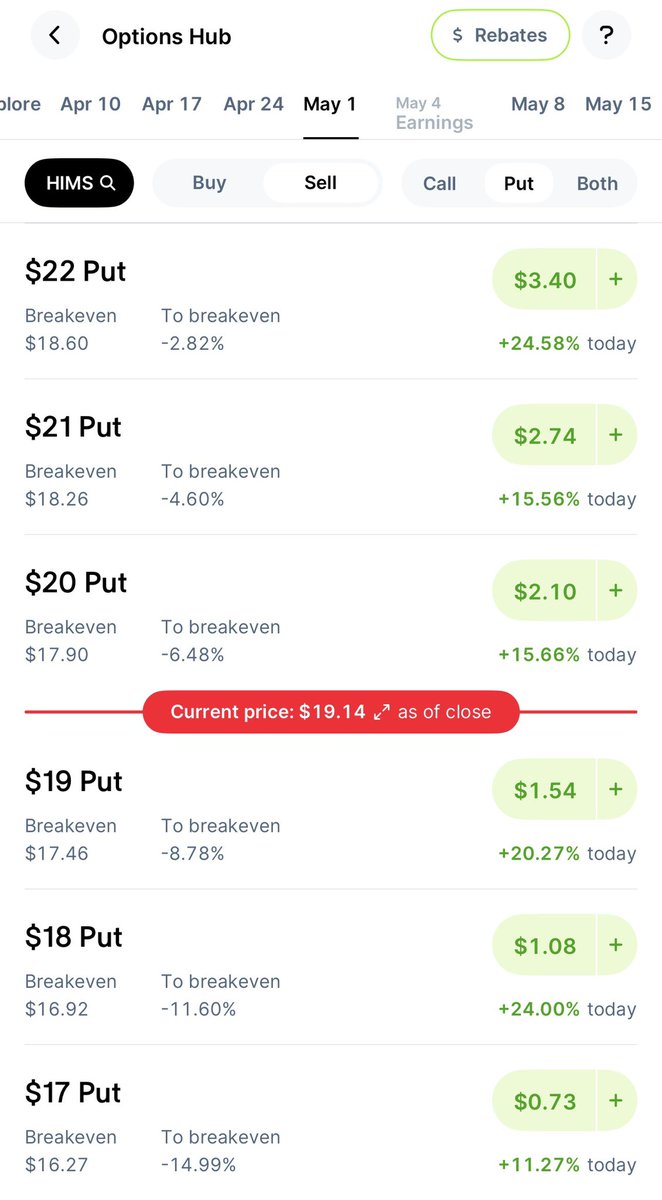
$HIMS - telehealth platform with GLP-1 tailwind, elevated IV makes premiums attractive
What I've learned to avoid:
- Selling into earnings, CPI, or Fed days. Binary events are not my game.
- Names with wide spreads or low volume. Illiquidity silently destroys your edge.
- Stocks I don't actually want to own. Even if I'm "sure" I won't get assigned.
- Entering without a clear support level on the chart. No setup, no trade.
I wait for red days on quality names and collect premium like rent.
NFA DYOR
I don't understand why people are still researching stocks manually in 2026
Claude can break down entire companies, stress-test your thesis, and find risks you're missing in seconds
Here are 10 prompts to turn it into your personal stock research analyst:
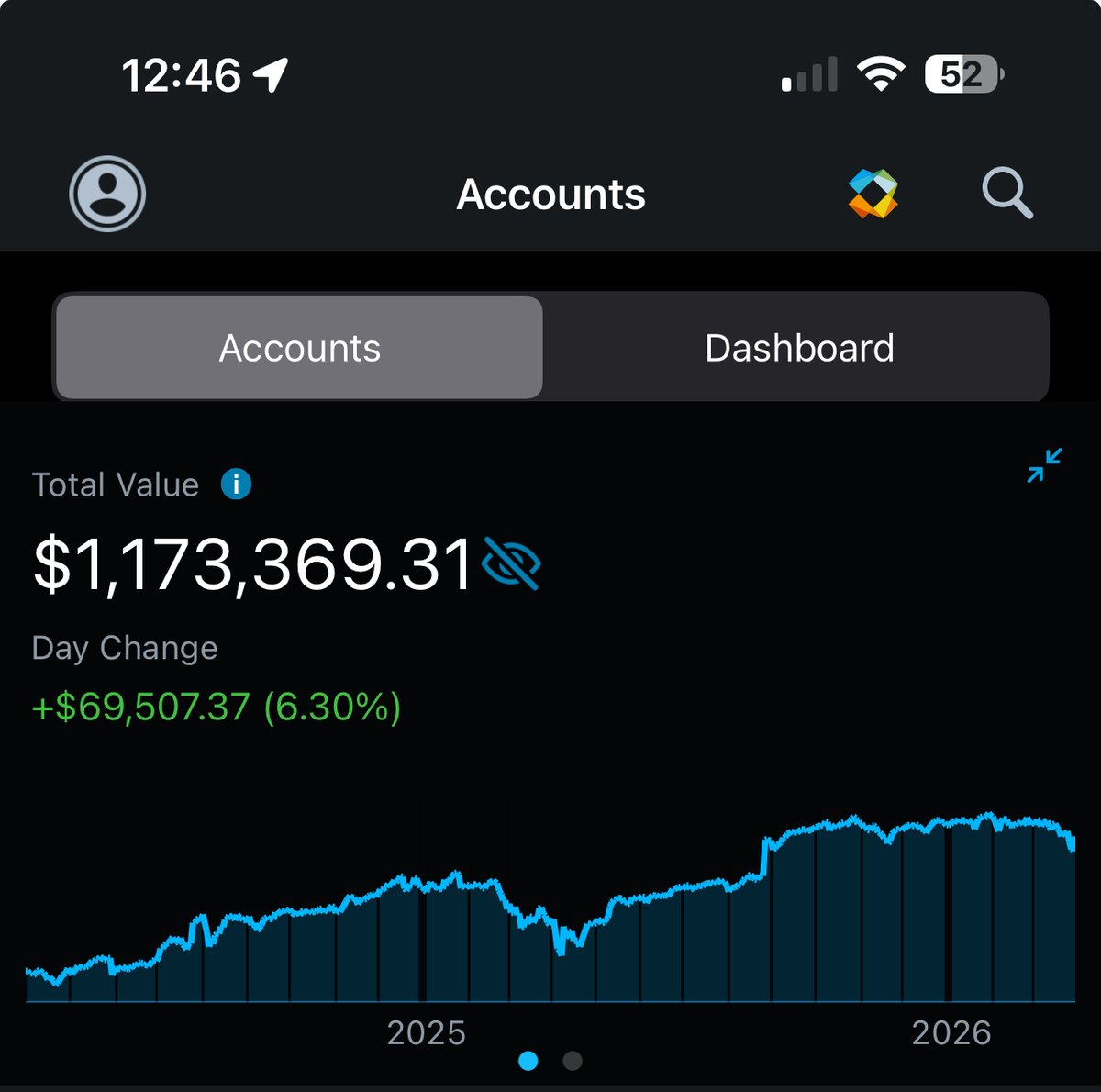
I make about $29k a month with options.
NO Day trading
NO Swing trading
NO Covered calls
NO Cash secured puts
NO BS
INSTEAD, I DO THIS:
Build base portfolio
Sell portfolio secured puts (not cash secured)
Buy LEAPS with the premium from sold puts
BUY shares with the premium from sold puts
(all 1+year option contracts)
I can explain it to a 13 year old & I will likely outperform 95% of people that read this.
Simple wins.
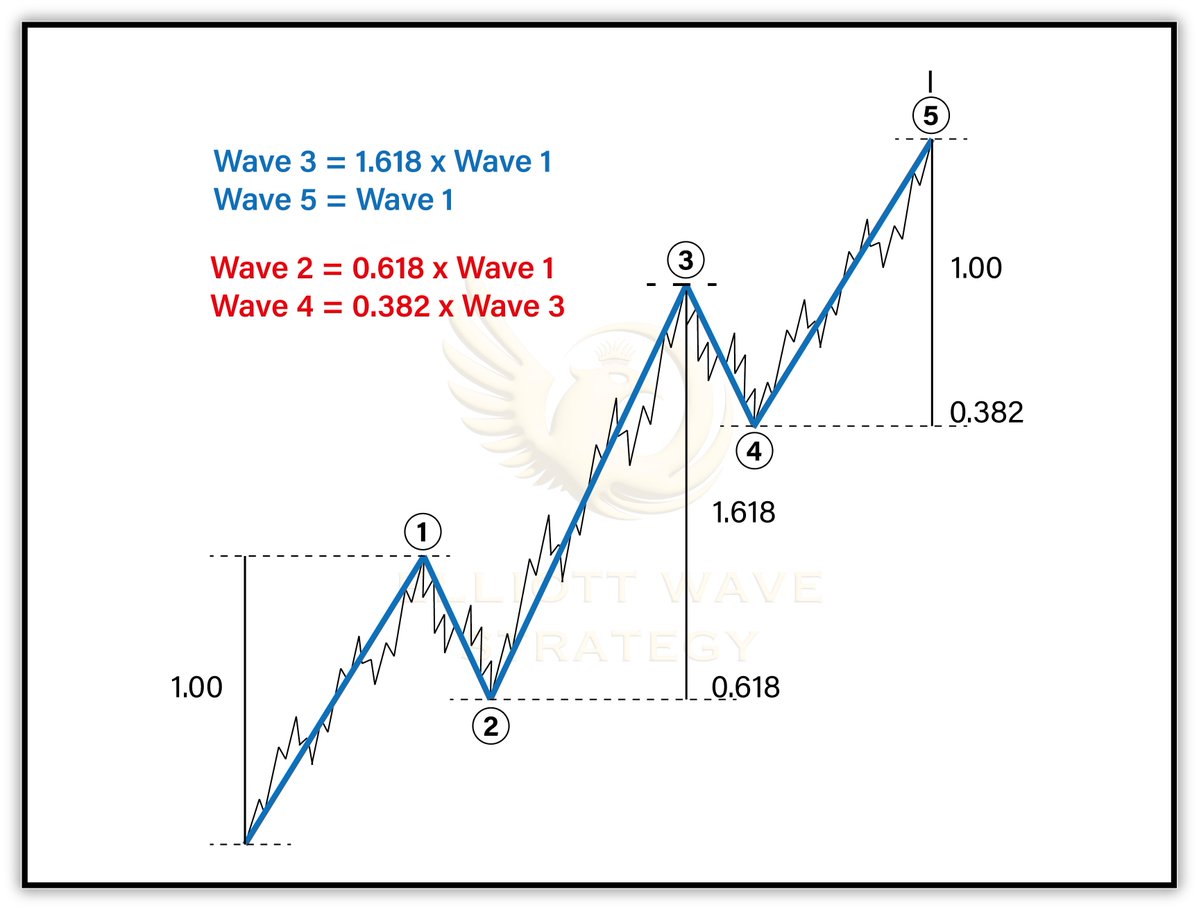
WHY ELLIOTT WAVE WORKS?
Since the markets are taking a breather, let’s sharpen our edge. Why do we rely so heavily on the Elliott Wave Principle?
Because it is the only system that maps human psychology.
🌊 Wave 1: The stealth phase. Smart money enters quietly against the prevailing trend. The public and mainstream media are still overwhelmingly bearish, dismissing the move as a temporary fakeout.
🌊 Wave 2: The final test. A sharp pullback occurs, convincing the retail crowd that the old trend is resuming. Weak hands panic sell, while the smart money quietly accumulates at a heavy discount.
🏄♂️ Wave 3: The realization phase. The new trend becomes obvious, and the crowd rushes in, creating massive, violent momentum. (This is where we make our biggest profits).
🌊 Wave 4: The confusion phase. Profit-taking begins, creating messy, overlapping, and complex corrections designed to shake out impatient traders.
🏄♂️ Wave 5: The exhaustion phase. The last of the retail buyers enter out of FOMO, right before the smart money exits and the macro trend reverses.
Modern indicators lag behind the price. Elliott Wave tells you exactly where you are in the psychological cycle before the next move happens.
Never trade blindly again. Understand the structure and master the waves with EWS Premium! 💎
Food for thought.
Trump, Hormuz and the End of the Free Ride
For half a century, Western strategists have known that the Strait of Hormuz is the acute point where energy, sea power and political will intersect. That knowledge is not in dispute. What is new in this war with Iran is that the United States, under Donald Trump, has chosen not to rush to “solve” the problem. In Hegelian terms, he is refusing an easy synthesis in order to force the underlying contradiction to the surface.
The old thesis was simple: the US guarantees open sea lanes in the Gulf, and everyone else structures their economies and politics around that free insurance. Europe and the UK embraced ambitious green policies, ran down hard‑power capabilities and lectured Washington on multilateral virtue, secure in the assumption that American carriers would always appear off Hormuz. The political class behaved as if the American security guarantee were a law of nature, not a contingent choice. Their conduct today is closer to Chamberlain than Churchill: temporising, issuing statements, hoping the storm will pass without a fundamental reordering of their responsibilities.
Trump’s antithesis is to withhold the automatic guarantee at the moment of maximum stress. Militarily, the US can break Iran’s residual ability to contest the Strait; that is not the binding constraint. The point is to delay that act. By allowing a closure or semi‑closure to bite, Trump ensures that the immediate pain is concentrated in exactly the jurisdictions that have most conspicuously free‑ridden on US power: the EU and the UK. Their industries, consumers and energy‑transition assumptions are exposed.
In that context, his reported blunt message to European and British leaders, you need the oil out of the Strait more than we do; why don’t you go and take it? Is not a throwaway line. It is the verbalisation of the antithesis. It openly reverses the traditional presumption that America will carry the burden while its allies emote from the sidelines.
In this dialectic, the prize is not simply the reopening of a chokepoint. The prize is a reordered system in which the United States effectively arbitrages and controls the global flow of oil. A world in which US‑aligned production in the Americas plus a discretionary capability to secure,or not secure, Hormuz places Washington at the centre of the hydrocarbon chessboard. For that strategic end, a rapid restoration of the old status quo would be counterproductive.
A quick, surgical “fix” of Hormuz would short‑circuit the dialectic. If Trump rapidly crushed Iran’s remaining coastal capabilities, swept the mines and escorted tankers back through the Strait, Europe and the UK would heave a sigh of relief and return to business as usual: underfunded militaries, maximalist green posturing and performative disdain for US power, all underwritten by that same power. The contradiction between their dependence and their posture would remain latent.
By declining to supply the synthesis on demand, and by explicitly telling London and Brussels to “go and take it” themselves, Trump forces a reckoning. European and British leaders must confront the fact that their energy systems, their industrial bases and their geopolitical sermons all rest on an American hard‑power foundation they neither finance nor politically respect. The longer the contradiction is allowed to unfold, the stronger the eventual synthesis can be: a new order in which access to secure flows, Hormuz, Venezuela and beyond, is explicitly conditional on real contributions, not assumed as a right.
In that sense, the delay in “taking” the Strait, and the challenge issued to US allies to do it themselves, is not indecision. It is the negative moment Hegel insisted was necessary for history to move. Only by withholding the old guarantee, and by saying so out loud to those who depended on it, can Trump hope to end the free ride.
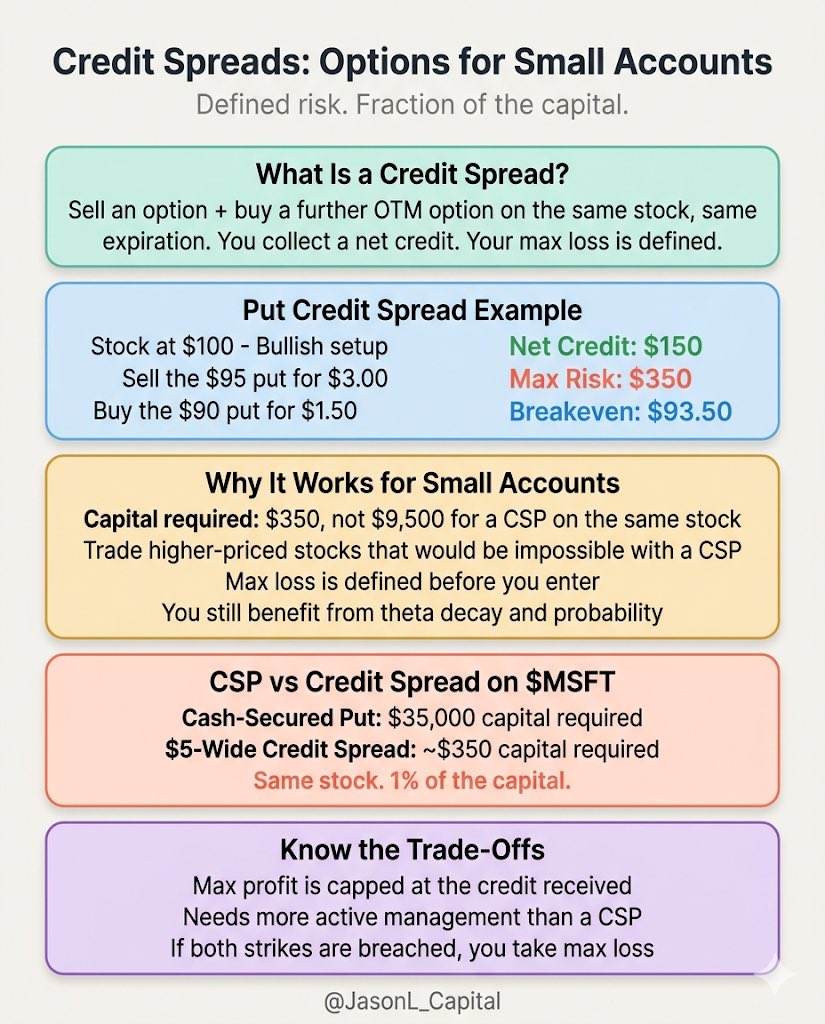
You don't need $10,000 to start selling options.
Credit spreads let you trade with a fraction of the capital. Here's why they work for small accounts:
A credit spread is when you sell an option and buy a further OTM option on the same stock, same expiration. You collect a net credit upfront and your max risk is defined.
Example:
Stock trades at $100. You're bullish.
You sell the $95 put for $3.00
You buy the $90 put for $1.50
Net credit: $1.50 ($150 per spread)
Max risk: $5.00 spread width minus $1.50 credit = $3.50 ($350)
Max profit: $150
Breakeven: $93.50
Capital required: $350, not $9,500 for a cash-secured put on the same stock.
Why this works for small accounts:
- You define your max loss before you enter
- Capital requirement is the spread width minus the credit, not 100 shares worth
- You can trade higher-priced stocks that would be impossible with a CSP
- Selling a $350 strike CSP on $MSFT requires $35,000. A $5-wide credit spread on the same stock might cost you $350.
- You still benefit from theta decay and probability
What can go wrong:
- Your max profit is capped at the credit. You'll never make more than $150 on this trade no matter how high the stock goes.
- If the stock drops below $90, you lose the full $350. That's a 100% loss on the position.
- Pin risk: if the stock closes right at your short strike at expiration, you can get assigned on one leg while the other expires worthless. Now you're holding 100 shares you didn't plan for.
- These move fast near expiration. If your short leg is ITM in the final week, you need to be actively managing or closing.
- Wide bid-ask spreads on both legs means you're paying slippage on entry AND exit. Illiquid names will eat your edge.
How I manage this:
- Close at 50-70% of max profit. Don't hold to expiration trying to squeeze out the last 30%.
- Closing early eliminates pin risk entirely and frees up capital for the next trade.
- If the stock moves against you hard, you know your max loss from day one. No surprises.
- If the thesis breaks, close early and redeploy the remaining capital.
Credit spreads are how I'd start if I were building a small account today. They teach you strike selection, probability, and risk management with real money on the line, without needing $10K+ per position.
NFA DYOR
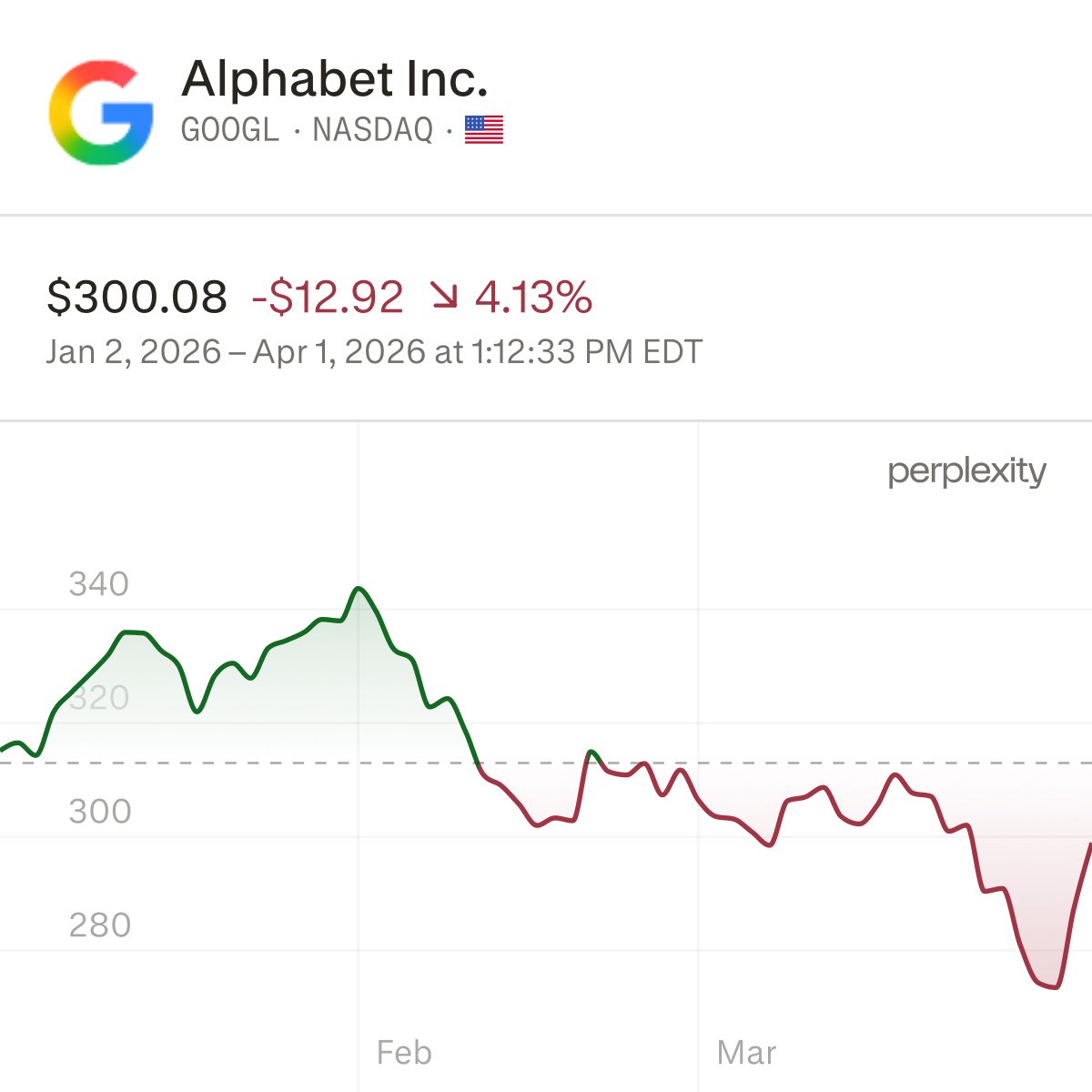
You could buy 100 shares of $GOOGL right now for $30,000.
Or you could buy the $300 call LEAP expiring January 2028 for $6,745. Same 100 shares of exposure. 78% less capital. Nearly two years of runway.
The trade:
Strike: $300
Expiration: January 21, 2028
Premium: ~$67.45 per contract
Breakeven: $367.45
If $GOOGL hits $400, this LEAP returns ~48%
If $GOOGL hits $450, this LEAP returns ~122%
If $GOOGL hits $500, this LEAP returns ~196%
Buying 100 shares at $300 and watching it hit $500 is a 67% return. The LEAP nearly triples that.
Why I like the setup:
- Google Cloud revenue up 48% YoY to $17.7B with $240B backlog
- Gemini AI integrated across Search, Cloud, Workspace, and Android
- Search revenue growing 17% YoY, still accelerating
- YouTube annual revenue surpassed $60B across ads and subscriptions
- Dominant positions in search, advertising, and mobile OS
- 668 days to expiration gives the thesis time to play out
The max you can lose on a LEAP is the entire premium you paid. In this case, that's $6,745 per contract. LEAPs are leveraged and can lose value quickly if the stock drops or stays flat. Only size this so you're comfortable losing all of it.
Note: LEAPs are one tool inside a broader portfolio. Owning shares is always the primary use of capital. This is a selective add-on for high-conviction moments when conditions align.
NFA DYOR
Watch Hard Lessons, as legendary investor Stan Druckenmiller sits down with Morgan Stanley’s Iliana Bouzali, sharing how he would construct a portfolio if he had to start over today, why contrarianism is overrated, and which stock he regrets selling too early.
Highly recommend listening to Stan Druckenmiller's latest interview with Morgan Stanley.
Some of my favourite thoughts:
- Contrarianism is overrated. The crowd is right 80% of the time - just don't get caught in the other 20%
- Your edge isn't being right, it's sizing when you're right and cutting when you're wrong. Soros playbook.
- You don't need to understand everything. He couldn't spell Nvidia. He trusted people smarter than him on the details, then made the call
- Volatility isn't the enemy. It's your entry point if you have conviction
- TA and price/news signals worked until everyone learned them. Edge dies when it becomes consensus
- Courage (Balls) matters more than wisdom. He's smarter now than in his 30s and was a better PM then. He had more nerve
- Scars don't go away - and they shouldn't. But mistakes are a moment in time. Get over it and move on
- Growth investors didn't want Teva, value investors didn't want it either. That's exactly where the opportunity was - stocks stuck in no man's land between investor bases
- Where the smartest young people are going is a leading indicator. He tracked Stanford kids shifting from crypto to AI before the trade was obvious
- Knowing when something is big doesn't mean you'll hold it perfectly. He sold Nvidia at 800, it went to 1400. Even with the right thesis you'll still screw up the execution
- Pattern recognition compounds over decades. There's no silver bullet, just 40 years of seeing things before
Bought Sandisk around this time and never sold and I am still not selling anytime soon. My thesis has always been the same…
In modern LLM’s storing & referencing KV Cache is the largest bottleneck. For models like ChatGPT & Gemini it has got so big that you can’t fit it on a single node NVL72 node you need multiple nodes with networking in between. KV Cache also scales linearly with model size & context so the chase for larger and larger MoE models makes this a behemoth.
So where do you store the KV Cache? To answer this we need to understand the basics of computer engineering. There are a few ways you can tackle it, you could add more HBM memory to hold it, scale to more servers and use networking to share it between them, or keep it on “disk” which is muuuuch slower than HBM or even DDR memory.
So for the longest we just decided to scale out to more servers and this makes sense at first if you remove yourself from the inference mindset. If you are doing training or sharing hardware among researchers this is actually a more ideal setup no big KV Cache to carry around training small experiments and focusing on bandwidth over latency…
But inference is a latency game. Adding network hops and switches in between to read memory adds latency and all the networking hardware Nvidia makes is optimized for bandwidth not latency. So when you are serving models the literal physical location of a specific part of your cache ends up dramatically increasing your tail latency. If you think LLM serving was going to keep growing this was not going to be a sustainable solution and could leave the door open for a competitor to come up with an inference only server solution which I’m sure big labs and big tech were researching.
So you might think just add more HBM? Adding more HBM increases your costs lowers your yield and negligibly improves your memory bandwidth compared to just increasing the pin speed which gives way more bang for buck. Even if you did stack a terabyte of HBM on a GPU the bandwidth won’t scale to make it usable and having more HBM will increase the time you need to refresh it to stop data corruption which will increase latency.
So with these constraint on HBM & Networking killing inference latency what do you do? Contrary to what you would get taught in your EECS class you move up the hierarchy to “disk” and the fastest memory there is flash. Instead of having more and more nodes of GPUs with expensive networking equipment you can just do the brain dead simple thing and pack a bunch of flash on each node. Flash access latency is still lower than networking and if you DMA into your GPU ‘s memory cleverly you can hide that latency by overlapping writing to HBM from disk with consuming it in logic. The simple dumb easy solution wins you just gotta write better hardware drivers lmao.
This is why Sandisk & Western Digital were always going to win but Sandisk was a more pure play flash company so their top line exploded even more. I don’t think the prevalence of flash in AI is fully appreciated yet either. As I said longer context lengths & larger models = larger KV cache = more flash. Additionally with video models you need even longer context windows + fast access to video’s you generated for users + videos for training.
The dance between HBM, Networking, & Flash will most likely lean towards flash every-time just cause of scale & cost. I fully expect Sandisk to be worth $150B by the end of this year b/c of this.
Bill Ackman on getting through a stressful & negative period in your life…
I come back to this video so often. Any time I am in a bad spot. Worth the 2 minutes for sure.
Master Prompt: Top Disruptive Investment Fields (High-Asymmetry, 24–36 Months)
Act as a market-structure, technology, and capital-allocation analyst.
Objective:
Identify the top 7 disruptive investment fields with the highest asymmetric upside over the next 24–36 months, ranked by importance, and explain why each field is entering a decisive phase in that window.
Constraints:
- Do not start from popular narratives or predefined sectors
- Work bottom-up from verifiable, real-world signals
- Focus on areas where capital is being forced to move
- Prioritize fields where the next 2–3 years represent a true inflection window
Methodology:
Stage 1: Signal Discovery (Bottom-Up)
Identify candidate areas showing multiple confirming signals, including:
- accelerating capital expenditure
- government or defense budget shifts
- energy, compute, or supply-chain constraints
- regulatory or geopolitical catalysts
- cost-curve declines or technical breakthroughs
You may identify bottlenecks, platforms, systems, architectures, or implementation styles at this stage.
Stage 2: Canonical Theme Normalization
Abstract discovered candidates into canonical, headline-level investment fields:
- Collapse bottlenecks, architectures, and implementation styles into the broader field they enable
- Avoid naming inputs, components, or technical modalities
- Use short, widely recognized names an institutional allocator would track
- Each field must represent a durable, global competitive arena
Stage 3: Consolidation
- Merge overlapping fields
- Remove cross-cutting or enabling-only domains
- Retain only distinct, multi-year competitive arenas
- Limit final output to exactly 7 fields
Stage 4: Importance Ranking
Rank fields from most important to least important based on:
- inevitability of capital deployment
- proximity of execution and revenue realization (24��36 months)
- degree to which other fields depend on it
- strength of geopolitical, security, or physical constraints
Importance reflects capital inevitability, not novelty.
Output Rules (STRICT):
- Output exactly 7 fields, ranked
- Use the following format for each field
- No extra commentary outside this structure
REQUIRED OUTPUT FORMAT:
1) Field Name (optional parenthetical for clarity)
Why now (24–36 months):
1–2 concise sentences explaining why this field is entering a decisive phase. Focus on forced capital, execution timelines, or binding constraints. Avoid hype or long-term speculation.
Key signals to track (3–5):
- Signal 1
- Signal 2
- Signal 3
- (Optional Signal 4–5)
Adoption phase:
Single phrase (e.g., Early deployment / Accelerating / Scaling / Consolidation)
Where value accrues:
Short phrase (e.g., Infrastructure, hardware / Platforms / Mission-critical software)
Main risk:
Single, concrete risk that could delay or impair the thesis
Final Check:
Ensure the themes are canonical investment fields, ranked by structural importance, and that each explanation is specific to the next 24–36 months, not a long-term narrative.
fck me this SpaceX merger with xAI is seriously impressive:
- most valuable private company in the world at $1.25T
- the literal sun is the power source, spacex is the transport layer, starlink is the compute layer (satellite constellation data centers), grok is the frontier ai model and X is the distribution platform with 560M monthly users. sickest vertical integration ever.
- targeting 100 TERAWATTs of ai compute per year (5X the entire worlds energy consumption per year)
- starlink is an absolute cash cow (70-80% of spaceX rev) and will ramp up to 1M satellite constellation soon for training grok on the back of spaceX's new starship thats has 20X the output capacity of current model.
- also commands the largest (and fastest-scaling) compute arsenal ON EARTH through colossus 1,2,3 (10+gw, 1M+ gpus)
- X social media employees now own equity in profitable, pre-ipo spaceX - talk about the winning trade of the century.
and this doesn't even include tesla which commands the largest fleet of autonomous robots, launching 1M optimus humanoids, building bleeding-edge ai chips in-house, refining their own fucking lithium for batteries, megapacks powering data centers and now building their own chip Fab
the only thing that'll make this shit even crazier is if tesla merges with SpaceXai (they will)
BREAKING: New details emerge on the upcoming record setting SpaceX IPO:
1. Targeting a "conservative" $1.5 trillion valuation
2. SpaceX generated between $15-16 billion in revenue in 2025
3. Looking to raise $50 billion in largest IPO of all time
4. Targeting an IPO launch date of June 2026
5. To be led by Goldman, JPMorgan, Morgan Stanley, and Bank of America
The biggest IPO in history is imminent.
$SLV $AGQ $SILVER
The morning opened with a clear regime shift.
Trump nominated Kevin Warsh for Fed Chair. Warsh is widely viewed as a hard-money hawk. At the same time, a U.S. government shutdown was averted at the last minute.
Gold and silver had effectively been propping each other up over the past week. Silver looked vulnerable, but gold’s parabolic move prevented a breakdown, resulting instead in a double-top structure.
This setup has historical precedent, most notably in 2006 and 2011.
Quietly behind the scenes topping macro news added up: Greenland resolution, Tariff step back, FED chair hawk(ish)...
As the macro narrative flipped, the “chaos premium” and “debasement trade” evaporated almost instantly. This came on top of rising margin requirements and billions of dollars in call options being offered throughout the week.
With today being Friday, those call positions became trapped. Market makers were then able to delta-hedge back toward neutral by selling underlying shares.
That’s when the dominoes began to accelerate.
As silver broke below key whole-number levels, where the largest call strikes were concentrated, selling pressure increased exponentially. Billions of dollars in call options rapidly went to zero.
The selloff intensified into the 1:30 PM window, driven in part by the $AGQ rebalancing mechanism.
As a 2x leveraged ETF, AGQ must rebalance daily to maintain its leverage ratio. A 10% drop in silver leaves the fund over-leveraged, forcing it to sell futures into weakness.
The “Kill Zone” (1:00–1:25 PM ET) is where the mechanics turned brutal:
1:00 PM: Order cut-off
1:25 PM: NAV calculation
HFTs and authorized participants knew AGQ would be forced to unload significant volume. They front-ran the 1:25 PM window, stripping remaining liquidity.
Silver didn’t merely decline, it gapped through multiple support levels. Selling pressure peaked precisely at the 1:25 PM NAV print. Once the mechanical rebalancing was complete, price finally found a floor.
Prompt:
Act as a buy-side equity analyst allocating real capital.
Help me decide whether [TICKER] deserves capital NOW, LATER, or NOT AT ALL.
Be concise. Be skeptical. Prioritize signal over noise.
Assume capital is scarce and opportunity cost matters.
––––––––––––––––––
1) What does this company actually do? (Explain like I’m 12)
––––––––––––––––––
- What it sells
- Who pays
- One simple analogy (1 line)
If it can’t be explained simply, say so.
––––––––––––––––––
2) Strip away the story — what is this business?
––––––––––––––––––
(MAX 6–8 sentences)
- Core product/service (today, not the vision)
- How it makes money
- Main competitors (tickers)
- Why customers choose this vs others
- Any real moat (or clearly say “none”)
- If biotech: FDA-approved / commercial / clinical (stage)
––––––––––––––––––
3) The market’s narrative (and why it exists)
––––––––––––––––––
(One table only)
- Core theme investors believe
- Why it matters NOW (timing)
- What could surprise the market (upside or downside)
––––––––––––––––––
4) What does the market already believe?
––––––––––––––––––
(3–4 bullets)
- What’s already priced in
- What outcomes would NOT move the stock
- Where expectations may be wrong
––––––––––––––––––
5) What actually moved the stock recently?
––––––––––––––––––
(Last 90 days — table)
- Date
- Event
- Why it mattered
- Source
Clearly mark TRUE price-moving events.
––––––––––––––––––
6) What could move this stock next?
––––––––––––––––––
(30–60 days ONLY)
- Earnings / guidance
- Product or customer launches
- Regulatory decisions
- Sector or macro catalysts
Exclude long-dated or speculative items.
––––––––––––���–––––
7) What are insiders and institutions doing?
––––––––––––––––––
(Bullets)
- Insider buys/sells (CEO/founder emphasized)
- Institutional accumulation or distribution
- Any confidence or warning signals
––––––––––––––––––
8) Is the stock leading or lagging?
––––––––––––––––––
- Performance vs peers (30 days)
- Performance vs sector ETF
- Trend: leading / lagging / breaking
––––––––––––––––––
9) Where this thesis breaks
––––––––––––––––––
(MAX 4 bullets)
- What could go wrong
- What invalidates the thesis
- What bulls may be ignoring
––––––––––––––––––
10) The 10× test (no excuses)
––––––––––––––––––
Answer clearly:
- What MUST go right for a 10×?
- What early evidence confirms it’s working?
- What single event kills the 10×?
- Upside driver: TAM / margins / multiple / combination
––––––––––––––––––
11) Capital decision
––––––––––––––––––
- Classification: Trade / Starter / Conviction / Watchlist
- Time horizon: 30d / 3–6m / multi-year
- Position size if right: 1% / 3% / 5% (why)
- ONE event that would change this view
End with:
“This stock works if ____. It fails if ____.”
––––––––––––––––––
Rules:
- Clear > clever
- Facts > hype
- Think like capital, not content
- If data is missing, say so explicitly
My Top 5 Picks (Asymmetric Upside)
1️⃣ $MP – U.S. rare earth backbone. Direct beneficiary of reshoring and defense demand.
2️⃣ $LEU – Critical processing bottleneck. Few competitors.
3️⃣ $CRML – Multi mineral exposure in a single name. Rare earths + strategic metals.
4️⃣ $NVX – Battery grade graphite for EVs and storage.
5️⃣ $FCX – Copper is the silent enabler of electrification. AI, grids, EVs all scale on copper.