@DavidLe76335983 Expel India ASAP, that toxic dumpster fire along the colonial British railway and feces infested holy river masquerading as a country. Elevate Iran and award founder privileges to Iran.
@anantgoenka_rpg@ficci_india Fuck off and don't come back. You mistake courtesy for meekness, then prance around half-assed spreading judgment on China. Go drink from your holy river. India number one so fuck off, take your master race relatives overstaying their visa, never step on Chinese soil again. 🙏
PRÄSIDENT PUTINS BOTSCHAFT AN DIE DEUTSCHE REGIERUNG UND DAS DEUTSCHE VOLK
So wird der Gnadenstoß versetzt – ohne Waffen, verbal… 🥳
„Wir wollen euch nicht angreifen! Warum sollten wir? Diese Zeiten sind längst vorbei! Jeder, der noch bei Verstand ist und klar denken kann, versteht das.
Erstens:
Ihr habt bereits Staatsschulden in Höhe von 2,5 Billionen Euro, und kein seriöser Wirtschaftswissenschaftler hat eine Ahnung, wie ihr die jemals zurückzahlen wollt. Und jetzt wollt ihr weitere 1 Billion Euro aufnehmen, um euch gegen uns zu bewaffnen. Wollt ihr, dass das russische Volk diese Schulden bezahlt? Niemals!
Zweitens: Euer Land ist voller Millionen von Migranten, die euch 50 Milliarden Euro im Jahr kosten. Sollte das russische Volk dafür zur Rechenschaft gezogen werden?
Drittens: Ein beträchtlicher Teil eurer Bevölkerung ist so verrückt, dass er glaubt, das Klima durch Fahrradfahren und Insektenessen beeinflussen zu können. Vielleicht ließe sich dieser massive Hirnschaden beheben, aber das würde uns auch etwas kosten.“ viel.
Viertens: – Euer Bildungssystem war einst vorbildlich. Jetzt findet in vielen Klassen praktisch kein Unterricht mehr statt, weil fast niemand mehr Deutsch spricht.
Fünftens: – Eure Infrastruktur verfällt, und ihr kommt mit den Reparaturen nicht voran.
Sechstens: – Eure Eisenbahnen waren einst der ganze Stolz der Welt. Jetzt fahren eure Züge wie in Indien.
Siebtens: – Wir brauchen eure berühmten Ingenieure nicht. Während der Sanktionen haben wir gelernt, dass wir ohne sie auskommen können. Sollten wir sie aber doch brauchen, wenden wir uns an China. Dort sind sie nicht nur billiger, sondern auch besser.
Achtens: – Ihr habt weder Rohstoffe noch Energiequellen. Warum sollten wir also euer Land erobern? Um Probleme zu lösen, die wir sonst gar nicht hätten? Realistisch betrachtet: Selbst wenn ihr uns rufen, kapitulieren und weiße Fahnen hissen würdet, würden wir trotzdem nicht kommen!
The female cop just executed a random bystander trying to get away from the shooter and then when the real shooter came she flees leaving two people dead because of her incompetence. What the hell are we doing allowing female police officers.
I often like Ray Dalio's takes on China but he gets quite a lot demonstrably wrong in this FT article on the "tribute system."
China's ancient tribute system - called 朝贡 (cháogòng) in Chinese - is typically very misunderstood in the West: we typically think it involved tributary states paying some form of "tribute" to China in exchange for protection - the way medieval vassals would pay fealty to a lord in Europe.
In reality, it had little to do with that. In fact, it was almost the opposite: in the Chaogong system, it was actually China paying the "tributary states."
The system was basically a quid-pro-quo where China would get "得名" (dé míng, literally "getting name/prestige") while tributary states would get "得实" (dé shí, literally "getting substance/material benefit") in exchange. It was about China paying huge amounts of money and other material benefits for the recognition of its centrality.
That's what makes it so alien to the Western framework, where tributary states are paying UP to the center, and security is enforced through military presence. The Chaogong system was almost exactly the inverse on both counts: China was paying DOWN and regional order was maintained not through the military but through generosity.
The core guiding principle of the system was established by the Hongwu emperor, the founding emperor of the Ming dynasty (incidentally one of the most interesting emperors in Chinese history since he is the only founder of a major dynasty who started off in life as a wandering beggar).
The principle he set in place was 厚往薄来 (hòu wǎng bó lái) - literally "generous outflow, modest inflow": giving out much more than you take in. This wasn't a byproduct of the system - it WAS the system. The entire architecture of Chaogong was built on this principle of asymmetric generosity.
Very concretely the way it worked is that tributary states would pay largely symbolic tribute to China (like local specialties and curiosities, the system codified that tribute should be "easy to obtain and not costly", 必易得而不贵) and they would in exchange receive 3 layers of economic benefits:
1) Immediate payback in the form of money and expensive goods (silk, brocade, porcelain, tea, silver, etc.), which value was typically dozens of times the value of the tribute received by the emperor
2) The right to trade during their tribute visit: the envoys' entourage could trade with specially licensed Chinese merchants at the Huitongguan (the official guesthouse in the capital)
3) Most importantly, and that's where the real money was, they would be granted the right to trade at Chinese ports. Under the Ming maritime prohibition, tributary status was the only legal entry point into the Chinese economy
China being China, this gave rise to some pretty funny hustles. The deal was so good that people started inventing entirely fictitious countries just to get in on it. There are several documented cases of people fabricating countries and showing up as "envoys" at the imperial court just to claim the privileges (https://t.co/nlJB8yWblv).
Another funny one is that there are several cases of Fujian merchants who would sail to Southeast Asia, get themselves appointed as minor officials by local rulers, then sail right back to China as "foreign envoys" - carrying huge commercial cargoes. In 1438, three members of Java's tribute delegation turned out to be guys from Fujian (https://t.co/QBES0IVprC).
The scam got so widespread that the Ming had to invent a credential system (勘合, kānhé) specifically to verify that tribute envoys were who they claimed to be and that the countries they came from were real.
More seriously though, the Chaogong system also led to big domestic tensions in some of China's neighboring countries, notably Japan which was permitted only one tribute mission per decade. The stakes were so high that the 2 most powerful feudal clans at the time (the Ōuchi and the Hosokawa) fought a shadow war over who controlled the trade license.
This culminated in the Ningbo Incident of 1523 (https://t.co/TgKtlc7zlO): two Japanese delegations from both rival clans arrived at the port of Ningbo and got into a dispute over whose credentials were legitimate, which ended up in a pitched battle on Chinese soil. They ended up rampaging through the city, killing Ming military officers, and altogether terrorizing the local population - all over who got to trade with China.
The aftermath of the Ningbo Incident led to the total breakdown of Japan-China trade. If that sounds familiar, it should...
Which brings back to today and Ray Dalio's description of China's tribute system, as well as his claim that we're facing some sort of modern revival of it in Asia.
First of all, some parts of his article are correct: there is indeed a significant power shift happening in Asia, with countries hedging by building closer ties with Beijing, and the US progressively withdrawing and altogether losing ground.
He is also completely right that Chinese strategic culture genuinely differs from Western strategic culture: as he writes they indeed play Go (WeiQi) and not chess.
He is however wrong to describe the tribute system as one based on pressure and intimidation. As we've just seen, it was pretty much the opposite: the basic idea was to be so generous that everyone wants in (to the extent that countries would literally fight to be tributaries), not so threatening that nobody dares leave.
He also - weirdly - seems to conflate the tribute system with the Art of War, treating them as two faces of the same Chinese playbook, when they've got strictly nothing to do with each others. They're not even from the same school of thought: the Chaogong system is fundamentally Confucian (以德服人, "winning people through virtue") whereas Sun Tzu is from an entirely different Chinese intellectual tradition - the Strategist school (兵家) - which is about as far removed from Confucian thinking as Machiavelli is from the Bible.
Mashing them together reads like someone who has picked up a handful of Chinese cliché references and treats them as interchangeable ingredients in a single "Chinese strategic culture" soup.
All in all, he makes the error WAY too many Western commentators do with Chinese concepts: he uses them as exotic wrapping paper for a fundamentally Western analysis. Strip away the Chinese terminology and his argument is actually pure Western thinking: what he is claiming is that China, as a rising power, is using its growing economic and military weight to reshape the regional order, weaker states are bandwagoning, and the declining hegemon can't stop it.
He is essentially taking Graham Allison's "Thucydides Trap," awkwardly draping it in misunderstood Chinese concepts, and presenting it as if it were Chinese thinking.
That being said, he is ironically correct - I think - that there is some form of revival of a tribute-like system but not in the way he understands it: China will (and does) use trade - its "generosity" - as a gravitational force to pull countries into its orbit. Not by threatening to cut them off, but by making the relationship too valuable to walk away from. THAT is much closer to how the actual Chaogong system worked.
It doesn't mean that the system is purely benevolent. The flipside of generosity is the absence of it: in the original tribute system, you could be cut off the way Japan was after the Ningbo Incident in the 16th century. And it's also what's happening - to some extent - to Japan today: after PM Takaichi declared that Japan would go to war with China over Taiwan, China has systematically restricted trade with Japan. Same story with what happened, for instance, to Australia in 2020 over PM Morrison's declarations on Covid.
The pattern is the same: the reward for participation is trade, and the punishment for hostility is its withdrawal. Essentially in the tribute system there is no stick, just a carrot: the stick is taking the carrot away.
Which, incidentally, is why you can be extremely confident that China will go to enormous lengths to develop its internal market, and why the current situation where China runs huge trade surpluses is facing mounting pressure to change from within China itself. If countries don't feel they're benefiting enough from trade with China, the entire logic collapses. That's why developing domestic demand isn't some target China sets itself to assuage Western demands, as some claim: it's genuinely a strategic imperative.
It's also why it's ironic that the West is so keen on pushing China to boost domestic consumption: in effect, it means we're already in a de-facto Chaogong-like system and they're asking that the carrot be bigger.
-----
I also wrote a Substack version of this post, which you can find here: https://t.co/jBUIVbDT9C
>get taken over by Indians
>make ridiculous monetization schemes that scam new customers with hidden fees
>company falls apart
Happens to all companies they take over. The Midus touch but with shit.
> Be retarded jeet named Satya Nadella
> Be given the reins of the most successful software company in history, can run on momentum alone
> AI_Race.exe suddenly launches!
> Ask even more retarded H-1B jeets at your company to make AI product
> Sucks so bad it wins the reputation for most likely to hallucinate
> Stock goes up 50% anyway
> Indian failing upwards, pure genius
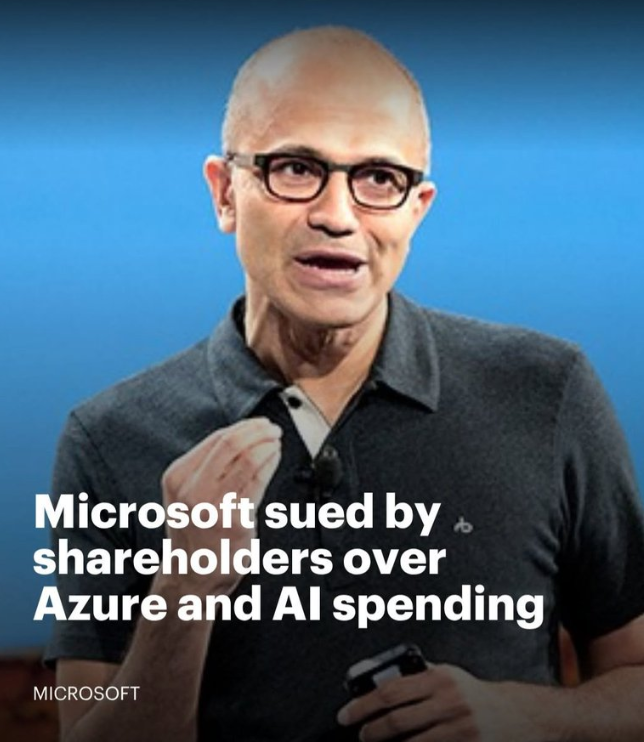
> Spent a whopping $37.5B to develop shitty AI, stealing money from other products to fund it
> Investors finally discover this, launch class-action lawsuit
> Instantly wipes $357 billion from Microsoft's value, biggest single day drop in its history
> No plan to recoup even the $37.5 billion, lawsuit going in without lube
Clearly these are the best and brightest that America needs in order to succeed
Canada: A parent in Edmonton uploaded video of a van carrying 5–6 young Indian males, allegedly identified as members of the tourist family of IAF Chief Amar Preet Singh, travelling on Indian diplomatic passports, who attempted to grab two teenage girls walking home from school.
The EU’s trade dilemma with China is almost comical.
It wants to confront China, but fears retaliation.
It wants to avoid confrontation, but cannot accept that Chinese goods are simply selling too well.
So Brussels calls the trade deficit “intolerable.”
But who created that deficit?
Europe did.
China wants to buy high-end European technology.
EUV lithography machines.
Advanced equipment.
Industrial tools.
Precision systems.
One EUV machine alone is worth thousands, even tens of thousands, of electric vehicles.
But Europe, under U.S. pressure, refuses to sell China what China actually wants to buy.
Then it imports affordable Chinese EVs, batteries, solar panels, machinery, and industrial goods because European consumers and companies need them.
Meanwhile, they complain that China is “earning too much money.”
This is absurd.
You cannot block the products China wants, buy the products China makes better and cheaper, and then cry about the imbalance you engineered yourself.
A trade deficit is not magic.
It is what happens when you refuse to sell valuable goods but keep buying useful ones.
Europe wants China’s market.
Europe wants China’s supply chains.
Europe wants Chinese affordability.
Yet Europe does not want China to profit.
That is just entitlement dressed up as economic anxiety.
If Brussels starts a trade war, it already knows Beijing can finish it.
Even in the trade war launched by Trump, the U.S. failed to gain the upper hand.
Why should Europe believe it can win?
That is why the EU keeps choosing “dialogue” while pretending it is a strategy.
But it is not strategy, it is just damage control.
“It’s literally a gulag” and “Most people find the work soul crushing.”
Thats the comments of the ~6,500 software engineers who didn’t apply to be part of the “Applied AI” unit, not ours. Synthetic data hit a wall on complex coding tasks, so Meta is feeding its own engineers into the pipeline as the human intelligence layer machines still can’t replace. Zuckerberg admitted in a June 12 memo the company “made mistakes.”
Engineers at Meta are becoming raw material for the systems built to replace them.