The US arms industry will loose a fair chunk of international customers.
A lot of powerful people will be seriously pissed off.
Is this the beginning of the end?
The recent Starlink / Starshield incident in Ukraine has created a dangerous precedence for the US export industry, many haven't yet grasped. The sudden deactivation respectively curtailing of those systems without warning not only cost precious lives, but also equipment worth millions.
Though the blame game between the White House (Trump) and SpaceX (Musk) is going on, ultimately it doesn't matter. It showed the world that the USA are not a reliable partner any more. Pointing at some obscure "violation of terms of services" without providing the exact passage are just increasing that notion that this was a political move.
The explanation that Starlink must not be used for "offensive" means is nonsense, too. Starlink has never been turned on over Russia, and using it in Ukraine is by definition defensive in nature. You can even argue that hitting Russian targets in Russia is defensive, since you don't have to wait for an attack to be conducted. Even the intention is enough to warrant action and to eliminate the threat at the source. But this is a different topic.
Furthermore, SpaceX has been fully aware that its Starlink terminals are being used by Ukrainian forces. Especially when considering that Ukraine only recently had to white-list their Starlink terminals for the Ukrainian military so that Russian forces, who have been abundantly using Starlink as well, were locked out. It has always been clear that those Starlink terminals are used for and by the Ukrainian military, and Ukraine has always been thankful for that.
Coming up with this bogus story, now, three weeks before midterms is therefore as transparent as it is shameless. It is obvious for everyone that this was just figleaf statement so that a political agenda can be pushed, an agenda which runs counter to the strategic nationalist interests of the USA, both political and economic.
And this is the real scandal. It is not new that the US had to lock out its technology or supplies to nations with which it had previously good and even cordial relation. Iran under the Shah, South-Vietnam and Cuba before Castro are just three to name it. But as you can see from them, it made perfectly sense back then. Those nations switched sides or disappeared altogether.
Ukraine on the other hand didn't switch sides and even helped the US in the most recent and botched Iran war, despite being short on ammunition itself. The Ukrainian government accepted every possible compromise and offered an unconditional ceasefire from the start. Russia on the hand refused all of it and is demanding surrender. Yet, it gets this treatment? Unbelievable.
This will be noted by all clients around the globe who purchase US weapons and technology. If agreements are not honored and can unilaterally and even clandestinely be altered based on the whims of a few, who only follow their own motives or election lies, then the all concept reliability falls apart.
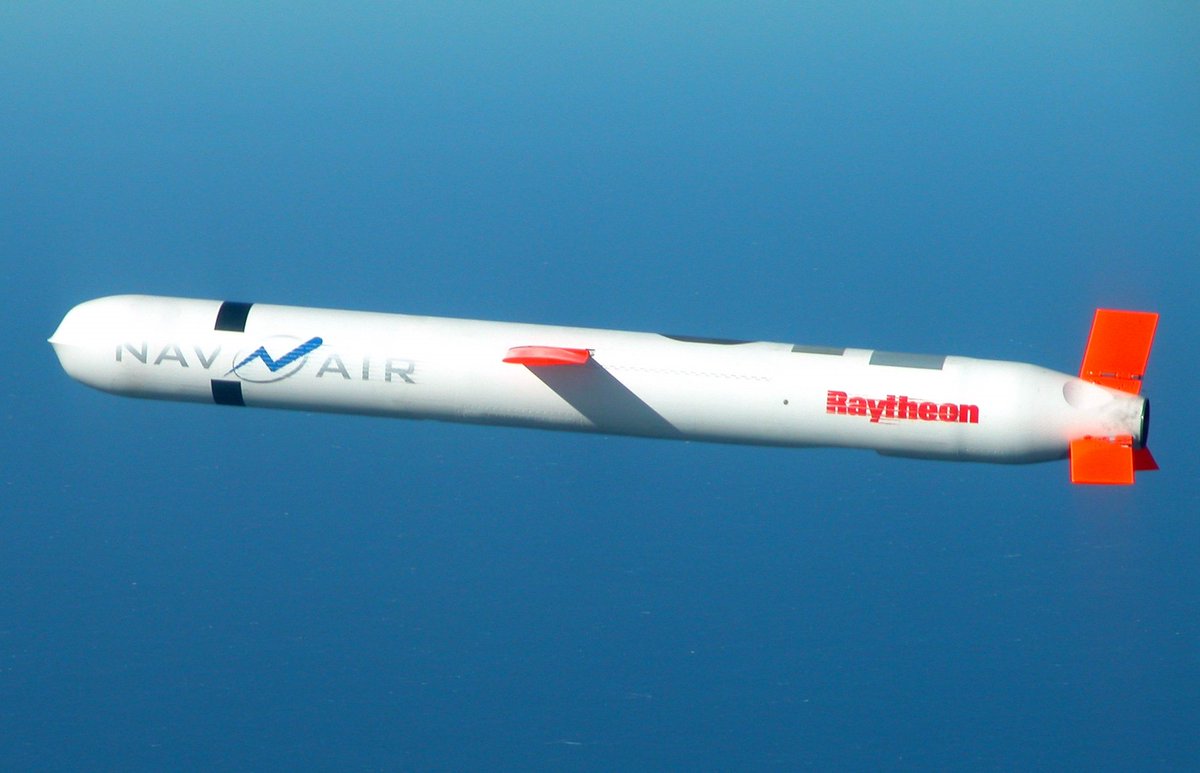
Whether it is Starlink, the F-35, Tomahawk missiles or HIMARS. All those systems run on software and in many cases can only properly operate with recent updates. You don't even need have a kill switch. You can only refuse to update and many of those systems lose more than 90% of their effectiveness within a short period, making worthless.
This is why we see the blame game between Musk and Trump. I'm sure that people around those guys told them how absolutely shortsighted and stupid this step was. It will fall back on the entire US industry. Not even those two guys are worth that losses and backlash. A functional US Congress would immediately start subpoenas and hearings, asking questions in order to mitigate the damage, but here we are.
Trump and Musk have given the best reason why not to buy American. Customers - governmental and private alike - around the globe will take note of this and act accordingly, and I wouldn't be surprised if this won't be limited to US military products only. An absolutely senseless and avoidable own goal.
This acoustic Hotel California solo has been living rent-free on YouTube for years, and every time it gets taken down someone just uploads it again.
The bends on a steel-string are ridiculous, the tone is perfect, and half the comments are people arguing about whether it's the original Acoustician version or another copy. Meanwhile the Eagles have spent decades being notoriously protective of their catalog. So the question sits there: at what point does a viral guitar cover stop being free advertising and start being something they should actually go after?
Plenty of bands quietly benefit from stuff like this. Others treat every note as copyrighted territory. Curious where people land on the Eagles specifically.
Life. You need to know when to walk away, know when to run and when to hold steady.
On July 26, 1977, in a New Orleans hotel room, Robert Plant answered a phone call that would tear his life in two
He was twenty-eight years old, leading the most powerful band on the planet, living among private jets, packed stadiums, and seemingly limitless success. Then he heard the voice of his wife, Maureen. And in an instant, everything fell apart.
Karac, their five-year-old son, was dead. A stomach virus, swift and merciless. No warning, no chance to intervene. While Robert sang on the other side of the ocean, his "little mountain man" was gone.
The tour stopped immediately. Plant flew to England in a state of shock that no amount of fame could allay. He found his son in the quiet of the Midlands, surrounded by a grief beyond words. That day, he looked for his bandmates. John Bonham was there, as devastated as he was. Jimmy Page and John Paul Jones were not. They did not show up at the funeral. Years later, they would talk about "respecting space," but for Robert, it was an absence that left a deep scar.
Something inside him cracked. He returned to his farm, stopped drinking, stopped taking drugs, stopped living like a rock star. He said he didn't want to be in Led Zeppelin anymore, that he just wanted to be with his family. He even applied for a job at a teachers' college, ready to leave music forever.
The only one who managed to bring him back was Bonham. Not with pressure, but with friendship. He'd show up at the farm driving a limousine, wearing a chauffeur's hat to make him laugh, and take him out for a quiet drink. He'd remind him that they were friends first, and musicians second. So Robert agreed to give it one last try.
In Through the Out Door was born, an album marked by an undisguised pain. Inside was All My Love, the most intimate tribute Plant ever wrote for his son.
In 1980, they were about to go back on tour. But tragedy wasn't over. On September 24th, during rehearsals, Bonham began drinking like never before. Forty shots of vodka in twelve hours. The next morning, he was dead. He was thirty-two years old.
Led Zeppelin issued a brief, almost terse statement: without Bonham, they couldn't continue. And they kept their word. No farewell tour, no replacement, no nostalgic outing. The biggest band in the world simply stopped.
For the next forty years, promoters from half the planet offered Plant astronomical sums for a reunion. Hundreds of millions for a single tour. Each time, he refused. Fans accused him of selfishness, of stubbornness. But Plant knew something they didn't: the "Golden God" had died in 1977, along with Karac.
Since then, he has built a new musical life. He explored folk, bluegrass, North African rhythms, sang with Alison Krauss, lowered his voice, let go of the cry that had made him immortal. He said he could no longer be that man, because that man no longer existed.
His story overturns the common idea of strength. It's not about moving forward at all costs. It's about knowing when to stop, when to protect what remains of truth. Plant chose his humanity over legend, life over myth.
Today he's seventy-six. He still plays, still creates, tours small venues. But he's never looked back. And perhaps this is his greatest lesson: you can buy everything except the past. And sometimes the bravest thing is to let go of what made you famous to save what made you human.
Europe is fighting an information war on someone else's battlefield.
A handful of foreign-owned platforms have extraordinary power over what hundreds of millions of Europeans see, fear and believe. Their algorithms are largely opaque, their influence is enormous, and we have remarkably little insight into how that power is being used.
The most disturbing part of this story may not even be the propaganda itself.
It may be that Europe has outsourced the infrastructure through which its citizens form political opinions to a handful of foreign-controlled social networks.
Think about it.
X, Meta and TikTok have enormous influence over European public discourse, yet Europe has no genuinely comparable social network of its own.
We have remarkably little independent visibility into what hundreds of millions of Europeans are actually being shown every day.
Consider X. One of the world's most influential platforms for political discourse was acquired by a single billionaire, partly financed by investors including a Saudi prince. We now largely depend on decisions made by its ownership about how information is distributed and amplified.
TikTok is another case. A platform owned by China's ByteDance, enormously influential among younger generations, powered by an extraordinarily effective recommendation algorithm whose workings remain largely opaque to outsiders.
Who decides what becomes visible? What gets buried? What narratives are amplified? What does a 17-year-old in France see compared with someone of the same age in Germany?
We simply don't know enough.
And the really troubling part is that hostile actors do not merely exploit these systems from the outside.
They can use specifically designed, opaque algorithms to shape what people see, reward outrage, fear, resentment and confrontation, and make certain narratives appear more widespread or urgent than they really are. The danger is not just that algorithms optimise for engagement while foreign actors spread disinformation alongside them. Algorithms themselves can become instruments of influence, deliberately designed or adapted to amplify divisions, undermine institutional trust and steer public opinion.
russia understood the value of information warfare long before social media existed. Soviet intelligence spent decades developing techniques to exploit divisions, undermine institutional trust and manipulate public opinion. Today's technology allows similar operations to be conducted at a scale and speed that would have been unimaginable to the KGB.
And importantly, they don't have to invent grievances. They can exploit real ones.
Look at the unrests in France, or the protests in Italy. Many underlying concerns are entirely legitimate. Some demonstrations have escalated into serious violence.
But what are people actually seeing on their feeds? Are they seeing the broader reality, or a relentless stream of selectively amplified confrontations, violence and outrage? How much of what goes viral is organic, and how much is deliberately pushed?
We should be very careful about assuming causation. But the fact that we cannot answer these questions with confidence is itself alarming.
Ukraine understood early on that the information war was another battlefield. Initiatives like the largely grassroots NAFO movement demonstrated that russian propaganda networks could be effectively challenged, rather than simply surrendering the online space to them.
Europe needs to take this dimension of its security far more seriously.
And that brings us to an uncomfortable question.
What do you actually do about platforms that have become so influential over the functioning of democratic societies?
Regulation? Mandatory algorithmic transparency? Independent auditing? Restrictions or, in extreme circumstances, even temporary suspension?
The EU already has the Digital Services Act, but having regulatory powers and exercising effective oversight are two very different things.
Obviously, censorship and government control over public discourse carry their own enormous dangers. A democracy cannot defend itself by abandoning the very freedoms it claims to protect.
But neither can it afford to be naive about how those freedoms can be systematically exploited.
We spent decades treating social networks primarily as technology companies providing communication services.
Perhaps we need to start treating them as something much more consequential: critical infrastructure that directly affects the functioning of democracy.
Because the greatest vulnerability is not just that hostile actors can spread lies, but that they can use opaque, specifically designed algorithms to determine which version of reality entire populations get to see.
And Europe has far too little control over any of it
For an entire decade, between 1985 and 1995, Lucasfilm Games (later LucasArts) created gaming history with virtually everything they touched. Look at that list and name me a single one that sucked.
Best of all:
⛔️ No annual subscriptions.
⛔️ No in-game transactions.
⛔️ No patches.
Anyone who ever held one of those beautifully designed boxes in their hands knows exactly what I’m talking about. Games were so much more than just their data.
By the way, the heaviest of the bunch was Secret Weapons of the Luftwaffe - its manual ran over 300 pages.
When physical games were truly physical!
🇪🇺 Parlament Europejski zdecydowaną większością głosów poparł rozwój kontynentalnej sieci kolei dużych prędkości.
20 października europosłowie przyjęli rezolucję zakładającą integrację istniejących linii oraz rozbudowę infrastruktury kolejowej w całej Europie.
🇵🇱 Jedynym polskim europosłem, który zagłosował przeciwko rezolucji, był Grzegorz Braun.
Za głosowało 558 europosłów, przeciw 23, a 73 wstrzymało się od głosu.
Jaki jest plan?
➡️ Połączenie europejskich stolic i największych ośrodków gospodarczych siecią szybkiej kolei.
➡️ Budowa nowych połączeń transgranicznych i skrócenie czasu podróży.
➡️ Rozszerzenie sieci na regiony dotychczas pozbawione kolei dużych prędkości.
➡️ Zwiększenie finansowania inwestycji w budżecie UE na lata 2028–2034.
Celem jest stworzenie zintegrowanej europejskiej sieci kolejowej, która zwiększy mobilność mieszkańców i konkurencyjność gospodarczą UE.
there is one universal truth:
you have to use emotion for acquisition & substance for retention.
you can apply it to products, dating women, whatever. the same damn principle applies everywhere: what gets someone interested is rarely if ever the same thing that makes them stay.
@Microinteracti1 As a student of history, I have noted the same thing as Snyder.
The willingness to blow up the foundations of Pax Americana with Ranger precision is extraordinary.
WATCH: President Trump’s full comments to CBS’s Nikole Killion about the war between Russia and Ukraine, arguing the land Russia has taken from Ukraine has gotten “bigger and bigger all the time, week by week,” and they have an “unlimited supply of people” to keep going, but not Ukraine....
“Russia would like to get it done. I think that — and you know, Russia is a big machine. They just keep grinding forward, and that’s what they’ve done. They’ve taken a very large piece of land, and, you know, you can say that Ukraine is doing well or poorly, but the land gets bigger and bigger all the time, week by week. It — just —they march forward. They just keep marching forward. They have an unlimited supply of people, whereas Ukraine, as you know, is — there’s a woman who’s, I guess, not exactly a very beautiful woman, nice woman, and she is on television recently talking about the fact that our men are gone. She’s a Ukrainian woman. Our men are gone. They’re lost. They’re dead. They’re in mental institutions. They’re walking around. They have no arms. They have no legs. In many cases, they’ve been hurt so badly; they’ve been just decimated, and it was very poignant. When I heard this, I said, boy, that’s some statement. And she said, Russia is a very big country. They can lose a lot of people in a war, and they have lost a lot of people. They lost 50 million people in the Second World War. They lose a lot of people, but they’re very big, and she said they have to settle this war. Look, Ukraine has lost a lot of people. Russia has lost a lot of people. Russia, though, is a giant nation. Ukraine is not. I can tell you this. We’ve been helping through Joe Biden originally, and he made a mistake because he should have done it through the European Union, and he should have been paid. European Union has quite a bit of money, although I have to tell you, they’re getting tired of spending it. But we gave $350 billion to Ukraine.”
“And, you know, I insisted on getting something for that money, and we got a very big chunk of land in rare Earth and other things, if anybody remembers. Let’s see what that amounts to, but Ukraine has to want to settle this war. Zelenskyy has to want to settle this war, and if he doesn’t, I think it’s going to be a very bad thing. Look, we have given tremendous amounts to Ukraine. We’ve got nothing back other than high diesel. We have — we have given probably possibly more money to Ukraine than almost anybody over the years. Hundreds of billions of dollars. We’ve gotten nothing back, and the American taxpayers are tired of it. We want Zelenskyy to make a deal. He can make a deal. He could have made a deal two years ago when we had our little chat in the Oval Office. We had a now quite well-remembered chat with JD, myself, some others. Zelenskyy could have made a good deal then, could have made a much better deal then probably, possibly, than he could make now, but he’s going to have to want to make a deal, because I don’t think his people are going to stand for it any longer. They’ve been fighting a war. So, last month they lost 32,000 people between the both of them. They’re mostly soldiers, mostly young soldiers, some people in a town that got hit or whatever, but mostly young soldiers. It doesn’t affect us much. It doesn’t affect us in theory at all. We’re not involved. What affects me is to see that many souls lost so needlessly, so what I’d like to see is I’d like to make a deal.”
“I’d like to see if they can make a deal. I thought, you know, I settled eight wars. I thought that would be the easiest one. The hatred between President Putin and President Zelensky is tremendous. I think that’s most of the reason they haven’t been able to make a deal, actually. But Ukraine has to want to make a deal because the United States has spent a fortune. Europe has spent a fortune. Europe is tired of it right now. They’re tired of it right now, and if they don’t make a deal, ultimately, it’s just going to get, in my opinion, it’s just really just going to get worse. You have a very big country in Russia. They have a lot of people. They have a lot of people to draw from. Ukraine does not have a lot of people to draw from, and it’s time to make a deal, and I say that — remember this though: We’ve given a lot to Ukraine. We’ve gotten absolutely nothing back except grief, death, tremendous monetary loss.”
“We’ve given incredible amounts of equipment, and military, primarily military equipment, but equipment of all kinds, and it’s time. I gave them javelins. When the stupid general for Russia — very stupid gentlemen — they had 1000 tanks riding up a concrete highway. They would have been in Ukraine in four hours going maximum tank speed — which is 48 miles an hour to be exact — nothing to stop them. The war would have been over in one day, and this very stupid general — I have no idea who he is. I doubt he’s still with us. I doubt he’s still living. He decided to hang a right onto the farmland and then take a left and go up to Kyiv, and rather than staying on the highway — the concrete highway, perfectly good highway where they were doing very nicely, would have been there in three and a half, four hours, and the whole war would have ended. He ended up getting stuck in the mud. It was like quicksand. They had — the night before, they had the heaviest rainfall they’ve had in ten years, and the land was soaking wet. It was like quicksand. This — I — most people don’t remember, but I do because it’s called war. You never know what happens. But he made a terrible decision, a legendarily bad decision. And the tanks got stuck. They couldn’t go forward. They couldn’t go back. They were dead, stuck, and they used the javelins. That’s the anti-tank weapon that I gave them. So, you know, the — the statement is Obama gave him sheets. I gave him javelins. So, I’ve helped Ukraine a lot, but it’s now time for them to end this war and stop all those young people from being killed.”
Things go from bad to worse. Trump 🇺🇸 seems to regret that 🇷🇺 didn’t conquer 🇺🇦 immediately, and blame the failure on some incompetent 🇷🇺 general. Who feeds him this strange stuff? Or does he just invent it because he wishes it was so?