@abegum It works until the team passes two or three agents. The usual breaking point is shared leads: who called last, and when. A "last touched by + date" column buys a lot of time before a CRM. Where do you see teams hit the wall?
@Evoputa The second editor is where it usually breaks: two people, one sheet, and nobody's sure which row is current. Curious what your one step before a CRM is. I'd guess one owner per row plus a last-updated column.
@TscaRookie That "lead closed, then copy everything into Asana" chain is where data drifts out of sync. Before building, map which fields actually need to move: usually client name, contact, scope and due date. The rest can stay in the CRM. Which step eats the most time?
@Courtie02 The simplest version that works: every customer gets a next follow-up date the moment you finish talking, and you sort by that date each morning. A sheet or calendar both work. If you're weighing sheet vs CRM, https://t.co/6mxT9Q3cYf walks through it.
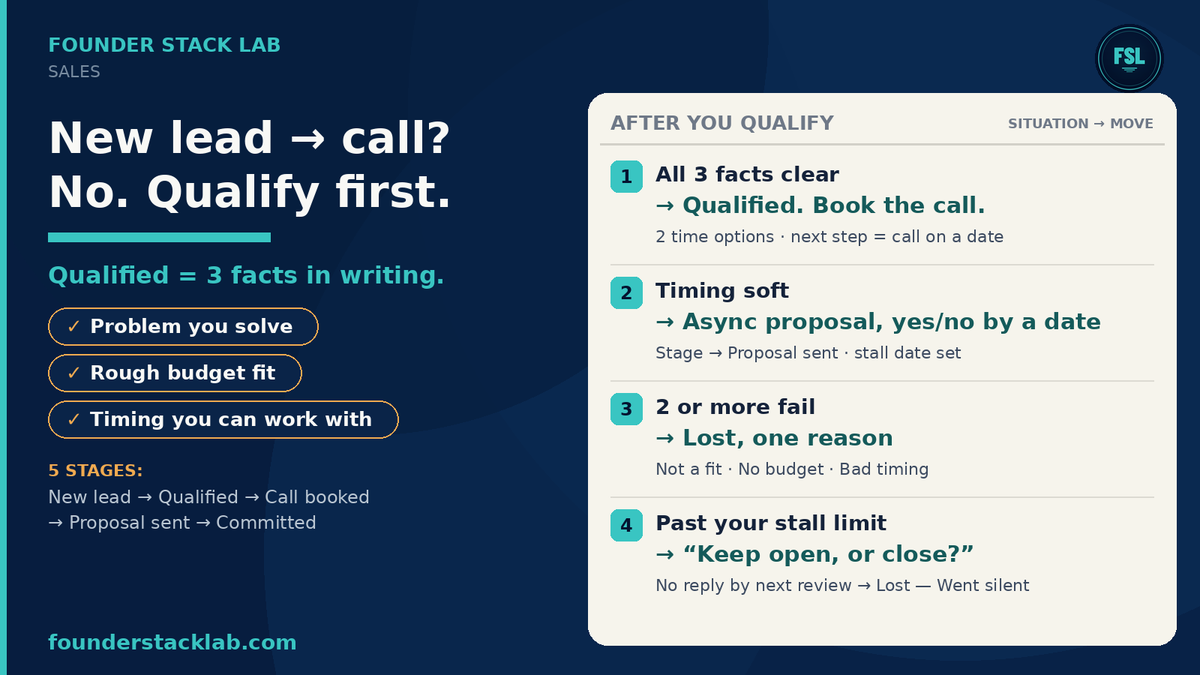
Verdict: qualify is the gate between New lead and anything that costs calendar time. All 3 clear → book. Timing soft → async proposal. 2+ fail → Lost, one reason.
Full guide: Qualify Leads Before You Book
https://t.co/HjmJ7UznRA
A lead isn't Qualified until 3 facts are in writing: problem, budget fit, timing. Skip it and you book calls that were never going to buy.
Scrolling X, I think this is what they do: book first, qualify on the call.
Solo founders: which stage do your deals stall in?
@david_bassey_ Using the client's own words from call transcripts is smart, it's usually the best copy source. One add: have the same skill write a next-step date per client into Notion, so follow-ups don't depend on rereading notes. Do you check what it pulls?
@gaurav07c What I hear most from solo founders: setup takes longer than the work, follow-up reminders get buried, and pricing jumps once a second person needs access. A CRM that nails "who do I follow up with today" beats most feature lists.
@MilanVijay24 WhatsApp plus inbox plus Excel is the classic setup for trading firms. Cheapest first step: add a "last contact date + channel" column to that Excel, so you know where each conversation actually lives. Which one does your team check first in the morning?
@PaulTesoriero1 Curious what the favorite feature is, the post cut off. For gig work the core is small anyway: event date, deposit status, and the next follow-up. Most paid CRMs bury those under sales-team stuff a solo DJ never uses.
@virginiabuechel That question is the whole system. If the answer sits next to each lead, plus the date you last asked, you've got most of a CRM in a sheet. When do you see owners actually outgrow that, more leads or more people touching them?
1/ Log the lost reason in one word.
When a lead says no — or you archive — pick from a fixed list. Free-text "why lost" turns into noise.
Solo founders: do you write one word on Lost, or leave a paragraph?
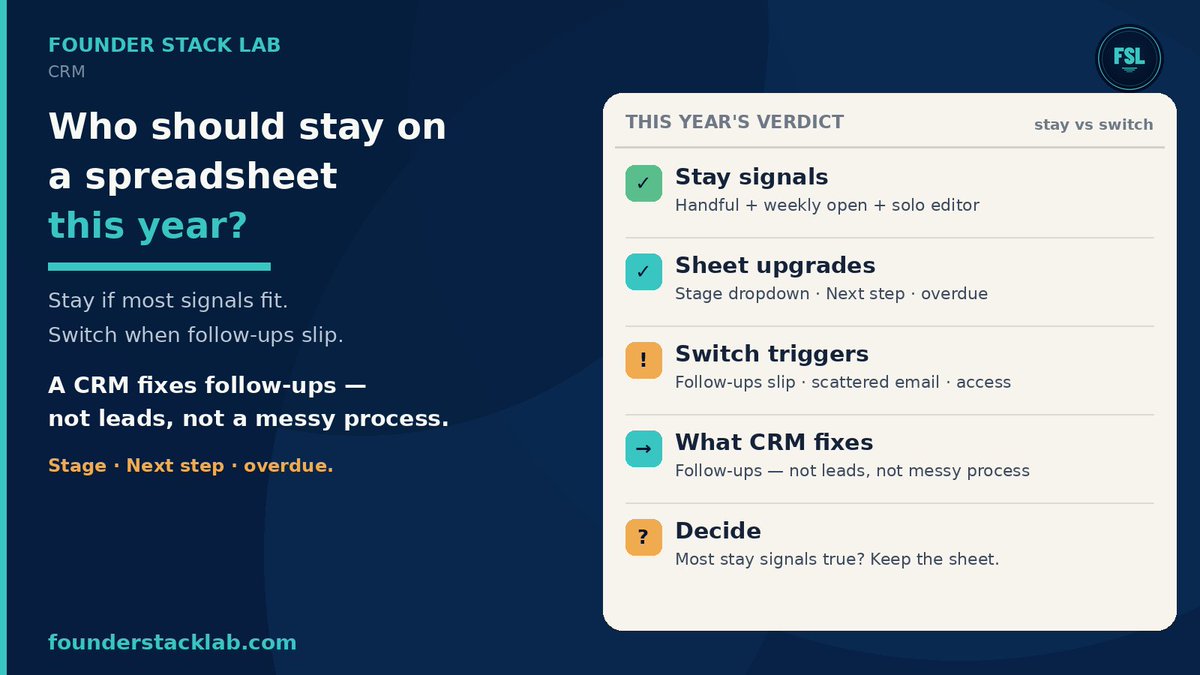
Who should stay on a spreadsheet this year?
If most stay signals fit, skip buying a CRM for now.
Solo founders: is your bottleneck getting leads — or tracking them?
A CRM fixes follow-up problems. It does not create leads. It does not fix a messy process.
Stay on the sheet this year if the signals fit. Switch when access, history, or follow-ups break.