new manuscript from @digiovannilab
NKL-T cells invade the aged spinal cord of humans and mice and exacerbate damage after injury
https://t.co/oQnoaVB3y7
New postdoc position available to join our team at Imperial. Please feel free to get in touch if interested! Deadline 10th Feb
https://t.co/p6MdYOKplF @ImperialBrains@UKDRI@SRBR_Outreach@EbrsOfficial
#Macrophages in muscles? 💪
Drs. Yuyang Yan, Carmelo Bellardita (@BellarditaC), & Simone Di Giovanni (@digiovannilab) found macrophages in muscle spindles that modulate neural activity via #glutamate.
📝 @Nature - https://t.co/WCpnUJDC9w
🎧 - https://t.co/bD1TdF85wC
Three-dimensional chromatin mapping of sensory neurons reveals that promoter–enhancer looping is required for axonal regeneration | PNAS https://t.co/gQyIrCp3Rx
Thank you, @HFSP, for another fantastic annual meeting, this time from Washington, DC! Always great to catch up with the HFSP community, cheers from the officially “most fun table” of #HFSPMeeting2024
Very happy to share our most recent endeavor into circadian anti-tumor immunity:
Circadian tumor infiltration and function of CD8+ T cells dictate immunotherapy efficacy: Cell https://t.co/fm6VArxPpz
📢The 23rd #HFSPAwardeesMeeting is around the corner🤩Top worldwide scientists will converge to explore groundbreaking research from various #BasicLifeScience disciplines🌐Submit your abstract by April 14th and be part of this dynamic exchange of ideas!💡https://t.co/f7dGBFlpv3
I will be starting my lab at the Department of Fundamental Neuroscience at the University of Lausanne in April! We’ll be looking at how spinal networks change in motor disorders, and we are looking for new team members. Interested in joining us? - check out the link below
Attention scientists from all over the world 🙃The HFSP Science Digest is OUT TODAY! 🌐Dive into groundbreaking discoveries, explore extreme ecosystems, and catch up on the 2022 HFSP Awards! Read it here: https://t.co/ncTj6ia0aq
#HFSPScienceDigest#BasicLifeSciences
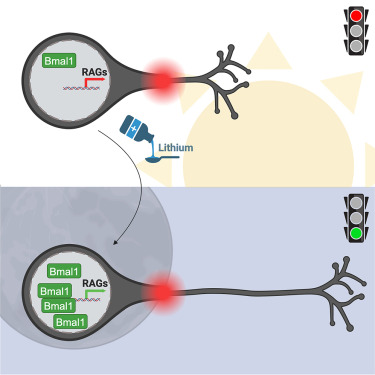
Scientists @ImperialBrains have discovered that the circadian clock regulates axonal regeneration and repair. These findings pave the way for the use of clock-associated therapies and timed neurorehabilitation for people with nerve damage 🕰️
⏰ Our scientists have discovered that the circadian clock regulates axonal regeneration and repair.
They found that DRG sensory neurons have a molecular clock which optimises axonal regeneration in a mouse sciatic nerve injury model. ⤵️
https://t.co/UZN9rphkxn