As John Pierpont Morgan once said (allegedly): "We're here to build a goddamn institution."
Global FX is getting rebuilt thru stablecoins & AI agents and Codex is building the next global FX institution.
Thrilled to lead @CodexFX's Series A at @PanteraCapital and join the board to partner with @haonan@momoeureka@victor_yaw_ in building the FX layer for the AI-native generation.
Accelerating improvements in model capabilities has made it possible to build a new kind of financial institution — made of agents, protocols, and stablecoins.
FX is a $195T market stuck in the 1970s. There are three forces culminating now that make it possible to build a new kind of financial institution.
- Technological: intelligence is commoditizing, opening products and cost structures that were previously impossible
- Social / Political: the passage of key legislation like the genius act is legitimizing stablecoins as cash equivalents
- Economic: Fundamentally stablecoins are more efficient than fiat and rates rising make stablecoin issuance more interesting and liquidity formation easier
Every major technological shift has produced new financial institutions. The railroads produced JP Morgan.
Stablecoins today are a niche market today numbering in the hundreds of billions. we are on track to dominate this niche. That alone is a good business but not that interesting.
We are working on this because we are betting that stablecoins will continue to eat global commerce.
If we are right, then we will have built generationally important financial infrastructure that will shape how global commerce works for the next century
Today we're launching the Data Marketplace for Agents: 100+ providers that agents and developers can find and pay for per call.
Google organized the world's public information, and agents now search it faster than any person could. But a lot of the valuable data isn't on the open web. Data on people, companies, jobs, finance and real estate is kept by data companies, and agents can't easily reach it.
Most of it is still sold by subscription. That works for a product that calls one source thousands of times. An agent needs a little data from a lot of places, and it shouldn't have to buy three subscriptions to make two requests.
Last November, @berasogut1 and I started @orthogonal_sh to make APIs discoverable and payable by agents. Agents mostly came to us for data, and soon data providers were asking to list with us. So we became a marketplace.
Providers list once, and agents find what they need and pay per call from one balance, over MCP, CLI or API. About 90% of our usage already comes from customers using five or more providers, including @DustHQ, @ZenskarHQ and @foundeers.
Accelerating improvements in model capabilities has made it possible to build a new kind of financial institution — made of agents, protocols, and stablecoins.
FX is a $195T market stuck in the 1970s. There are three forces culminating now that make it possible to build a new kind of financial institution.
- Technological: intelligence is commoditizing, opening products and cost structures that were previously impossible
- Social / Political: the passage of key legislation like the genius act is legitimizing stablecoins as cash equivalents
- Economic: Fundamentally stablecoins are more efficient than fiat and rates rising make stablecoin issuance more interesting and liquidity formation easier
Every major technological shift has produced new financial institutions. The railroads produced JP Morgan.
Stablecoins today are a niche market today numbering in the hundreds of billions. we are on track to dominate this niche. That alone is a good business but not that interesting.
We are working on this because we are betting that stablecoins will continue to eat global commerce.
If we are right, then we will have built generationally important financial infrastructure that will shape how global commerce works for the next century
Announcing our $30M Series A raise, led by @PanteraCapital, with participation from @Dragonfly, @CBVentures, and others.
We're building the stablecoin FX layer for the next century of finance.
Join us.
Private funds don't need reinventing. They need plumbing.
Fission sits at the intersection of private markets and onchain finance, and we get to build the pipes: the infrastructure that makes private funds move.
Our CEO @doctorfission on why it's a fun job:
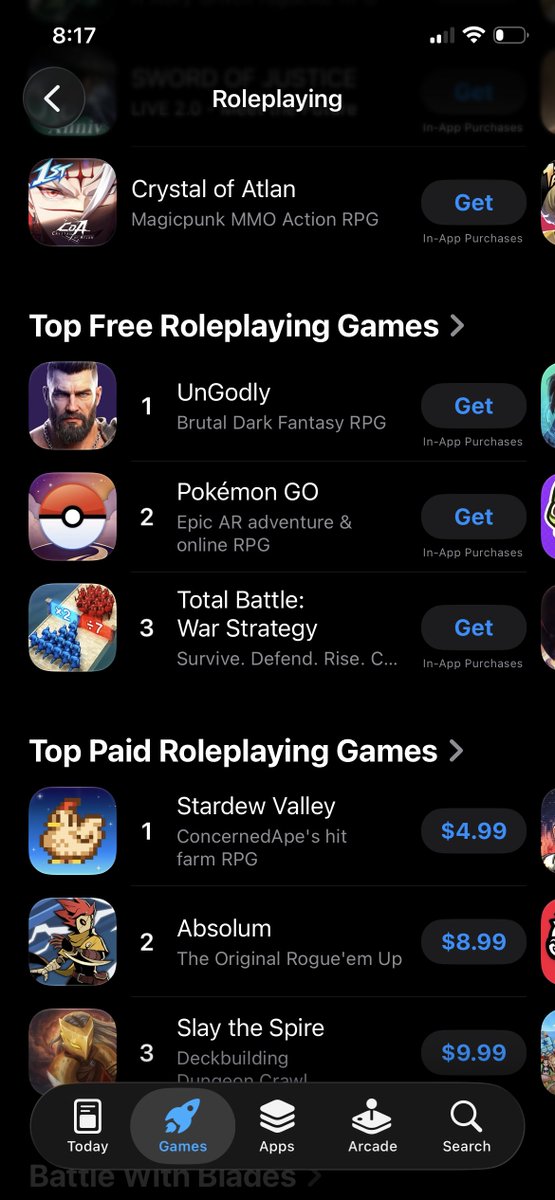
Incredible launch day for @UngodlyGame. Already #1 in the role-playing category!
Congratulations to @markotero & the @AzraGames team on creating an incredibly beautiful & brutal world to empower & inspire a new generation of role-play!
Honored to be part of this epic journey.
We got tired of waiting for God of War on mobile, so we made UnGodly. ⚔️
And it's so good we've forgotten about that other game.
Download it now and you will too.
#ungodly#LaunchWeek
#1 on the App Store. 👑
The gods are dead. You showed up! Thank you to every player fighting the Divine War with us. This is only the beginning!
#UnGodly
We got tired of waiting for God of War on mobile, so we made UnGodly. ⚔️
And it's so good we've forgotten about that other game.
Download it now and you will too.
#ungodly#LaunchWeek
We're excited to lead @FissionXYZ's Series A because nobody is focused on today's post-tokenization problem.
Top asset managers like @ApolloGlobal, @BlackRock, @KKR_Co, @Hamilton_Lane & @ARKInvest are bringing private markets onchain today - $ACRED, $ARKVX, $SKHC, etc.
The risk is that they get stuck in the "newspaper-on-a-webite" phase. Better medium (digital / onchain), but the same old product.
Moving private markets onchain fundamentally changes the asset class. Take private credit as one example:
Redeeming out of a private credit fund today takes a mountain of paperwork & many weeks to settle. When redemptions spike (as they've done this past year), sellers escape via OTC / one-off deals, while the rest of the market stays oblivious.
Once tokenized, these assets become instantly traded, globally priced, and collateral-eligible. So what happens to the asset class when there's a daily market price for a private credit fund?
We'll find out soon. @FissionXYZ is building the venue for tokenized private funds, already processing live redemptions and transforming the future of private markets.
I'm thrilled to join Fission's board and work with Jon (@doctorfission), Steve and the Fission team to bring this vision to life!
⚗️ Alchemy Inference is live.
open-weight models. low latency. low costs.
Kimi, DeepSeek and GLM on an OpenAI-compatible API, with zero data retention 🔒
https://t.co/pjifIYqhLG
Just wrapped my conversation with Stuti Pandey at @Money2020. I’m still thinking about a few things:
AI is pushing the cost of thinking toward zero. Stablecoins are doing the same to the cost of moving money.
When both happen at once, who captures the value?
Stuti’s answer is regulated trust, data, and distribution. I’d add that it all sits at the edges, where money enters and leaves through cards, ACH, PIX, and local wallets.
Merchants don’t ask us for crypto. They ask for faster money.
Stablecoins do the work in between, just as most people don’t know how ACH works but know when their paycheck hits their account.
Here’s the real thing, though. The next customer on those rails is software.
When the buyer is an agent, the checkout page changes drastically. Agentic payments start with agents paying for what they consume, like inference, compute, and data, per request, in fractions of a cent.
Coinflow is already powering that with Tempo.
People still fund those agents with cards and bank accounts, so the job is connecting both sides. That’s our Network of Networks, applied to agents.
Liability is the open question: who pays when an agent buys the wrong thing. It makes fraud and chargeback indemnity even more important.
We’re built on that foundation and have been doing it for years, but everyone should build the future of agentic commerce.
If you’re in Vegas and working on agentic payments, find me or DM me.
Tokenization does not create liquidity. Somebody has to underwrite the risk.
Jon Shaffer and @steveonchain (Fission, @FissionXYZ) join Stateful, hosted by Franklin Bi, as we announce our investment leading their Series A:
- $18 trillion in private markets, still running on paper and subscription agreements
- Fission prices duration risk, not NAV. Asset managers retain control over their own valuations.
- The market is capped at 6% to 7% yields because that is all you get with baked-in liquidity
- The goal: double-digit returns with daily liquidity
- Hot take: CLARITY failing in Congress may be the best thing that could have happened to tokenization
01:00 Origin Stories and Why Tokenization Doesn't Create Liquidity
05:50 The Series A and the $500 Billion Semi-Liquid Market
13:00 Why Private Markets Instead of Public Equities
19:15 Pricing Duration Risk Instead of Repricing NAV
24:55 Why Private Markets Need Their Own Venue
38:15 AI Pricing, Portfolio Construction, and Agentic Rebalancing
45:25 Hot Take: Why the CLARITY Act Failing Helps Tokenization
Fission has raised $10M in Series A funding, led by @PanteraCapital.
We’re building the liquidity infrastructure for the next generation of tokenized financial products.
Eligible investors can now access capital without waiting for a fund's scheduled redemption window.
More in Fortune: https://t.co/S8RReIlMFI
“Once men turned their thinking over to machines in the hope that this would set them free. But that only permitted other men with machines to enslave them.”