OVH annonce Olala mini 7A1B
OVH sa première famille de LLM. Premier représentant de cette famille, Olala mini 7A1B est un modèle compact bâti sur une architecture inédite.
Olala : le modèle innovant dans l’attention hybride
Olala mini repose sur une architecture de 7 milliards de paramètres (7B) avec un milliard activés répartis entre 256 experts par couche, l’attention hybride avec Differential-TPA et Mamba-3, au format BF16. Seule une fraction du modèle est sollicitée à chaque requête, ce qui le rend plus rapide et moins gourmand en mémoire. Conséquence directe: le modèle fonctionne sur un GPU doté d’un minimum de 8 Go de mémoire, il atteint 160 tokens par seconde sur une RTX A4500, et même sans GPU, sur un simple processeur, à 50 tokens par seconde. Sa fenêtre de contexte atteint aujourd’hui 32 000 tokens. Olala mini sera disponible en open source sur Hugging Face, sous licence Apache 2.0.
Entraîné avec l’aide publique européenne et en fonctionnement chez Qwant
Olala mini a été entraîné sur trois supercalculateurs publics européens, Jupiter, MeluXina et Jean Zay, équipés de GPU GH200, A100 et H100. Ce soutien, qui représente l’équivalent de 7 M€ en heures de calcul, a été déterminant, et OVH tient à en remercier les pouvoirs publics. L’initiative publique s’est révélée un succès à plus d’un titre : elle a fait émerger une équipe d’exception en intelligence artificielle et a donné naissance au Lab Agentique d’OVH: OVHai LLM. Olala mini est publié avec ses poids, son modèle de base pré-entraîné, son rapport technique et sa documentation de conformité à l’AI Act. Qwant l’a déjà adopté pour sa fonctionnalité de réponse flash, avec des gains significatifs : des réponses 20 % plus rapides et des coûts de fonctionnement divisés par trois par rapport au modèle précédemment utilisé.
En route vers la v1.1, puis la v2.0
Attendue d’ici la fin de l’année, la version 1.1 portera la fenêtre de contexte à 128 000 tokens et améliorera ses performances en raisonnement mathématique. Avec la version 2.0, OVHai LLM entend développer des modèles spécialisés dans trois domaines. D’abord, l’agentique pour les entreprises : à terme, Olala alimentera OVHai Workspace, dont la version chiffrée nécessitera des modèles capables de tourner en local, directement sur le poste de travail. Ensuite, le DevOps cloud, avec des déclinaisons adaptées aux développeurs, aux architectes et aux équipes d’exploitation qui assurent la continuité de service 24h/24. Enfin, la cybersécurité, dans ses volets défensif comme offensif. Olala v2.0 dépassera les 100 milliards de paramètres.
https://t.co/3QlWMzfpkk
If you've ever wondered why smart TVs are so cheap, this is why.
@log4j rooted his Samsung and found an always-on hot mic, automatic content recognition, geolocation, network mapping, ad targeting and user profiling, shared with Samsung's "400 partners".
A lot of it can be blocked in <15 min, wrote a basic guide below.
What your TV is doing
The main culprit is ACR (automatic content recognition). Your TV screenshots what's on screen, fingerprints it, and sends it home to build your ad profile. Samsung does it every 500ms, LG every 10ms [1].
What is insane: it happens on connected devices too.
Plug in your laptop, your console, your work machine, and your TV can fingerprint that via HDMI [1].
He also found that if your Samsung doesn't have a mic, it'll look for one from a connected soundbar or bluetooth device.
https://t.co/vNdTnIQ6KF
It's on by default, and you likely agreed to it on the setup screen you clicked through in 10 seconds.
Step 1: Turn off ACR
Samsung: Terms & Privacy → Viewing Information Services
LG: Live Plus
Vizio: Viewing Data
Roku: "Use info from TV inputs"
Sony/Google TV: Samba Interactive TV
Menus vary by model, but those are the names to look for. While you're in there, opt out of interest-based ads, reset your advertising ID, decline every optional privacy agreement, turn off voice recognition, and delete apps you never open.
Step 2: Give smart devices their own network
Put the TV, cameras, speakers and vacuum on your router's guest/IoT network. The logic is simple: these devices rarely get patched. If one gets compromised (getting drastically more frequent with AI), it shouldn't be able to see your other devices or home network.
Step 3: Block trackers for the whole house with DNS-level filtering
NextDNS (cloud-based) is easy and has a solid free plan. Pi-hole is a little bit more work if you prefer self hosting. For simplicity we'll focus on the former.
1. Sign up at https://t.co/IwhafVWVM8 (free tier is plenty)
2. Privacy tab: add a blocklist (OISD is a good bet) and turn on Native Tracking Protection for Samsung, LG, Roku, Amazon (see attached image)
3. Setup tab: copy your endpoint
4. Paste it into your router's DNS settings as DNS-over-HTTPS/TLS (or use the IPs + "Link IP" if your router only does plain DNS)
5. Bonus: block outbound port 53 except to your router. Some devices hardcode their own DNS to get around you
Then open the NextDNS logs and watch how often your TV phones home. It's eye-opening. If an app or update breaks, find the domain in the logs and allowlist it.
Why they do this
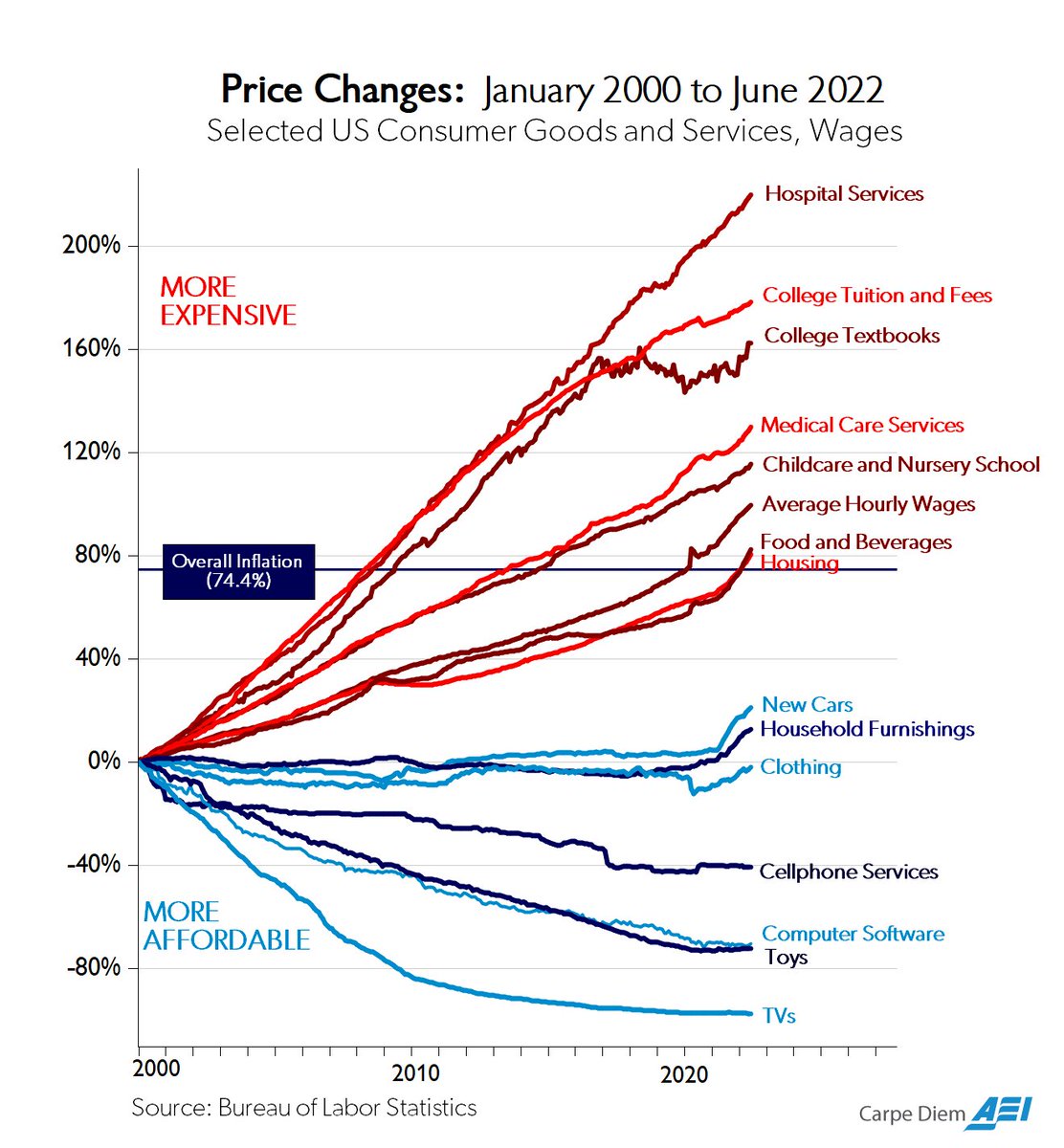
TV prices are down 97% since 2000 [2]. Most of that is better manufacturing and brutal competition. But once margins on the hardware hit zero, the cost moved to you.
In Q3 2024, Vizio lost $6.7M selling TVs and made $115.8M in gross profit from ads and viewing data [3]. They've said on earnings calls that they keep TV prices low to grow the audience they sell to advertisers. Walmart bought them in 2024.
This isn't a conspiracy theory either. Vizio paid $2.2M to the FTC in 2017 for tracking 11 million TVs without consent. Last December, Texas sued Samsung, LG, Sony, Hisense and TCL over ACR. Samsung and LG have since agreed to stop collecting that data without explicit consent [4].
TL;DR
1. ACR off
2. Ads + voice off
3. Smart devices on their own network
4. NextDNS filtering on the router
Sources:
[1] ACR study: https://t.co/S1IS8lXNbA
[2] Cost of US consumer goods: https://t.co/nclXELXcbd
[3] Vizio Q3 2024: https://t.co/CrVbwc9ZXk
[4] Texas v. Samsung: https://t.co/wFOUdeh1if
Meet Mistral Large 4, aka Le Chonk.
• 1T parameters, natively multimodal. 49B active.
It is the best open weights model from US or Europe on aggregated benchmarks.
• State-of-the-art on critical workloads, including cyber defense, manufacturing and finance and it surpasses closed frontier models on visual grounding.
• Forged in Europe end-to-end and is deployable from Europe via our own Mistral Cloud infrastructure.
• Available to all via API today. Working with cybersecurity partners privately.
Open weights release end of October.
JUST IN: Andrej Karpathy, a top AI scientist at Anthropic, is reportedly barred from accessing the company’s most advanced AI model because he is not a U.S. citizen.
Elon just created 4,400 millionaires in a single day.
400 of them are now worth over $100 million.
These aren't VCs. They're SpaceX employees, and the list includes welders, technicians, and cafeteria staff, because for two decades the company paid every level of the workforce in stock instead of higher salaries.
Juan Hernandez immigrated from Mexico and took a $28 an hour contractor welding job in 2015. He says he didn't even know what SpaceX was. The company gave him a $10,000 equity grant and let him buy more shares through payroll deductions. That stake is now worth $880,000.
Trevor Hise's parents wanted him to take a stable job at General Electric. He picked SpaceX instead, stayed 12 years, and accumulated over 100,000 shares. At the $135 listing price that's $13.5 million. He's 37 and semiretired. His words: "The magnitude of this has been ridiculous."
The most telling detail came before the listing. Over 100 employees quietly banded together and negotiated a group wealth management deal covering up to $5 billion, because none of them had ever needed a wealth manager before.
Software IPOs have minted millionaires for 30 years. This is the first one where the money went to the factory floor.
[ 🇮🇹 ITALIE | 🇺🇸 ÉTATS-UNIS ]
🔸 Ferrari dévoile sa première voiture 100% électrique, la Luce, avec 1 050 chevaux, une autonomie estimée à 450 km et un 0 à 100 km/h en 2,4 secondes. Proposée à partir de 640 000 dollars, elle sera livrée aux États-Unis à partir du 2e trimestre 2027.
Personal update: I've joined Anthropic. I think the next few years at the frontier of LLMs will be especially formative. I am very excited to join the team here and get back to R&D. I remain deeply passionate about education and plan to resume my work on it in time.