Letting Leftist aggressors know that if they start a civil war that we'll be ready to finish it is not "calling for a civil war."
It's warning bad people not to start one.
I wish everyone could understand the difference.
Every so often I read something on X and think “Wow, I wish I had written that. It’s pure poetry.”
Such is the case with the below masterwork.
I’m jealous.
The Wife Who Believed Before the NFL Did
Kurt Warner's truck ran out of gas on a freezing winter night.
Brenda and their two kids were inside.
All four of them dug through the seats for loose change.
They didn't find many coins.
Kurt jogged to a gas station thinking his kids deserved better.
About five years later, he was a Super Bowl MVP.
But Brenda had already lived a lifetime.
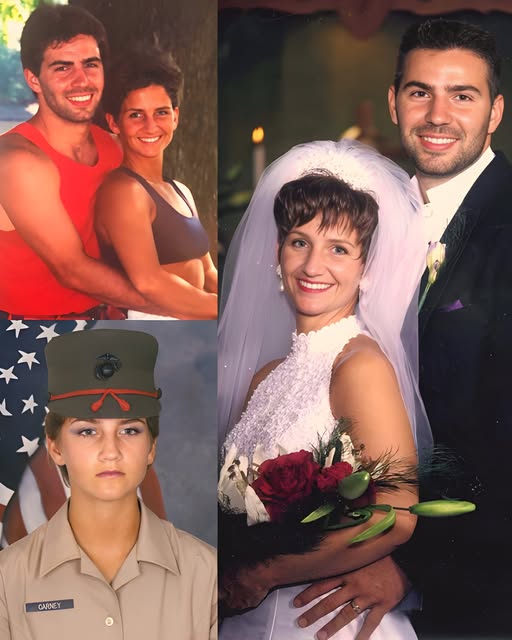
She was a U.S. Marine. Her son Zack was born in 1989.
At 4 months old, an accident left him with a brain injury and legally blind.
Doctors didn't expect him to ever sit up.
Read that again.
Then her marriage ended while she was eight months pregnant.
She moved back in with her parents. Went on food stamps. Finished nursing school.
Then she met a college quarterback at a country bar.
He showed up the next day to meet her kids. Zack grabbed his hand and pulled him inside.
"No judgment, no expectation, just loved him," Brenda says.
But football wasn't working.
Green Bay cut Kurt in 1994. He stocked shelves overnight at a grocery store for $5.50 an hour and took care of the kids by day.
Brenda had never even watched an NFL game.
They married in 1997. Kurt adopted Zack and Jesse. Five more kids followed.
The Rams signed him that December and sent him to Amsterdam. Kurt says Brenda told him: "I will hold down the home front for three months."
Then 1999. Then 41 touchdowns. Then the NFL MVP and a Super Bowl with a then-record 414 yards.
Think about that.
In 2001, they started the First Things First Foundation. By May 2024, it had given a home to its 61st family.
In 2017, Kurt chose Brenda to present him at the Hall of Fame. "You, above all others, deserved to share this stage with me," he told her.
In 2018, they opened Treasure House, a home for adults with disabilities. It was Brenda's idea. Zack was one of its first six residents.
From a baby doctors didn't expect to sit up to one of the first residents of a home his parents built.
Some quarterbacks are measured in MVPs.
Kurt Warner is measured in a truck out of gas. A wife who held down the home front. A home for people like Zack.
Just to show all you ladies that I'm fair with my posts here is one just for you!
Three men were hiking through a forest...when they came upon a large raging, violent river.
Needing to get to
the other side, the first man prayed, God, please give
me the strength to cross the river.
Poof!!!
God gave him big arms and strong legs... and he was able to swim across in about 2 hours.
After witnessing that, the second man prayed, God, please give me strength and the tools to cross the river.
Poof!!!
God gave him a
rowboat and strong arms and strong legs...
and he was able to row across in about an hour after almost capsizing once.
Seeing what happened to the first two men, the third man prayed, God, please give me the strength, the tools and the intelligence to cross the river.
Poof!!!
HE WAS TURNED INTO A WOMAN!!!
She checked the map, hiked one hundred yards upstream... and walked across the bridge….
A Priest kept chickens at his village. One evening the cock went missing.
At the church mass prayer
gathering, the priest asked,
Who has a cock?
All the men got up. "No, I
meant who has seen a cock?"...
All the women got up.
No, who has seen, a cock that isn't their's?
Half the men and women got up…
Oh, for Heaven's sake, Who has seen my cock?
All the nuns got up…
Remember when Playboy reportedly offered Sarah Palin $4 million to pose nude?
Then National Geographic offered Michelle Obama $50.
Then KFC rolled out the “Hillary Special”: two small breasts and two large thighs.
Now they’ve added the “Nancy Pelosi Special”: nothing but left wings and chicken shit.
Just keeping you current.
If you have seen Forrest Gump, you have already seen Sammy Davis get the Medal of Honor. In the film, when President Johnson drapes the medal around Forrest's neck, that is real footage of Johnson doing it to Davis, with Tom Hanks's face dropped in. Gump's medal was loosely based on a real citation, and the real man earned it in the Mekong Delta in the middle of the night.
Davis was a sergeant, an artilleryman, at a small fire support base west of Cai Lay. In the early hours of November 18, 1967, a massive Viet Cong force, many times the size of the little garrison, came out of the dark and tried to overrun it. Mortars and recoilless rifles walked across the position, blowing apart guns and dropping men everywhere. A river was the only thing between the enemy and the howitzers.
Davis grabbed a machine gun to cover his gun crew, and a recoilless rifle round blew him off his feet and into a foxhole. He got up. His back was broken, he was burned and bleeding, and his gun crew was down, so he went to the 105mm howitzer and worked it almost alone, loading and firing and getting knocked flat by its own recoil onto his shattered back, then getting up and doing it again. He fired beehive rounds, packed with thousands of little darts, straight into the attackers at point blank range.
Then he heard wounded Americans calling from across the river, on the enemy's side. Sammy Davis could not swim. His back was broken. None of that stopped him. He grabbed an air mattress, pushed off into the water under fire, and paddled across to the far bank. He found three wounded men and brought them back across that river one at a time, refusing to leave a single one on the wrong side. Only after they were safe would he let anyone deal with his own wounds.
President Johnson gave him the Medal of Honor in 1968. Davis lived, healed as much as a man heals from that, and spent the decades since as one of the most beloved figures in the Medal of Honor community, traveling the country to talk to kids and veterans. He is alive today, an old soldier from Indiana who once crossed a river he could not swim, on an air mattress, with a broken back, because men on the other side needed him. The movie borrowed his moment. The real story is better.
The Army did not even want him. He was a skinny sharecropper's kid from Alabama, barely a hundred and twenty pounds, and they turned him away for being too small. He kept coming back until they let him in. Three years later he was standing almost alone on a hill in Korea, covered in other men's blood and some of his own, holding off the Chinese army.
Ola Lee Mize grew up dirt poor in Albertville, Alabama, one of those hungry Depression kids who worked from the time he could walk. When he tried to enlist they weighed him and sent him home for being underweight. He fattened up, tried again, kept at it, and finally talked his way into the Army.
By June 1953 the war was almost over. Everyone knew the armistice was close. But the fighting on the outpost hills was as savage as it had ever been, and Sergeant Mize's company was holding one of the worst of them, a little rise near Surang-ni that they called Outpost Harry. The word passed to the men defending it was blunt. Hold Outpost Harry at all costs. Do not lose it.
On the night of June 10 the Chinese came to take it, throwing wave after wave of infantry behind a nonstop artillery barrage at a small group of Americans dug into the hilltop. What Mize did over that night and into the next morning is almost a blur of one impossible act after another.
He heard a wounded man was trapped in a forward listening post, so he ran out through the barrage, alone, and dragged him back. He saw a bunker about to be overrun and fought his way to it, killing around ten of the enemy and scattering the rest. He was knocked flat again and again by the concussion of shells landing almost on top of him, blown right off his feet, and each time he got back up and kept going. At one point a blast threw him so hard that a comrade later thought he was dead.
He moved up and down that hill all night, from position to position, firing, throwing grenades, dragging wounded men to cover, calling artillery down close to his own lines, and pulling the shattered defenders back together every time it looked like the outpost was about to fall. When one of his own men did not recognize him and nearly shot him, it was because Mize was so caked in blood and dirt he no longer looked like himself. At dawn he helped organize a counterattack that finally threw the enemy off the hill for good.
They held Outpost Harry. And this is the part I love. Mize survived all of it. He got the Medal of Honor from President Eisenhower, then went on to help build the modern Special Forces and served multiple tours in Vietnam, retiring as a full colonel. The hundred and twenty pound kid the Army rejected became one of the toughest soldiers it ever produced.
In January 1991, Norman Schwarzkopf knew the exact number of body bags the Pentagon had ordered in anticipation of the coming ground campaign. He was 56 years old, and he had been handed a responsibility no American commander had carried since the Second World War: more than half a million soldiers from 34 nations, arrayed across the Arabian desert, waiting to be pointed at one of the most battle hardened armies on the planet.
Saddam Husseins forces had spent eight years fighting Iran. They had fortified every approach into Kuwait with mines, trenches, and pre aimed artillery, all built on a single assumption: that when the Americans arrived, they would come straight through the front door.
Schwarzkopf had no intention of using the front door.
He had learned something during two tours in Vietnam that desk generals never quite grasp. He had been decorated three times with the Silver Star for gallantry under direct fire. The most famous of those moments came in May 1970, when he received word that soldiers under his command had stumbled into a minefield. He flew in by helicopter and found the men trapped, with a wounded soldier lying on the ground screaming and a very real danger that the mans panic would cause him to set off another mine. Schwarzkopf crawled across the minefield to the wounded soldier, pinning him down safely so another man could splint his shattered leg.
Believe me, it wasnt a heroic act, he said later. It was something that somebody had to do, and I was the man in charge. Because of experiences like that, he knew, in a way that cannot be taught in a classroom, exactly what he was about to ask his soldiers to do.
For six weeks before a single ground soldier moved, coalition aircraft worked methodically. They struck command centers, severed supply lines, silenced communication networks, and systematically blinded the Iraqi military, all while Iraqi generals watched the Kuwaiti border and waited for the frontal assault they were certain was coming.
It was not coming.
Instead, two hundred thousand soldiers and thousands of armored vehicles moved west, deep into the open desert. They moved at night, in total electronic silence, far away from cameras and away from every position the Iraqi army had spent months preparing to defend. All the while, the Iraqi generals kept their eyes fixed on the coast.
When the ground war finally began on February 24, 1991, coalition forces were already hundreds of miles to the west. They swept through open terrain no one had bothered to defend, drove deep into Iraq, pivoted east, and struck the Republican Guard from behind. Every escape route was already closed.
The ground war lasted just 100 hours. One of the largest armies in the world collapsed in a mere four days of combat. Kuwait was liberated, and coalition casualties were a tiny fraction of the numbers that had been feared.
The Left Hook, Schwarzkopfs famous flanking maneuver, is still studied at war colleges today, and military historians still marvel at its elegance.
Six months later, the offers poured in: Senate seats, presidential conversations, corporate boards, and television contracts. The full machinery of American celebrity was pointed directly at the man who had just won the most precisely executed military campaign in a generation.
Yet, he retired in August 1991, moved to Tampa, Florida, and went fishing. He wrote just one memoir, It Doesnt Take a Hero, published in 1992, and gave a small number of speeches. He did not spend the following decades reminding the world of what he had achieved. He had led, he had brought his people home, and the job was finished.
Norman Schwarzkopf died on December 27, 2012, in Tampa, Florida, at the age of 78, from complications of pneumonia. Veterans mourned him, and military historians wrote long assessments of his career. His ashes were buried at the West Point Cemetery alongside those of his father, another general, also named H. Norman Schwarzkopf, who had famously directed the investigation of the Lindbergh baby kidnapping in the 1930s.
The operational records of Operation Desert Storm are preserved in military archives. His name is on all of them, quietly and permanently, because a record like his doesnt require his presence to stand.