Deuda de Air-e supera los $2,3 billones y amenaza la estabilidad financiera del sector eléctrico colombiano
La deuda acumulada por Air-e alcanzó aproximadamente $2,3 billones en abril de 2026, más de cuatro veces el monto registrado al momento de su intervención estatal en 2024 (cerca de $530.000 millones).
De este pasivo, alrededor de $1,5 billones corresponden a obligaciones con plantas térmicas, lo que genera graves riesgos de liquidez para agentes clave de la generación, especialmente durante un fenómeno de El Niño, comprometiendo la seguridad energética del país.
La reciente propuesta de liquidación de Air-e, anunciada por el Gobierno nacional, ha recibido un fuerte rechazo del sector. Gremios como Andeg han advertido de posibles interrupciones en la prestación del servicio y de disrupciones en el mercado mayorista de energía.
En un contexto de posible llegada del fenómeno de El Niño 2026-2027, esta crisis podría traducirse en incrementos del riesgo de racionamiento, aumentos significativos de las tarifas, erosión de la confianza de los inversionistas y debilitamiento de la preparación del sistema eléctrico nacional frente a escenarios de mayor demanda.
https://t.co/ddYnLfcbnG
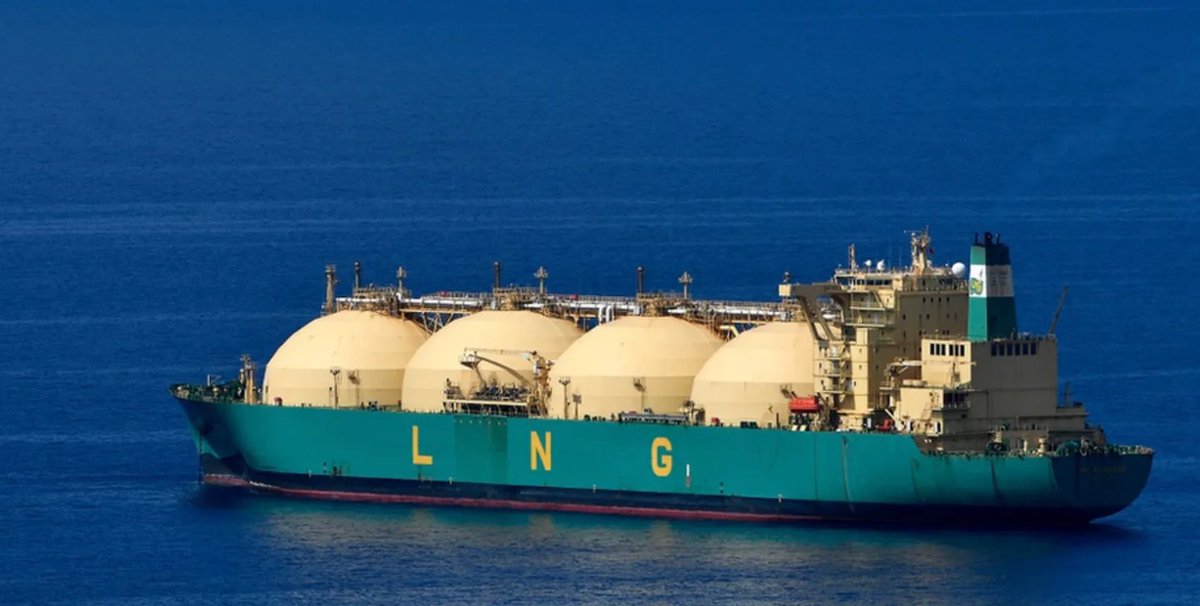
More evidence of Asian counties performing a LNG-to-coal fuel switch: Thailand has reactivated two coal-fired units that had been mothballed.
The switch is important to put a lid on global LNG (and European gas) prices.
https://t.co/qqyd5NrZQ8
Hoy lanzamos “Salvavidas al Empleo”: un apoyo temporal a la nómina de micro y pequeños negocios en Bogotá para evitar que crezca el desempleo o aumente la informalidad.
El auxilio será de hasta $800.000 para mujeres y $700.000 para hombres que devenguen salario mínimo.
Los negocios interesados pueden inscribirse hasta el 27 de febrero de 2026 en https://t.co/smF1Sewush
Explore more insights on electricity markets, policies & trends around the world in @IEA’s Electricity 2026 report, released today.
The full report is freely available on our website 👉 https://t.co/5sWGDvdffg
Total CEO just sends the bomb💥
CEO of TotalEnergies Patrick Pouyanné:
"There are too many LNG projects, and banks will need to decide where to invest"
#LNG doesn’t fail on geology.
It fails on capital access.
Not every molecule makes it to market.
Only the cheapest , fastest and most bankable.
So the real question.
Which LNG projects clear bank credit committees.
And which stay stranded on paper?
#oott #energy #NatGas
📊INFOGRAPHIC: EU grants final approval to end Russian gas, #LNG imports
🔹#EU to phase out remaining flows by autumn 2027
🔹Dependence on #Russia has fallen significantly in recent years
📸 https://t.co/xTs4NRi02A
@avianca sigue maltratando a sus usuarios no es posible que en un vuelo internacional de +5h utilicen los mismos aviones recortados que usan en vuelos nacionales. Es increible que pretendan que una persona destine +5h de su vida en un espacio que no alcanza ni para las piernas.
Rystad data shows only ~25–30% of annual oil consumption is offset by new discoveries. Oil and gas demand keeps rising, but discoveries have collapsed from >20bn boe a decade ago to ~5–8bn today. Production can lag reality—but not forever. #EnergyMarkets #OilGas
https://t.co/4xHovUtn8t
🛢️ Trafigura Moves First
🇻🇪Venezuelan Oil Is Back in Europe🇪🇺
While oil majors debate sanctions risk, Trafigura has already opened the pipe.
Trafigura just lifted 1 million barrels of Venezuelan Merey crude under the US–Venezuela framework and routed it via Caribbean storage to Spain, with repsol as the end buyer.
This is the first Venezuelan crude cargo into Europe in nearly a year.
No press release.
No political noise.
Just barrels moving.
Why this matters?
• Trafigura is now the main commercial executor of Trump’s 50 million barrel Venezuela deal
• Europe is reaccepting US blessed Venezuelan oil
• Heavy sour discounts are doing what diplomacy could not
Why Trafigura, not the majors?
• Zero upstream exposure
• Full control of shipping, storage, blending
• Ability to lift now and argue later
While ExxonMobil calls Venezuela “uninvestable” and Chevron expands cautiously, Trafigura is monetising first.
What comes next?
• More European cargoes if discounts clear
• Spanish and Italian refiners first in line
• Asia only if Europe and the US Gulf saturate
You don’t need to own reserves to control oil flows.
You just need to control logistics and timing.
Trafigura does both.
🚨If you want to know Why chaos became the most profitable trade of the decade and the single stock capturing it all
Do not miss my latest article, here👇
https://t.co/PLLYl86hoA
#oott #Venezuela #Energy #Geopolitics
ADIÓS, ANALISTAS. ADIÓS, WALL STREET.
Se acabaron las suscripciones de 99 $/mes.
ChatGPT acaba de convertir mi portátil en un escáner bursátil en tiempo real.
Aquí tienes 10 prompts para hacerlo tú mismo ↓
Fixing the Venezuelan oil industry will take time, money, and—most importantly—institutional change
Francisco Monaldi
Director of the Latin American Energy Program, Rice University’s Baker Institute
In the short term, Venezuela’s oil industry will have a limited impact on global markets. The country currently accounts for less than one percent of world oil production. Over the medium and long term, however, a sustained recovery in Venezuelan output could make a meaningful difference. From a purely technical standpoint, Venezuela could produce four to five times its current level of roughly one million barrels per day. Achieving that outcome, however, would require more than a decade of consistent effort and investments exceeding $100 billion dollars.
Geology is not Venezuela’s problem. The country possesses vast reserves, faces relatively low geological risks, and enjoys moderate extraction costs. Under an appropriate contractual and tax regime, oil production would be profitable even at prices as low as $25–30 per barrel. The real obstacles to investment are not found below ground but above it. They are political, regulatory, and institutional in nature.
Over the past quarter century of chavismo in power, the Venezuelan state has repeatedly reneged on its agreements with foreign investors. Resource nationalism has restricted the role that international oil companies can play, undermining confidence and discouraging long-term commitments. The national oil company, PDVSA, is now effectively bankrupt and lacks the operational and financial capacity to lead a recovery on its own. Any significant increase in production would therefore have to be driven largely by foreign firms.
For that to happen, several conditions must align. Venezuela would need stable and constructive relations with the United States and Europe, along with the permanent removal of oil sanctions. Investors would also need to perceive a minimum degree of political stability and, critically, a durable consensus among the country’s political leadership in favor of reopening the oil sector to foreign participation. Finally, a credible and competitive legal framework would need to be approved by a legitimate legislature and enforced by a legitimate executive.
Some argue that sanctions relief alone could unleash a rapid influx of investment. In reality, sanctions relief is necessary but far from sufficient. Without firm legal protections, policy continuity, and political legitimacy, large-scale investments with long development horizons will not materialize.
In the absence of genuine institutional change, Venezuela may still attract limited “low-hanging fruit” investments—projects with high short-term returns and fast cost recovery. While these could generate modest gains, they would do little to rebuild the industry or restore the country’s production capacity over the long run. Major projects requiring substantial capital and long maturities will remain out of reach.
The central problem facing Venezuela’s oil sector is therefore not technical or geological. It is political and institutional. These realities are often obscured by wishful thinking or by actors seeking quick profits. A meaningful recovery is possible, but only if it is grounded in durable political change, credible institutions, and a long-term commitment to restoring investor confidence.
The price of everything on Earth.
This chart is all of the natural occurring elements, their occurrence rate in Earth's crust (X-axis) and their price in USD (Y-axis).
The chart illustrates three clear price regimes.
1. Yellow band is stuff that is economically priced this is within 1 order of magnitude of -1 log-log.
2. Stuff above the yellow band is expensive for its relative abundance on Earth.
3. Stuff below the yellow band is cheap for its relative abundance on Earth.
There is a by-product trap in the global economy and this is the dominant choke mechanism, many of the elements above the red line are by-products of primary processes and you can't build dedicated economies of scale for a material without a primary process. Likewise some things below the yellow band are also by-products or waste products of a primary process.
Titanium is the canonical process opportunity of the 21st Century, it sits well outside the economy for such an abundant material a clear sign that Kroll + chloride chemistry is the issue. Any viable electrolyte/plasma/FFC type route is a multi sigma unlock for humanity.
Noble gases are on the floor, they are cheap to stockpile and tied to industrial air separation processes ie oxygen and nitrogen plants.
Rare Earth sit tightly in the economically priced band, their pricing is separation process and demand mix dominated, not scarcity dominated.
The kink/flattening at high abundance shows where scarcity stops mattering, beyond circa 10^3 ppm the economy hits the energy floor and energy / logistics drive price illustrating the Earth is well below its carrying capacity for humanity.
The chart also demonstrates that national resilience lies on process capacity and not access to ore, this is quite different to the learnings of WWII. But hey, times change.
Policy should invest toward primary processes or waste stream recovery for Ga/Ge/In/Sc/Re/Te and we should be funding science for process breakthroughs in Ti/V/Nb/Ta/Hf.
On the whole, humans get a B+
(maybe we should get an A++ when you consider nobody even thinks about this stuff and we just Adam Smith our way to glory?)
Fun to plot this for other worlds and figure out what processes make sense to take there. Obviously all the prices start much higher when you start over and you have to spend a long time driving them down. The chart for Earth is mature, we've been doing this here a few thousand years now.
Sr. Presidente, gracias por su respuesta. Siempre estaré abierto al debate académico. Vamos a ello:
1⃣ Colombia enfrenta un problema de Enfermedad Holandesa por el boom de exportaciones de clorhidrato de cocaína.
2⃣ Un cálculo prudente a partir de últimos datos de @ONU_es indica que la producción nacional de cocaína superará 3.200 toneladas en 2025.
3⃣Aun descontando las incautaciones, que suelen rondar el 30%, el volumen que ha de llegar efectivamente a los mercados internacionales es de 2.240 toneladas.
4⃣ Sí, las incautaciones han aumentado. Pero no porque la Fuerza Pública sea más eficiente en dicha labor, sino porque los narcos producen muchísimo más.
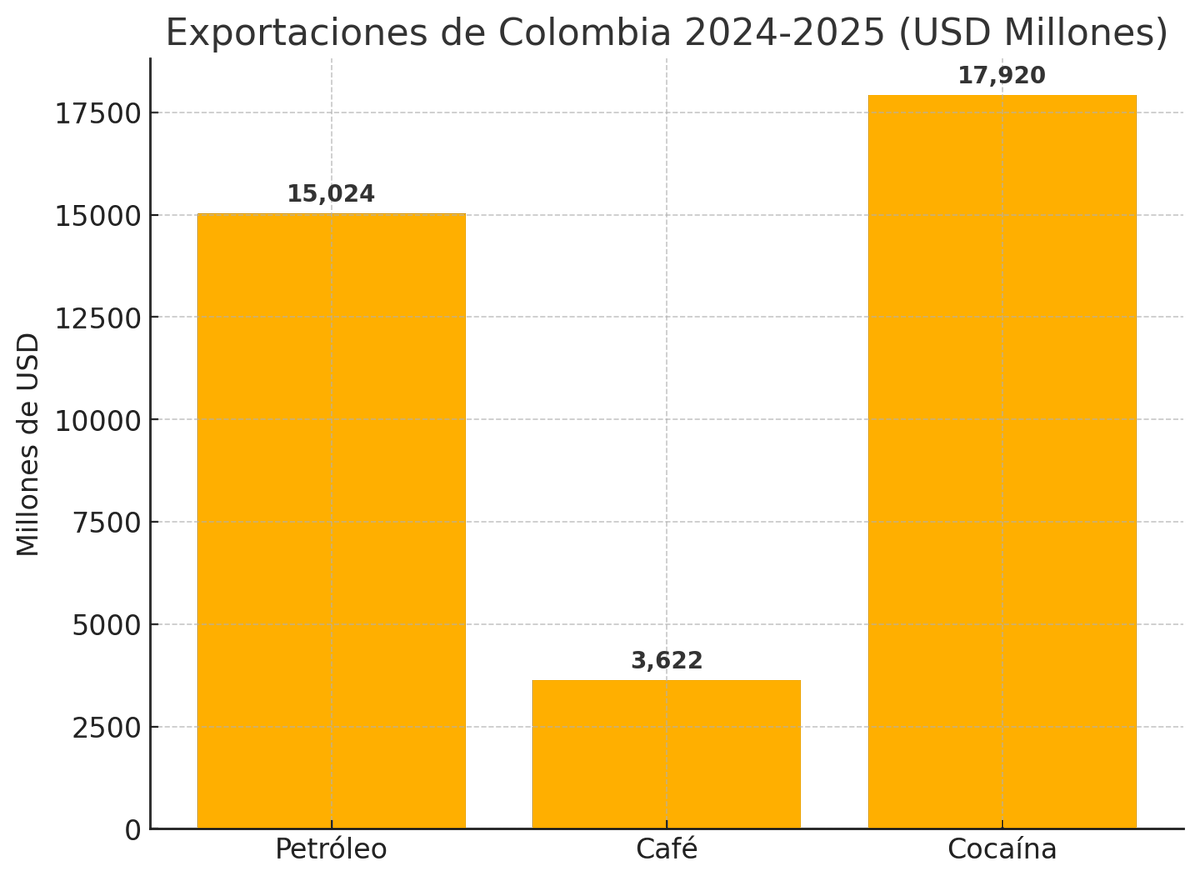
5⃣ 2.240 toneladas equivalen a USD $17.920 millones: casi 20% más que las exportaciones de petróleo (USD $15.024 millones en 2024), 4,5 veces lo que exporta Colombia en café (USD $3.622 millones).
6⃣Estamos hablando de COP $72 billones en exportaciones de este “commodity”: más de lo que recibe la Fuerza Pública en presupuesto anual:
https://t.co/FqMkxe0Vt9
7⃣ Hay una proxy demoledora: las remesas del exterior. No es una explosión súbita de productividad de la diáspora, sino un crecimiento feroz en pitufeo.
8⃣ Los resultados de la Enfermedad Holandesa? Todos los sectores No Transables disparados. Sectores Transables intensivos en mano de obra y con desbalance cambiario estructural a punto de quebrar (ej.: flores).
9⃣Cierto es que un país también revalúa por razones especulativas. Y cierto es que en Colombia hay carry trade. Pero esto no es la causa original de la apreciación del COP. Es uno de sus efectos que, además, agudizan la situación.
🔟Cierto es que hay un efecto global de debilitamiento del USD. Pero ese efecto le pega por igual a todos los EM's y sabemos que la apreciación del COP rebasa de lejos a la de los demás EMs.
📌 El problema en Colombia SÍ tiene un problema de tasa de interés doméstica. Pero no se origina en el @BancoRepublica, quienes deberían más bien estar controlando el impuesto inflacionario y el señoreaje que tanto le pega a los más pobres:
https://t.co/6IR24heZzM
📌El problema de tasa se origina más bien en el agudo problema fiscal que Ud. mismo reconoce con la Emergencia Económica.
📌La colocación de TES x 23 billones a @BlackRock lo prueba: a) no había bid para un monto así de grande; b) se pagó esa falta de apetito con una altísima tasa para compensar el riesgo fiscal. Veamos:
📌Caja del Tesoro Nacional ha llegado a mínimos históricos;
📌Gobierno se está financiado mediante jineteo de proveedores (basta ver la situación de la cadena del sector eléctrico por el no pago de subsidios estratos , 2 y 3;
📌Deuda/PIB en sendero ascendente sin que un evento tipo COVID lo justifique
👉 La tasa está 300 pbs por encima de lo que paga un CDT en Colombia: el mercado cobra una prima de +30% para guardar su plata en títulos del Tesoro Nacional en vez de un banco privado. Eso lo dice todo.
🇶🇦 Qatar Warns the World Is Sleepwalking Into a 2030s Supply Crisis
⚠️ A Global LNG Shortage Is Already Forming
Qatar’s energy minister, Saad Al-Kaabi, just sent the strongest warning the LNG market has heard in years.
Despite record #LNG construction today, he says the world is heading toward a structural gas shortage next decade driven by AI power demand and chronic upstream underinvestment.
And the numbers are alarming.
• #AI data centers could add 3–6 bcf/d of gas demand by 2030 from almost zero today.
• #Qatar is lifting LNG output from 77 Mtpa → 142 Mtpa by 2030.
• It will market almost 160 Mtpa including US projects nearly 20% of global LNG.
• The world will add 360 bcm/year of new liquefaction by early 2030s but underinvestment means this still may not be enough.
• US + Qatar will supply 80% of all new LNG coming to market this decade.
And a huge portion of Qatar’s new capacity is uncontracted meaning Doha can time and price the market with precision.
💡 Why Qatar Is Worried
Al-Kaabi’s message is blunt.
The world thinks it is oversupplied today.
But with AIdriven power loads exploding, Europe phasing out Russian gas, Asian demand rising, and upstream investment lagging…
The market could flip into a sharp LNG deficit by the early mid 2030s.
This is the same setup we saw before the 2021–2022 gas crisis.
Only bigger.
🌍 The US Factor
The United States is Qatar’s only real peer.
• Golden Pass
• Plaquemines
• CP2
• Port Arthur
• Rio Grande
These projects push US LNG toward similar scale as Qatar by 2030.
But even US exporters are warning:
AI power loads could tighten domestic gas balances and push Henry Hub higher, raising contract risk.
This is why American suppliers are rewriting LNG contracts with more hybrid or non Henry indexation.
📦 Portfolio Players Are About to Face Real Competition
#QatarEnergy Trading plans to scale to 30–40 Mt of traded LNG by 2030, half from non-Qatari volumes.
That puts it squarely against:
• @Shell
• @TotalEnergies
• bp
And it will compete with unmatched cost advantage.
🔮 The 2 Market Scenarios
Scenario 1 : Qatar’s Warning Comes True
AI demand + weak upstream investment = tight LNG by 2030s.
Prices firm. Long-term contracts surge. Low-cost suppliers win.
Scenario 2 : Temporary Oversupply, Then a Snap Tightening
Late LNG wave → brief glut → rapid tightening mid-2030s.
Qatar manages its uncontracted volumes to avoid a price crash.
Either way, the age of cheap LNG is ending.
(do not forget to subscribe to my newsletter , link in my bio)
#oott