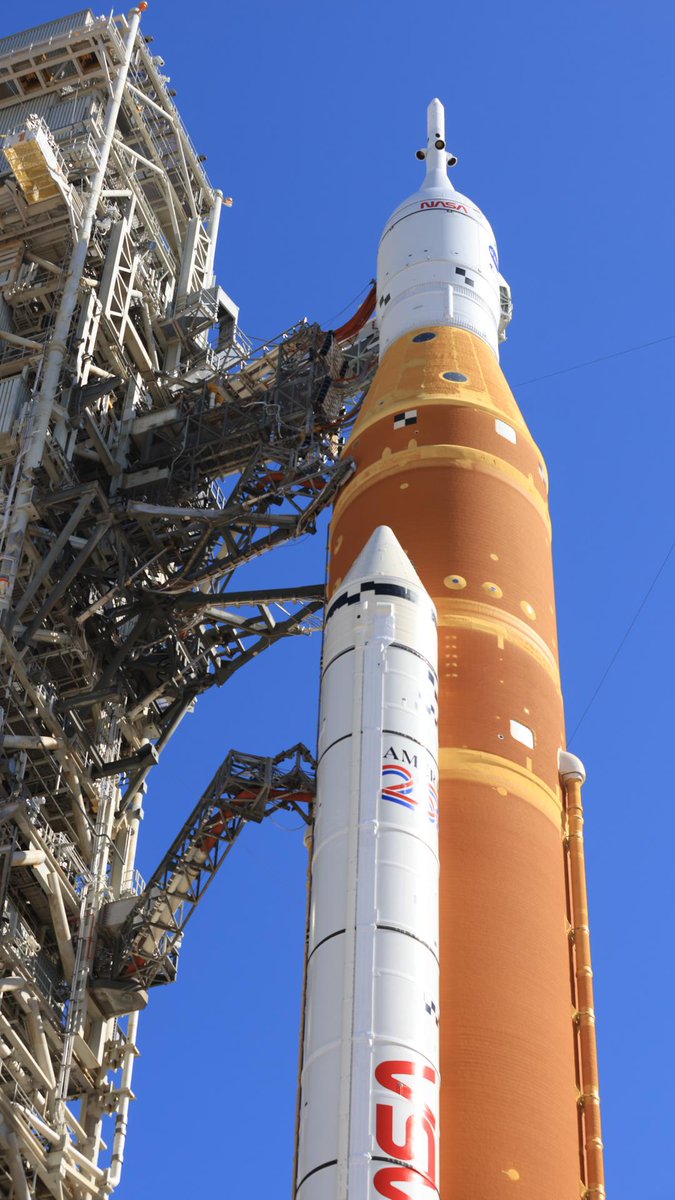
LIVE: NASA leaders provide an update on the Artemis campaign after the rollback of the Artemis II Moon rocket and Orion spacecraft earlier this week. https://t.co/oF4jEDQJrt
NASA teams successfully fueled the Artemis II rocket during tonight’s prelaunch test for the lunar mission.
Our Artemis experts will answer questions about the important milestone and next steps during a briefing tomorrow at 11am ET (1600 UTC). https://t.co/fVjFOmK5dy
Moonbound @NASAArtemis docuseries on the Artemis missions https://t.co/mMMxGBqeCU 'This episode explores the physical and mental challenges of preparing for a crewed flight around the Moon, and the teamwork required to test new systems at the edge of exploration.'
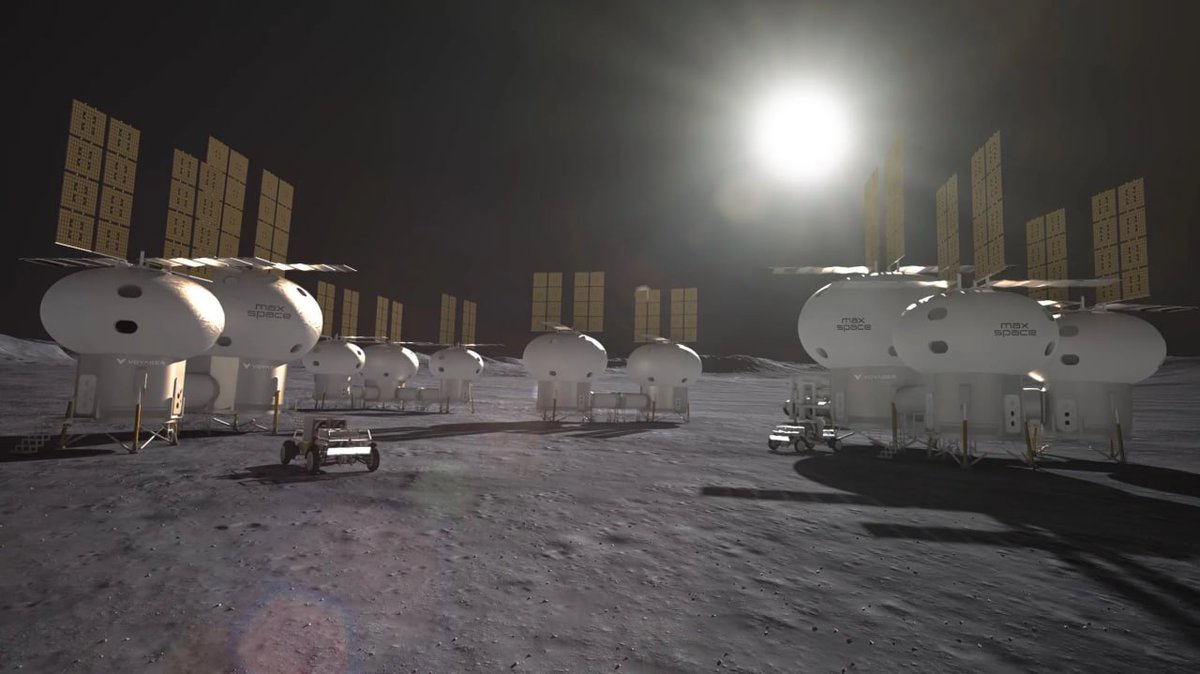
One of our portfolio companies just partnered to build habitats on the Moon and Mars. 🌕 🚀
Voyager Technologies teamed up with Max Space to build expandable habitats.
It’s actual infrastructure for people to live and work in deep space. Not hotels/space-tourism, but habitats for people to live and work in.
The best way to describe it is vacuum-sealed pillows that launch compact and inflate after deployment.
The modules launch together in a single mission, with no ISS-style assembly required. They’re high-volume but relatively low-mass, built on 40 years of on-orbit experience.
Ground validation is starting now with planned in-space demos later this decade.
Dylan Taylor (Voyager CEO) said: "The Moon is no longer a flags-and-footprints exercise. It is the next operational domain in a growing space economy."
Translation... We're moving from exploration to operations.
So the only logical question is...
Would you sign up to live on the Moon and Mars?
https://t.co/kC2O62ETr0
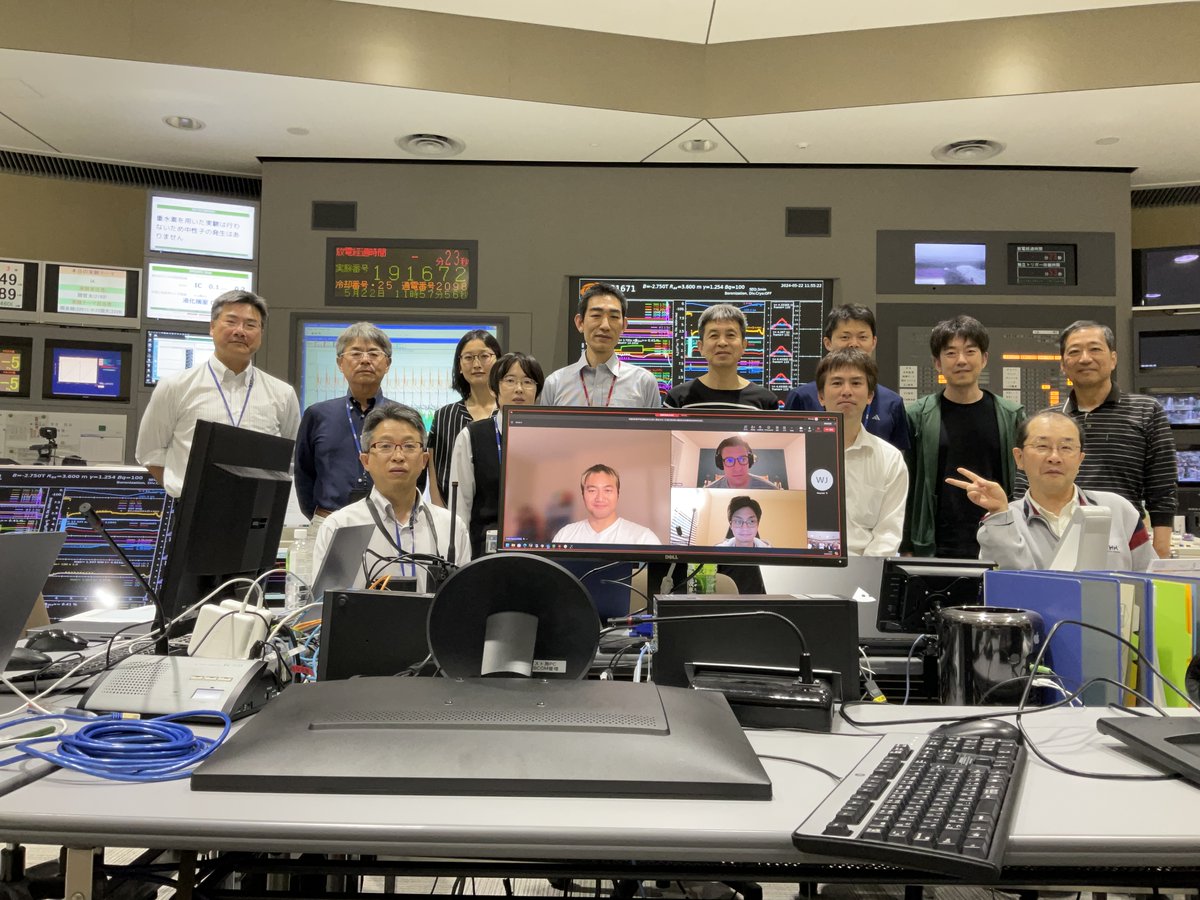
Congratulations to the TAE and NIFS teams on their recent publication in the journal Nuclear Fusion!
Our mission to deliver fusion power at a commercial scale starts with our preferred fuel, hydrogen-boron, which is non-radioactive, safe and abundant. The publication shares how an innovative heating method — combining radio frequency waves with neutral particle beams — enhances the hydrogen-boron fusion reaction rate: https://t.co/HLBzXq6cbJ
This publication results from years of collaboration between TAE and @NIFSplasma, and it points to a promising method for generating clean, safe and cost-effective fusion energy. ⚡
Polaris has made history as the first privately developed fusion energy machine to demonstrate measurable deuterium-tritium fusion and achieve plasma temperatures of 150 million degrees Celsius (MºC).
Global spending on AI infrastructure has jumped from roughly $1 billion per day around 2024–2025 to close to $2 billion per day projected for 2026...
This is STILL just the beginning.
NSF is investing over $100M to launch the NSF National Quantum and Nanotechnology Infrastructure program, establishing a nationwide network of open-access research facilities for quantum and nanoscale technologies, innovation and workforce training.
https://t.co/UjnVjxB6d0
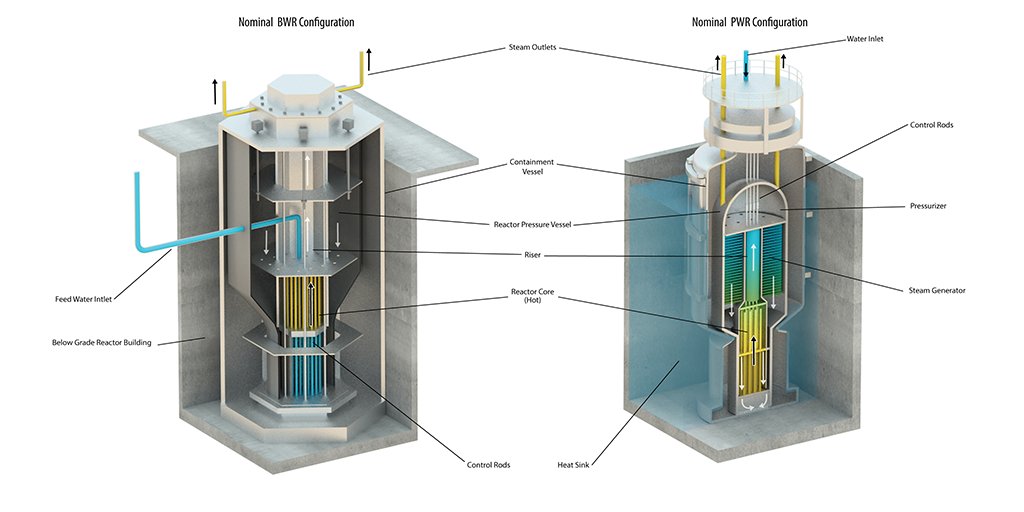
Advanced light-water small modular reactors are smaller, manufactured versions of large-scale reactors.
They typically range from 50 to 350 megawatts of electric power and can come in two types — pressurized or boiling water reactor systems.
Update on our Moon mission: Following a Feb. 12 confidence test, teams are reviewing data and will examine findings before setting a timeline for the next test, a second @NASAArtemis wet dress rehearsal this month. March remains the earliest potential launch window. Read more: https://t.co/GSRtC9o61W
Well... ya comin’?
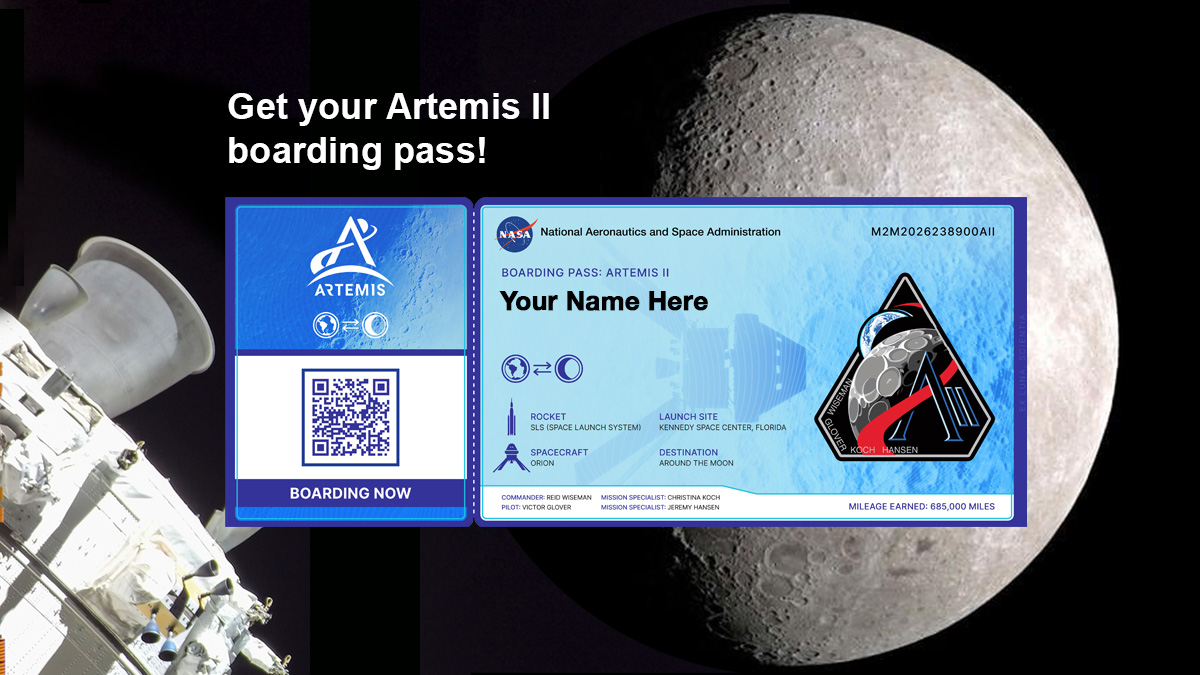
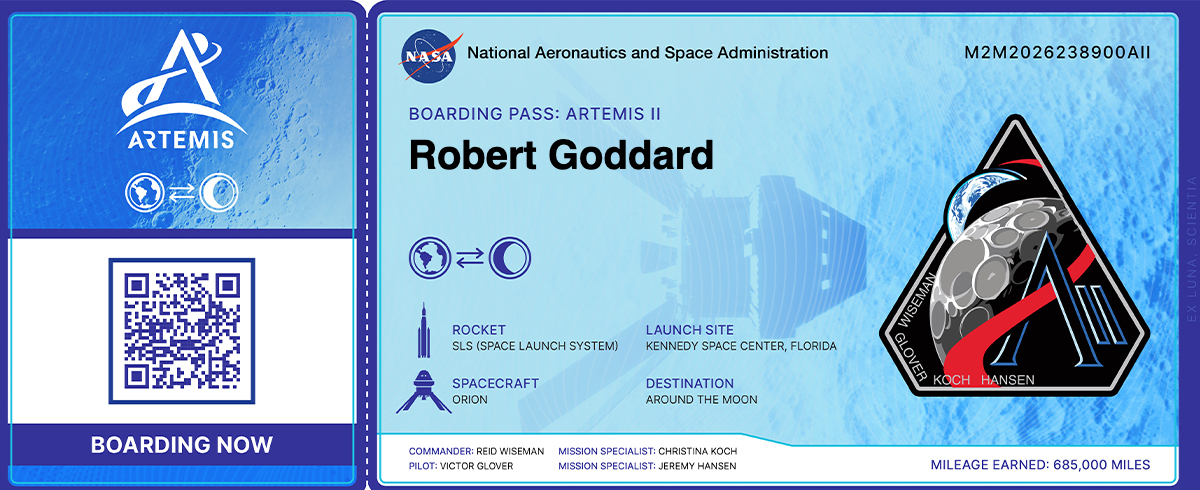
Time is running out to get your boarding pass for the @NASAArtemis II mission! Your name will fly around the Moon and back along with the four Artemis II astronauts.
Sign up here by Jan. 21: https://t.co/nTtUw1Clns
We're heading to the Moon.
The launch window opens as early as Feb. 6 for our crewed @NASAArtemis mission. Throughout the journey, we'll bring you live coverage on NASA+: https://t.co/XjTc1fTzOv
🚨Mission Update: Rollout for Artemis II is less than two weeks away.
This milestone begins final, system-wide testing as NASA prepares to send astronauts around the Moon for the first time in more than 50 years, with a launch window opening as soon as February 6.
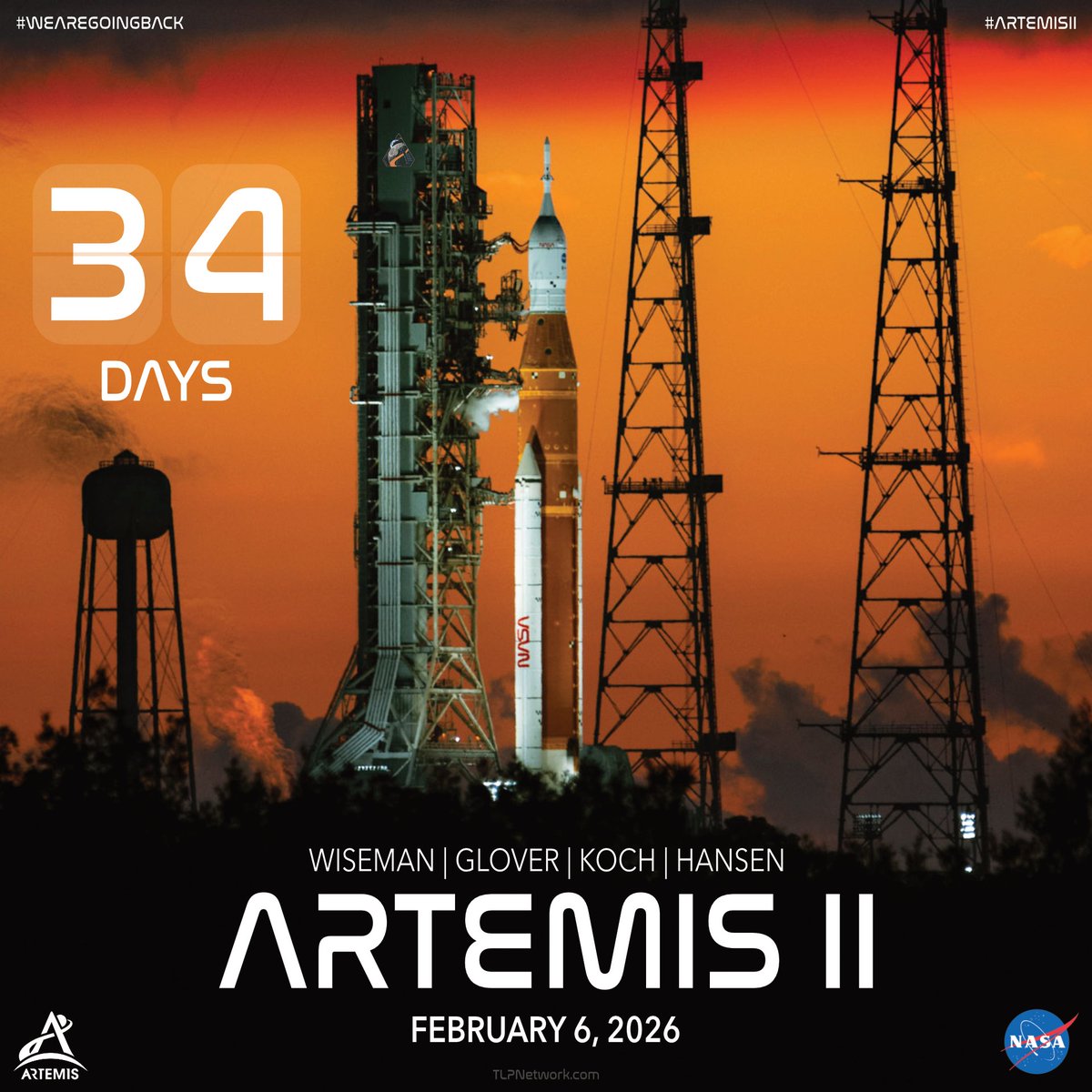
The countdown is real! In 34 days, Artemis II launches; sending astronauts around the Moon for the first time in over 50 years!!
📅 Target: February 6, 2026 (Launch date subject to change)
Follow us for the latest Artemis II updates!
#ArtemisII#WeAreGoingBack#Moon#Orion #SLS #NASA #CSA
This is something big.
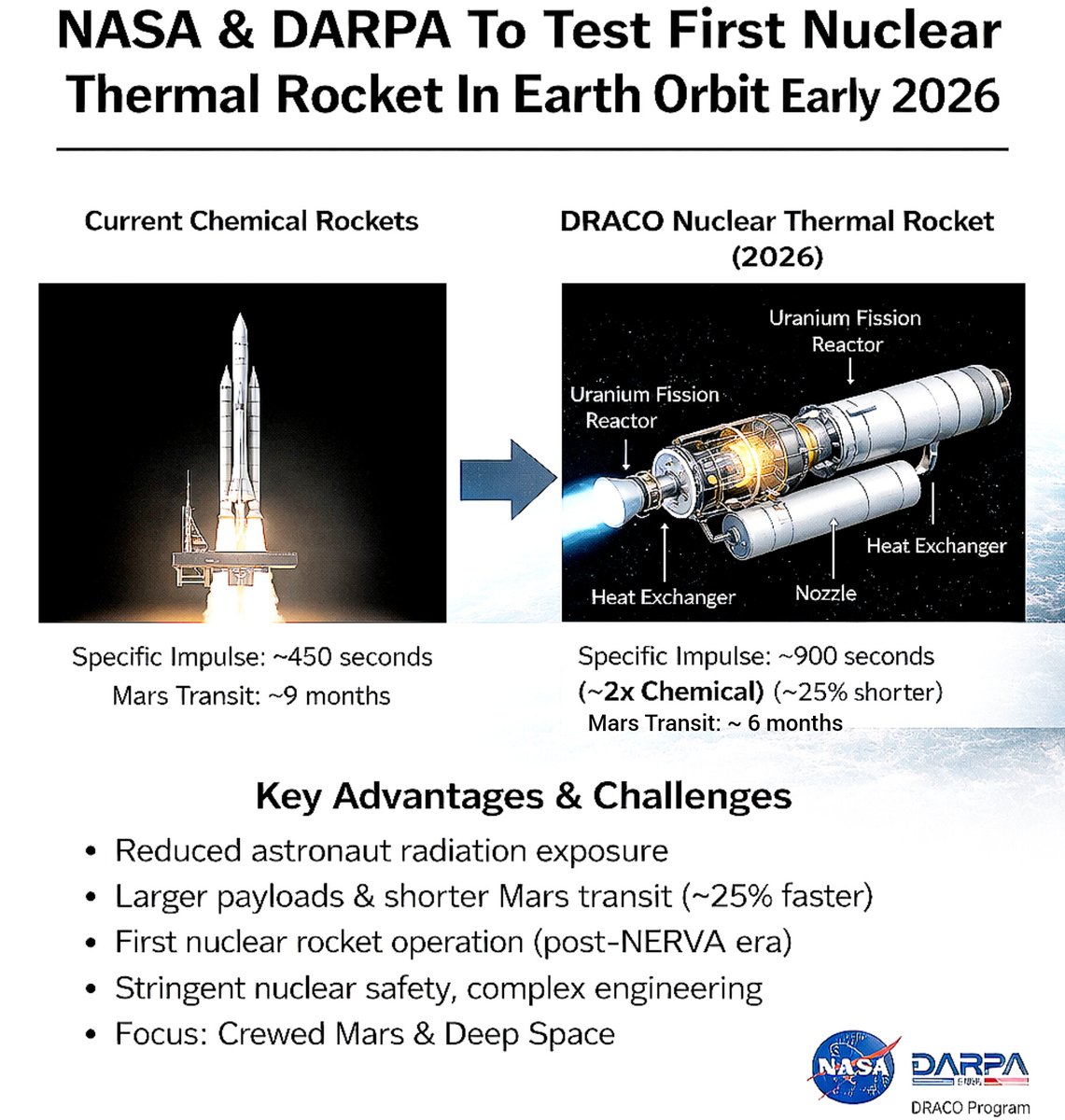
NASA and DARPA to test first nuclear rocket in earth orbit.
They are planning an in space demonstration of nuclear thermal propulsion under the DRACO program in early 2026. The system uses uranium fission to heat liquid hydrogen propellant, producing thrust with a specific impulse of roughly ~900 seconds, nearly double the efficiency of conventional chemical rockets, which peak near 450 seconds. The test is designed to validate reactor operation in orbit, with the nuclear system remaining inactive during launch.
This capability could reduce Mars transit times by ~25%, lowering astronaut exposure to radiation and enabling larger payloads and more flexible mission architectures. However, the program must navigate stringent nuclear safety requirements, complex reactor engineering and political oversight. If successful, DRACO would mark the first operation of a nuclear rocket in space, reviving concepts last explored during the NERVA era, this time with a clear focus on crewed missions to Mars and deeper space exploration.
Pack your bags, we're headed for the Moon! 🧳
Sign up to send your name to orbit the Moon, carried inside Orion when the Artemis II mission launches in 2026.
🎟️ Boarding passes available here: https://t.co/lwTxeVsncv