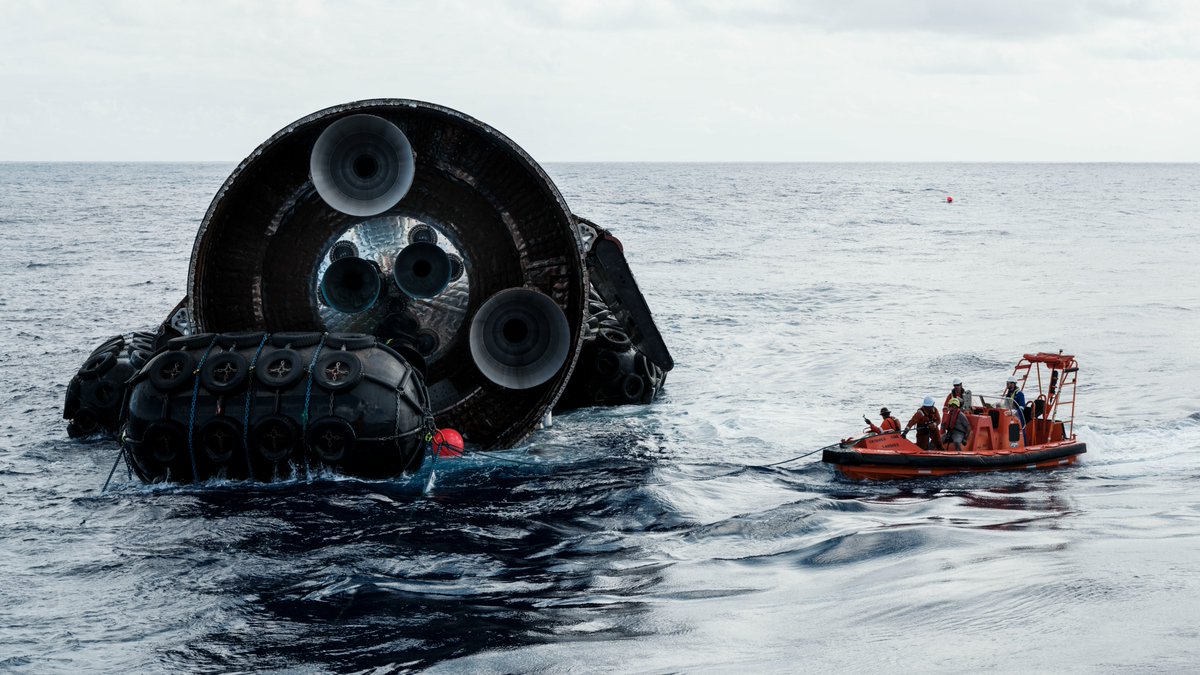
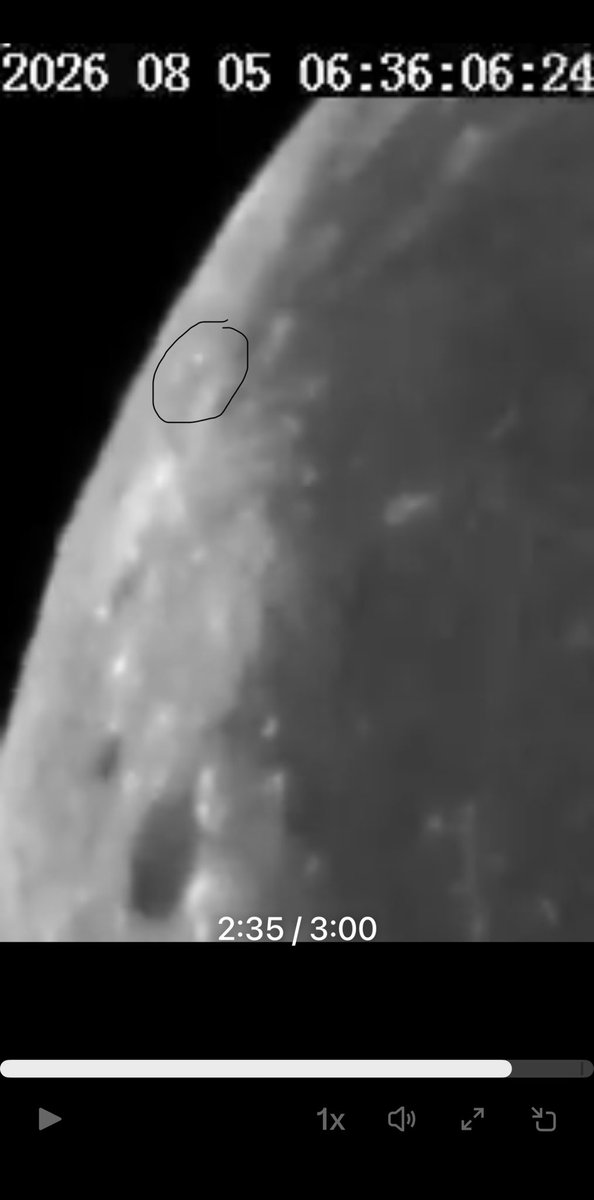
The SpaceX Recovery team is still working to recover Flight 13’s Starship from the Indian Ocean. They’ve been overcoming challenging conditions and increasingly rough seas as they attempt to guide the 52m long spacecraft to port
Wanted to give an update on the hotfire anomaly investigation. Progress continues. The anomaly originated at the main oxygen valve on one of the BE-4 engines, which was later confirmed by hardware recovery and inspections. Extensive component-level and engine hotfire tests have been conducted to understand the failure mode better and inform mitigations. The path forward is clear. We're making small modifications to the valve that can be quickly retrofitted to existing engines. We’re manufacturing the updated hardware, which will be ready by the end of this month. In parallel, we're working through the remaining fault tree analysis.
Elon: "I don't want to jinx it or anything, but I think I would call the heat shield problem solved at this point. All indications from data and visual inspection is we have solved it. That doesn't mean we won't make improvement, but we do not see any technical obstacles to achieving rapid reusability at this point."
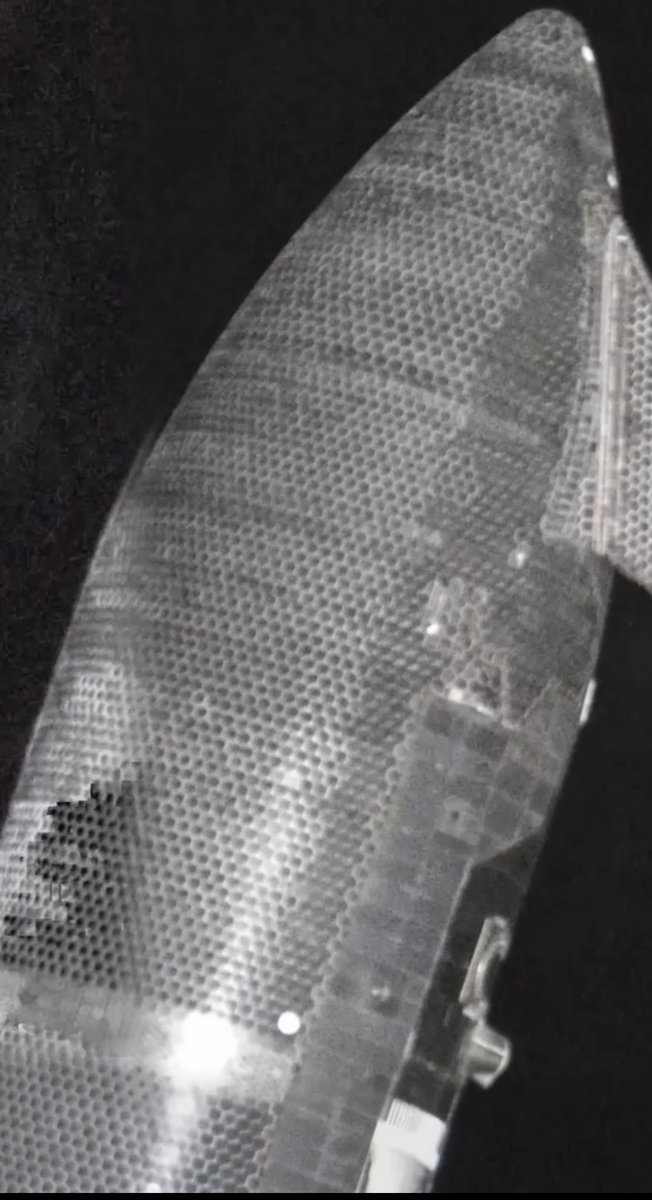
View of Starship in space from a Starlink V3 satellite on Flight 13.
This composite is made of imagery from four separate cameras on a single satellite. Six of the satellites were equipped with cameras to scan Starship’s heat shield and transmit imagery down to operators to continue testing methods of analyzing Starship’s heat shield readiness for return to launch site on future missions