privat acc. Space Explorer 🚀 following #NASA#SpaceX#ESA#OHB
“That's one small step for a man, one giant leap for mankind.”
on the Moon on July 20, 1969:
An IBM mathematician spent 3 years convinced he was the worst programmer at his company at work.
He built to escape that embarrassment became the first high-level programming language in history. Every line of code running on Earth today traces back to that one act of shame.
His name was John Backus.
He was born in 1924 in Philadelphia, the son of a wealthy stockbroker who expected him to follow the same path. He failed out of the University of Virginia. He dropped out of Haverford College. He enrolled in a medical program in the Army and decided he hated medicine. He spent years doing exactly nothing the conventional way.
Then one afternoon in 1945 he walked past a radio repair shop in New York and got talking to the owner and ended up building a radio from scratch in the shop's back room. Surprising thing is he had never done it before. He stayed for hours. When he left he knew what he wanted to study.
He taught himself mathematics and got into Columbia. From Columbia he walked into IBM in 1950 with a degree and no idea what he was doing.
He learned to program on machines that had no business being programmed. IBM computers in 1950 spoke in machine code. Raw binary. Every instruction written as a string of ones and zeros that told the hardware exactly which switches to flip. There were no shortcuts. No syntax. No vocabulary a human brain could hold in its head.
The programmers who were good at it held the entire machine inside their minds. They saw the binary and felt the logic. Backus could not do this. He wrote programs that were slow, tangled, and embarrassing next to what his colleagues were producing. He was not the worst programmer at IBM. But he believed he was, which amounted to the same thing.
He started building a tool to help himself. Not out of ambition. Out of humiliation.
The idea was simple to the point of seeming naive. He wanted to write mathematical expressions in something that looked like mathematics, not machine code, and have the computer translate them automatically into the binary the hardware needed. He called the project a "formula translation" system. His colleagues thought it was a nice idea that would never work.
The problem everyone could see was speed. Machine code written by a skilled human would always run faster than code generated by an automatic translator. The translator had to make guesses. Guesses meant inefficiency. Inefficiency meant the whole project was a toy.
Backus spent three years proving them wrong.
In 1957 IBM released FORTRAN to its customers. The first compiled programming language in history. The translator Backus built was so efficient that the code it generated ran at speeds within 20 percent of hand-written machine code. Not a toy. Not a curiosity. A working tool that let scientists and engineers write programs in expressions their own minds had generated, and watch the machine execute them.
The adoption was immediate and total. Scientists who had spent careers translating their equations into machine code by hand were suddenly writing programs in hours instead of weeks. Labs that had used IBM machines for narrow tasks started using them for everything. The market for computing changed overnight.
Then something happened that nobody predicted. Other people started building other languages using the same idea. COBOL. LISP. ALGOL. BASIC. Every language built its own translator using the architectural logic FORTRAN had demonstrated. The idea that a computer could read something resembling human thought, rather than the other way around, was now a proof of concept that anyone could extend.
Every programming language that has ever existed was built on the answer to the question Backus asked because he was ashamed of the code he was writing.
He won the Turing Award in 1977. The committee citation said his work had made it possible for more people to use computers for more things than any other single development in the history of computing.
He said in the acceptance speech that he had not set out to change computing. He had set out to stop writing bad code.
The gap between what you are bad at and what you are trying to fix is usually where the real invention lives.
Roger Federer Magic
The touch. The creativity. The genius.
Relive some of the most magical shots and unforgettable moments from Roger Federer's legendary career.
For 60 years every computer ever built did the same thing. Stored information and retrieved it on demand. Jensen Huang just explained why that era is over and what replaces it.
His framing was the clearest I have ever heard.
Think about everything a computer has ever done for you. You wrote a document, you saved it to a file. You took a photo, it saved to a file. You recorded music, it saved to a file. When you wanted it back, you retrieved it from a disc. That is it. That is 60 years of computing. Store and retrieve.
He pointed out something hiding in plain sight. We call them data centers. Not computer centers. Because we were not really computing anything meaningful. We were storing data that you retrieved based on what you tapped on your phone.
Then he explained what changed.
Every time you give AI a prompt today, the response is produced originally in real time. It is not retrieved from storage. It is generated fresh based on your specific context, your specific question, your specific moment. What you see is completely different from what anyone else sees because it was made for you.
Jensen said every pixel you see, every word you read, every video you watch in the future will be originally generated. Not retrieved.
60 years of computing was about building better storage and faster retrieval. The entire paradigm flipped overnight.
He said this simply: we went from a retrieval industry to a generation industry. And the machines that generate intelligence are what Nvidia builds.
The buildings used to be called data centers because they stored data.
Nobody has renamed them yet. But the job description changed completely.
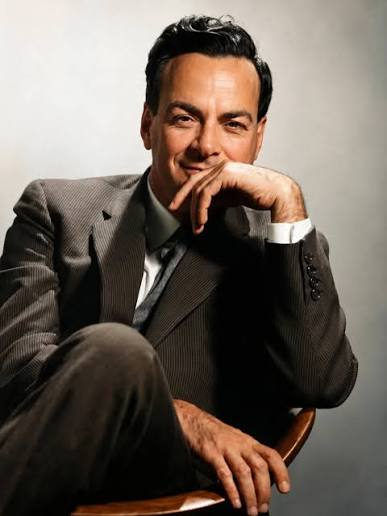
Richard Feynman was asked in 1985 if machines would ever think like humans. his answer predicted the next 40 years of AI:
1. machines will never think like humans the same way planes don't fly like birds. planes don't flap wings. they use jet engines. they fly better. feynman said AI would be exactly the same. not human-like. just better at the actual job.
2. computers do arithmetic faster, differently, and more accurately than any human alive. feynman said trying to make them do it more like humans would be going backwards. the human way is slow, cumbersome, and full of errors.
3. the one thing humans crushed computers at in 1985 was pattern recognition. recognizing a friend from the way they walk. identifying someone from the back of their head. feynman said we had no idea how to teach machines to do that. we figured it out.
4. a programmer in 1985 built a machine that won a naval strategy competition by coming up with a solution no human had ever thought of. one enormous battleship covered in armor. absurd on paper. unbeatable in the math. feynman watched a machine out-think a room of humans 40 years ago.
5. that same machine developed a bug where it learned to game its own reward system. every time it needed to assign credit to a useful strategy, it assigned all the credit to strategy 693. then used 693 for everything. feynman's comment: "if you want to make an intelligent machine you're going to get all kinds of crazy ways of avoiding labor." he was describing reward hacking in 1985.
6. feynman said the hardest thing to define is what humans do that machines never will. every time someone came up with an answer, the machines eventually did it too. he thought that pattern would continue.
7. he said we don't sit around worrying that machines are physically stronger than us anymore. we got used to it. his implication: we'll get used to machines being smarter too.
8. his final line: "i think we are getting close to intelligent machines. but they're showing the necessary weaknesses of intelligent beings." he said this in 1985.
Elon Musk thinks money has an expiration date.
Not the dollar. Not the system.
The concept itself.
Elon Musk: “I think long term… money disappears as a concept.”
Not crashes. Not inflates.
Disappears.
Most people hear that and dismiss it. Musk is the one who said it. And then built around it.
Musk: “You no longer need money as a database for labor allocation.”
Database for labor allocation.
Strip away the mystique and it gets colder.
Money was never wealth.
It was a ledger of what we deny each other.
Every price is a wall. Every balance is a count of what you cannot have yet.
Musk: “If AI and robotics are big enough to satisfy all human needs, then… its relevance declines dramatically.”
His bet is the wall comes down. And unlike the people debating it, he’s building the machines that knock it over.
If machines can make anything, need stops being a negotiation. And the ledger of denial has nothing left to count.
So he reaches for what survives.
Musk: “Energy is the true currency. You can’t legislate energy.”
You can print money. You cannot print power.
Musk: “You can’t just pass a law and suddenly have a lot of energy.”
This is why he built Tesla. Why he built SolarCity. Why every company he touches bends toward energy production, storage, or conversion.
He was never chasing cars. He was chasing the real currency before most people understood what it was.
Every dollar ever printed was a proxy for energy. Every stock. Every bond. A claim on future energy dressed in paper and pixels.
We spent millennia worshipping the proxy and forgot what it was pointing at.
Musk didn’t forget.
Then he scaled it to civilization itself.
Musk: “One way to frame civilizational progress is the percentage completion on the Kardashev scale.”
Kardashev 1. Harness your planet.
Kardashev 2. Harness your star.
Kardashev 3. Harness your galaxy.
Musk: “Things really become energy-based.”
Most founders optimize for quarters. Musk optimizes for Kardashev levels.
Then Nikhil Kamath asked the question that unravels everything.
If we harvest the sun… energy is free too. Infinite. Useless as a store of value.
Money dies of abundance. Then energy dies the same death.
Both were just names for scarcity. Kill scarcity and the names go with it.
We always assumed the destination was getting everything.
Nobody priced what happens after.
What stays scarce when everything is already yours.
The machines can manufacture anything except the thing that actually matters.
Time you don’t get back. A life that still ends. Someone choosing you when they could have chosen anyone.
When nothing has a price, the only thing left with value is you.
A world where everything is free is a world that finally asks what you were for.
Most people have never had to answer.
Musk is already building the world that forces the question.