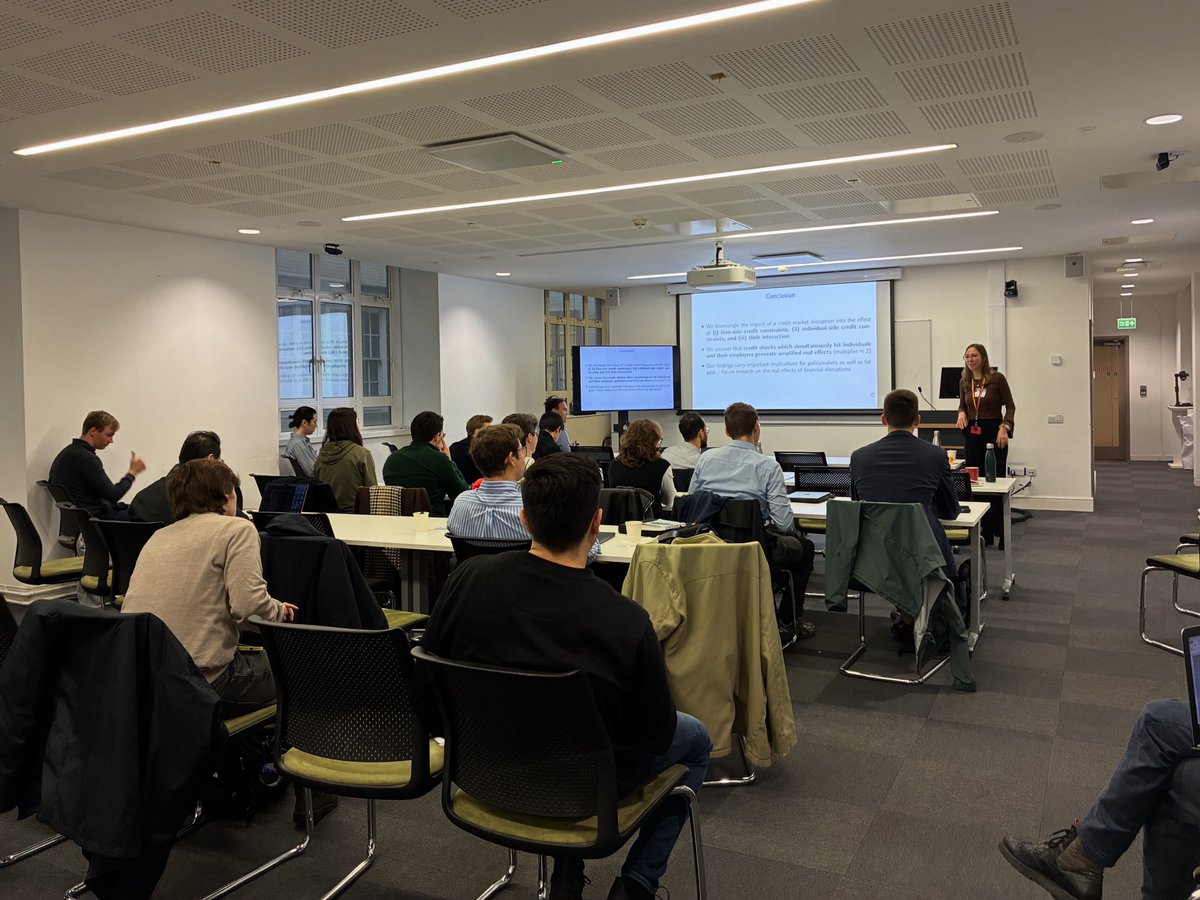
Yesterday we held the first edition of the London Macro PhD Workshop! 14 great presentations and lively discussions with PhDs from around London. Thank you to everyone who came and contributed. We hope to repeat it next year!
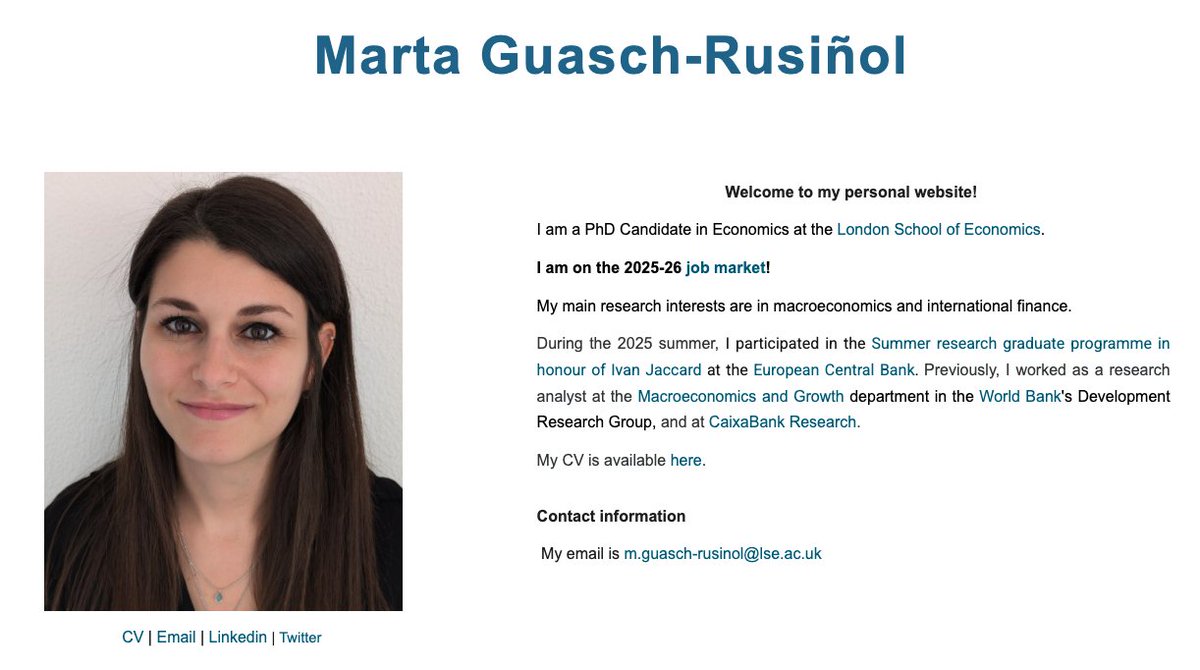
Marta Guasch-Rusinol (@GuaschRusinol) is on the job market!
Over the last decades, there was an explosion of corporate debt. Marta asks what were the consequences. Her insight: large corporations benefit most, because only they can access corporate debt markets. (1/5)
Global liquidity lines: The hidden map behind new trade divides by Saleem Bahaj, @FuchsMarie_ and @R2Rsquared
? How is global liquidity now centered around USD, EUR, and RMB?
? Does this signal a shift toward a multipolar financial system?
? Are monetary links beginning to mirror new trade blocs?
Let’s see...
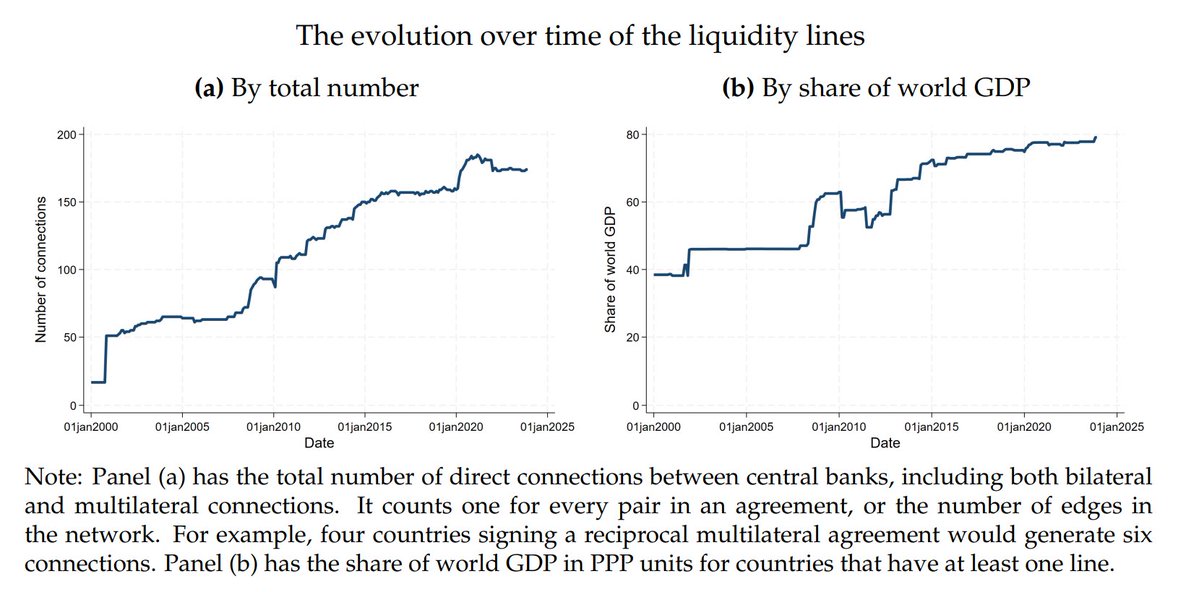
!!! The number of central bank liquidity connections has surged since 2000 — a sign of deepening financial interdependence.
!!! A sharp rise followed the 2008 crisis, reflecting emergency cooperation during global stress.
!!! By 2025, nearly 80% of world GDP is covered by at least one liquidity line.
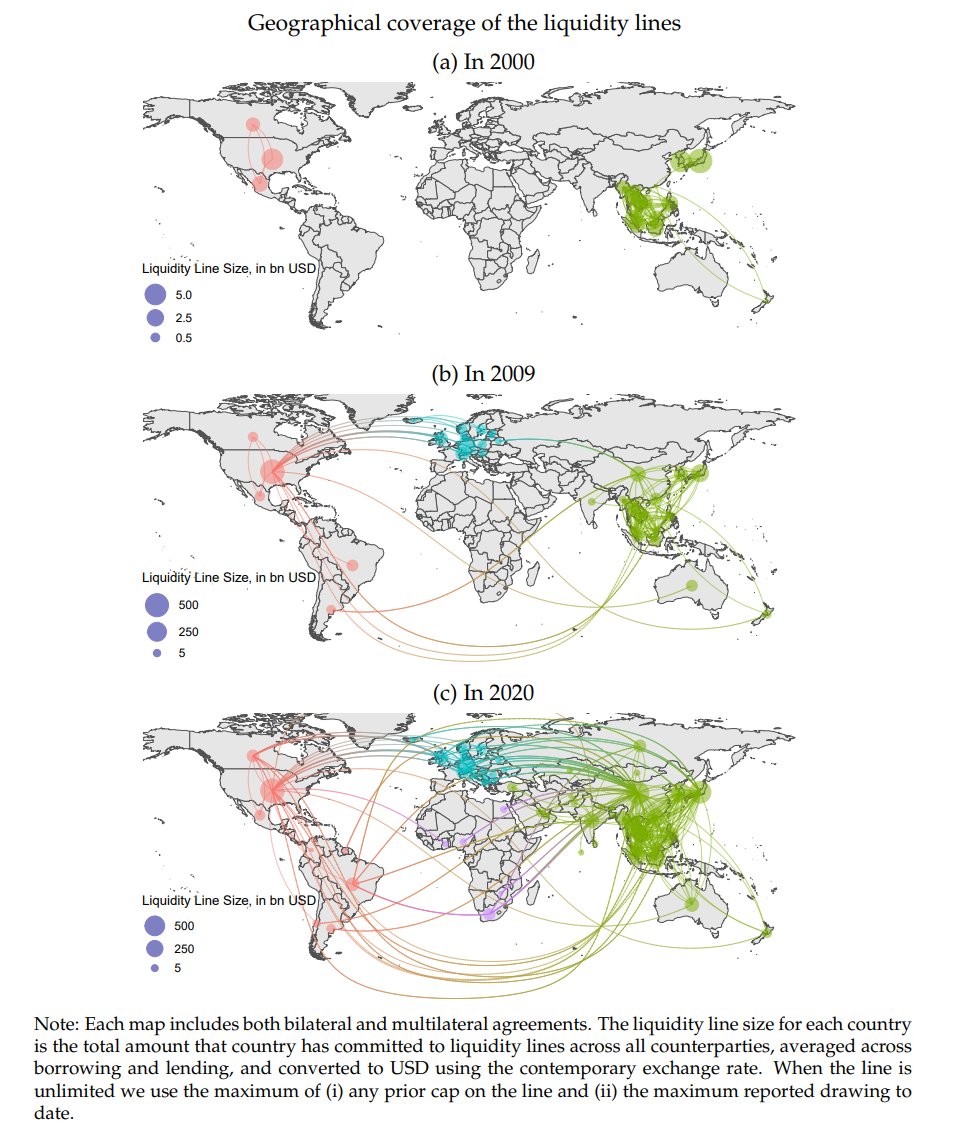
!!! In 2000, liquidity connections were limited and regional, centered mainly in the U.S. and East Asia.
!!! By 2009, after the global financial crisis, the Federal Reserve and other major central banks expanded swap networks, linking North America, Europe, and Asia.
!!!
In 2020, the map shows a densely connected global network, with the People’s Bank of China (PBoC) emerging as a major hub alongside the Fed and the ECB.
!!! These connections also mirror today’s strategic financial blocs, where liquidity access parallels trade and geopolitical alliances.
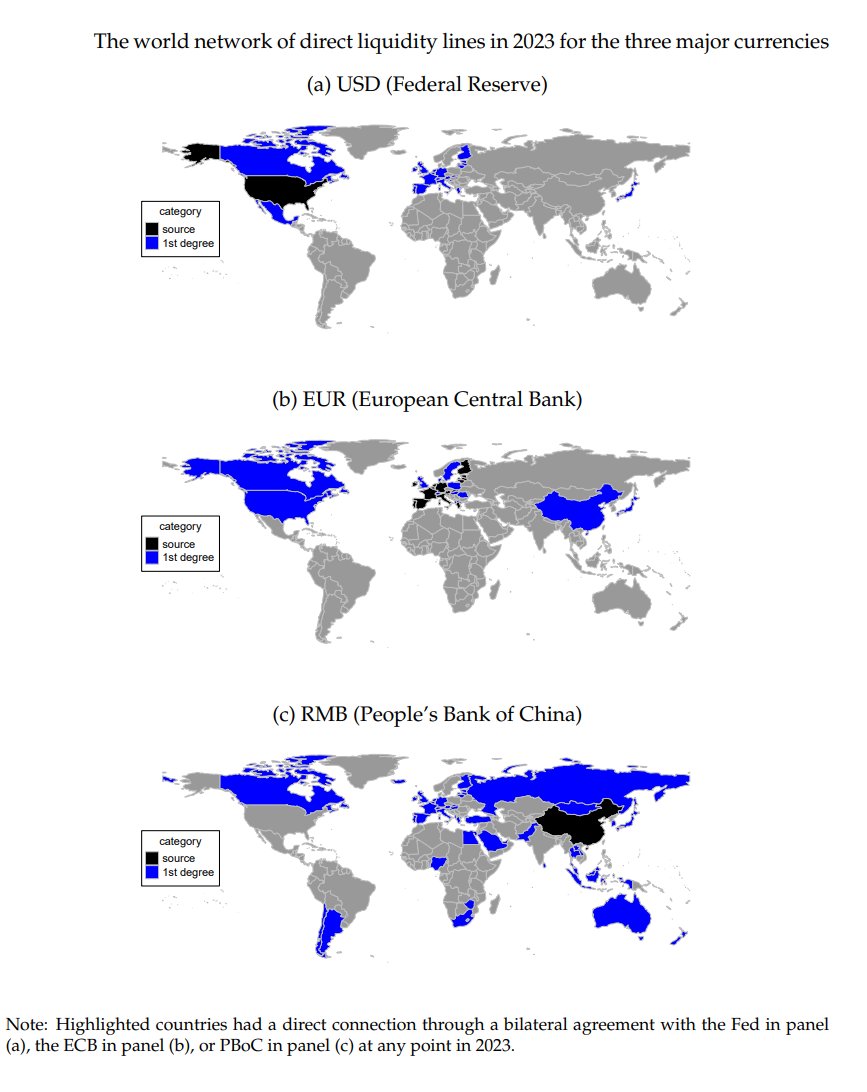
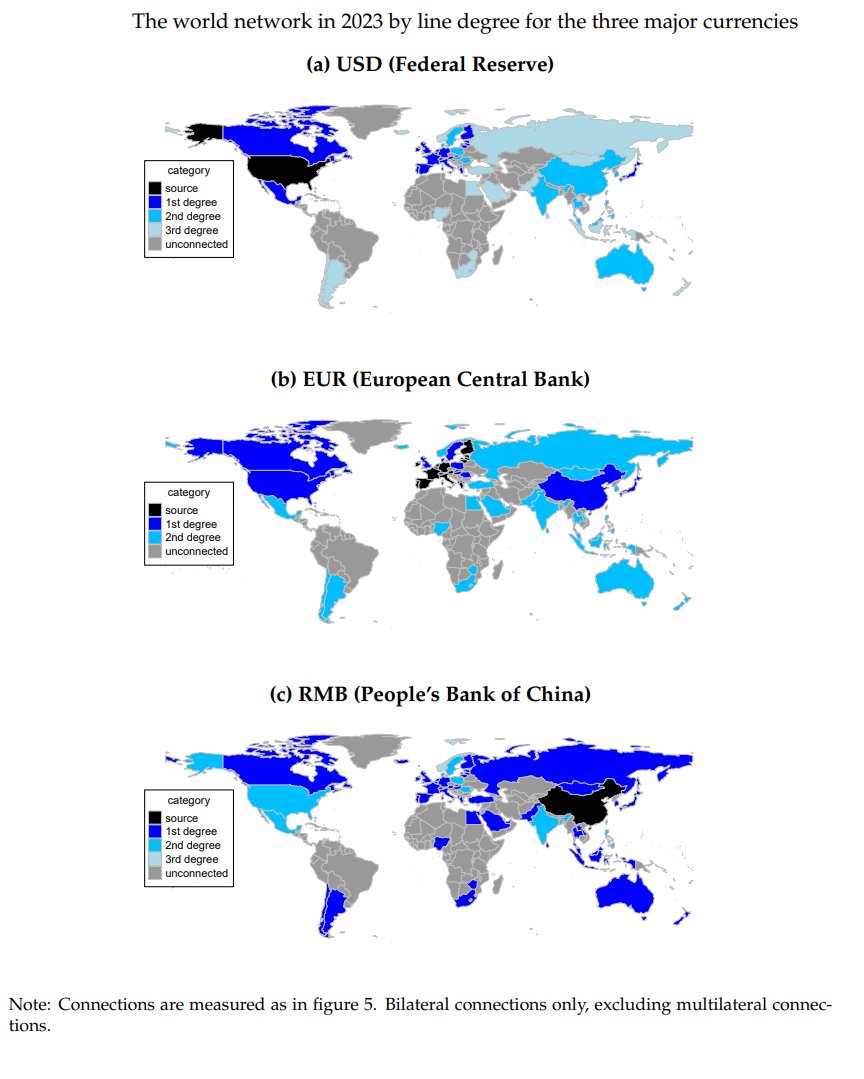
!!! By 2023, three major liquidity hubs—the Fed (USD), ECB (EUR), and PBoC (RMB)—dominate global networks.
!!! USD lines connect advanced economies; RMB lines reach deeper into emerging markets across Asia, Africa, and Latin America.
!!! The world’s liquidity map now mirrors a multipolar financial order, aligning with new trade and geopolitical blocs.
!!! The network has shifted from regional clusters to a multi-hub structure — led by the Fed (USD), ECB (EUR), and PBoC (RMB).
!!! Each major currency now anchors its own financial zone, echoing today’s emerging trade blocs.
!!! The maps reveal that financial links are quietly redrawing global boundaries — just as new tariffs reshape trade ones.
Source: Bahaj, Saleem & Fuchs, Marie & Reis, Ricardo, 2024. "The Global Network of Liquidity Lines," CEPR Discussion Papers 19070, C.E.P.R. Discussion Papers.
Macro PhD students in London:
Register to attend our PhD workshop at LSE on 14 November! We have a great programme of PhD presentations and lots of time to get to know your London-based colleagues.
See the provisional programme and register to attend here https://t.co/3HAgS13WEV
Calling all Macro PhD students based in and around London!
Join us for a workshop at LSE on 14 Nov to get to know each other and discuss your research.
Send us your paper or extended abstract by 15 Aug!
https://t.co/3HAgS13oPn
** Dataset on the global network of central bank cross-border liquidity (swap and repo) lines **
Every active agreement 2000-23. May be useful for those studying networks in macro, the international monetary system, and central banking.
https://t.co/knnDLO1QsF