Understanding where a risk event is happening is critical. Understanding who and what may be impacted is even more important.
⭐ Read our G2 reviews: https://t.co/FZFtKK2RBO
Proud to see Everbridge 360® become part of AT&T’s portfolio for eligible enterprise and public sector customers.
Read more: https://t.co/DetLyX6TlX
“The privilege of pressure.”
In Discover Resilience: The Podcast, Mark Harvey reflects on serving at the White House and the lessons that come from navigating challenges that don't have easy answers.
🎧 YouTube (https://t.co/60ZMEcB2kB) & Spotify (https://t.co/dqiRTcoHuT).
In our upcoming webinar, From Risk to ROI: Building the business case for resilience investment, we'll share a practical framework for turning operational risk into executive-ready justification for investment.
📅 July 1, 2026
Register today: https://t.co/ZHjcgy5m8q
Building a Travel Risk Management software RFP? Don't stop at traveler tracking and alerting capabilities.
Our latest guide outlines the key questions to ask vendors and the criteria to include in your TRM evaluation process.
Download the guide: https://t.co/59WqJY4PaB
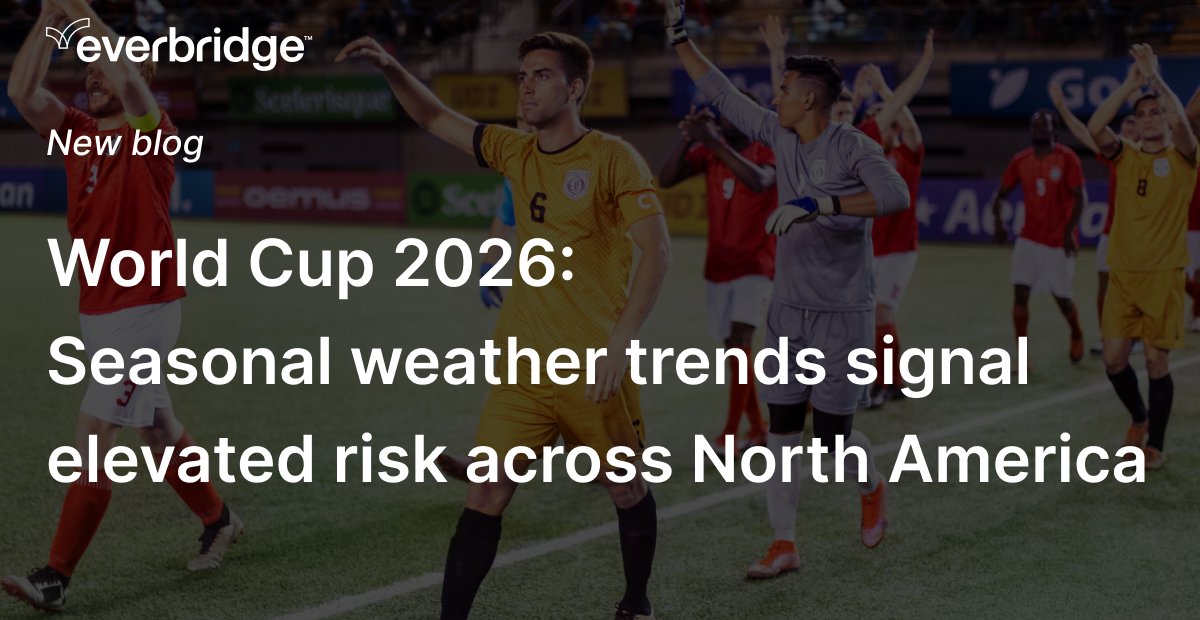
105°F+ heat index.
Multi-city exposure.
Overlapping climate threats.
This is the projected risk landscape for World Cup 2026.
👉 See what the latest seasonal outlook reveals: https://t.co/JCcG0B5uCy
True. Never had more fun.
“The people who were in it for the outcome, however, are having the time of their life as they are seeing their productivity multiply thanks to AI.”
The more I think about it, the more I realize that software development is at an inflection point because of AI coding agents.
A lot of us entered the field because we liked the challenge of writing code and building things with our own hands (I was one of them). Over the years, some of us moved on from the love of writing code to doing other things (e.g., focusing on architecture, managing teams of developers, etc.) while some stayed in it for the love of code and transitioned to becoming super ICs.
Right now, we're at a point where LLMs are writing most of the code. The people who are in it for the love of coding are having an identity crisis. For now, their role will mostly shift to reviewing code (not fun at all) and designing tests (even less fun). Some of them might not stay in the software business.
The people who were in it for the outcome, however, are having the time of their life as they are seeing their productivity multiply thanks to AI.
The landscape changes as the nature of the work changes. Not all hunters enjoyed the transition to livestock farming. Not all coders will like the transition to orchestrating agents.
Everbridge is proud to support Estonia’s continued investment in nationwide public warning modernization.
Read the full announcement: https://t.co/IKtjI1lKQf
As excitement builds for 2026, so do the operational risks.
From extreme heat to travel disruptions, organizations need greater visibility and preparedness ahead of the world’s biggest football tournament.
🔗 https://t.co/25N40xbvuJ
What happens when extreme heat, massive crowds, and critical infrastructure collide?
This isn’t a weather story — it’s an operational challenge that could impact safety, logistics, and real-time decision making.
👉 Full analysis & preparedness strategies https://t.co/3rx4CPsMS6
Most organizations don’t fail because they lack a plan.
They fail because their plan doesn’t translate into action under pressure.
Take the Best in Resilience™ maturity assessment to to benchmark your risk preparedness against industry leaders: https://t.co/feagkhcs1J
“The agent conversation stopped being about models two quarters ago. It is about infrastructure now.” - @NateBJones
The shift happening in AI isn’t just about who has the best model. It’s about which platforms can connect to enterprise data, plug into existing workflows, and support ecosystems of interoperable agents.
Nate recently shared a five-part framework for evaluating agent announcements:
1. Does it work with the tools teams already use?
2. Is it extensible and open to other agents?
3. Can it access meaningful enterprise data?
4. Is an ecosystem forming around it?
5. Can agents stack on top?
Salesforce Headless 360? Checks all five boxes.
The full video is worth a watch: https://t.co/ztiC0vHJ1E
I'll take the contrarian position that
- increased span of control
- everyone player-coach
- less managers
- more AI code
- (yes by "non technical")
results in higher--not lower--quality over the long haul.
This has been obviously coming for years now. Leaders: time to sharpen those hard skills. ICs: time to become AI builders.
If you haven’t started yet, today is as good of a day as any.
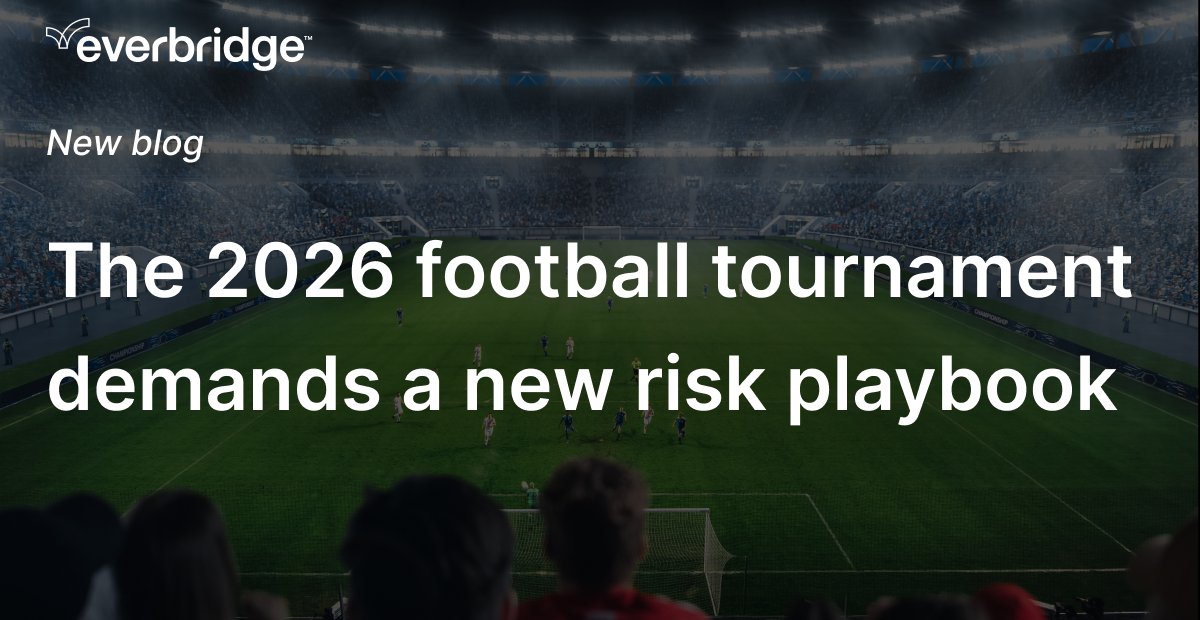
Most organizations are preparing for the 2026 World Cup like it’s just another major event.
It’s not.
This will be:
* The largest tournament ever
* Spread across 3 countries
* Operating in a far more volatile global environment
Read more: https://t.co/eVKeuJFN9k
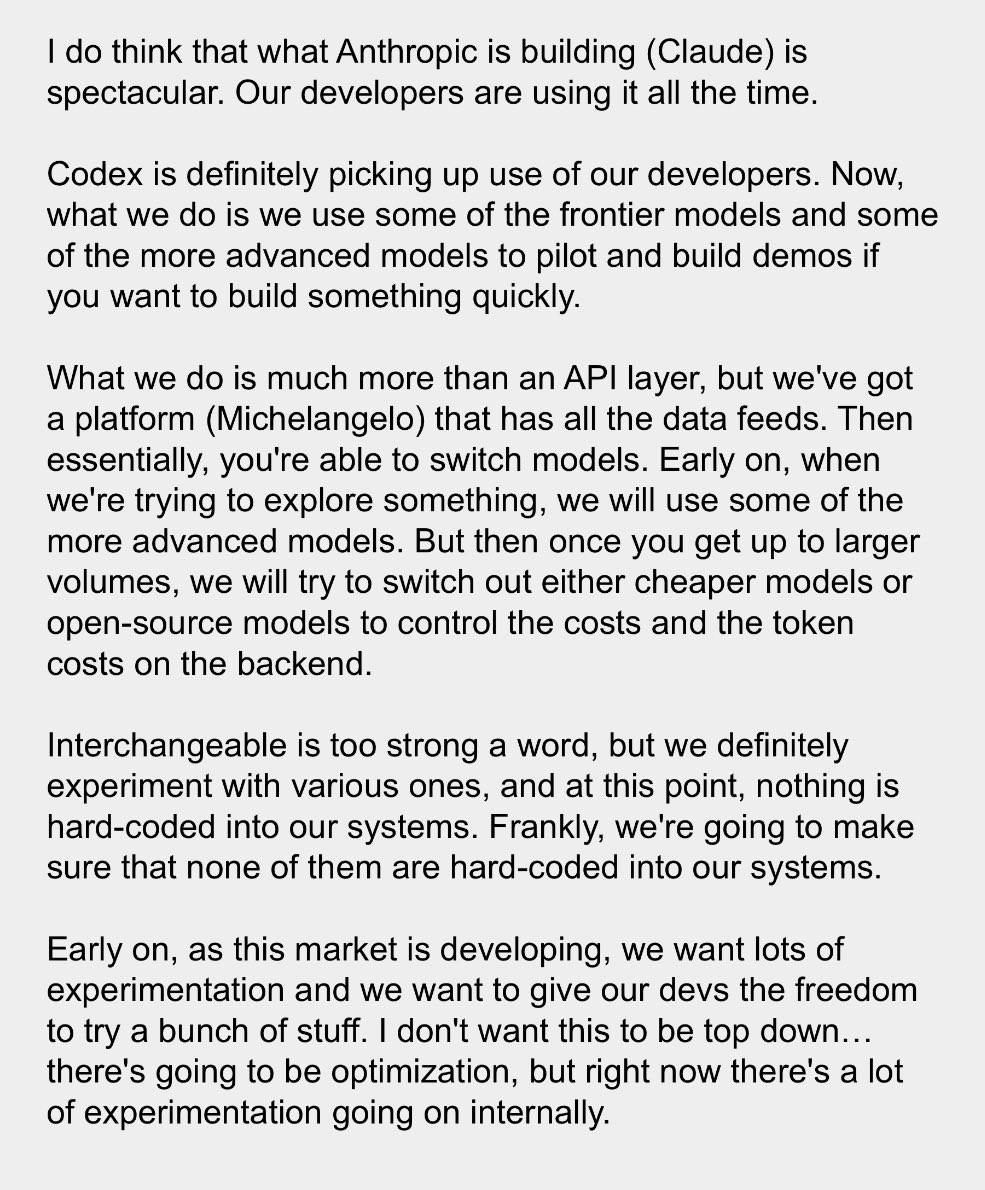
Uber’s CTO recently said the company had already burnt through its entire token budget for 2026.
In a recent interview, Uber CEO Dara Khosrowshahi explained how internally they switch between AI models to try and control costs: create V1s with frontiers, then switch to cheaper or open-source models once a feature hits high enough usage.
My biggest takeaways from @mschoening:
1. Great products have one tiny core that is exceptionally good. iPhone is multitouch. GitHub is the pull request. Figma is real-time collaboration. Dropbox was a menu bar sync icon. Notion is blocks and slash commands. Max’s failed startup in 2014 spent years polishing the editing experience, and it never worked. Meanwhile, Notion's first editor was terrible. But it didn't matter because the core was right. The biggest pitfall is thinking "if I just add one more feature, it'll finally be great." That never works.
2. Taste is a virtual machine in your head that predicts how your target audience will react. To build taste, you need reps. For designers specifically, the ones with the highest taste both build side projects end-to-end and constantly tinker with new apps. They’re the annoying person suggesting the 49th new tool. But that exposure to other people’s ideas is critical. Surround yourself with tasteful things so you feel like what you’re making is lacking.
3. The first 10% of every project is now free. You can send ten agents to explore ten versions of an idea before committing to one. Exploration has become very cheap. But quality, reliability, and shipping great products hasn't.
4. Agency is becoming the real differentiator, not skills. When AI closes skill gaps, the people who thrive are the ones who treat the world around them as malleable, and change things. Max points to Notinos like @brian_lovin and @EricTLiu, who moved from PRDs to Figma to building prototypes in code—not because their role told them to but because they wanted to.
5. The goal isn't for designers to ship to production—it's for them to master the material they're designing with. Max doesn't care if designers write code that lands in production. He cares that they think in code, because this forces them to consider the medium. At Notion, chat-interface prototyping moved out of Figma into a small LLM-friendly playground, because "the static image of a chat is basically a dead fish." If your interface is an agent, you can't design it in Figma.
6. The amount of software is exploding. The quality isn’t. Max: “I don’t feel like the quality of software has increased all that much in the last 12 months. The amount of software has, but it’s very, very hard to find software that is reliable.” Even top labs’ own tools regress every two weeks and still can’t render a TUI at a reasonable frame rate.
7. Being first doesn’t matter—being right does. Bluetooth headphones were crappy until AirPods. The iPod wasn’t the first MP3 player. Anthropic started after OpenAI with less funding and is now killing it. Durability matters most. Think about how you’d build IKEA, a generational company that doesn’t concern itself with what’s trending on Twitter.
8. The SaaSpocalypse is overstated—people don’t actually want to maintain their own software. Max tried rebuilding Notion in a weekend and concluded that most people don’t want that. “Software is like a garden. You need to tend to it. The thing you pay for in the as-a-service is the maintenance.” Anthropic, of all companies, runs on Slack.
9. Coding is becoming a primitive that diffuses into every role. Models are improving exponentially at coding but not meaningfully at writing or other domains. When labs claim progress elsewhere, “you just applied coding principles to this domain.” At Notion, HR is already automating work without bugging engineering. The next wave isn’t “AI comes for marketing”; it’s that coding capability shows up inside every function.
10. We already have universal basic income—it’s called knowledge work. Max means this both as a joke and somewhat seriously. If you really look at what we need to live and be content, it’s a lot less than what we have. We’ve built this hierarchy and all these jobs that are “absolutely necessary.” We’re so inventive at coming up with new reasons why we must be in the loop. Will it look the same with agents? Maybe not. But we’ll find new ways to insert ourselves into the conversation.
Full conversation: https://t.co/t8EazLlNpV
@naval The entire translation layer is disappearing. Instead of clicking around a screen or reading documentation to connect systems you just state your intent and the AI figures out the plumbing in the background. It completely changes how we interact with software.